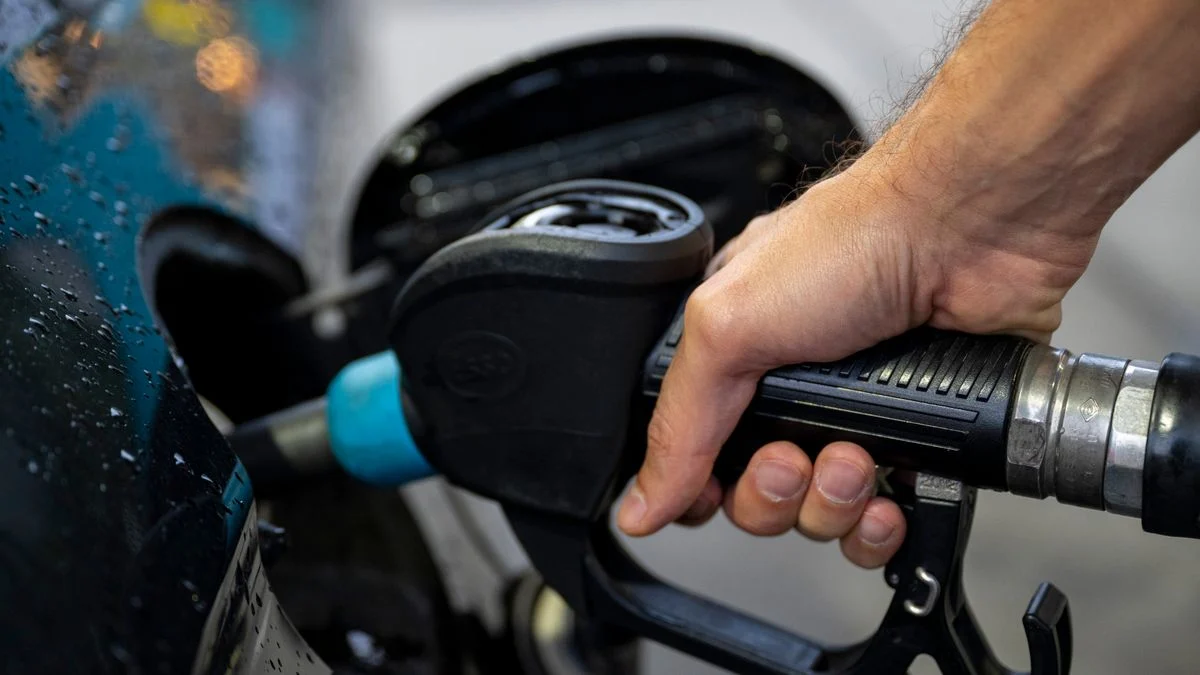
In a move designed to shield German motorists from the suffocating impact of record-high energy prices, the federal government recently implemented a temporary reduction in fuel taxes—a policy colloquially known as the "Tankrabatt." However, just days after the measure took effect, the initial euphoria among drivers has evaporated. Instead of a sustained reduction in costs at the pump, data indicates that fuel prices are once again creeping upward, effectively absorbing the fiscal relief meant for the pockets of the public.
The Current State of the Pump
According to the latest figures released by the ADAC, the largest automobile association in Germany, the average price for a liter of Super E10 gasoline hit 2.137 euros this past Sunday. This represents a 2.3-cent increase compared to the previous Thursday, immediately following the rollout of the policy. Diesel, which had seen its own surge in demand, rose by 0.9 cents to an average of 2.253 euros per liter.
For millions of commuters and logistics operators, this trend is more than a mere statistical fluctuation; it is a source of profound frustration. The primary objective of the tax cut was to provide a buffer against the inflationary pressure of the energy crisis. Instead, the market appears to have neutralized the benefit within a matter of days.
Chronology of a Controversial Policy
The trajectory of the Tankrabatt has been marked by volatility and intense public scrutiny.
Pre-Implementation: As the war in Ukraine intensified and global energy markets wobbled, the German government announced the reduction of the energy tax on fuel to the European minimum. The goal was a direct reduction of 16.7 cents per liter for petrol and 11.4 cents per liter for diesel.
The Launch: When the measure went live, many gas stations indeed reflected the lower prices. For a brief period, drivers could find Super E10 for under two euros per liter in various regions across the country, providing a temporary sense of relief.
The Reversal: Within less than a week, the upward trajectory returned. Industry analysts observed that even as the tax cut lowered the base cost, the retail prices at stations began to drift back toward their pre-rebate levels. By the end of the first weekend, the "cheaper" era was already being replaced by a return to the status quo of high-cost mobility.
Market Analysis: Why the Rebate is Being Absorbed
The ADAC has expressed deep skepticism regarding the market’s current pricing behavior. Their experts note that the primary external drivers of fuel prices—the global crude oil price and the Euro-Dollar exchange rate—have remained relatively stable throughout the period. This disconnect suggests that the factors driving the recent price hikes are not necessarily linked to international supply chain shocks, but rather to domestic market dynamics.
H3: The Scarcity of "Budget" Offers
Perhaps the most telling indicator of the market’s shift is the disappearance of competitive pricing. Immediately following the introduction of the rebate, many gas stations engaged in price competition, which forced the average cost down. However, that competition has since plateaued. "Budget" offers—fuel priced significantly below the average—are becoming increasingly rare. This suggests that the retail sector has reached a new, higher price equilibrium, where the benefit of the tax cut is being retained within the supply chain rather than being passed entirely to the consumer.
Official Responses and Industry Defenses
The controversy has sparked a heated debate between consumer advocates, political observers, and the fuel industry.
The industry association En2x, which represents the major players in the German fuel sector, has staunchly defended its members. In an official statement, the association emphasized that its member companies have passed on the tax relief in full. They argue that the recent price increases are a direct result of rising procurement costs on the global market.

"The retail price at the pump is composed of many variables," a representative noted, "including the cost of crude oil, refining margins, logistics, and taxes. While the tax component has decreased, the acquisition costs for fuel on the international wholesale market have shown significant volatility, which naturally filters down to the consumer level."
However, this argument does little to quell public distrust. Critics point out that the speed with which the price rose after the rebate suggests a lack of transparency in how fuel prices are calculated. There is a lingering concern that the fuel companies are using the government’s tax relief as a "cover" to widen their own profit margins, knowing that the consumer is accustomed to high price points.
Economic and Social Implications
The failure of the Tankrabatt to provide long-term relief has significant implications for the broader German economy and the government’s standing.
The Inflationary Burden
Fuel costs are a primary component of the consumer price index. High fuel prices have a cascading effect: they increase the cost of transporting goods, which in turn drives up the price of groceries and consumer products. If the Tankrabatt fails to keep prices suppressed, the government’s efforts to curb inflation may be undermined.
The Political Fallout
The policy was intended as a populist measure to ensure social stability during a time of economic uncertainty. If the rebate is seen as a failure, it will likely increase political pressure on the coalition government to provide direct cash transfers or other forms of targeted support rather than broad-based tax cuts that are easily absorbed by market forces.
The Future of Mobility
The current situation highlights the inherent vulnerability of the German economy to global energy shocks. While the government attempts to pivot toward renewable energy, the transition remains a long-term project. In the interim, the reliance on traditional fossil fuels—and the opaque pricing structures that govern them—leaves the average citizen at the mercy of market forces that appear to prioritize corporate profitability over national economic relief.
Conclusion: A Lesson in Market Mechanics
The "Tankrabatt" experience in Germany serves as a cautionary tale for policymakers worldwide. It demonstrates that when government fiscal policy meets highly consolidated, reactive markets, the intended benefits for the consumer are rarely guaranteed.
As the German Federal Cartel Office continues to monitor the situation, the question remains whether the market will self-correct or if the government will need to intervene with more aggressive regulatory measures. For now, the German driver is left to navigate a market where the price at the pump is a moving target—one that seems to drift upward, regardless of the best intentions of the state.
The volatility observed over these past few days is not merely a technical issue; it is a fundamental challenge to the social contract between the state, the energy industry, and the public. As the summer progresses, the pressure will be on regulators to prove that the tax relief was not just a windfall for the oil companies, but a meaningful attempt to keep the wheels of the German economy turning without bankrupting its workforce.
Whether through increased transparency requirements or a structural overhaul of how fuel taxes are applied, the government must act to restore faith in the system. Until then, the neon signs at German gas stations will remain a symbol of frustration rather than relief.