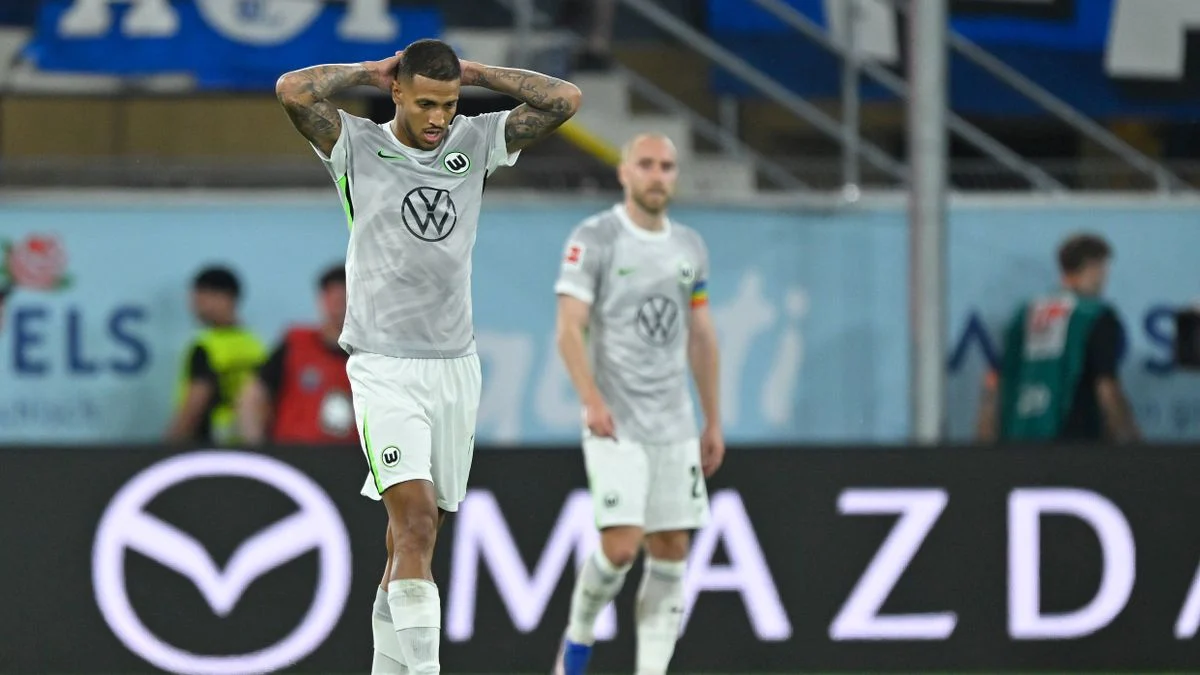
By Editorial Staff | October 13, 2026
The tranquil facade surrounding Eintracht Frankfurt’s executive offices has been shattered. Following a humbling defeat in Leipzig that exposed deep-seated structural flaws within the squad, the internal pressure on Sport CEO Markus Krösche has reached a boiling point. What was once described by club insiders as a period of calm stability has rapidly devolved into a climate of speculation, with questions surrounding the long-term viability of the current leadership structure.
The Core Crisis: A Mismatch of Expectations and Reality
For weeks, the narrative emanating from the Deutsche Bank Park was one of internal harmony. Following a tumultuous August, September appeared to offer a reprieve. There were no major transfer controversies, no public clashes between the sporting director, the board, and the coaching staff, and no signs of a fractured locker room. The club projected an image of a well-oiled machine, operating with a "business as usual" mentality.
However, the recent tactical and physical collapse against RB Leipzig acted as a catalyst, tearing down that veil of normalcy. The defeat was not merely a loss on the scoreboard; it served as a brutal performance review for the roster assembly that Krösche has overseen. As the October 19th general meeting approaches and the January transfer window looms, the discrepancy between the public "all is well" narrative and the reality behind closed doors has become impossible to ignore.
A Chronology of Declining Confidence
The current scrutiny did not arrive overnight. It is the result of a compounding series of events that have left fans and stakeholders questioning the direction of the club.
- The Summer Transfer Window (August 2026): Initially, Krösche received praise for his ability to generate a significant transfer surplus, meeting the ambitious targets set by the Supervisory Board. However, as the season progressed, the "sell-to-succeed" model began to show cracks.
- The Post-Deadline Day Reality: Following the close of the summer market, initial reports suggested a successful window. But as injury concerns mounted and tactical inconsistencies became glaring, the critique shifted. Observers began to point out that while the balance sheet looked healthy, the pitch performance was suffering due to a lack of depth and quality in key positions.
- The Leipzig Humiliation (October 2026): The lopsided defeat served as a wake-up call. The performance was characterized by a lack of defensive cohesion and a failure to address structural gaps that had been identified months prior.
- The Present Day: With media outlets, including the Frankfurter Rundschau and Bild, now labeling Krösche as a "manager on notice," the atmosphere at the club is one of intense anticipation regarding potential leadership changes.
Supporting Data: The Gaps in the Roster
The core of the criticism directed at Krösche lies in his squad planning. Despite substantial financial injections, the Eintracht squad appears disjointed in critical areas:
Defensive Fragility
The full-back positions have been a revolving door of inconsistency, failing to provide the stability required for a top-tier Bundesliga campaign. Similarly, the central defense has been under immense pressure. The failure to adequately replace outgoing personnel like Nathaniel Brown and Rasmus Kristensen has left the backline vulnerable. Even team captain Robin Koch, while a stalwart of the club, has struggled to anchor a defense that lacks a reliable, high-quality partner.
Midfield Investment vs. Output
The club’s investment in the defensive midfield has been significant, with over €20 million spent on players like Raphael Onyedika and Noel Aseko. Yet, these acquisitions have failed to provide the necessary control or physical dominance expected for such a high financial outlay. Furthermore, the nearly €5 million spent on secondary defensive options has not translated into the squad depth required for a multi-competition season.
Official Responses and Internal Dynamics
The power structure at Eintracht Frankfurt is currently defined by the influence of Mathias Beck, the President and Chairman of the Supervisory Board. Beck, who holds a mandate of near-unanimous support from the membership, is the individual responsible for the oversight of the sporting board.
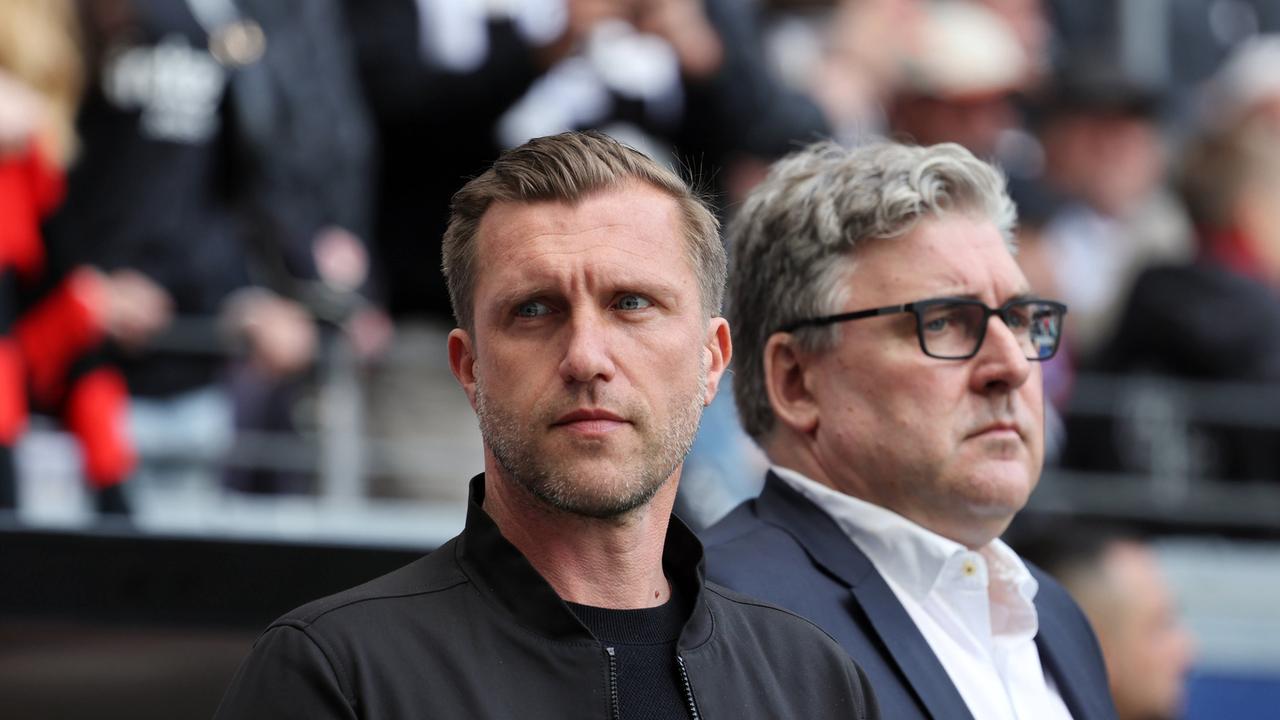
When pressed on the stability of the relationship with Krösche, Beck recently offered a measured response to the Wiesbadener Kurier: "Assume that we are in a constant and productive exchange. I currently have no reason to doubt the contractual basis of our working relationship."
However, professional observers note that while the public support remains, the background maneuvering is telling. The club has been quietly preparing for a future without Krösche for some time. The attempt to develop internal successors, such as the involvement of figures like Pirmin Schwegler, indicates a strategic awareness that the current leadership might not be a permanent fixture.
The Implications: What Lies Ahead?
The question of whether Markus Krösche will fulfill his contract, which runs until 2028, is now the central debate in the corridors of power.
The "Winter Window" Dilemma
Replacing a sporting director during an active season is a high-risk endeavor. The upcoming winter transfer window (January 1 – February 1, 2027) is crucial for the club to address the identified squad deficiencies. A new director would require a steep learning curve, potentially complicating the mid-season recruitment drive. However, if the board believes that Krösche’s strategy is fundamentally flawed, they may decide that a change is better implemented sooner rather than later, even at the cost of immediate disruption.
Potential Successors
While the rumor mill has churned out names like Hasan Salihamidzic—a move considered highly unlikely and incompatible with the club’s current culture—more realistic candidates are being discussed in industry circles. Names such as Joti Chatzialexiou (1. FC Nuremberg) and Marcel Schäfer (RB Leipzig) are frequently mentioned, alongside homegrown talents like Benjamin Weber (FC Augsburg) and Marco Neppe (Paris FC). Each of these candidates brings a different profile, but all are currently established at other institutions, meaning a transition would require delicate negotiations.
The Rise of Axel Hellmann
Amidst this turbulence, the role of Vorstandssprecher (Board Spokesman) Axel Hellmann remains a focal point. Often referred to as "Mister Eintracht," there is significant speculation that he could ascend to an even more powerful position as Chairman of the Board. Should the leadership structure undergo a shake-up, Hellmann is expected to be the constant that maintains the club’s institutional identity.
Conclusion
Eintracht Frankfurt stands at a crossroads. While the club’s financial health remains a point of pride, the sporting results and the recurring issues with squad composition have created a precarious situation for Markus Krösche. The coming weeks will be decisive. Whether the board chooses to double down on their current leadership or initiate a transition to a new sporting philosophy, the objective remains the same: restoring the competitive edge that the fans have come to expect.
For now, the "peace" that was so carefully curated throughout September has been replaced by the realities of professional football, where results remain the ultimate judge of executive performance. The next few weeks of institutional maneuvering will determine whether this is merely a rough patch or the beginning of a significant era of change for the Eagles.