In a shocking development for the youth development sector of German football, Jens Härtel has officially stepped down as the U19 head coach of 1. FC Union Berlin. The resignation follows a series of substantiated allegations regarding discriminatory remarks made during training sessions, which have resulted in a significant disciplinary sanction from the German Football Association (DFB).
The departure of the 57-year-old, a veteran tactician known for his previous roles at 1. FC Magdeburg, Hansa Rostock, and Erzgebirge Aue, marks a somber turning point for both the coach’s career and the club’s internal culture. As Härtel retreats from the professional stage to undergo a period of personal reflection, the incident has sparked a wider conversation about the standards of conduct expected within elite youth academies.

The Core Facts: A Career in Jeopardy
The announcement, made on October 11, 2026, confirmed that Jens Härtel had requested the immediate termination of his duties at Union Berlin. The club, which had been conducting an exhaustive internal review, accepted his resignation, acknowledging that Härtel intended to step away from the sport indefinitely to address the gravity of the accusations brought against him.
The crisis stems from an anonymous report detailing discriminatory behavior during the daily operations of the club’s U19 training program. While the specific nature of the remarks has not been publicized out of respect for privacy, the findings of the DFB’s internal investigation were severe enough to warrant immediate and public disciplinary action.
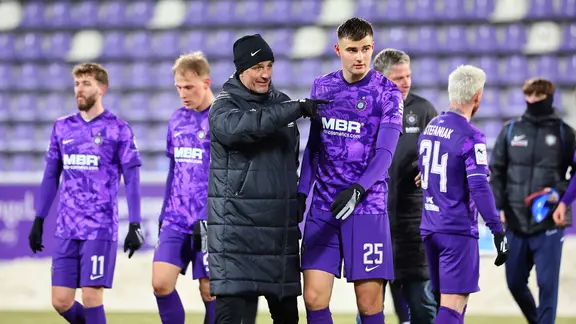
For a coach of Härtel’s stature—who was once considered a steady hand in the volatile world of German professional football—the fall from grace is precipitous. Having successfully navigated the pressures of the 2. Bundesliga, his transition to youth development was intended to be a period of mentorship and growth. Instead, it has concluded in a high-profile scandal that highlights the DFB’s increasingly stringent "zero-tolerance" policy regarding discrimination in any form.
Chronology of the Scandal
The timeline of the investigation suggests a rapid escalation once the allegations surfaced.

- Initial Allegations: The process began with an anonymous letter delivered to the management of 1. FC Union Berlin. The document detailed specific instances where the coach’s language allegedly crossed the line from tactical instruction into discriminatory territory.
- The Internal Review: Union Berlin immediately triggered an external audit, engaging third-party investigators to ensure transparency. This period was characterized by a lack of direct complaints from the affected players themselves, according to club statements, suggesting that the culture of silence or fear may have played a role in the delayed discovery of the behavior.
- The DFB Intervention: As the gravity of the allegations became clear, the DFB’s Control Committee launched a formal investigation. They recommended a multi-week ban on all coaching activities, a recommendation that the DFB Sport Court eventually formalized into a significant sanction.
- The Ruling: On October 11, 2026, the DFB Sport Court officially issued a twelve-week ban on Härtel from all football-related functions.
- The Resignation: Following the verdict, which Härtel acknowledged and accepted, he formally requested his release from his contract at Union Berlin, effectively ending his tenure with immediate effect.
The DFB Sport Court Ruling: A Stringent Penalty
The punishment handed down by the DFB is a clear signal to the professional football community that discriminatory behavior will no longer be treated as a mere lapse in judgment. The twelve-week "functional ban" is a sophisticated penalty designed not just to punish, but to force behavioral change.
Breakdown of the Sanction:
- Immediate Suspension: Härtel is required to serve eight weeks of the ban immediately. This period acts as a cooling-off phase and a direct consequence of his actions.
- Probationary Period: The remaining four weeks of the ban have been suspended for a duration of one year. Should Härtel return to a coaching role within that timeframe, any further infraction will trigger the immediate enforcement of the remaining four weeks.
- Mandatory Rehabilitation: The court has mandated that Härtel attend a formal conflict and de-escalation training program. He is required to provide documented proof of his participation to the DFB no later than April 31, 2027. This component represents the DFB’s commitment to rehabilitation, provided the individual is willing to engage with the educational process.
The Admission: Accountability and Regret
In a statement released shortly after the verdict, Jens Härtel did not contest the findings. Instead, he expressed deep regret, admitting that he had failed to meet the standards required of a youth coach.

"I have made mistakes," Härtel stated. "I failed to live up to the role-model function that is inherent in the job of a youth coach. I have apologized to the players, the staff, and the club. It was never my intention to hurt anyone, but I recognize that my actions were discriminatory and unacceptable."
This admission is significant. By choosing not to fight the DFB ruling, Härtel has signaled a willingness to accept responsibility. However, the damage to his professional reputation is substantial. In an industry where trust between coaches, players, and parents is the bedrock of development, an official finding of discriminatory conduct is often a career-ending obstacle.

Club Response: Union Berlin’s Path Forward
For 1. FC Union Berlin, the fallout is a logistical and moral challenge. Lutz Munack, a member of the club’s presidium, addressed the situation with a tone of disappointment but resolve.
"We are disappointed by the behavior that necessitated these sanctions," Munack said. "The club does not tolerate discrimination in any form. While we respect Jens’s decision to step down and seek a period of reflection, it is our responsibility to ensure that our youth academy remains a safe, inclusive environment for all players."

The club has confirmed that they are implementing new, rigorous prevention measures. Moving forward, education on anti-discrimination, diversity, and conflict resolution will be a mandatory component of the training curriculum for all coaching staff at the academy. The lack of a direct report from an affected player during the investigation has prompted the club to re-examine its internal whistleblowing mechanisms, ensuring that young players feel empowered to report misconduct without fear of reprisal.
The Broader Implications for Youth Football
The case of Jens Härtel serves as a microcosm of a larger cultural shift within German football. For decades, the "old school" approach to coaching—characterized by high-pressure, abrasive, and sometimes aggressive communication—was accepted as part of the game. However, the modern era demands a new paradigm of leadership.

1. The Death of the "Authoritarian" Model
The era of the "shouting coach" is ending. Clubs are now prioritizing emotional intelligence and psychological safety, recognizing that the development of a young athlete is just as much about mental health and personal growth as it is about tactical proficiency.
2. Heightened DFB Scrutiny
The DFB’s role has evolved from merely overseeing competition to acting as the moral arbiter of the sport. By enforcing mandatory sensitivity training and long-term bans, the organization is attempting to sanitize the coaching ranks and protect the integrity of the youth system.

3. The Challenge of "Quiet" Discrimination
One of the most concerning aspects of this case is that the abuse was identified via an anonymous tip rather than a direct complaint. This suggests that there is still a significant "fear gap" in youth sports. Organizations are now under pressure to create anonymous, safe reporting channels that do not rely on the bravery of a single child to challenge an authority figure.
Conclusion: A Turning Point?
The resignation of Jens Härtel is a painful event for all involved, but it is also a necessary one for the evolution of the sport. The case demonstrates that the industry is no longer willing to look the other way when a coach’s conduct violates the fundamental values of respect and equality.

As Härtel begins his period of personal reflection, the footballing world will be watching to see how he manages this transition. More importantly, the industry will be watching to see how clubs like Union Berlin adapt their internal structures to prevent such failures in the future.
Ultimately, the goal of youth football is to produce not just professional players, but well-rounded, respectful individuals. Achieving that goal requires coaches who understand that their influence extends far beyond the pitch. When that influence is misused, the consequences—as we have seen today—are absolute. The case of Jens Härtel will likely serve as a cautionary tale for years to come: in the modern game, there is no place for the abuse of power, no matter the pedigree of the coach.