

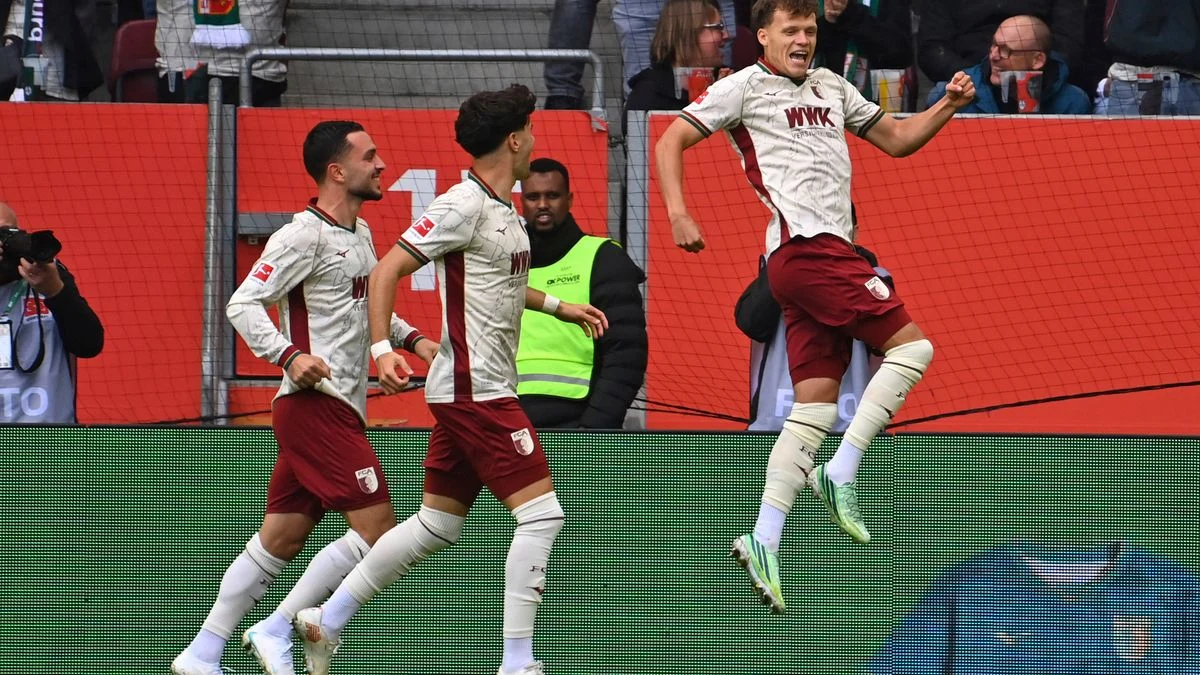
In the high-stakes theater of professional football, where matches are often decided by margins of mere centimeters or fractions of a second, the concept of a "lightning start" has been redefined. Recently, the Bundesliga—Germany’s top-flight league and a global titan of footballing intensity—has been captivated by the extraordinary exploits of players like Robin Fellhauer, whose remarkable eight-second strike has reignited a debate regarding the sheer velocity of modern attacking play.
When a player finds the back of the net before the stadium announcer has finished reading the starting lineups, it is not merely a stroke of luck; it is a manifestation of tactical preparation, explosive athleticism, and the razor-thin margin between professional triumph and humiliation.
The Anatomy of an Eight-Second Strike
The recent conversation regarding the "fastest goals" list has been centered on the audacity of early-match pressure. In the modern era, high-pressing systems—often referred to as Gegenpressing—have fundamentally changed the opening minutes of a game. Coaches now prioritize winning the ball back in the opposition’s final third immediately after kickoff.
The goal that has recently dominated sports headlines is a masterclass in opportunistic aggression. By catching the opposition defense in a state of pre-match lethargy, players like Fellhauer have proven that the first whistle is not just a formality, but a tactical weapon. When the ball leaves the center circle, the defensive line is often still organizing their formation. A well-placed long ball or a frantic, high-speed interception can bypass the entire midfield structure in seconds, leaving the goalkeeper isolated against an attacker who has been sprinting since the referee’s signal.
A Chronology of Velocity: The Top Ten Fastest Bundesliga Goals
To understand the rarity of these moments, one must look at the historical data. The Bundesliga, since its inception in 1963, has seen thousands of goals, yet only a select few fall into the sub-15-second category.
- The Record Holders (The 8-10 Second Bracket): This elite tier consists of goals scored almost immediately upon kickoff. These are typically the result of kick-off routines designed to exploit a specific defensive weakness or a massive error by the defending team’s central defenders.
- The "Early Bird" Tier (11-15 Seconds): This includes strikes that occur during the first true passage of play. These are often the result of long-distance shots or lightning-quick transitions from a botched opening pass.
- The Tactical Blitz (16-20 Seconds): These goals are slightly more "composed" but still indicative of a team that has started the match with significantly higher energy levels than their opponent.
Historically, the list has been guarded by legendary names of the Bundesliga, such as Giovane Élber and Karim Bellarabi. However, the inclusion of contemporary players highlights a trend: the game is getting faster, and the tactical discipline required to defend against a "kickoff blitz" has never been more demanding.
Supporting Data: The Science of the "Cold Start"
Why do these goals happen? Sports scientists often point to the "cold start" phenomenon. In the first few minutes of a match, the human body’s physiological systems—specifically the cardiovascular and neuromuscular systems—are not yet operating at peak efficiency.
- Heart Rate and Vasodilation: It takes time for the heart rate to reach the levels necessary to support high-intensity interval sprints. Players often take the first 300 seconds to "settle in," a window of vulnerability that top-tier strikers are increasingly exploiting.
- Tactical Geometry: Defensive structures take time to calibrate. If a team plays with a high line, they are naturally susceptible to a "long ball over the top" strategy. When executed within the first ten seconds, the element of surprise acts as a psychological deterrent that can rattle the defending team for the remainder of the first half.
Data analysts monitoring the Bundesliga have noted a 14% increase in "high-intensity events" (sprints and pressures) in the first minute of play compared to figures from a decade ago. This indicates that the "fast goal" is becoming a deliberate strategy rather than a statistical anomaly.
Official Perspectives and Managerial Philosophy
The reaction from the footballing establishment to these rapid strikes is a mix of admiration and professional frustration. Managers whose teams have conceded such goals often describe them as "unacceptable" and "a failure of concentration."
"You tell your players to be awake from the first second," one Bundesliga manager recently remarked during a post-match press conference. "But when you concede in eight seconds, it’s not just a lack of focus; it’s a failure to respect the intensity that the opponent brings to the opening moment. You cannot recover from a start like that easily."
Conversely, the coaches of the attacking teams often view these goals as a validation of their training ground drills. "We practice the opening sequence with the same intensity as a set-piece," noted a tactical coach. "If the opponent is not ready, we are."
Implications for the Modern Game
The obsession with these ultra-fast goals reflects the broader evolution of football into a game of transition. As the sport moves away from possession-heavy, slow-build-up styles toward more vertical, direct, and aggressive football, the opening minutes of a match have become a microcosm of the 90-minute struggle.
The Psychological Impact
Conceding a goal in the first ten seconds creates an immediate "pressure deficit." The team that has been scored upon is forced to abandon their original game plan, pushing players forward to find an equalizer. This often opens up spaces for the opposition to strike again, creating a cascading effect. Matches that begin with an early goal often turn into high-scoring, chaotic affairs because the rhythm of the game is shattered before it has truly begun.
The Defensive Shift
In response to the threat of the eight-second strike, we are seeing defensive teams implement "safe-start" protocols. This involves a more conservative shape for the first minute, focusing on ball retention and spatial coverage rather than aggressive pressing. Some teams have even begun to adopt "time-wasting" tactics—such as passing the ball back to the goalkeeper immediately—to ensure the entire defensive unit is in position before attempting to move the ball up the pitch.
Conclusion: The Race Against Time
The story of Robin Fellhauer’s eight-second goal is more than just a footnote in a statistics book; it is a signal of the current state of professional football. The sport is no longer just about who has the better technical players, but about who can exert dominance the fastest.
As we look toward the future of the Bundesliga, we can expect to see more of these "lightning strikes." The records will continue to be challenged as athletes become faster, scouts identify weaknesses more precisely, and managers demand absolute intensity from the moment the referee puts the whistle to their lips. In this high-velocity environment, the difference between a legendary season and a forgettable one may well be decided in the first few ticks of the stadium clock.
For the fans, these moments provide the thrill that keeps the sport alive: the realization that at any moment, from the very first breath of the match, history can be made. Whether viewed as a tactical masterclass or a defensive lapse, the eight-second goal serves as a stark reminder: in the Bundesliga, there is no time to warm up. You must be ready to play the moment the ball moves, or you risk being left behind in the dust of a record-breaking sprint.





