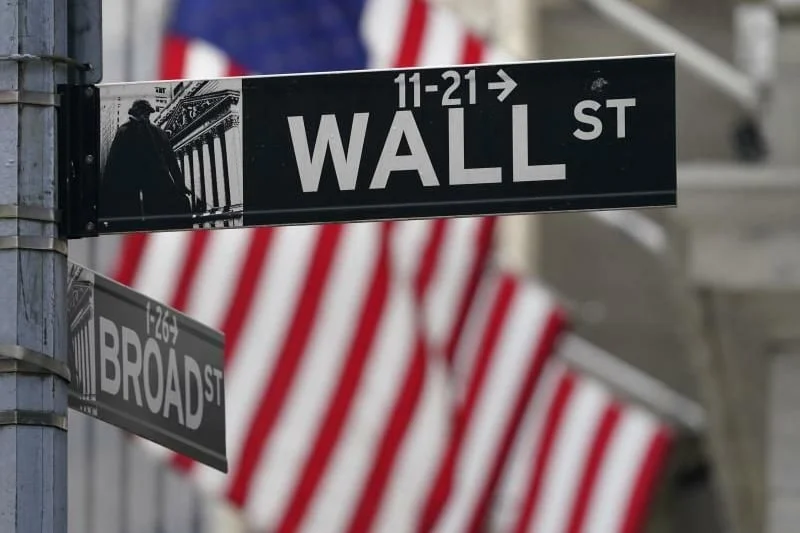
NEW YORK/DÜSSELDORF – The opening of the trading week at the New York Stock Exchange has been defined by a sense of pervasive caution. As investors return to their desks, the landscape is marked by a palpable tension, driven by the ongoing geopolitical instability in the Middle East and a heightened state of anticipation regarding key macroeconomic data and corporate disclosures scheduled for the coming days.
While the Dow Jones Industrial Average managed to carve out modest gains, the broader market narrative was one of fragmentation. Tech-heavy indices, which have served as the primary engine of growth for the better part of the year, saw a cooling in momentum, signaling that market participants are increasingly looking for safety and stability in a climate of persistent uncertainty.
Main Facts: A Market in Search of Direction
The current market environment is characterized by a "wait-and-see" approach. The primary indices—the Dow Jones, the S&P 500, and the Nasdaq—have struggled to find a unified direction as the opening bell signaled the start of a critical week. This volatility is not merely a reflection of daily trading noise but a manifestation of deeper, structural concerns regarding inflation, interest rates, and the escalating risk of regional conflict.

The most notable individual performance has been that of Microsoft. The tech giant has captured the attention of analysts by breaking through a crucial technical resistance level for the first time in approximately a year. This breakthrough is viewed by many as a potential bellwether for the broader technology sector, suggesting that despite general market hesitation, high-quality, cash-generative firms remain the primary focus for institutional capital.
However, the sentiment is dampened by the volatility in the energy sector. Following a period of relative calm in the early morning sessions, oil prices staged a notable rally. Both Brent Crude and West Texas Intermediate (WTI) saw significant upward pressure, reflecting investor fears that geopolitical friction could disrupt supply chains or lead to production bottlenecks in one of the world’s most vital energy corridors.
Chronology: The Pulse of the Trading Day
The trading day began with a flicker of optimism, largely fueled by a cooling-off in some of the more aggressive interest-rate narratives that dominated the previous week. However, as the morning progressed, the atmosphere shifted.
- Early Morning (Pre-Market): Futures were pointing toward a relatively flat opening. The focus remained on the Middle East, with traders tracking headlines from the region and their potential impact on commodity prices.
- Market Open: Indices opened with a slight upward bias, led by industrial and defensive stocks. Investors appeared to be rotating out of high-growth technology names into more traditional value-oriented equities.
- Mid-Day (12:00 PM EST): The narrative shifted as energy prices began to climb. The rise in Brent Crude—which pushed past the $106 per barrel mark for delivery in December—acted as a headwind for the broader market. Higher energy costs are traditionally viewed as a "tax" on consumers and corporations alike, complicating the outlook for inflation.
- Late Afternoon: The divergence became more pronounced. While the Dow Jones maintained its modest gains, the tech-heavy Nasdaq struggled to shake off the drag caused by sector-specific profit-taking and the macro-headwinds provided by rising oil prices.
Supporting Data: The Energy Equation
The surge in oil prices is the most significant exogenous variable currently impacting the financial markets. An increase of nearly 2 percent in a single session is a stark reminder of the market’s sensitivity to supply-side shocks.
Analysts point to several key drivers for this volatility:
- Geopolitical Risk Premium: The instability in the Middle East has created a "risk premium" in the pricing of crude oil. Any potential escalation is priced in immediately by traders, leading to rapid, reflexive spikes in price.
- Supply Chain Fragility: The reliance on global shipping routes that pass through volatile regions has introduced a layer of logistical anxiety. Even if production remains steady, the cost of insurance and the risk of transit delays are being passed on to the consumer, further fueling inflation expectations.
- Inventory Concerns: With demand projections remaining relatively resilient, the market is highly sensitive to any reports of lower-than-expected inventories, which would tighten the global supply-demand balance further.
At the same time, the bond market in the United States remained closed on Monday due to a federal holiday, removing a crucial "anchor" for investors. Without the signal provided by Treasury yields—which often dictate the discount rates used to value stocks—traders were left to navigate the day based on technical levels and headline risk, further contributing to the day’s mixed performance.
Official Responses and Expert Perspectives
Market strategists are urging a degree of composure, emphasizing that the current volatility is largely symptomatic of a market "resetting" its expectations.
"We are entering a period where the correlation between geopolitical events and equity performance is at its highest in years," noted one senior market analyst. "The Microsoft performance is encouraging, but it is an outlier. The broader story is about the cost of capital and the cost of energy. Until we see more clarity on the stability of supply chains and the trajectory of inflation, we should expect these mixed, choppy trading sessions to continue."
The consensus among analysts is that the upcoming earnings season and the next round of consumer price index (CPI) data will be the ultimate arbiters of where the market heads next. Until those data points are released, the market is essentially treading water, reacting to the most recent headline rather than long-term economic fundamentals.

Implications: What This Means for the Investor
The current market landscape holds several critical implications for both retail and institutional investors:
1. The "Quality" Factor
As the market remains directionless, capital is naturally gravitating toward companies with strong balance sheets and established market positions. Microsoft’s recent performance is a clear indicator that investors are prioritizing companies that can sustain profitability even in an environment of rising costs.
2. The Energy-Inflation Link
The rise in oil prices is a double-edged sword. While it may benefit energy-sector equities, it poses a significant threat to consumer spending and corporate margins in other sectors. If oil prices remain elevated, we could see a renewed debate about "sticky" inflation, which would complicate the Federal Reserve’s path forward regarding interest rate policy.

3. Geopolitical Risk Management
The events of the past 24 hours serve as a stark reminder of the limitations of purely quantitative analysis. In the current climate, investors must factor in "event risk." This often involves diversifying portfolios across sectors that are less sensitive to global supply chain disruptions and potentially increasing exposure to defensive assets that can hedge against market volatility.
4. Technical Resilience
Despite the "mixed" nature of the market, the fact that the Dow Jones has held onto gains suggests that there is still a floor to investor sentiment. The market is not currently in a state of panic; rather, it is in a state of prudent observation. The key will be whether the major indices can maintain these levels through the remainder of the week.
Conclusion: A Critical Week Ahead
As we look toward the remainder of the week, the focus will undoubtedly shift toward corporate earnings and central bank commentary. The market is searching for a catalyst—either a signal that inflation is beginning to moderate, or that the corporate sector has the pricing power to withstand higher energy and input costs.

For now, the story of the week is one of balance: the struggle between the desire for growth and the reality of a world characterized by supply shocks and regional instability. Investors should prepare for continued oscillation, keeping a close eye on the energy markets, which will likely remain the primary driver of volatility until more concrete economic data becomes available.
The resilience shown by industry leaders like Microsoft provides a glimmer of stability, but the broader market remains caught in a tug-of-war between optimism regarding the underlying health of the economy and the pervasive fear of what lies around the next geopolitical corner. In this environment, patience, diversification, and a focus on fundamental value remain the most effective strategies for navigating the complexities of the modern global marketplace.