Frankfurt/Kiel. The German rental market is currently defined by a profound and widening gap between its major metropolitan hubs. While some cities are witnessing an accelerating surge in asking rents, others are experiencing a period of surprising, relative stabilization. This growing dichotomy, highlighted by the latest GREIX (German Real Estate Index) report from the Kiel Institute for the World Economy (IfW), signals that the era of uniform national rent hikes may be giving way to a more localized, volatile housing landscape.
For those looking to secure a new lease, the data paints a challenging picture: a nationwide increase of 1.2 percent in the third quarter of 2026 compared to the previous three months, and a substantial 3.7 percent rise over the past year.
"After the annual growth rate hovered around the three percent mark for two consecutive quarters, we are now seeing the momentum of rental price increases picking up speed again," notes Jonas Zdrzalek, the lead real estate expert at the IfW. As the market shifts, understanding these regional nuances is no longer just a task for analysts—it is an urgent necessity for millions of German households.
The Core Data: A Market in Flux
The GREIX index, which aggregates data from 37 cities and regions across Germany, provides a granular look at the state of the housing market. The primary takeaway from the third quarter of 2026 is that the "hot" markets are getting hotter, while the pressure in some previously expensive cities is showing signs of decompression, at least temporarily.
Nationally, the 3.7 percent annual increase in asking rents serves as a barometer for the broader economic pressure on tenants. However, when one dissects the data by city, the trends deviate sharply. Hamburg, for instance, has emerged as a focal point of price acceleration, with asking rents climbing by a staggering 6.7 percent year-on-year. Düsseldorf and Cologne follow closely behind, each recording a 5.4 percent uptick, while Munich—long the nation’s most expensive city—continues its relentless climb with a 4.8 percent increase.

Conversely, Berlin presents a fascinating outlier. Despite its reputation for intense competition, asking rents in the capital grew by only 1.4 percent over the past year. In fact, during the first half of 2026, the market in Berlin was cooler than it had been in the previous year. Stuttgart and Leipzig have similarly remained more moderate, both recording growth rates of roughly 1.9 percent.
Chronology of the 2026 Rental Shift
To understand how we arrived at this point, it is necessary to look at the progression of the market over the last nine months of 2026.
- Q1 2026: The market began the year with a sense of cautious anticipation. High interest rates continued to dampen construction activity, yet rental demand remained stubbornly high due to urbanization and a lack of new supply.
- Q2 2026: A period of stagnation and slight correction in select areas. Berlin, in particular, saw a temporary cooling of the market, which provided a brief respite for prospective tenants.
- Q3 2026: The current data shows a decisive "trend reversal" in the capital. Against the second quarter, Berlin’s asking rents surged by 2.1 percent—the highest jump among the eight major German metropolises. Meanwhile, cities like Cologne began to see signs of price stagnation, suggesting that the limit of "what the market can bear" may have been reached in certain high-demand zones.
Supporting Data: Price Benchmarks and The "New" Reality
The sheer scale of the financial burden on tenants is best illustrated by looking at the cost per square meter. Munich remains the undisputed leader in unaffordability, with landlords demanding an average of 23.70 euros per square meter (cold rent). For a standard 80-square-meter family apartment, this translates to a monthly base rent of 1,896 euros—before utilities or heating costs are even considered.
Frankfurt sits in the upper-mid tier at 17.90 euros per square meter, while Hamburg is currently averaging 16.50 euros. On the other end of the spectrum, Leipzig remains an outlier of relative affordability at 10.40 euros per square meter.
The Rise of the "Bestand"
Perhaps the most surprising trend uncovered by the IfW report is the behavior of the "Bestandswohnungen" (existing rental stock) compared to "Neubauten" (new builds). Nationally, existing homes have seen their rents climb by 3.7 percent over the past year, outpacing the 3.3 percent increase in the new-build sector.
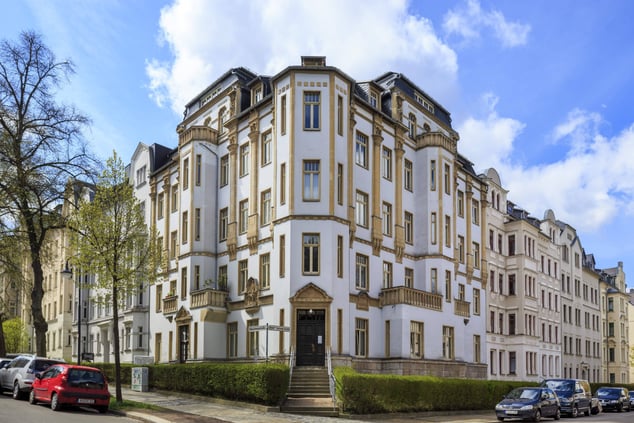
This development is counter-intuitive but telling. It suggests that, in the current economic climate, the premium associated with new construction is becoming less attractive or perhaps less accessible to the average tenant. Data shows that new-build apartments in the eight largest cities are now sitting on the market for an average of 14 days longer than existing, older apartments.
Official Analysis and Expert Insight
The Kiel Institute’s findings offer a diagnostic look at the underlying causes of these shifts. Jonas Zdrzalek points toward "limited willingness to pay" among tenants as a primary driver for the slowdown in new-build rent growth.
"We are witnessing a decoupling," Zdrzalek explains. "In the top-tier segment, particularly with modern, energy-efficient new builds, the price ceiling is being tested. Tenants are becoming more selective, and the result is that landlords are forced to keep properties on the market longer, or eventually, negotiate."
This creates a small window of opportunity for prospective tenants. While it does not equate to a widespread drop in prices, the increased vacancy duration for new-builds suggests that in the high-end market, there is once again room for price negotiations—a phenomenon that had all but disappeared during the peak of the housing supply crisis.
Implications for Tenants and Policy
The discrepancy between the national index and individual city performance has profound implications for those navigating the German rental market.

The "Existing Contract" Trap
It is vital for tenants to distinguish between "asking rents" (the price of a new contract) and "current rents" (the price in existing contracts). The GREIX index tracks the former. This means that a tenant who has lived in the same apartment for a decade is likely paying a fraction of what a newcomer would pay for the exact same unit today.
This creates a "lock-in effect." Tenants are increasingly reluctant to move for job opportunities or life changes, such as starting a family, because the cost of transitioning to a new contract is so prohibitively high. This mobility constraint is not just a personal struggle; it has broader macroeconomic consequences, as it prevents the labor market from functioning efficiently when workers cannot easily relocate to high-demand areas.
The Regional Divergence
Outside the major metropolises, the story is just as dramatic. In Bochum, rents have surged by 6.3 percent, driven by a regional influx of demand that has historically been overlooked. Augsburg and Mannheim are seeing similar pressures, with increases of 5.6 percent and 5 percent, respectively.
For the budget-conscious, the "cheapest" options remain in cities like Chemnitz (6.30 euros/sqm), Gelsenkirchen (7.70 euros/sqm), and Duisburg/Hamm (8.60 euros/sqm). However, even in these cities, the rate of increase is beginning to track upward, signaling that the search for affordable living is pushing tenants into smaller, secondary cities that were previously considered "safe havens" from the housing crisis.
Conclusion: The Path Forward
The German housing market is no longer a monolith. It is a fragmented landscape where the dynamics of supply, demand, and local economic health are creating vastly different outcomes for residents.

For policymakers, the data from the third quarter of 2026 serves as a clear warning: generalized national policies may no longer be effective. The surge in Berlin, the cooling in Cologne, and the persistent climb in Hamburg all require localized interventions. Whether through accelerated planning permits, incentives for social housing, or more targeted rent controls, the government faces the arduous task of balancing the need for developer profitability with the fundamental right to affordable housing.
As we look toward the final quarter of 2026, the trend of rising rents shows little sign of abating. For the average renter, the advice remains the same: remain vigilant, be prepared for longer, more competitive searches, and recognize that the market you occupy is likely governed by local forces that are, for the moment, immune to broader national stabilization trends.