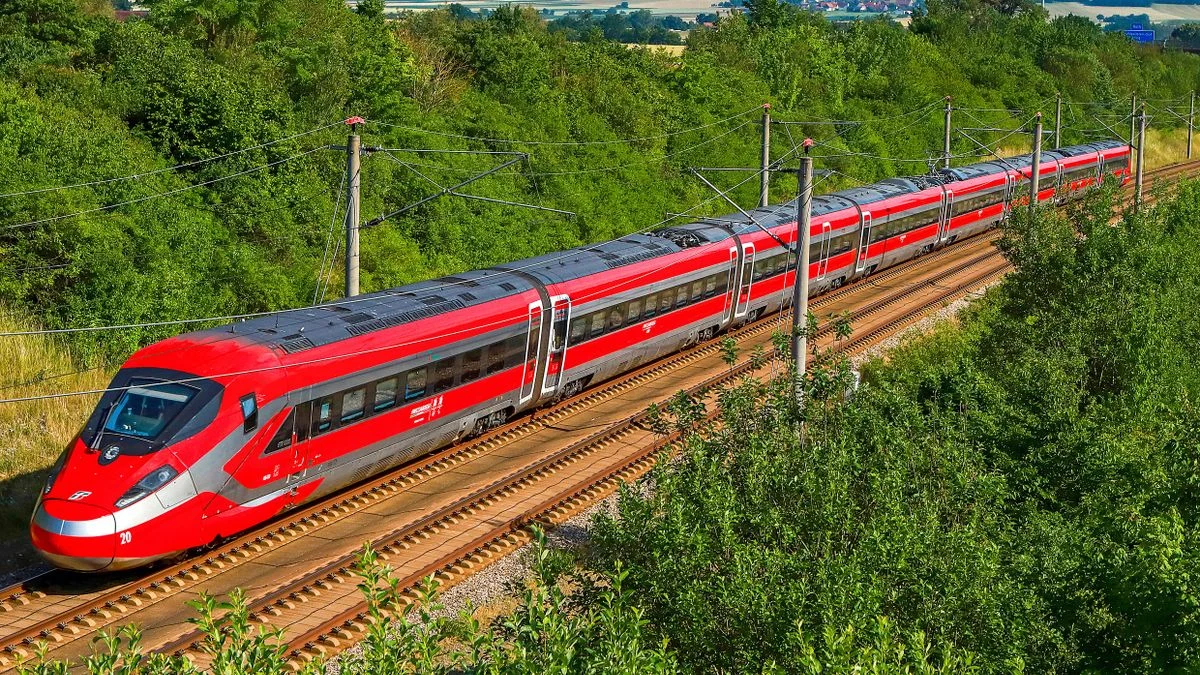
Introduction: A Mediterranean Breeze in the German Rail Desert
For decades, the Deutsche Bahn (DB) has been synonymous with a specific set of experiences for the German traveler: signal failures, mysterious delays, and the perennial "wagon sequence" lottery. In stark contrast, Italy’s high-speed rail operator, Trenitalia, has transformed from a struggling national carrier into a benchmark of efficiency, punctuality, and customer-centric service.
With the introduction of the Frecciarossa (Red Arrow) into the German rail network—specifically connecting Milan to Munich—a pivotal question arises: Is this the dawn of a new, competitive era for European rail travel, or merely a decorative addition to an already crumbling infrastructure? As the train glides across the Alps, it carries with it the aspirations of commuters weary of domestic stagnation.
Main Facts: The Anatomy of the Frecciarossa Expansion
The Frecciarossa represents the pinnacle of Italian engineering and operational strategy. Unlike the traditional, often utilitarian aesthetic of German InterCity Express (ICE) trains, the Italian counterparts are built for speed and luxury.
- The Route: The service currently bridges Milan and Munich, serving as a vital artery for international business and tourism.
- Operational Philosophy: While DB operates on a hub-and-spoke model often paralyzed by nodal congestion, Trenitalia’s high-speed lines in Italy were built as dedicated, high-capacity corridors, largely shielded from the delays of regional traffic.
- The Experience: The Frecciarossa offers four levels of service: Executive, Business, Premium, and Standard. Even in Standard, the amenities often surpass the average German second-class experience, featuring leather seating, integrated power sockets, and a sophisticated onboard catering system.
- The Integration: The trains are currently operating under a test-bed framework, navigating the complex regulatory requirements of the EBA (Eisenbahn-Bundesamt) and the specific technical constraints of the German track network.
Chronology: From Mediterranean Success to Northern Testing
The journey of the Frecciarossa into Germany is not an overnight occurrence but the result of a multi-year strategy by the Ferrovie dello Stato Italiane (FS) group.
- 2020-2021: FS Group announces its intention to challenge incumbent operators across Europe, viewing the liberalization of the rail market as a primary growth vector.
- 2022: The first technical trials for the ETR 1000—the flagship trainset—commence in Germany. Engineers focus on cross-border signaling compatibility and the unique power supply requirements of the German grid.
- 2023: Initial cross-border services begin, primarily focusing on the Brenner Pass route. This period serves as a stress test for logistics and passenger demand.
- 2024: The "Testbetrieb" (test operation) phase moves into high gear. Public scrutiny increases as German passengers compare the reliability of these arrivals against the backdrop of domestic DB service failures.
- Present Day: The integration is in a critical evaluation phase. Data is being collected on energy efficiency, maintenance costs in German depots, and, most importantly, passenger satisfaction levels.
Supporting Data: Why Italy Wins the Punctuality War
To understand the "Frecciarossa effect," one must look at the performance gap. While DB’s long-distance punctuality often hovers in the low 60-70 percent range during peak operational crises, Trenitalia’s high-speed services frequently maintain punctuality rates exceeding 90 percent.
- Dedicated Infrastructure: Italy invested billions in the Direttissima lines—tracks dedicated exclusively to high-speed trains. Germany, by contrast, continues to mix high-speed ICE trains with slow-moving freight and regional commuter traffic on the same tracks.
- Maintenance Cycles: The ETR 1000 fleet benefits from advanced predictive maintenance software that monitors train health in real-time, reducing the "surprise" breakdowns that plague the aging ICE-1 and ICE-2 fleets.
- Cost-Benefit Analysis: While the Frecciarossa ticket prices are competitive, the operational cost per kilometer is kept low by high utilization rates. The Italian model proves that premium services do not necessarily require exorbitant pricing if the operational flow is consistent.
Official Responses and Stakeholder Perspectives
The entry of a foreign state-owned operator into the German market has elicited mixed reactions from the political and corporate establishment.
The Deutsche Bahn Position
Deutsche Bahn has publicly maintained a posture of "healthy competition," though internally, sources suggest significant pressure. The DB management has been forced to defend its own investment strategies, focusing on the "Starke Schiene" (Strong Rail) program. However, the presence of the Frecciarossa serves as a constant, inconvenient reminder of what the competition is achieving with similar (or often fewer) resources.
The Italian Perspective
Trenitalia executives argue that the liberalization of the European rail market is the only way to meet climate goals. By offering a viable, high-quality alternative to short-haul flights and car travel, the Frecciarossa is not just competing with DB—it is competing with the automobile and the airline industry for the "soul" of the European traveler.
Government and Regulatory View
The German Ministry of Transport (BMDV) has welcomed the increase in rail capacity but remains cautious. The primary hurdle remains the "interoperability" of the European rail network. Bureaucratic friction, such as language requirements for drivers and differing safety certifications, continues to be a bottleneck for the Italian expansion.
Implications: The Future of German Rail
What does the Frecciarossa mean for the average German commuter? The implications are three-fold:
1. Competitive Pressure on DB
The presence of a high-performance competitor is the most effective medicine for a stagnant incumbent. If DB loses market share on lucrative routes to international operators, the political mandate for reform—which has been stalled for years—will become unavoidable.
2. The Standardization of "Quality"
German passengers are beginning to redefine their expectations. If one can travel from Milan to Munich in a train that is clean, quiet, and consistently on time, the excuses of "infrastructure works" and "weather conditions" offered by DB start to lose their resonance. The Frecciarossa is setting a new benchmark for what a premium rail experience should look like.
3. European Integration
Beyond the logistics, this represents the "Europeanization" of rail. For too long, national rail operators functioned as protected silos. The Frecciarossa signifies a shift toward a single, seamless European rail space where the flag on the side of the train matters less than the speed and reliability of the service.
Conclusion: A Lesson in Mobility
The test operation of the Frecciarossa on German tracks is more than just a logistical exercise; it is a cultural audit of the German transport system. The Italians have shown that rail travel can be elegant, efficient, and profitable without sacrificing public service.
As Germany grapples with its own modernization efforts—the massive digitalization of signaling systems and the refurbishment of core nodes—the Frecciarossa serves as both a catalyst for change and a mirror. If the Italian operator can succeed where domestic incumbents struggle, the message to Berlin is clear: The problem is not the rail itself, but the management and the mindset governing its operation.
Whether this leads to a permanent shift in the German rail landscape or remains a niche, premium alternative, one thing is certain: the era of the isolated national railway is coming to an end. The Red Arrow has arrived, and it has brought with it the uncomfortable, yet necessary, truth that Germany’s rail future depends on its ability to adapt, compete, and finally, deliver.
Disclaimer: This analysis is for informational purposes and reflects the current state of the rail sector in Europe as of mid-2024. For real-time updates on ticket pricing, route availability, and operational status of the Frecciarossa in Germany, travelers are advised to check official carrier portals.