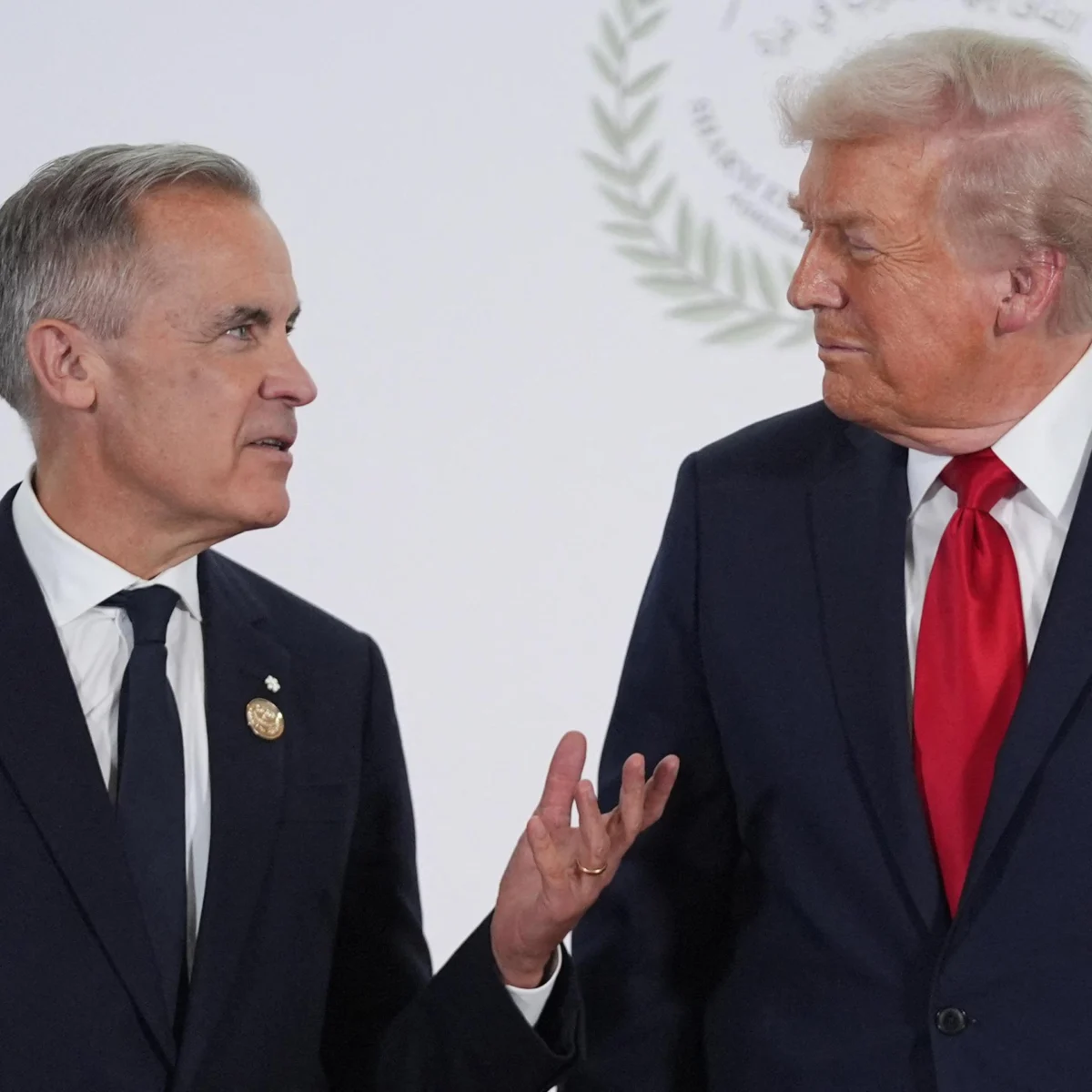
Washington D.C., October 24, 2026 – The United States government has announced a significant, albeit partial, rollback of tariffs previously imposed on a range of products originating from Canada. The move, coming amidst escalating domestic pressure and the shadow of upcoming elections, offers a glimmer of relief for specific American industries and consumers, particularly those in border states heavily reliant on cross-border trade. However, the broader, entrenched trade dispute between the two North American allies remains unresolved, casting a long shadow over bilateral relations.
The decision to lift duties on certain Canadian goods, particularly those vital for the agricultural sector, was confirmed today, marking a notable shift in the Trump administration’s protectionist trade stance. Senator Susan Collins, a prominent Republican from Maine, a state sharing an extensive border with Canada, spearheaded the successful lobbying effort. She declared that her persistent advocacy had secured crucial tariff exemptions for agricultural products, acknowledging the profound economic distress these levies had inflicted upon her constituents and the wider farming community.
This latest development underscores the intricate interplay of economic pressures, domestic politics, and international trade policy. While the partial repeal offers a temporary respite, it does little to mend the fundamental disagreements that ignited the trade conflict, leaving both nations grappling with the unpredictable ramifications of a continued economic standoff.
Chronology of a Contentious Trade Relationship
The trade relationship between the United States and Canada, often hailed as one of the most robust and interdependent in the world, has been subject to increasing strain over recent years, culminating in a series of tit-for-tat tariffs. The current dispute, characterized by its aggressive posture from Washington, represents a significant departure from decades of relatively seamless economic integration.
Historical Context: NAFTA to USMCA
For nearly three decades, the North American Free Trade Agreement (NAFTA) served as the bedrock of economic relations between the US, Canada, and Mexico. While imperfect, NAFTA fostered an intricate web of supply chains, particularly in the automotive, manufacturing, and agricultural sectors, creating a deeply integrated continental economy. However, from the outset of his first presidency, Donald Trump vehemently criticized NAFTA, labeling it a "disaster" and blaming it for American job losses and trade deficits.
His administration initiated a contentious renegotiation process, culminating in the United States-Mexico-Canada Agreement (USMCA), which came into effect in 2020. While USMCA preserved much of the original agreement, it introduced new rules, particularly for automotive content, and addressed areas like digital trade and labor standards. Despite the new agreement, the underlying protectionist philosophy of the Trump administration persisted, laying the groundwork for subsequent unilateral tariff actions that would bypass the dispute resolution mechanisms of USMCA.
The Genesis of Trump’s Tariffs
The seeds of the current trade war were sown long before the most recent round of tariffs. President Trump’s "America First" agenda prioritized domestic production and aimed to reduce perceived trade imbalances, often through the imposition of tariffs. His administration frequently invoked Section 232 of the Trade Expansion Act of 1962, citing national security concerns, to justify tariffs on imported steel and aluminum from numerous countries, including Canada.
Canada, a steadfast ally and a primary source of steel and aluminum for US industries, found itself caught in the crosshairs. While initially granted exemptions, these were later revoked, prompting outrage and immediate retaliation from Ottawa. This initial skirmish set a dangerous precedent, demonstrating Washington’s willingness to use broad tariff powers against its closest partners, even over goods deemed critical for mutual economic prosperity.
Escalation and Retaliation
The current phase of the trade conflict escalated dramatically in March of the current year (2026), when President Trump announced sweeping new tariffs, some as high as 25 percent, on a wide array of Canadian goods. These duties, which later saw increases to as much as 50 percent on specific product categories, targeted key sectors of the Canadian economy. While the White House cited various justifications, including perceived unfair trade practices and the need to protect American industries, critics argued the measures were largely punitive and economically disruptive.
Canada’s response was swift and resolute. Under the leadership of Prime Minister Mark Carney, Ottawa immediately announced proportionate retaliatory tariffs on US imports, mirroring the value and scope of the American levies. This tit-for-tat approach, characteristic of modern trade disputes, aimed to exert reciprocal pressure on American industries and political constituencies, thereby demonstrating Canada’s unwillingness to concede to what it viewed as unwarranted protectionism. The retaliatory tariffs primarily targeted products from states critical to the US presidential election cycle, including agricultural goods, consumer products, and manufactured items, intensifying the political stakes.
Mounting Domestic Pressure
The economic fallout from these tariffs quickly became apparent on both sides of the border. In the United States, industries reliant on Canadian inputs faced soaring costs, supply chain disruptions, and reduced competitiveness. Farmers, manufacturers, and consumers began to feel the pinch of higher prices and limited choices. This growing economic pain translated into mounting political pressure on the Trump administration.
Republicans in states bordering Canada, in particular, found themselves in a precarious position. Their constituents, deeply integrated into cross-border trade networks, were among the hardest hit. Senator Susan Collins of Maine emerged as a vocal critic of the tariffs, relentlessly advocating for exemptions for her state’s vital agricultural sector. Her efforts were representative of a broader discontent among Republican lawmakers who recognized the tariffs as a significant burden, especially as the country approached the 2026 midterm elections. The narrative of "America First" was increasingly clashing with the economic realities faced by specific American communities, forcing a reassessment of the tariff strategy.
Supporting Data and Economic Impact
The economic relationship between the United States and Canada is not merely significant; it is foundational to the prosperity of both nations. Any disruption, particularly through broad-based tariffs, carries substantial economic consequences that ripple through numerous sectors.
Bilateral Trade Significance
The United States and Canada share the world’s largest bilateral trading relationship, with hundreds of billions of dollars in goods and services crossing the border annually. In 2025, total two-way trade in goods and services exceeded an estimated $800 billion USD, supporting millions of jobs in both countries. This extensive integration means that economic policies in one nation invariably affect the other, creating a shared economic destiny.
Cross-border supply chains are incredibly complex and efficient, optimized over decades to leverage regional strengths. For instance, components for a single automobile might cross the border multiple times before the final product is assembled. Tariffs disrupt this efficiency, adding costs and administrative burdens at every stage, ultimately making products more expensive for consumers or less competitive for businesses.
Impact on Key Sectors
The imposition of tariffs had a disproportionate impact on several key sectors, creating winners and losers, but largely leading to overall economic drag.
- Agriculture: This sector was particularly vulnerable. US farmers faced higher costs for essential Canadian inputs such as fertilizers, peat moss for nurseries, and certain animal feeds. Simultaneously, Canadian agricultural producers, including dairy, poultry, and specialty crop farmers, saw their access to the lucrative US market constrained by punitive tariffs, leading to reduced export volumes and lower prices for their goods. Senator Collins’ focus on agricultural exemptions directly addresses this critical pain point, recognizing the existential threat tariffs posed to many family farms in her region.
- Manufacturing: Manufacturers on both sides of the border experienced significant disruption. American factories using Canadian steel, aluminum, or timber faced increased raw material costs, forcing them to either absorb these costs, pass them on to consumers, or seek more expensive, less efficient alternative suppliers. Canadian manufacturers, conversely, found it harder to compete in the US market due to added tariffs, leading to scaled-back production and, in some cases, layoffs. The integrated nature of the North American manufacturing base meant that a tariff on one side often hurt industries on the other.
- Consumers: Ultimately, consumers bore the brunt of the trade war through higher prices. Whether it was imported Canadian lumber making new homes more expensive, or US-made goods facing Canadian retaliatory tariffs, the cost of living saw upward pressure. Reduced competition due to tariffs also limited consumer choice and could stifle innovation as businesses focused on navigating trade barriers rather than developing new products.
- Job Market: While the administration argued tariffs would protect American jobs, the reality was often more complex. Industries dependent on affordable imports or export markets saw job losses as businesses struggled to remain profitable. For example, a furniture manufacturer in Michigan relying on Canadian timber might have to cut jobs if timber costs became prohibitive, or a Canadian auto parts supplier might downsize if US demand dropped due to tariffs.
Specific Examples
Consider the lobster industry in Maine, which Senator Collins heavily represents. While Maine is famous for its lobsters, the processing infrastructure often relies on Canadian workers and supplies, and vice-versa, with Canadian processors handling Maine catches and American distributors selling Canadian products. Tariffs on seafood or related processing equipment could create immense pressure on an already competitive industry. Similarly, the tariffs on Canadian steel and aluminum impacted US auto parts manufacturers, increasing the cost of production for vehicles assembled in the US, potentially making them less competitive globally. These real-world impacts fueled the domestic political opposition that eventually pressured the White House.
Official Responses and Political Maneuvering
The decision to partially lift tariffs is a testament to the powerful confluence of economic hardship and political expediency, eliciting a spectrum of reactions from Washington and Ottawa.
Senator Collins’ Statement
Senator Susan Collins (R-Maine), a long-standing advocate for free trade and a vocal critic of the tariffs, hailed the decision as a crucial victory for her state and for American agriculture. "I have worked tirelessly to highlight the devastating impact these tariffs have had on Maine’s farmers, foresters, and agricultural processors," Senator Collins stated in a press release. "These exemptions for vital agricultural products will provide much-needed relief, lowering input costs for our farmers and ensuring they can continue to compete effectively. While this is a welcome step, I will continue to push for the full elimination of all tariffs that harm our economy and undermine our strong relationship with Canada." Her success underscores the influence of targeted, persistent lobbying from members of Congress who can articulate the direct economic consequences of trade policy on their constituents.
Broader Republican Opposition
Senator Collins was not alone in her opposition. Numerous Republican lawmakers, particularly those from states sharing a border with Canada or with significant export-oriented industries, had voiced strong objections to the tariffs. Their arguments often centered on economic pragmatism:
- Economic Harm: Tariffs were seen as a tax on American consumers and businesses, raising costs and reducing competitiveness.
- Electoral Vulnerability: With the 2026 midterm elections looming, incumbents were increasingly concerned about voter backlash from economically distressed constituents. The tariffs became a potent campaign issue for opponents.
- Ideological Principles: Many Republicans traditionally favor free markets and open trade, viewing protectionism as antithetical to conservative economic principles. While supporting the President, they struggled to reconcile his tariff policy with their long-held beliefs.
Governors and state legislatures in states like Michigan, New York, and Vermont had also publicly called for a de-escalation of the trade dispute, highlighting the adverse effects on their local economies. This broad-based Republican dissent made the tariffs politically unsustainable in their original form.
White House/Trump Administration Stance
The White House, while announcing the partial tariff repeal, sought to frame the decision not as a concession but as a flexible adjustment aimed at optimizing American economic interests. A statement from the Office of the United States Trade Representative (USTR) emphasized the administration’s ongoing commitment to "leveling the playing field" for American workers and businesses. "The President’s trade policies are designed to ensure fair and reciprocal trade," the statement read. "These targeted adjustments demonstrate our willingness to adapt strategies to achieve optimal outcomes for the American people, while continuing to address unfair trade practices where they persist."
This carefully worded explanation allowed the administration to claim both steadfastness in its "America First" agenda and responsiveness to domestic economic concerns, without fully abandoning its protectionist posture. The partial nature of the relief was key to maintaining this narrative, signaling that while some adjustments were made, the fundamental stance against certain Canadian imports and the broader trade dispute remained.
Canadian Reaction
In Ottawa, the reaction from Prime Minister Mark Carney’s government was cautiously optimistic. While welcoming the relief for specific sectors, Canadian officials reiterated their call for a complete removal of all tariffs. "We view this as a positive step, and we acknowledge the efforts of those in the United States who understand the mutual benefits of free and fair trade," stated Chrystia Freeland, Canada’s Deputy Prime Minister and Minister of Finance. "However, our position remains clear: all tariffs imposed on Canadian goods are unwarranted and detrimental to both our economies. We will continue to advocate for their full repeal and will maintain our own retaliatory measures until a comprehensive resolution is achieved."
The Canadian government has consistently maintained that its tariffs are a defensive response to illegal US levies, designed to pressure Washington into compliance with international trade rules. While the partial relief might reduce some immediate pressure, it does not alter Canada’s fundamental demand for a return to pre-dispute trade conditions.
Industry and Lobby Group Reactions
Industry associations on both sides of the border offered mixed reactions. The American Farm Bureau Federation expressed relief for the agricultural sector but urged further action. "Our farmers have borne the brunt of these trade wars for too long," said a spokesperson. "While we applaud the efforts to exempt critical agricultural inputs, the uncertainty of ongoing tariffs continues to weigh heavily on our members. We need a stable, predictable trade environment."
Similarly, Canadian industry groups welcomed the specific exemptions but highlighted the broader challenges. "Any step towards de-escalation is good news," commented the Canadian Manufacturers & Exporters association. "However, until all tariffs are removed, Canadian businesses face significant disadvantages, and the future of cross-border investment remains uncertain." These reactions underscore the complexity of the situation: a partial victory for some, but persistent anxiety for many.
Implications and Future Outlook
The partial lifting of tariffs represents a tactical adjustment in a larger strategic trade conflict. While providing some immediate relief, it does not signify an end to the underlying tensions or the profound implications for both economies and their political landscapes.
Economic Implications
- Supply Chain Stability: The exemptions will bring some stability to specific cross-border supply chains, particularly in agriculture, allowing businesses to plan with slightly greater certainty regarding input costs. However, for industries still facing tariffs, such as certain manufactured goods or resources, the uncertainty persists, leading to continued reluctance for long-term investments that span the border.
- Consumer Prices: Consumers in the US might see a slight moderation in prices for specific goods that were previously subjected to tariffs, especially agricultural products and items using those as inputs. Conversely, Canadian consumers might experience similar relief on US goods that had been subject to Canadian retaliatory tariffs, assuming Ottawa adjusts its own measures in response to the US action.
- Investment Climate: The lingering presence of tariffs, even if reduced, continues to deter foreign direct investment (FDI) in both countries, particularly for businesses that rely on integrated North American supply chains. Investors seek predictability, and the ongoing threat of unilateral trade actions undermines that confidence, potentially diverting capital to more stable regions.
Political Implications
- Midterm Elections 2026: The timing of this partial tariff relief is undeniably linked to the political calendar. For Republican lawmakers in border states, securing these exemptions provides a tangible win to present to their constituents ahead of the 2026 midterm elections. It allows them to demonstrate effectiveness in advocating for local interests, potentially mitigating voter frustration over the broader economic impact of the tariffs. For the Trump administration, it offers a narrative of responsiveness and strategic flexibility without fully abandoning its core "America First" platform.
- Bilateral Relations: While a step towards de-escalation, the partial relief does not fundamentally alter the strained bilateral relationship. The trust eroded by the imposition of tariffs under national security pretexts, and the subsequent tit-for-tat exchanges, will take considerable time and consistent effort to rebuild. The episode highlights a shift in the perceived reliability of the US as a trading partner, even for its closest allies.
- Global Trade Policy: The ongoing US-Canada trade dispute, even in its partially resolved form, continues to send a powerful signal to the global community. It reinforces the trend of increasing protectionism and the weaponization of trade policy for political ends. This could encourage other nations to adopt similar unilateral measures, further fragmenting the global trading system and undermining multilateral institutions like the WTO.
Path Forward
The path forward for a full resolution of the US-Canada trade conflict remains highly uncertain. As the original report noted, "an agreement in the trade conflict is currently not in sight." Several factors contribute to this intractable situation:
- Fundamental Disagreements: The core philosophies guiding the trade policies of the two nations are at odds. The Trump administration’s emphasis on managed trade, bilateral balances, and domestic protection clashes with Canada’s traditional advocacy for rules-based multilateral trade and open markets.
- Election Cycle Influence: With an active political cycle, both governments may be hesitant to make significant concessions that could be perceived as weakness by their domestic audiences. The upcoming US elections, in particular, will heavily influence the administration’s willingness to make further compromises.
- Precedent Setting: Both sides are wary of setting precedents. The US does not want to signal that political pressure can easily undo its tariff actions, while Canada wants to ensure that unilateral US actions are met with firm and proportionate responses.
Future negotiations, if they occur, would likely be protracted and complex, touching upon a wide range of issues from agriculture and manufacturing to energy and digital trade. The current partial relief offers a temporary pause, but the underlying tensions and the potential for renewed escalation persist.
In conclusion, the US government’s decision to lift tariffs on certain Canadian products, particularly those critical for agriculture, marks a nuanced moment in an ongoing and acrimonious trade dispute. Driven by intense domestic political pressure and the economic realities faced by American industries, this move offers a limited respite. However, it falls short of a comprehensive resolution, leaving both the US and Canada in a state of continued economic and political uncertainty as they navigate the complex landscape of their intertwined future.
This news report was originally broadcast on Deutschlandfunk on October 24, 2026.