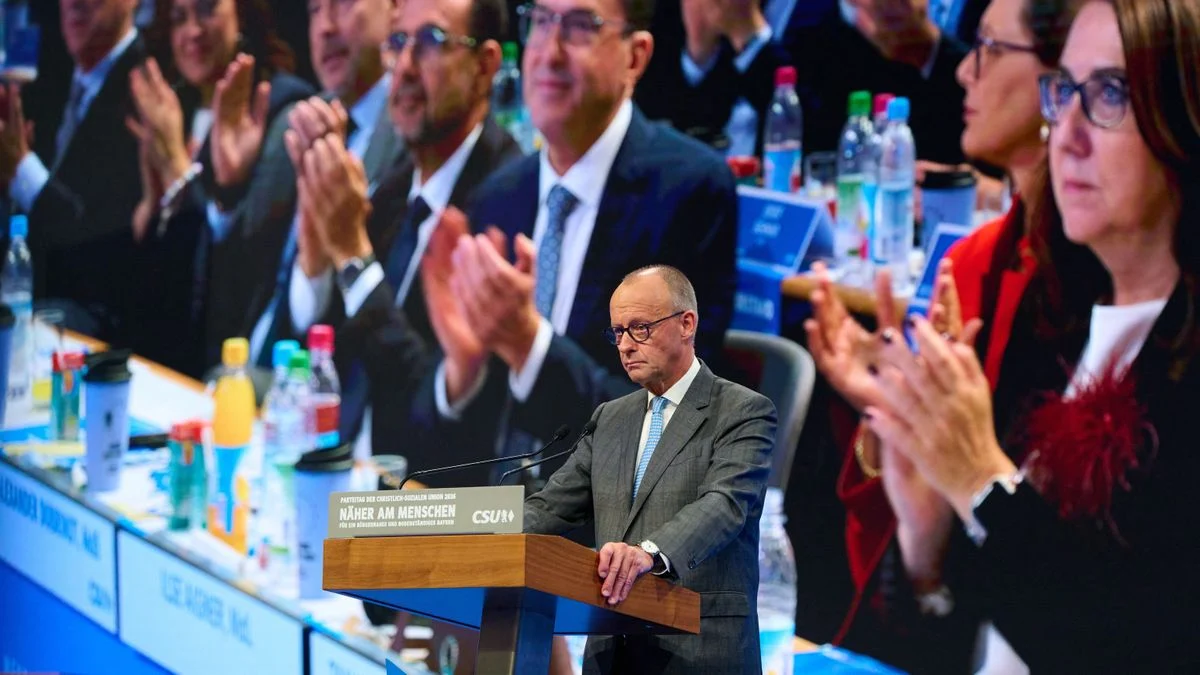
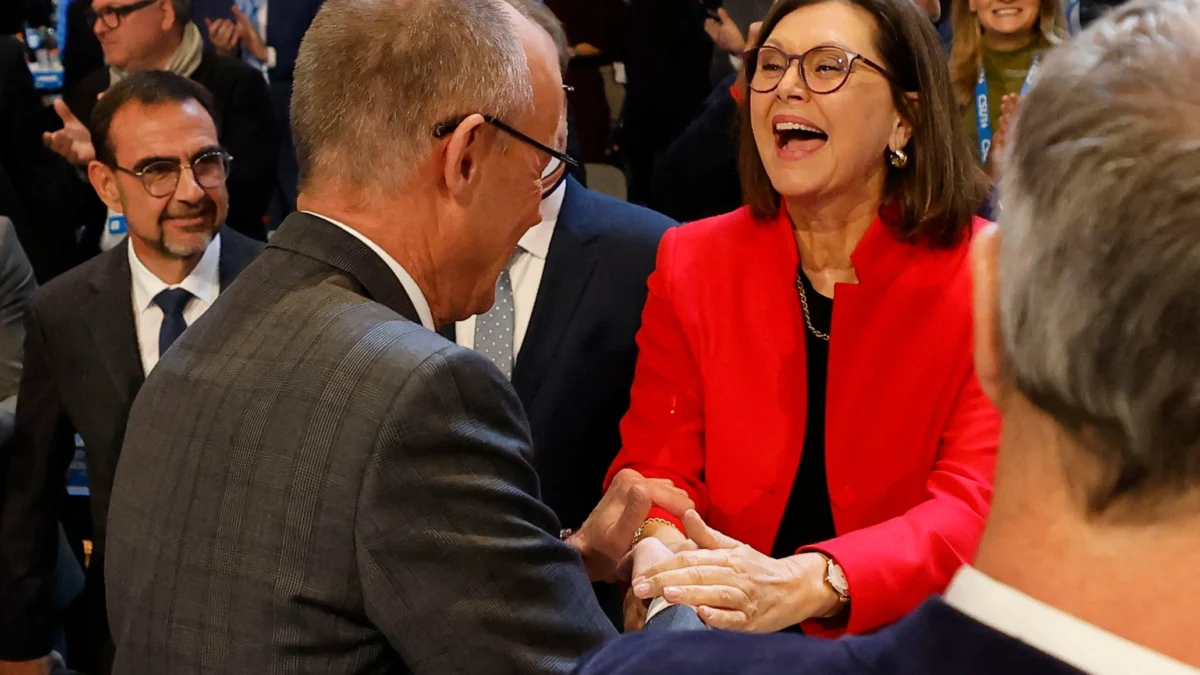
Munich, Germany – October 24, 2026 – Federal Chancellor and CDU Chairman Friedrich Merz delivered a powerful address at the CSU party conference in Munich today, issuing a fervent call for unprecedented unity between the sister parties, the Christian Democratic Union (CDU) and the Christian Social Union (CSU). Beyond his stern warnings against the rise of political extremism, Merz’s speech was particularly notable for a deeply symbolic gesture: a public and emphatic acknowledgement of Bavarian State Parliament President Ilse Aigner, a move that ignited a standing ovation from delegates and is widely interpreted as a significant endorsement for her potential candidacy for the federal presidency.
Merz’s appearance at the annual gathering of Bavaria’s dominant party underscored the critical need for a cohesive conservative front in Germany’s increasingly fragmented political landscape. His words resonated with an audience keen to see the Union parties present a united and strong alternative to the current challenges facing the nation. The moment involving Ilse Aigner, however, transcended the usual pleasantries, injecting an electrifying dynamic into the ongoing debate about who will succeed President Frank-Walter Steinmeier.
Main Facts: A Dual Message of Cohesion and Endorsement
Chancellor Merz’s speech at the CSU party conference was meticulously crafted, delivering a two-pronged message designed to solidify the Union’s position and project strength.
Firstly, he unequivocally demanded "maximum unity" from both CDU and CSU, stressing that the parties "must stand closer together than ever." This call was framed within the context of combating "extremists" from both the far-right and far-left, whom Merz accused of actively undermining the democratic fabric of Germany. His rhetoric aimed to galvanize the moderate conservative base and reassure voters that the Union is prepared to defend core democratic values against divisive forces.
Secondly, and perhaps more consequentially, Merz delivered a striking and unexpected nod to Ilse Aigner, Bavaria’s respected State Parliament President. By greeting her by name, immediately following CSU Chairman Markus Söder and before other prominent figures like European People’s Party leader Manfred Weber, Merz elevated Aigner’s profile significantly. The spontaneous, thunderous applause and standing ovation from the CSU delegates confirmed the profound impact of this gesture, instantly positioning it as a powerful signal in the race for the next federal president. This public acknowledgement from the CDU Chancellor, after months of careful silence on the succession question, has effectively shifted the narrative, giving Aigner’s potential candidacy a formidable boost.
Chronology: A Carefully Orchestrated Address
The events of Merz’s speech unfolded with a precision that belied the spontaneous reaction it elicited.
Arrival and Initial Anticipation (Morning):
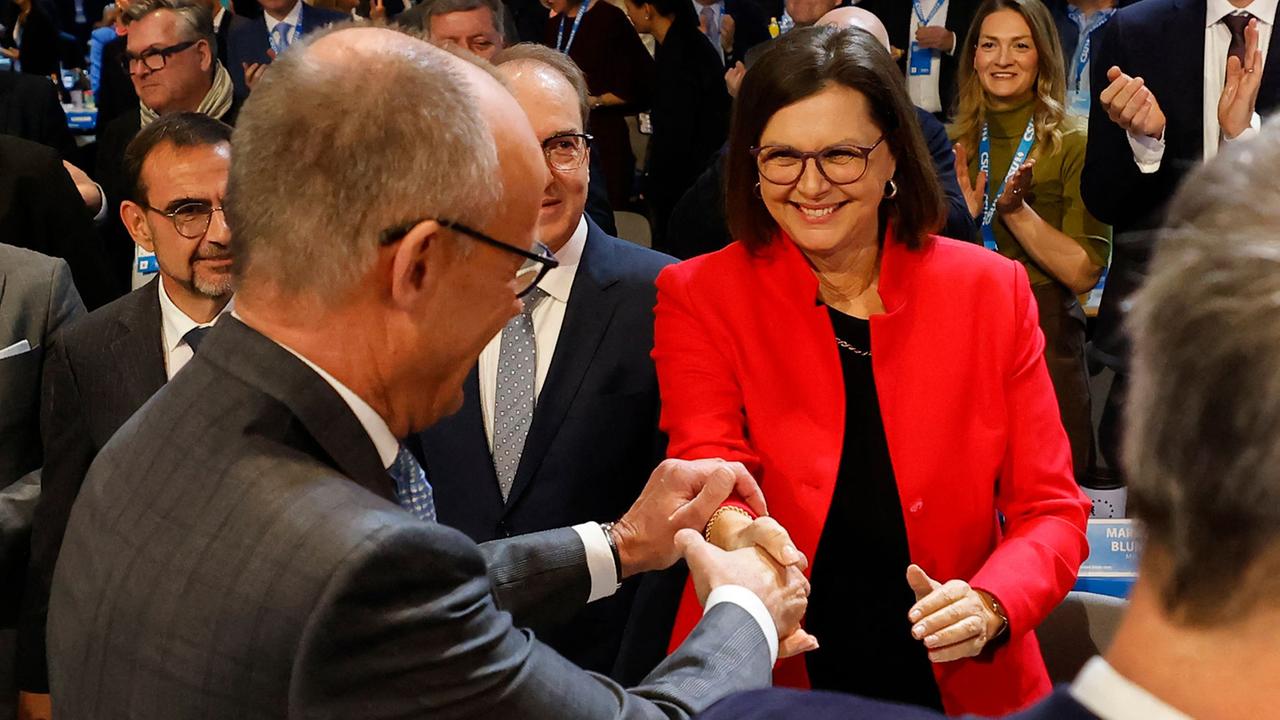
Chancellor Merz arrived at the CSU party conference in Munich amidst a palpable sense of anticipation. His visit, as the leader of the sister party and the nation’s Chancellor, is always a significant event, but this year, the looming question of the federal presidency added an extra layer of intrigue. Photographers captured him shaking hands with Ilse Aigner upon his arrival, a seemingly innocuous moment that, in retrospect, foreshadowed the day’s key development.
Merz Takes the Podium (Early Afternoon):
Shortly after 13:00 Uhr, Merz took to the stage, following CSU Chairman Markus Söder’s opening remarks. The atmosphere in the hall was charged, with delegates eager to hear the Chancellor’s vision for the future of the Union and the country.
The Unity Mandate (First Half of Speech):
Merz commenced his address by emphasizing the shared heritage and future of the CDU and CSU. He invoked historical moments of cooperation and reminded delegates of the parties’ collective responsibility for Germany’s stability and prosperity. "CDU and CSU must stand closer together than ever," he declared, his voice resonating with conviction. He painted a picture of a nation under siege from political fringes, warning that the Union would "not surrender Germany" to these "extremists" from both ends of the political spectrum. This segment of his speech was met with solid, appreciative applause, reflecting the delegates’ shared concern over rising polarization.
Highlighting Söder’s Role:
Merz then pivoted to acknowledge his personal and professional relationship with CSU leader Markus Söder. He praised Söder as "the strong voice" for the CSU, not only in Bavaria but also nationally. He spoke of a "good collaboration" and a "deeply felt sense of responsibility" that united them. This public affirmation of Söder’s leadership and their cooperative spirit served to reinforce the message of intra-Union harmony, crucial after periods of historical friction between the two leaders.
The Pivotal Aigner Moment (Mid-Speech):
The most striking moment of the speech occurred when Merz moved beyond Söder to extend greetings to other prominent figures present. After Söder, he paused, then deliberately and clearly named Bavarian State Parliament President Ilse Aigner. The effect was instantaneous and electrifying. A wave of applause and cheers erupted from the delegates, quickly escalating into a sustained standing ovation. Many delegates rose from their seats, turning towards Aigner to acknowledge her with enthusiastic acclaim. The Chancellor had, with a single, strategically placed name, offered a powerful, unspoken endorsement.
Concluding Remarks (Latter Half of Speech):
Following the Aigner interlude, Merz continued with his broader policy points, but the energy in the hall had visibly shifted. The Aigner moment had become the undeniable focal point, overshadowing other policy discussions. He reiterated calls for economic strength, security, and a robust European stance, all framed within the imperative of Union unity.
Post-Speech Reaction:
Upon the conclusion of his address, Merz received a warm send-off, but the buzz among delegates was almost entirely focused on the Aigner gesture. Journalists immediately began dissecting the implications of his carefully chosen words and the delegates’ emphatic reaction.
Supporting Data: Contextualizing the Union’s Dynamics and the Presidential Race
The political landscape in which Merz delivered his speech provides essential context for understanding its significance.
CDU and CSU: A Complex Partnership:
The CDU and CSU are often referred to as "sister parties," forming a single parliamentary group in the Bundestag. This unique arrangement is predicated on the CSU operating exclusively in Bavaria, while the CDU operates in the other 15 German states. Historically, their relationship has been characterized by both deep cooperation and periodic, sometimes intense, rivalries. Disagreements over policy, leadership bids, and strategic direction have occasionally led to public spats, threatening the cohesion of the conservative bloc. Merz’s strong emphasis on unity, therefore, is not merely rhetorical; it is a recognition of the fundamental necessity of their alliance for electoral success and governmental stability. The warning against "extremists" also highlights a shared concern about the erosion of traditional party support, particularly from the far-right Alternative for Germany (AfD).
The Role of the Federal President:
Germany’s Federal President is largely a ceremonial head of state, embodying the nation’s unity and moral authority. While possessing limited executive powers, the President plays a crucial role in representing Germany internationally, mediating political crises, and serving as a conscience for the nation. The office is highly respected, and the selection of a new President is a moment of significant national reflection and political maneuvering. The incumbent, Frank-Walter Steinmeier, a Social Democrat, is completing his second and final term in March.
The Federal Assembly:
The decision on the next Federal President rests with the Federal Assembly (Bundesversammlung), a unique constitutional body that convenes specifically for this purpose. It comprises all 736 members of the Bundestag (the federal parliament) and an equal number of delegates elected by the 16 state parliaments, proportionally representing the political strengths within those states. This broad composition means that a candidate requires broad consensus, often necessitating cross-party support, especially in the absence of a clear majority for any single bloc. The election is scheduled for January 30, 2027.
Ilse Aigner’s Profile:
Ilse Aigner (61) is a veteran politician with a distinguished career. She has served as a Federal Minister (of Food, Agriculture, and Consumer Protection), a Member of the Bundestag, and has held various ministerial portfolios in the Bavarian state government before becoming President of the Bavarian State Parliament (Landtagspräsidentin) in 2018. Her political style is characterized by pragmatism, a down-to-earth demeanor, and a strong connection to her Bavarian roots. She is well-regarded across party lines in Bavaria and has consistently high approval ratings. Her gender would also make her the first female Federal President of Germany, a historic milestone that many, including Söder, have championed.
Markus Söder’s Advocacy:
CSU Chairman Markus Söder has been a vocal proponent of Aigner’s candidacy for the federal presidency for some time. In his own speech at the party conference the day prior, he reiterated his strong support, publicly advocating for her as the ideal successor to Steinmeier. Söder’s consistent backing has set the stage for Aigner’s potential bid, but the missing piece had been a clear signal from the CDU leadership, particularly from Chancellor Merz.
Official Responses: A Unified Front Emerges
The reactions to Merz’s speech, particularly the Aigner moment, were immediate and telling.
Merz’s Calculated Silence Ends:
Prior to his Munich address, Chancellor Merz had maintained a deliberate public silence regarding the presidential succession. This reticence was widely noted, leading to speculation about his preferred candidate or his strategy for the upcoming Federal Assembly. His explicit greeting of Aigner, strategically placed and delivered with emphasis, was therefore not a casual remark but a carefully calculated signal. While not an outright declaration of support, the context and the delegates’ reaction elevated it to a de facto endorsement from the highest echelon of the CDU. This move indicates a willingness by Merz to align with the CSU’s preferred candidate, signaling a desire for inter-party harmony on this crucial national appointment.
CSU Delegates’ Enthusiastic Acclaim:
The standing ovation and thunderous applause for Ilse Aigner, prompted by Merz’s mention, spoke volumes. It was an unscripted, visceral reaction that underscored the CSU’s deep desire to see one of their own, and specifically Aigner, ascend to the federal presidency. The delegates’ enthusiasm conveyed not only personal regard for Aigner but also a strong endorsement of Söder’s persistent advocacy for her. This unified display of support within the CSU sends a clear message to the broader political landscape about their commitment to Aigner’s potential candidacy.
Ilse Aigner’s Reaction (Implied):
While the article doesn’t explicitly state Aigner’s verbal response, her presence and the context imply that she would have acknowledged the applause graciously. The gesture from Merz, coupled with the delegates’ reaction, undoubtedly strengthens her position and provides significant momentum to her potential campaign.
Markus Söder’s Position Reinforced:
Merz’s speech, by acknowledging Aigner so prominently, implicitly validated Söder’s earlier calls. This moment reinforced Söder’s role as a key political player and a forceful advocate for Bavarian interests within the Union. The public display of "good collaboration" between Merz and Söder, culminating in the Aigner signal, suggests a thawing of any past tensions and a renewed commitment to a united front.
Implications: Reshaping the Presidential Race and Union Dynamics
The ripple effects of Chancellor Merz’s speech are expected to be far-reaching, significantly influencing both the presidential election and the future trajectory of the CDU-CSU alliance.
Boost for Ilse Aigner’s Candidacy:
Merz’s gesture is an undeniable boon for Ilse Aigner. While the CDU has refrained from officially naming a candidate, the Chancellor’s public recognition, amplified by the CSU’s enthusiastic response, effectively positions Aigner as the leading candidate for the Union bloc. This implicit endorsement from the most powerful figure in the CDU provides a crucial signal to potential wavering delegates in the Federal Assembly. It suggests that Aigner has significant cross-party appeal within the Union, making it much harder for other internal candidates to emerge or gain traction. For the first time, a clear path for a Union candidate to the federal presidency seems to be materializing.
Strengthening CDU-CSU Unity:
The entire speech, particularly the joint emphasis on fighting extremism and the harmonious moment involving Aigner, serves to reinforce the fragile but essential unity between the CDU and CSU. By aligning with the CSU’s preferred presidential candidate, Merz has made a significant overture that can mend past rifts and foster greater cooperation. A united front is critical for the Union’s electoral prospects in upcoming state and federal elections, especially in the face of strong challenges from both the far-right and, to a lesser extent, the far-left. This newfound cohesion could project an image of stability and shared purpose, appealing to centrist voters.
Shaping the Broader Presidential Race:
With the Union seemingly coalescing around Aigner, the dynamic of the broader presidential race will inevitably shift. Other parties will now have to factor in a strong, unified candidate from the center-right. While cross-party consensus is often sought for the largely ceremonial role of President, the Union’s unified stance might make it more difficult for other parties to push their own candidates without significant concessions or a broader coalition. This could lead to intense negotiations in the coming months as parties jockey for influence within the Federal Assembly. The prospect of Germany’s first female President will also add a unique dimension to the debate.
Merz’s Strategic Acumen:
Merz’s move is a testament to his strategic political acumen. By offering this tacit endorsement, he not only placates the CSU and strengthens Union unity but also positions himself as a unifying figure capable of bridging divides within the conservative family. This could enhance his own leadership standing within the CDU and across the political spectrum. It demonstrates a pragmatic approach to political power, prioritizing internal cohesion for broader political goals.
Challenges Ahead:
Despite the positive momentum, challenges remain. The Federal Assembly is a complex body, and securing an absolute majority still requires significant outreach and negotiation with other parties. While the Union’s united stance is powerful, they will likely need support from smaller parties or even segments of the current governing coalition to ensure Aigner’s election. Furthermore, the explicit warning against "extremists" underscores the ongoing battle for the soul of German politics, a fight that requires sustained unity and a clear vision from mainstream parties.
In conclusion, Chancellor Friedrich Merz’s appearance at the CSU party conference was more than a routine address. It was a carefully calibrated political maneuver that simultaneously strengthened the bedrock of the CDU-CSU alliance and significantly advanced Ilse Aigner’s prospects for the federal presidency. The standing ovation for Aigner marked a pivotal moment, signaling a new chapter of unity and strategic alignment within Germany’s conservative bloc as the nation looks towards choosing its next head of state. The coming months will reveal whether this powerful signal translates into a definitive victory in the Federal Assembly.