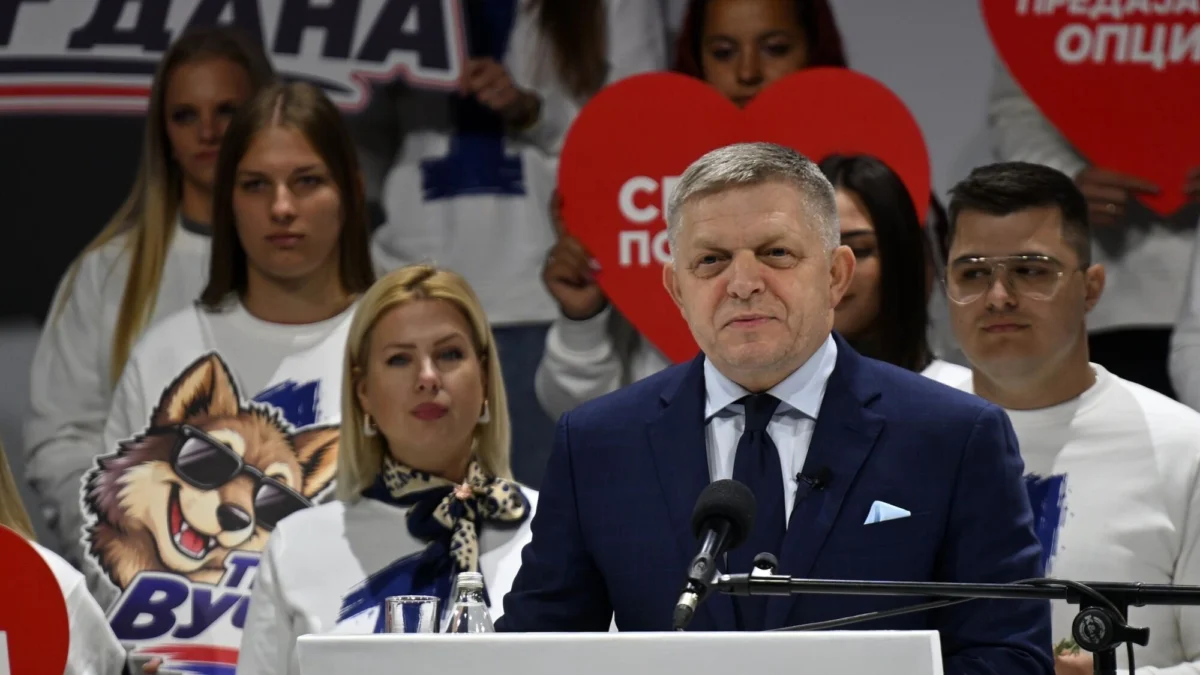
BRATISLAVA, Slovakia – November 26, 20XX – The recent regional and municipal elections in Slovakia, held this past Saturday, have concluded without major incidents, marking a significant democratic exercise across the EU and NATO member state. Voters cast their ballots to elect mayors and regional presidents, with the outcome widely viewed as a crucial "mood test" for the country’s political landscape, particularly ahead of the next parliamentary election, which must take place by autumn 2027.
The central question looming over the elections was the performance of the ruling coalition, led by the controversial left-populist Prime Minister Robert Fico, and how strongly the liberal and conservative-populist opposition parties would fare. While official results are anticipated on Sunday, initial indications from unofficial exit polls, particularly in the capital, Bratislava, suggest a complex and potentially fractured political picture.
A Crucial Barometer: Local Votes Reflect National Sentiment
Local elections, though focused on municipal and regional governance, often serve as vital indicators of broader political sentiment. In Slovakia, where political divisions have deepened in recent years, this particular ballot was no exception. Analysts and political observers keenly watched the results, seeking clues about public support for the current government’s policies and the momentum of the opposition. The stakes were high, as strong performances or significant setbacks at the local level can dramatically influence national campaign strategies, resource allocation, and overall morale leading up to the parliamentary polls.

The elections for mayors, municipal councils, regional governors, and regional assemblies directly impact the daily lives of Slovak citizens, from infrastructure development and public services to local economic policies. However, the shadow of national politics, particularly the policies and rhetoric emanating from Prime Minister Fico’s government, loomed large over many local campaigns. Candidates often found themselves having to navigate local concerns while also positioning themselves implicitly or explicitly against the backdrop of national political narratives.
The Political Landscape Under Fico’s Return
Robert Fico’s return to power in late 2023, heading a coalition comprising his Smer-SD party, Hlas-SD (Voice – Social Democracy), and the Slovak National Party (SNS), marked a significant shift in Slovakia’s political trajectory. Fico, a veteran politician known for his populist appeal and often confrontational stance towards the European Union and the West, has steered Slovakia towards a more nationalistic and, at times, pro-Russian foreign policy. His government’s agenda has included reforms to the justice system, particularly concerning the special prosecutor’s office, which has been criticized by opposition and international bodies as potentially undermining the rule of law and anti-corruption efforts.
The ruling coalition draws its primary support from a diverse base, often uniting voters concerned about traditional values, economic stability, and national sovereignty. Fico’s narrative often resonates strongly with segments of the population who feel neglected by liberal urban elites and who are wary of perceived external influences on Slovak policy. The coalition’s platform typically emphasizes social welfare, state control over key industries, and a more pragmatic approach to international relations, often interpreted as less aligned with mainstream EU positions.

Conversely, the opposition comprises a spectrum of parties, including the liberal Progressive Slovakia (PS) and the Christian Democratic Movement (KDH), along with other centrist and conservative-populist formations. These parties generally advocate for closer ties with the EU, robust democratic institutions, and policies that prioritize transparency and human rights. Their challenge lies in uniting disparate voter bases and effectively countering the populist appeal of the government, particularly outside of the larger urban centers.
Bratislava’s Liberal Affirmation: A Counterpoint to National Trends
One of the most closely watched races was the mayoral election in the capital city, Bratislava. According to an unofficial exit poll commissioned by the daily newspaper "Dennik N," the liberal incumbent, Matúš Vallo, secured a convincing victory. This outcome, if confirmed by official results, underscores Bratislava’s consistent identity as a stronghold for the liberal opposition.
Vallo’s victory is more than just a local success; it sends a clear message about the distinct political identity of Slovakia’s capital. Bratislava, as the economic and cultural hub, tends to be more cosmopolitan, pro-European, and open to liberal values. Its electorate often prioritizes issues such as environmental protection, sustainable urban development, cultural diversity, and stronger engagement with EU institutions. The affirmation of a liberal mayor in Bratislava, especially with a strong mandate, can be interpreted as a direct counterpoint to the more nationalistic and conservative rhetoric emanating from the Fico government.
This result highlights a familiar political dynamic observed across many European nations: a significant divergence in political preferences between large, prosperous urban centers and smaller towns or rural regions. While Bratislava’s voters emphatically backed a liberal candidate, this does not necessarily translate into a nationwide shift in sentiment. Instead, it underscores the deep societal and political cleavages that define contemporary Slovak politics.
The Urban-Rural Divide: A Persistent Feature
The preliminary picture from the municipal elections reinforces the long-standing urban-rural divide within Slovakia. While the opposition demonstrates significant strength in Bratislava and other larger cities, the governing coalition, particularly Fico’s Smer-SD and its allies, traditionally dominates in smaller towns and among economically less affluent population groups.
This geographical and socioeconomic polarization is a critical factor in Slovak elections. In rural areas and smaller municipalities, voters often prioritize different issues. Concerns about local employment, the cost of living, access to basic services, and a sense of cultural preservation often take precedence. The government’s populist messaging, which often promises direct support for families and pensioners and emphasizes national interests, tends to resonate more effectively with these demographics.

The challenges for the opposition are significant in bridging this divide. While they can mobilize a strong base in urban centers, translating that support into broader national electoral success requires reaching out to and addressing the concerns of voters in less prosperous, often more conservative, regions. This necessitates tailored messages and grassroots campaigning that can penetrate areas where government parties have established deep roots and loyal followings.
Anticipating the Official Verdict and Underlying Dynamics
While unofficial exit polls provide an early glimpse, the final and official results from the electoral authority are expected on Sunday. These official tallies will offer a definitive picture of the distribution of power at the regional and municipal levels. However, beyond the sheer numbers, political analysts will delve into the underlying dynamics that shaped voter behavior.
Voter turnout, for instance, will be a key metric. Local elections often see lower participation rates compared to national polls. A higher-than-expected turnout, or significant variations in turnout across different regions, could indicate heightened political engagement or specific mobilization efforts by parties.

The success of independent candidates versus party-affiliated ones is another important aspect. In local elections, personality and local issues often play a more dominant role, allowing popular independent candidates to challenge established party structures. However, the party affiliation of successful candidates, even if running as independents, will be scrutinized to assess the broader party political leanings.
Furthermore, the results will be analyzed for any shifts in regional power balances. Are there any regions traditionally dominated by one political bloc that show signs of weakening or strengthening support? Such shifts could signal evolving demographic trends, changing economic conditions, or the effectiveness of particular campaign strategies.
Implications for Slovakia’s Political Future
The outcomes of these regional and municipal elections carry significant implications for Slovakia’s political trajectory.

For Robert Fico’s Government: Even if the overall results do not present a clear national mandate, Fico’s coalition will likely interpret any successes in their traditional strongholds as an affirmation of their policies and direction. A robust performance in smaller towns could reinforce their strategy of appealing to a nationalistic and socially conservative base. However, a strong showing by the opposition in key urban centers, particularly Bratislava, might signal areas of significant discontent and potentially put pressure on the government to temper some of its more controversial legislative initiatives, especially those drawing international scrutiny. It might also force them to recalibrate their communication strategy to address the concerns of the urban, pro-European electorate.
For the Opposition: Strong results in major cities provide crucial momentum and a platform for the opposition parties. Matúš Vallo’s victory in Bratislava, if confirmed, will be celebrated as a significant win and a symbol of resistance against the current national government. Such local successes can energize opposition activists, attract new supporters, and provide concrete examples of effective governance under their leadership. However, the challenge remains to consolidate these urban gains and translate them into broader appeal across the country. They will need to develop compelling narratives that bridge the urban-rural divide and address the economic and social concerns of all Slovak citizens. This could involve focusing on issues like corruption, healthcare access, and education, which resonate across different demographics.
For Slovakia’s International Standing: Given Prime Minister Fico’s often contentious rhetoric regarding the war in Ukraine, his criticism of EU policies, and his government’s moves concerning the justice system, the political climate indicated by these elections will be closely watched by Brussels and other international partners. While local elections don’t directly alter foreign policy, they can reflect the domestic political will that underpins a government’s international posture. A perception of growing internal dissent could lead to increased scrutiny from the EU regarding democratic standards and rule of law in Slovakia.

Looking Ahead: The Road to the 2027 Parliamentary Elections
The true significance of these regional and municipal elections lies in their role as a prelude to the next parliamentary election. With less than four years until the next national ballot, parties will now meticulously analyze these results to refine their strategies, identify swing voters, and prepare for the broader national contest.
The Fico government will likely seek to consolidate its power, potentially pushing through legislative changes that further entrench its agenda. This could include continued efforts to reform the judiciary or media landscape, which have already drawn criticism. The opposition, emboldened by any urban successes, will focus on building alliances, strengthening their organizational structures, and developing a unified vision to present to the electorate. They will aim to highlight the perceived shortcomings of the current government, particularly concerning economic performance, rule of law, and Slovakia’s international reputation.
The coming months will undoubtedly see intensified political maneuvering, debates over national direction, and a continuous struggle for the hearts and minds of Slovak voters. These regional and municipal elections, while seemingly local in scope, have laid down the initial markers for what promises to be a fiercely contested political future for Slovakia. The full picture, once the official results are in, will provide the first concrete data points in this ongoing national political saga.