Nairobi, Kenya – October 24, 2026 – Kenya has tragically confirmed a second death linked to the ongoing Ebola epidemic, signaling a deepening crisis within the East African nation and raising urgent concerns about the regional spread of the deadly virus. The announcement by the Ministry of Health in Nairobi underscores the formidable challenge facing healthcare systems and public health officials as they battle to contain an outbreak that originated months ago in the Democratic Republic of Congo (DRC).
The latest fatality involves an infected woman, a close family member of Kenya’s first confirmed Ebola patient who also succumbed to the disease. She had been under stringent quarantine protocols since October 13, highlighting the persistent danger of household transmission even under supervised conditions. With a total of nine confirmed infections reported across the country, Kenya is grappling with a critical juncture in its response efforts, striving to prevent wider community transmission.
This development comes as the region faces a complex and evolving epidemiological landscape. Nigeria, a populous West African nation, reported its first Ebola case earlier this week, drawing attention to the virus’s potential for intercontinental spread via travel and trade routes. In contrast, Uganda, a neighbor to the DRC and no stranger to Ebola outbreaks, successfully declared its epidemic over in August, offering a glimmer of hope and vital lessons in effective containment strategies. The current epidemic, which officially began in the DRC in mid-May, has already exacted a heavy toll, with more than 9,000 cases and approximately 4,400 deaths recorded in that country alone.
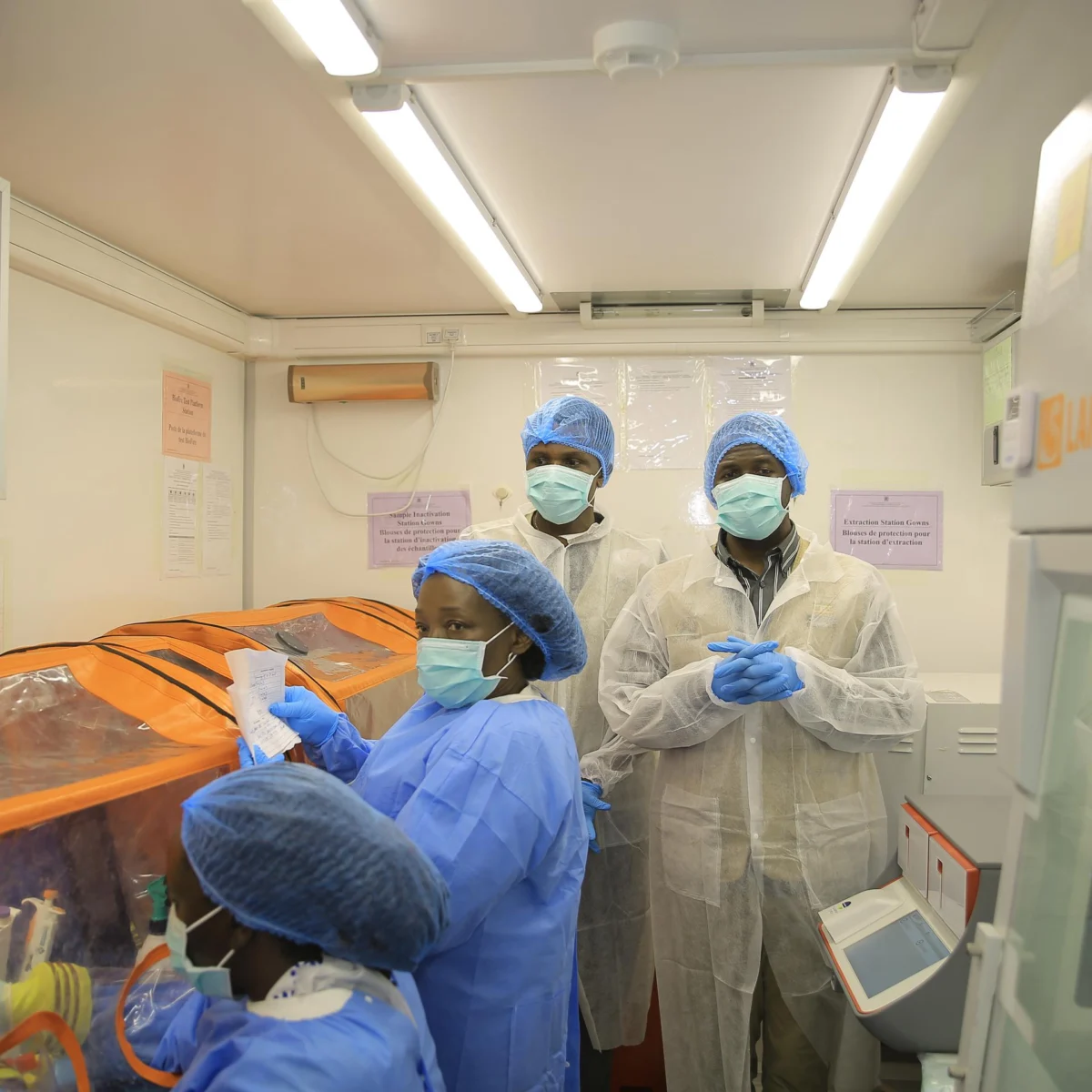
The visual representation of medical professionals in protective gear within a laboratory conducting rapid tests, as captured in the image, serves as a stark reminder of the frontline battle against this highly contagious and often fatal disease. The scene encapsulates the rigorous efforts required for early detection and isolation, which are paramount in curbing the virus’s spread.
Main Facts: A Deepening Crisis in East Africa
The confirmation of a second Ebola-related death in Kenya sends a somber message to the nation and the broader international community. This tragic event not only represents a significant loss of life but also intensifies the urgency of containment measures, particularly given the confirmed chain of transmission.
Kenya’s Latest Loss: A Family’s Ordeal
The deceased, whose identity has been withheld for privacy, was a direct contact of Kenya’s index case. Her death, despite being under quarantine since October 13, underscores the insidious nature of the Ebola virus and the challenges in managing close contacts. The incubation period for Ebola can range from 2 to 21 days, meaning individuals can be asymptomatic yet infectious, making early detection and rigorous isolation protocols absolutely critical. The fact that a quarantined individual succumbed to the disease highlights potential vulnerabilities in monitoring or the sheer aggressive progression of the illness. This incident will undoubtedly prompt a review of current isolation practices and contact tracing efficacy to identify any potential gaps that could be exploited by the virus. Public health officials are now redoubling efforts to trace all secondary contacts of both deceased patients, a labor-intensive process vital for interrupting transmission chains.
National Infection Overview: A Growing Cluster
With nine confirmed infections across Kenya, the national health authorities are facing a rapidly escalating situation. While the specific geographical distribution of these cases within Kenya has not been fully detailed, initial reports suggest a clustering around points of entry or areas with high mobility from affected regions. Given Kenya’s strategic position as a regional hub for trade, travel, and logistics, particularly its bustling capital Nairobi and major port city Mombasa, the risk of wider spread is a paramount concern. The Ministry of Health has activated its emergency response framework, deploying rapid response teams to affected areas, enhancing surveillance, and preparing isolation units in key hospitals. The focus is not only on managing existing cases but also on preventing the emergence of new clusters, especially in densely populated urban centers where the virus could spread quickly.
Regional Spillover: Alarms Beyond Borders
The reporting of Nigeria’s first Ebola case this week serves as a stark reminder that the virus respects no borders. While the exact link between the Nigerian case and the current East African outbreak is still under investigation, it highlights the interconnectedness of global health and the ease with which pathogens can traverse continents. Nigeria, with its vast population and extensive international travel links, presents a significant challenge for containment should the virus gain a foothold. This development has triggered heightened vigilance across Africa and globally, prompting airports and border crossings to reinforce health screenings.
Conversely, Uganda’s success story offers a crucial blueprint. After battling its own Ebola outbreak earlier in the year, Uganda declared its epidemic over in August, a testament to its robust public health infrastructure, rapid response capabilities, and strong community engagement. Uganda’s experience provides valuable lessons for Kenya and other nations currently grappling with the virus, particularly in areas such as efficient contact tracing, community trust-building, and swift deployment of vaccines and therapeutic treatments. The contrast between Uganda’s containment and the current situation in Kenya and Nigeria underscores the critical importance of preparedness and response capacity.
Chronology of the Current Outbreak
Understanding the timeline and progression of the current Ebola epidemic is crucial for appreciating its scale and the challenges involved in its containment.
Genesis in the Democratic Republic of Congo (DRC): A Persistent Threat
The current Ebola epidemic was officially declared in the Democratic Republic of Congo (DRC) in mid-May 2026. While the specific region of origin for this particular outbreak has not been explicitly stated in the provided context, the DRC has historically been the epicenter of numerous Ebola outbreaks, often originating in its eastern provinces such as North Kivu, Ituri, or North Kivu. These regions are frequently plagued by armed conflict, displacement, and a lack of trust in governmental and international health organizations, which severely hampers containment efforts. The fragmented healthcare infrastructure, combined with traditional burial practices that involve close contact with the deceased, often accelerates the virus’s spread. Since its declaration, the outbreak in the DRC has spiraled, with over 9,000 reported cases and approximately 4,400 fatalities, making it one of the most severe outbreaks in recent history. The persistent humanitarian crisis in the DRC complicates every aspect of the response, from surveillance to vaccination and safe burials.
The Spread to Neighboring Nations: Porous Borders and Human Movement
The mechanism by which Ebola migrated from the DRC to Kenya, and subsequently to Nigeria, is likely multifaceted. Cross-border movement of people – including traders, refugees, and migrant workers – is a primary vector for disease transmission in the region. Kenya shares a border with Uganda, which in turn borders the DRC, creating a pathway for the virus to travel. Major transportation corridors, including roads and air travel, also facilitate rapid dissemination. For instance, an infected individual, unaware of their status during the incubation period, could travel significant distances before symptoms manifest, potentially exposing numerous others. The initial cases in Kenya are suspected to have direct or indirect links to individuals who had recently traveled from or through affected regions in the DRC, or their contacts. The identification of the first case in Kenya likely triggered intensive epidemiological investigations to trace its origin and prevent further spread.
Milestones and Turning Points: A Regional Health Odyssey
- Mid-May 2026: Official declaration of the Ebola epidemic in the Democratic Republic of Congo. This marked the beginning of intensive international and national response efforts in the DRC.
- August 2026: Uganda successfully declares its Ebola epidemic over. This declaration was a significant achievement, demonstrating effective public health interventions and rapid response mechanisms. It served as a beacon of hope and a model for other nations.
- Early October 2026: Kenya reports its first confirmed Ebola case, signaling the virus’s entry into the country. This event immediately elevated the national alert level and initiated emergency response protocols.
- October 13, 2026: The second confirmed patient in Kenya (the deceased woman) is placed in quarantine, indicating prompt action following contact tracing.
- Mid-October 2026: Nigeria reports its first Ebola case, broadening the geographical scope of concern and underscoring the potential for wider regional and possibly intercontinental spread.
- October 24, 2026: Kenya announces its second Ebola fatality, highlighting the severe challenges in managing confirmed cases and preventing further deaths despite containment efforts.
Supporting Data and Epidemiological Insights
Understanding the scientific and epidemiological characteristics of Ebola is paramount for effective disease control.
The Virulence of Ebola: A Lethal Foe
Ebola virus disease (EVD) is a severe, often fatal illness in humans. It is caused by infection with one of the Ebola virus species (e.g., Zaire Ebolavirus, Sudan Ebolavirus). The current outbreak is likely caused by the Zaire Ebolavirus, historically the most common and deadliest. The incubation period, from infection to the onset of symptoms, can range from 2 to 21 days, making contact tracing particularly challenging. Initial symptoms often include sudden onset of fever, fatigue, muscle pain, headache, and sore throat. These are followed by vomiting, diarrhea, rash, symptoms of impaired kidney and liver function, and, in some cases, both internal and external bleeding (e.g., oozing from the gums, blood in the stools). The fatality rate for Ebola is notoriously high, averaging around 50%, but can vary from 25% to 90% depending on the specific virus species, the quality of healthcare, and the timeliness of treatment. The current outbreak in the DRC, with its roughly 48% mortality rate (4,400 deaths out of 9,000 cases), aligns with this grim historical pattern.
Transmission Dynamics and Containment Challenges: A Complex Battleground
Ebola is transmitted to humans from wild animals and spreads in the human population through direct contact with the blood, secretions, organs, or other bodily fluids of infected people, and with surfaces and materials (e.g., bedding, clothing) contaminated with these fluids. A critical aspect of transmission is during traditional burial ceremonies, where mourners may come into direct contact with the body of the deceased, who remains infectious. This cultural practice, deeply ingrained in many communities, poses a significant public health challenge.
Beyond cultural practices, several other factors impede containment:
- Misinformation and Mistrust: Rumors, conspiracy theories, and lack of trust in health authorities can lead to non-compliance with health guidelines, refusal of treatment, and evasion of contact tracers.
- Lack of Infrastructure: Remote areas often lack adequate healthcare facilities, trained personnel, and essential supplies, making rapid response difficult.
- Strained Healthcare Systems: Even in more developed areas, an influx of Ebola patients can overwhelm already stretched health systems, diverting resources from other essential health services.
- Population Mobility: High population density, urbanization, and constant movement of people for economic or social reasons make it challenging to track and isolate infected individuals and their contacts.
The Role of Diagnostics and Treatment: Tools of the Trade
Rapid diagnostic tests, as depicted in the image, are crucial for early identification of cases, enabling swift isolation and treatment. These tests, often PCR-based, detect the virus’s genetic material and can provide results within hours. Early diagnosis is critical for improving patient outcomes and breaking chains of transmission.
Treatment for Ebola primarily involves supportive care:
- Rehydration: Providing intravenous fluids and balancing electrolytes.
- Maintaining Oxygen Status and Blood Pressure: Essential for organ function.
- Treating Other Infections: Addressing co-infections that might arise.
- New Therapies: In recent years, significant progress has been made with monoclonal antibody treatments such as Inmazeb (atoltivimab/maftivimab/odesivimab-ebgn) and Ebanga (ansuvimab-zykl), which have shown effectiveness in improving survival rates when administered early. These treatments specifically target the virus, preventing it from replicating. The availability and equitable distribution of these advanced therapies are critical considerations in managing outbreaks.
Vaccination Efforts: A Shield Against the Virus
The development and deployment of Ebola vaccines have been a game-changer in outbreak control. Two highly effective vaccines, Ervebo (rVSV-ZEBOV) and Zabdeno/Mvabea (Ad26.ZEBOV/MVA-BN-Filo), are now available. Ring vaccination strategies, where contacts of confirmed cases and their contacts are vaccinated, have proven highly effective in containing outbreaks by creating a protective ring around infected individuals. Mass vaccination campaigns are also deployed in high-risk areas. The success of Uganda in declaring its epidemic over was partly attributed to its swift and comprehensive vaccination efforts. Kenya and other affected nations are expected to leverage these vaccines as a cornerstone of their response strategies, prioritizing frontline health workers and at-risk populations.
Official Responses and International Cooperation
Effective Ebola control relies heavily on robust national responses and coordinated international efforts.
Kenya’s National Strategy: A Multi-pronged Approach
The Kenyan Ministry of Health has swiftly activated its national emergency response plan following the confirmation of Ebola cases. Key components of this strategy include:
- Enhanced Surveillance and Contact Tracing: Deploying dedicated teams to identify, list, and monitor all individuals who have been in contact with confirmed cases for the full 21-day incubation period. This involves daily health checks and immediate isolation upon symptom onset.
- Isolation and Case Management: Establishing dedicated isolation units in designated hospitals with trained medical staff and appropriate personal protective equipment (PPE). Ensuring access to supportive care and advanced treatments.
- Public Health Campaigns: Launching extensive public awareness campaigns through various media channels to educate communities about Ebola symptoms, transmission routes, prevention measures (hand hygiene, avoiding contact with bodily fluids), and the importance of seeking early medical attention. These campaigns also aim to combat misinformation and stigma.
- Border Surveillance: Strengthening health screenings at international airports, seaports, and land border crossings, particularly those adjacent to the DRC and Uganda, to detect potential imported cases.
- Resource Allocation: Mobilizing national resources, including financial aid, medical supplies, and human resources, to support the response efforts.
Regional Coordination: A United Front
The East African Community (EAC) and the Africa Centres for Disease Control and Prevention (Africa CDC) play vital roles in fostering regional coordination. These bodies facilitate information sharing, harmonize public health policies, and coordinate cross-border health initiatives. The EAC, for instance, has a framework for integrated disease surveillance and response, which is crucial for managing outbreaks that span multiple member states. Joint training exercises, sharing of best practices, and coordinated border health measures are essential to prevent the virus from exploiting regional boundaries.
International Aid and WHO Involvement: Global Solidarity
The World Health Organization (WHO) is at the forefront of the international response, providing technical guidance, epidemiological support, and logistical assistance to Kenya. The WHO’s role includes:
- Risk Assessment and Strategic Planning: Assisting national authorities in assessing the risk, developing response plans, and setting priorities.
- Capacity Building: Training healthcare workers in infection prevention and control (IPC), case management, and safe burial practices.
- Logistical Support: Facilitating the deployment of essential supplies, including PPE, diagnostic kits, and vaccines.
- Coordination: Orchestrating efforts among various international partners, including Médecins Sans Frontières (MSF), UNICEF, the Red Cross, and other humanitarian organizations that bring invaluable on-the-ground expertise and resources. These organizations often establish emergency treatment centers, conduct community outreach, and support psychosocial care.
Lessons from Past Outbreaks (Uganda’s Success): A Blueprint for Containment
Uganda’s recent success in declaring its Ebola epidemic over offers critical insights and a potential blueprint for Kenya. Key factors contributing to Uganda’s triumph included:
- Swift and Decisive Action: Rapid deployment of emergency response teams and immediate isolation of suspected cases.
- Robust Surveillance and Contact Tracing: A well-established system for identifying, tracking, and monitoring contacts.
- Community Engagement and Trust: Effective communication strategies that built trust with affected communities, reducing resistance to public health interventions and promoting adherence to guidelines.
- Experience from Previous Outbreaks: Uganda has faced multiple Ebola outbreaks in the past, allowing it to build institutional memory and refine its response protocols.
- Availability of Vaccines and Therapeutics: Early access to and strategic deployment of Ebola vaccines and monoclonal antibody treatments.
- Strong Political Will and Leadership: A commitment from the highest levels of government to prioritize the response and allocate necessary resources.
Kenya can draw heavily from Uganda’s experience, particularly in enhancing community engagement, strengthening its primary healthcare system, and ensuring rapid access to and deployment of medical countermeasures.
Broader Implications and Future Outlook
The current Ebola outbreak extends far beyond the immediate health crisis, posing significant socio-economic and geopolitical challenges.
Socio-Economic Impact: A Multi-faceted Toll
An uncontrolled Ebola epidemic can inflict severe socio-economic damage.
- Economic Disruptions: Trade can be severely impacted by border closures, travel restrictions, and reduced consumer confidence. Key sectors like tourism, a significant revenue generator for Kenya, can suffer immensely due to fear of contagion. Agricultural production and market access can also be disrupted, leading to food insecurity.
- Healthcare Costs: Managing an outbreak is incredibly expensive, diverting resources from other essential health services and placing immense strain on national budgets. This includes costs for personnel, equipment, isolation facilities, and public awareness campaigns.
- Loss of Productivity: Illness and death among the workforce lead to reduced productivity, further hindering economic activity.
- Social Stigma and Psychological Impact: Survivors often face stigma and discrimination, hindering their reintegration into society. Communities affected by the disease experience profound psychological trauma, grief, and fear. The disruption of daily life, loss of livelihoods, and fear of infection can lead to widespread anxiety and social unrest.
Geopolitical Ramifications: Regional Stability at Stake
An escalating Ebola crisis can have serious geopolitical implications. Border closures, while intended to prevent spread, can strain diplomatic relations and disrupt regional trade agreements. The perception of a region as a ‘hotspot’ can deter foreign investment and humanitarian aid, exacerbating existing vulnerabilities. In conflict-affected areas, an outbreak can be weaponized or further destabilize fragile peace agreements, as health workers might face security threats, and essential services become inaccessible. The current outbreak, originating in the conflict-ridden DRC, is a prime example of how health crises can intersect with geopolitical instability.
Preparedness and Prevention: Investing in Resilience
The recurring nature of Ebola outbreaks underscores the critical need for long-term investment in public health preparedness. This includes:
- Strengthening Health Systems: Building resilient primary healthcare systems capable of early detection, rapid response, and effective case management. This means investing in infrastructure, training healthcare professionals, and ensuring adequate supplies.
- Rapid Response Teams: Establishing and continuously training dedicated rapid response teams at national and sub-national levels, equipped to swiftly deploy to outbreak sites.
- Public Health Education: Continuous public health education programs that build community trust, promote healthy behaviors, and counter misinformation, even in inter-epidemic periods.
- Research and Development: Ongoing investment in research into emerging pathogens, diagnostics, vaccines, and treatments to stay ahead of future threats.
- One Health Approach: Recognizing the interconnectedness of human, animal, and environmental health, and promoting collaborative efforts to address zoonotic diseases like Ebola at their source.
The Road Ahead for Kenya and the Region: Vigilance and Solidarity
The immediate future for Kenya involves an intense period of vigilance, aggressive contact tracing, isolation, and public education. The government, with support from international partners, must work tirelessly to contain the current clusters and prevent wider dissemination. The lessons from Uganda’s success and the challenges faced by the DRC will be invaluable in shaping Kenya’s ongoing response.
Beyond the immediate crisis, the current outbreak serves as a powerful reminder for all nations in the region to bolster their health security frameworks. This includes improving cross-border surveillance, enhancing regional coordination, and continuously investing in public health infrastructure and human resources. The fight against Ebola is not just a national endeavor but a collective regional and global responsibility. The solidarity and coordinated efforts demonstrated by nations and international organizations will ultimately determine the trajectory of this and future epidemics, shaping the health and stability of East Africa for years to come.