

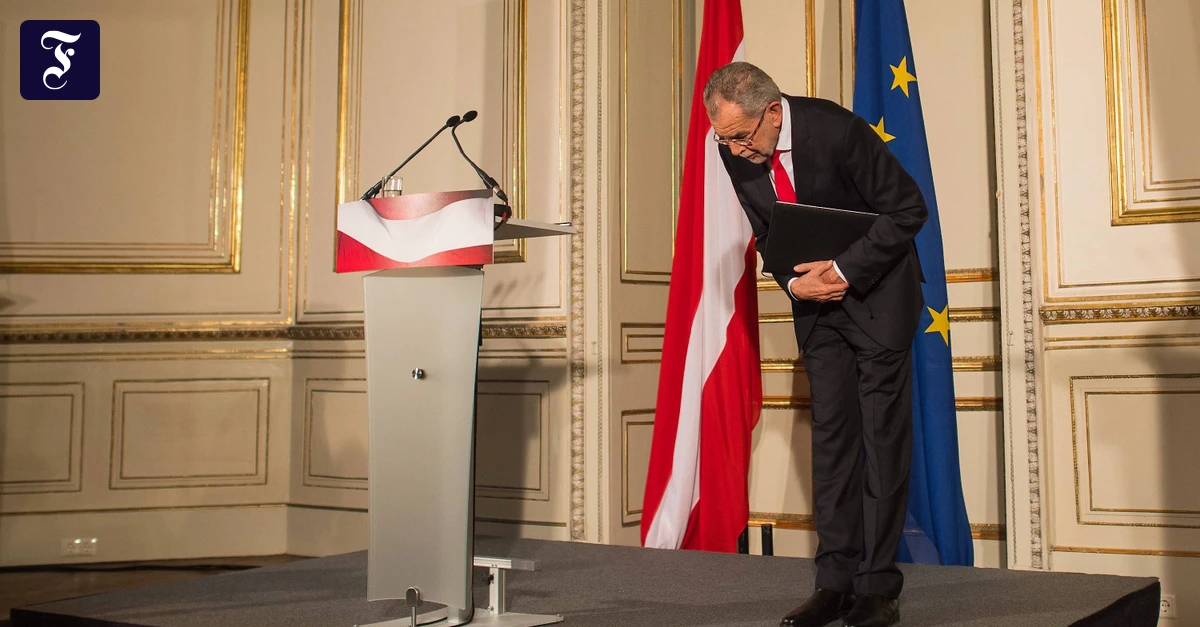
Vienna, Austria – After a protracted and often tumultuous electoral journey, Alexander Van der Bellen has been officially declared the President-elect of Austria. The victory, confirmed by the final tally of postal ballots on Tuesday, marks the culmination of a uniquely challenging campaign that tested the resilience of both the candidates and the nation’s democratic institutions. Van der Bellen, visibly weary yet resolute, addressed the nation, recounting the arduous path that led to this hard-won mandate.
The presidential race, initially scheduled to conclude in May, was marred by irregularities that led to the annulment of the second-round results by the Constitutional Court. This unprecedented decision necessitated a rerun of the election, a scenario that plunged Austria into a prolonged period of political uncertainty and campaigning. Van der Bellen’s victory, however, provides a much-needed sense of closure and a clear direction for the country.
A Marathon of Campaigns: The Road to the Presidency
The electoral saga began with a first round of voting, followed by a highly contested runoff. The initial results of this runoff, which saw Van der Bellen narrowly defeat his opponent, Norbert Hofer of the Freedom Party (FPÖ), were later invalidated by the Constitutional Court. The court cited procedural flaws in the counting of postal ballots, including premature opening and alleged instances of rule-bending, as the primary reasons for its decision. This ruling sent shockwaves through Austria and cast a shadow of doubt over the integrity of the electoral process.
The annulment led to a postponement of the second-round election, originally slated for October. The ensuing period was characterized by a renewed and intensified campaign. Van der Bellen, an independent candidate supported by the Green Party, found himself in a prolonged battle against Hofer, who represented the populist right. The campaign was marked by passionate debates, extensive media coverage, and significant public engagement, reflecting the deep divisions within Austrian society.
The challenges did not end there. A minor but symbolically significant issue, described by Van der Bellen as a "kleberproblem" (a sticking problem, referring to faulty glue on postal ballot envelopes), further delayed the rescheduled election. This seemingly trivial detail underscored the meticulous scrutiny the process was now under, highlighting the critical importance of every procedural step. The election was eventually rescheduled for December 4th.
Finally, on Sunday, December 4th, Austrian citizens went to the polls for the second time in the runoff election. The preliminary results indicated a clear lead for Van der Bellen, but the decisive factor, as it had been in the initial runoff, was the counting of the postal ballots. This time, the process was conducted with an unprecedented level of rigor and transparency, ensuring that the will of the people would be accurately reflected. The meticulous counting of these votes, completed on Tuesday, confirmed Van der Bellen’s victory, bringing an end to a truly historic and exhausting electoral marathon.
The Constitutional Court’s Intervention: A Defining Moment
The Constitutional Court’s decision to annul the May 22nd runoff election was a watershed moment in Austrian democratic history. The court’s ruling, delivered on July 1st, was based on a comprehensive review of the electoral process and found significant breaches of electoral law. While the court did not allege widespread fraud, it highlighted a pattern of irregularities in the handling of postal ballots.
Specifically, the court pointed to instances where postal ballots were opened and counted before the designated time, and in some cases, by individuals who were not authorized to do so. These procedural missteps, although seemingly minor in isolation, collectively undermined the principle of equal treatment of all voters and the integrity of the secret ballot. The court’s judgment emphasized that even small deviations from established procedures can erode public trust in the electoral system.
The court’s decision was a testament to its commitment to upholding the rule of law and ensuring the fairness of democratic elections. It underscored the importance of strict adherence to electoral regulations, particularly in the context of postal voting, which involves a significant portion of the electorate. The annulment, while disruptive, ultimately served to reinforce the robustness of Austria’s democratic framework and its capacity for self-correction.
Supporting Data: The Evolving Electoral Landscape
The repeated electoral contests provided a unique opportunity to observe shifts in voter sentiment and the impact of the extended campaign on the electorate. While precise breakdowns of the second, rescheduled election are still being analyzed, the trends from the initial runoff and the subsequent period offer valuable insights.
In the initial runoff on May 22nd, Alexander Van der Bellen secured 50.35% of the vote, narrowly defeating Norbert Hofer, who garnered 49.65%. The margin of victory was a mere 31,000 votes. Crucially, the postal ballots, which were counted later, showed a slightly different distribution, with Hofer gaining more ground in this segment. This delicate balance highlighted the importance of every vote and the potential for irregularities to influence the outcome in a close race.
The period between the annulled election and the rerun saw intensive campaigning by both candidates. Van der Bellen, an economist and former Green Party leader, positioned himself as a unifying figure, advocating for an open and tolerant Austria. His campaign focused on environmental issues, social justice, and a pro-European stance. Norbert Hofer, on the other hand, ran on a platform of stricter immigration policies, national sovereignty, and a more critical approach to the European Union.
The extended campaign also saw a heightened focus on voter turnout and engagement. With the election being postponed twice, maintaining voter interest and motivation became a significant challenge. The final results of the December 4th election, while still being fully analyzed for detailed demographic and regional breakdowns, indicated a clear victory for Van der Bellen, suggesting a solid consolidation of support. This outcome could be attributed to a variety of factors, including a desire for stability after the prolonged electoral process, a potential backlash against the FPÖ’s more polarizing rhetoric, and Van der Bellen’s sustained efforts to appeal to a broader electorate.
Official Responses and Reactions
The reactions to Alexander Van der Bellen’s victory have been largely positive, characterized by a sense of relief and a desire to move forward.
Alexander Van der Bellen, in his victory speech, expressed his gratitude to the voters and acknowledged the arduous nature of the campaign. He emphasized his commitment to serving all Austrians, regardless of their political affiliations, and pledged to be a president who fosters unity and dialogue. He stated, "We have gone through a long and arduous journey. But today, we have reached our destination. I am deeply honored and humbled by the trust placed in me by the Austrian people."
Norbert Hofer, while expressing disappointment at the result, conceded defeat and called for national unity. He acknowledged the Constitutional Court’s decision and the need to respect the democratic process. In his concession speech, Hofer stated, "I congratulate Alexander Van der Bellen on his victory. The democratic will of the people must be respected. Now is the time for Austria to come together."
The Austrian government, led by Chancellor Christian Kern, welcomed the outcome and expressed hope for a period of stability. The government had been under considerable pressure to ensure the smooth running of the repeated election and expressed relief that the process had concluded successfully.
International reactions were also largely favorable, with many European leaders congratulating Van der Bellen and expressing their confidence in Austria’s democratic institutions. The prolonged electoral process had been closely watched by international observers, and the successful conclusion was seen as a positive sign for democratic stability in Europe.
Implications for Austria and Beyond
Alexander Van der Bellen’s presidency comes at a critical juncture for Austria and carries significant implications for both domestic and international policy.
Domestic Stability and Unity: After a period of intense political division and uncertainty, Van der Bellen’s victory is expected to bring a much-needed sense of stability. As an independent candidate with broad support, he is well-positioned to act as a unifying figure, bridging ideological divides and fostering a more collaborative political climate. His emphasis on dialogue and consensus-building will be crucial in navigating the challenges ahead.
European Integration: Van der Bellen has consistently advocated for a strong and engaged Austria within the European Union. His presidency is likely to signal a continuation of Austria’s pro-European stance, strengthening its ties with its European partners and supporting further integration. This stands in contrast to the more eurosceptic rhetoric of his opponent, offering a clear direction for Austria’s foreign policy.
Environmental and Social Policies: As a candidate with strong ties to the Green Party, Van der Bellen is expected to champion environmental protection and sustainable development. His presidency may see increased focus on climate action, renewable energy, and ecological policies. Similarly, his emphasis on social justice and inclusivity is likely to shape domestic policy, promoting a more equitable society.
The Future of Populism in Austria: The close result of the initial runoff and the prolonged campaign highlighted the significant support for populist movements in Austria. While Van der Bellen’s victory represents a setback for the FPÖ, the underlying factors that fueled their support, such as concerns about immigration and economic inequality, remain relevant. The challenge for the new presidency will be to address these concerns effectively and prevent further polarization.
Reinforcement of Democratic Norms: The electoral process, despite its challenges, ultimately underscored the resilience of Austria’s democratic institutions. The Constitutional Court’s decisive intervention and the meticulous rerun of the election demonstrated a commitment to upholding the rule of law and ensuring the integrity of the democratic process. This experience serves as a valuable lesson for other democracies facing similar challenges.
In conclusion, Alexander Van der Bellen’s triumph marks the end of a remarkable and arduous electoral journey. His presidency offers the promise of stability, a renewed commitment to European integration, and a focus on environmental and social progress. As Austria moves forward, the lessons learned from this historic campaign will undoubtedly shape its political landscape for years to come.





Leave a Reply