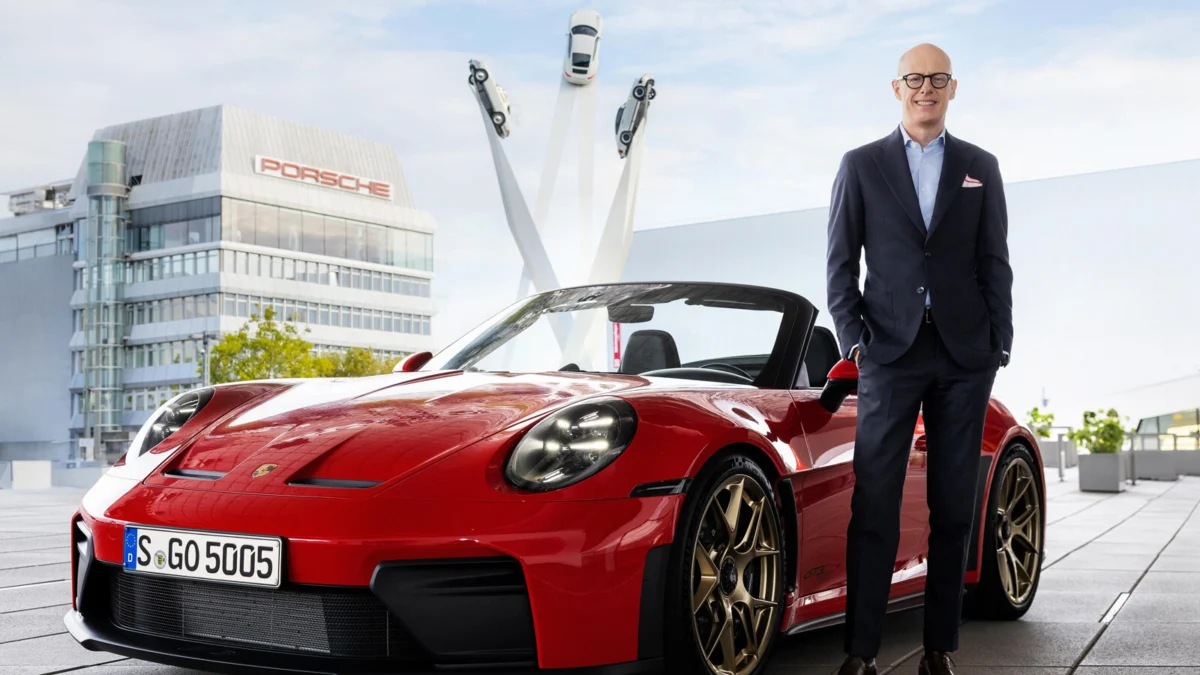
In the hallowed halls of the Porsche development center in Weissach, Germany, a somber yet determined mood prevails. For years, Porsche was the undisputed crown jewel of the Volkswagen Group—a symbol of engineering perfection and a license to print money. However, the narrative has shifted dramatically. Under the leadership of Michael Leiters, who took the helm in January, the iconic Zuffenhausen-based automaker is confronting a harsh reality: the transition from a high-growth manufacturer to a leaner, more exclusive luxury powerhouse.
The newly unveiled strategy, dubbed "Sportwagenschmiede 35," is not merely a corporate restructuring; it is a fundamental redefinition of what Porsche represents in an era of global economic headwinds, cooling demand for electric vehicles, and intense competition.
The Core Crisis: From Growth to Consolidation
For the better part of the last decade, Porsche’s growth was relentless. By chasing volume, the company expanded its footprint globally, reaching production levels that, while impressive, began to dilute the very exclusivity that defines the brand. The consequences of this strategy were laid bare this year. As sales figures faltered across key markets—most notably China—the financial impact rippled through the parent Volkswagen Group, costing the Porsche and Piëch families dearly in dividends and market valuation.
Leiters, a veteran of the industry, diagnosed the problem with brutal clarity: Porsche had become "over-engineered" for volume. The organization was structurally geared toward producing 350,000 units annually, yet market demand has softened significantly. The goal now is to lower the break-even point to under 200,000 vehicles, prioritizing margin over raw volume.
The Global Sales Slump (First Half Comparison)
The data tells a sobering story of why this pivot is unavoidable. Porsche’s global deliveries for the first half of 2026 compared to 2025 reveal a broad-based decline that spares no major region.
| Region | 2025 Deliveries | 2026 Deliveries | Change |
|---|---|---|---|
| Global | 146,391 | 122,306 | -16% |
| Germany | 15,973 | 14,938 | -6% |
| North America | 43,577 | 37,712 | -13% |
| China | 21,302 | 14,501 | -32% |
| Europe (excl. DE) | 35,381 | 30,278 | -14% |
| Overseas/Emerging | 30,158 | 24,877 | -18% |
The 32% collapse in the Chinese market serves as a stark warning to the entire German luxury automotive sector, highlighting the urgent need for Porsche to recalibrate its regional dependency and focus on high-yield customer segments.

Strategy "Sportwagenschmiede 35": The Pillars of Reform
The core philosophy of "Sportwagenschmiede 35" is simple: "less is more." Leiters aims to position the brand further up the value chain, focusing on hyper-exclusive models and extensive personalization.
Elevating the Luxury Tier
Porsche intends to increase the proportion of its most expensive models from approximately one-third of the total portfolio to nearly 50% by 2030. The financial objective is equally ambitious: raising the average price of the top 10,000 vehicles sold from €270,000 to €330,000.
To achieve this, the company is diversifying its "Sonderwunsch" (Special Wishes) program. By allowing customers to personalize their vehicles to an unprecedented degree, Porsche expects to sextuple the revenue generated from this division in the coming years.
Model Pipeline and The "911" Sacred Cow
Porsche’s future product roadmap is a delicate balancing act between electrification and combustion loyalty.
- The 718 Evolution: The electric version of the mid-engine 718 (Boxster and Cayman) is officially slated for 2027.
- The New SUV: By 2028, a new, larger, and more premium SUV—positioned above the Cayenne—is expected to hit the market, likely offered with internal combustion and plug-in hybrid options to hedge against the slow adoption of pure EVs in certain segments.
- The 911 Vow: In a move that will appease traditionalists, Leiters has firmly declared, "The 911 will never be electric." The iconic sports car will remain the torchbearer for Porsche’s combustion heritage.
To ensure focus, the brand will prune its existing lineup, cutting the total number of model variants by 20%.
Operational Efficiency: The Cost of Survival
If the product strategy is the heart of the turnaround, the cost-cutting measures are its backbone. Porsche is embarking on a massive efficiency drive across the entire value chain.

Targeted Reductions:
- Development Costs: A 20% reduction in R&D spending for future model series.
- Manufacturing: A medium-term reduction in production personnel costs of up to 30%.
- Operations: Sales and distribution costs are to be slashed by 20% by consolidating sales regions and reducing complexity.
- Material Costs: A 10% reduction in material costs for new vehicle projects, leveraging synergies within the VW Group.
Michael Steiner, Porsche’s Head of Development, emphasized the rationale: "We must become leaner where the customer sees no difference, so we can invest more where they do." By utilizing advanced digital simulations and reducing component complexity, the company aims to slash development timelines by up to 40%.
The Human Impact: A Difficult Transformation
The most painful aspect of this turnaround is the inevitable reduction in headcount. To reach the lean structure required for long-term viability, Porsche is planning a significant workforce reduction. The target is a 25% reduction in total staff, with a strategic aim to eventually reach 30%.
The cuts will fall disproportionately on administrative and development roles, as well as management. The company plans to eliminate 40% of all management positions—a move intended to flatten the hierarchy and accelerate decision-making processes. With the global workforce standing at approximately 41,800 at the end of 2025, these figures represent thousands of job losses, signaling a period of significant labor tension in Stuttgart.
Implications and Future Outlook
The "Sportwagenschmiede 35" plan represents a high-stakes bet on the resilience of the ultra-luxury market. By distancing itself from the mass-market volume trap and refocusing on its roots as an exclusive sports car manufacturer, Porsche is attempting to insulate itself from the volatility that currently plagues the wider automotive industry.
However, the strategy is not without risks. Shrinking the organization while attempting to launch high-end, complex new models requires a level of execution that leaves little room for error. Furthermore, the decision to rely on a hybrid strategy for its upcoming SUV while competitors move aggressively toward full electrification could prove either visionary or outdated depending on the speed of global emission regulations.
As Michael Leiters navigates this transition, the automotive world is watching. If successful, Porsche will emerge as a smaller, more profitable, and more exclusive entity. If the strategy fails, the brand risks alienating its core customer base while simultaneously losing the scale that enabled its past successes. For now, the focus in Weissach is singular: restore the strength of the horse in the crest by becoming, once again, the ultimate "Sportwagenschmiede."