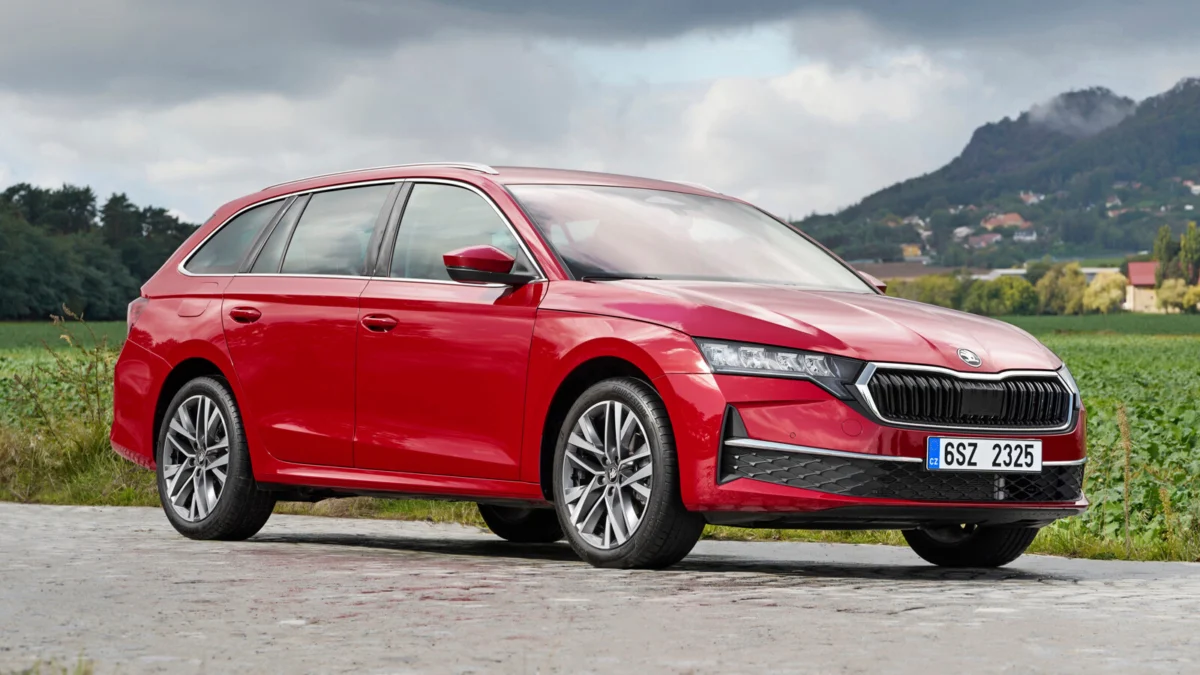
Volkswagen Group is embarking on a significant technological pivot. While the automotive giant has spent years championing mild-hybrid systems and pushing aggressively toward pure battery-electric vehicles (BEVs), the landscape is shifting. Following the initial rollout of a brand-new, sophisticated hybrid powertrain in the T-Roc last year, the group is now cascading this technology throughout its portfolio. The most prominent beneficiary of this strategic migration is the Skoda Octavia, a model that has long served as the bread-and-butter workhorse for the Czech manufacturer.
This new full-hybrid system is not merely an incremental update; it represents a fundamental change in how Skoda approaches fuel efficiency and powertrain dynamics, drawing technical inspiration from the successful blueprints that Japanese manufacturers have refined over the past two decades.
The Core Technology: Electrification Redefined
At the heart of the new Skoda Octavia hybrid lies a complex yet elegant powertrain architecture designed to maximize thermodynamic efficiency. Depending on the specific configuration, the internal combustion engine (ICE) produces either 96 kW or 110 kW. However, the role of this engine has been fundamentally redefined.
The Mechanics of the Hybrid System
In low-to-medium load scenarios, the gasoline engine acts primarily as a generator, feeding energy into the system rather than directly driving the wheels. This is a serial hybrid configuration. The generator is coupled directly to the combustion engine, ensuring a steady stream of electricity is available for the primary traction motor.
The second, and arguably more critical, component is the electric motor located at the output of the transmission. Unlike traditional multi-gear automatic transmissions, this system utilizes a single-gear setup. The electric motor is a permanent participant in the propulsion process. At speeds below approximately 60 km/h, the vehicle operates almost exclusively in electric mode, providing the silent, torque-rich acceleration characteristic of EVs.
Dynamic Operating Modes
The vehicle intelligently toggles between three distinct operating states to optimize efficiency:
- Serial Mode: The electric motor at the transmission is powered by the generator, which in turn is driven by the gasoline engine. This decouples the engine’s RPM from the road speed, allowing it to run at its most efficient load point.
- Pure Electric Mode: When the battery is sufficiently charged and the vehicle load is minimal, the system shuts down the ICE entirely. While the effective energy capacity of the battery is less than 1 kWh, making this mode a rarity during high-speed highway driving, it provides a crucial edge in urban stop-and-go traffic.
- Parallel/Combined Mode: At speeds exceeding 60 km/h and under high load—such as during rapid acceleration or steep climbs—a wet multi-plate clutch engages. This allows the internal combustion engine to mechanically contribute torque directly to the wheels, supplementing the electric motor for maximum performance.
Chronology of Development and Market Entry
The arrival of this technology in the Octavia is the result of a long-term roadmap that began with the modular expansion of the Volkswagen Group’s "MQB" platform architecture.
- Mid-2023: Volkswagen introduces the new T-Roc with the debut of this specific hybrid powertrain. The industry noted the shift toward a "Japanese-style" hybrid setup, signaling a departure from VW’s previous reliance on dual-clutch transmission (DSG) mild-hybrid setups.
- Early 2024: Testing phases for the Octavia hybrid variants commence. Engineers focus on fine-tuning the integration of the electric motor with the Octavia’s chassis, which requires significant packaging adjustments compared to the standard internal combustion models.
- Q3 2024: Skoda confirms the technical specifications and announces the production timeline for the hybrid Octavia.
- October 2024: Official order books open for the European market.
- December 2024: The first customer deliveries are scheduled to begin, marking the start of a new era for Skoda’s mid-size segment.
Supporting Data and Technical Specifications
To understand the impact of this transition, one must look at the technical trade-offs inherent in the design. While the system promises superior efficiency, it comes with specific packaging requirements that potential buyers must consider.

Efficiency and Energy Management
The battery, while small at 1.6 kWh, is a masterclass in longevity-focused engineering. Skoda has opted for a conservative state-of-charge (SoC) management strategy, keeping the battery between 40% and 90% capacity. By avoiding the extreme ends of the charge cycle, the manufacturer expects to significantly extend the lifespan of the lithium-ion cells, addressing a common concern regarding hybrid battery degradation over time.
The Cost of Innovation: Packaging and Performance
The integration of the hybrid battery and motor results in a measurable impact on the Octavia’s utility:
- Cargo Space: The standard mild-hybrid Octavia boasts a luggage capacity of up to 600–640 liters. In the full-hybrid version, this is reduced to 460 liters for the sedan and 485 liters for the Combi (wagon), a sacrifice of nearly 25% of the total volume to accommodate the electrical components.
- Fuel Capacity: The fuel tank has been downsized to 40 liters to make room for the hybrid architecture.
- Top Speed: Perhaps most notably for performance-oriented drivers, the hybrid model is electronically capped at 180 km/h. While this is sufficient for all legal driving environments, it lags behind the 200+ km/h capability of the base-model 85-kW mild-hybrid Octavia.
Implications for the Market
The shift to a full-hybrid system in the Octavia has significant implications for Skoda’s market positioning. By moving away from complex gear-shifting transmissions, Skoda has eliminated the "shift shock" and torque interruptions that can plague traditional automatics. This provides a smoother, more refined driving experience, which is expected to appeal to a demographic that values comfort and fuel economy over raw top-end speed.
Competitive Positioning
Skoda is positioning this vehicle as a direct competitor to the Toyota Corolla and Hyundai Elantra hybrids. By adopting a system that mimics the efficiency-first mindset of these competitors, Skoda is essentially saying that it no longer feels the need to force the "German performance" narrative onto every segment. Instead, they are prioritizing the "Total Cost of Ownership" (TCO) for their customers.
Environmental Impact
While WLTP consumption values have yet to be finalized, the consensus among industry analysts is that the Octavia hybrid will represent a significant leap in real-world fuel economy. By keeping the engine within its optimal thermal efficiency window for longer periods, the vehicle is expected to outperform its mild-hybrid predecessors, particularly in dense urban environments where traditional engines struggle with inefficiency.
Official Stance and Future Outlook
Skoda has remained relatively quiet regarding pricing, likely waiting to see how the market reacts to the official launch in October. However, the strategy is clear: the Volkswagen Group is diversifying its approach to electrification. Rather than betting everything on a single "pure EV" future, they are utilizing proven hybrid technology to bridge the gap for customers who are not yet ready for the infrastructure demands of a full battery-electric vehicle.
The success of the Octavia hybrid will likely dictate the speed at which this powertrain is introduced into other models like the Superb or even the Kodiaq. For now, the Octavia remains the testbed for this transformation.
As the industry looks toward 2030 and beyond, the introduction of this hybrid system serves as a reminder that the transition to sustainable mobility is not a straight line. It is a multi-pronged journey where refinement, packaging, and efficiency must be balanced in real-time. For the Skoda buyer, this means a car that is slightly less "fast" on paper, but significantly more "intelligent" on the road. The decision to prioritize longevity and efficiency over high-speed capability is a calculated move that may well pay dividends as fuel prices and environmental regulations continue to tighten across the European Union.