In a high-stakes diplomatic maneuver, the European Union and China have reached a tentative "understanding" regarding the trade of hybrid vehicles. Following intensive negotiations in Beijing between EU Trade Commissioner Maroš Šefčovič, Chinese Minister of Commerce Wang Wentao, and Vice Premier He Lifeng, both parties have signaled a potential shift in the automotive trade landscape. While the agreement marks a significant step toward de-escalating trade tensions, the lack of a transparent, legally binding framework leaves stakeholders in the dark regarding the future of one of the most volatile segments of the global auto market.
The Core Conflict: Why Hybrids?
The recent friction centers on a structural loophole in the European Union’s trade defense mechanisms. As of October 30, 2024, the EU has imposed definitive countervailing duties on battery-electric vehicles (BEVs) originating from China, with rates ranging from 7.8% to 35.3% on top of the standard 10% import tariff. This policy was the result of a rigorous anti-subsidy investigation that specifically targeted purely electric propulsion systems.
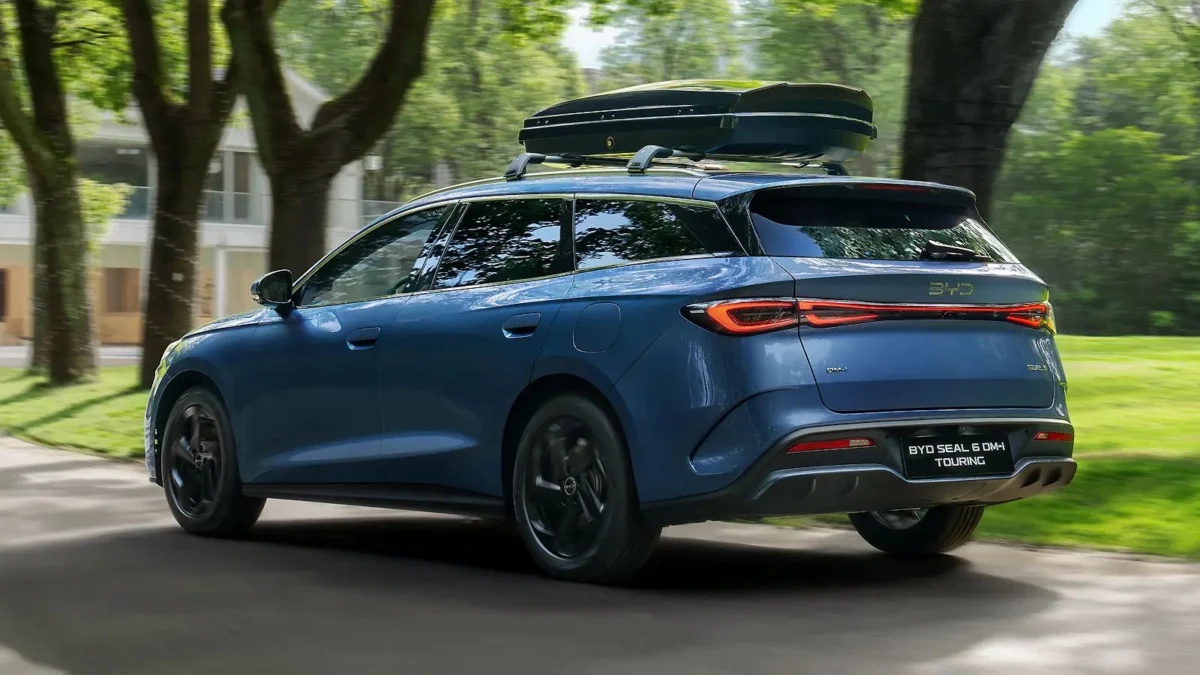
However, the regulations—specifically Implementing Regulation 2024/2754—did not cover plug-in hybrid electric vehicles (PHEVs). Because these vehicles utilize internal combustion engines and fall under different customs tariff codes, they effectively bypassed the punitive tariff regime. Chinese manufacturers, highly adept at reading market signals and regulatory landscapes, pivoted rapidly. Data from Eurostat and independent market analysts indicates a massive surge in shipments: from a negligible 659 vehicles in 2022 to over 160,000 full-hybrids (HEVs) imported between January and July 2026 alone. During the same period, PHEV imports ballooned from approximately 56,700 to over 217,000 units. By June 2026, Chinese brands had secured a record 34% share of the European PHEV market, creating an existential challenge for European automakers already struggling with the transition to electrification.
Chronology of a Trade Dispute
The timeline of this dispute reflects the cooling of EU-China relations:
- Late 2024: The EU formalizes anti-subsidy duties on Chinese BEVs, triggering retaliatory rhetoric from Beijing.
- Early 2025: European automakers report a sharp decline in market share as Chinese manufacturers increase exports of hybrid models, which remain exempt from the new duties.
- Early 2026: The EU Commission publishes guidelines for price undertakings for BEVs, establishing a template for how manufacturers might avoid tariffs through voluntary commitments.
- Mid-2026: Reports emerge that the EU is considering emergency import restrictions on hybrids, citing the "loophole" as a threat to the bloc’s industrial autonomy.
- October 2026: The high-level summit in Beijing concludes with a vague "understanding." Commissioner Šefčovič publicly suggests that the agreement could lead to a reduction of Chinese hybrid exports to the EU by more than 50%.
Supporting Data: The Scale of the Influx
The data reveals why the European Commission felt compelled to act. The rapid displacement of European-made hybrids by Chinese-manufactured alternatives is not merely a matter of price, but of manufacturing efficiency and supply chain dominance.
While the Chinese Ministry of Commerce (MOFCOM) has published a list of 16 "results and work assignments," the document is notably devoid of specific regulations for importers. The South China Morning Post reported that these 16 points include commitments to continue talks through March 2027, as well as vague promises regarding the expedited export of Rare Earth Elements (critical for EV batteries) and ongoing negotiations over minimum price thresholds for electric vehicles.
Crucially, these 16 points do not explicitly outline the rules for hybrid vehicles. This leaves a massive vacuum of information: Will there be quotas? Are there specific "floor prices" for these vehicles? How will the EU monitor compliance? Without a published, legally binding text, the market remains in a state of speculative limbo.
Official Responses and Strategic Ambiguity
Commissioner Šefčovič’s assessment that the agreement could halve hybrid exports is the only concrete metric the public has been given. However, the lack of consensus on the document’s legal status is striking. While the Chinese side frames it as a "common agreement," the European Commission has not presented a corresponding text.
For the European Commission, the pressure is immense. With an EU summit scheduled for mid-October 2026 in Brussels, the leadership must present a coherent strategy to the heads of state. The challenge is balancing the need to protect the European automotive industry—which remains a bedrock of the EU economy—with the desire to avoid a full-scale, WTO-violating trade war.
The precedent of the "Cupra Tavascan" (a vehicle manufactured by Volkswagen Anhui in China) provides a window into what a "price undertaking" might look like. In that case, the EU accepted a combination of a minimum import price, annual volume caps, and strict reporting requirements. This confirms that the EU’s trade defense measures target the origin of the vehicle, regardless of whether the brand is European or Chinese. The uncertainty now lies in whether the "Hybrid Understanding" will mirror this complex regulatory architecture.
The WTO Dilemma: A Legal Tightrope
The dispute also touches upon the delicate legal framework of the World Trade Organization (WTO). As recently as September 2026, the Chinese Ministry of Commerce publicly decried voluntary export restrictions as a "serious violation" of WTO rules, arguing that they distort fair competition.
Article 11.1(b) of the WTO Agreement on Safeguards prohibits voluntary export restraints. Conversely, "price undertakings" are explicitly permitted under Article 18 of the Agreement on Subsidies and Countervailing Measures. However, these are only valid within the context of a formal anti-subsidy investigation. Since the EU has not yet launched a full anti-subsidy probe into hybrids, any "voluntary" cap negotiated behind closed doors exists in a legal gray area.
Broader Economic Implications
Beyond the automotive sector, this agreement is a barometer for the broader EU-China economic relationship. With a trade deficit cited by Commission President Ursula von der Leyen as reaching nearly one billion euros per day, vehicles are only one piece of a much larger puzzle.
If the EU and China can successfully manage this sector, it may provide a template for future negotiations in other industries—such as renewable energy components or digital infrastructure—where similar trade imbalances exist. If the agreement fails to produce measurable results, the EU is expected to shift toward more aggressive unilateral measures, including potential quotas and stricter import controls.
For the average European consumer, the outcome of these negotiations will directly impact the availability and price of hybrid vehicles in the coming years. For manufacturers, it represents a period of necessary recalibration. Whether this "understanding" is the beginning of a stable trade partnership or merely a temporary ceasefire in an escalating global conflict remains to be seen. As the Brussels summit approaches, the focus remains squarely on whether the "gentlemen’s agreement" in Beijing can be transformed into a robust, enforceable, and transparent trade policy that protects the interests of the European Union without sacrificing the principles of open, globalized trade.