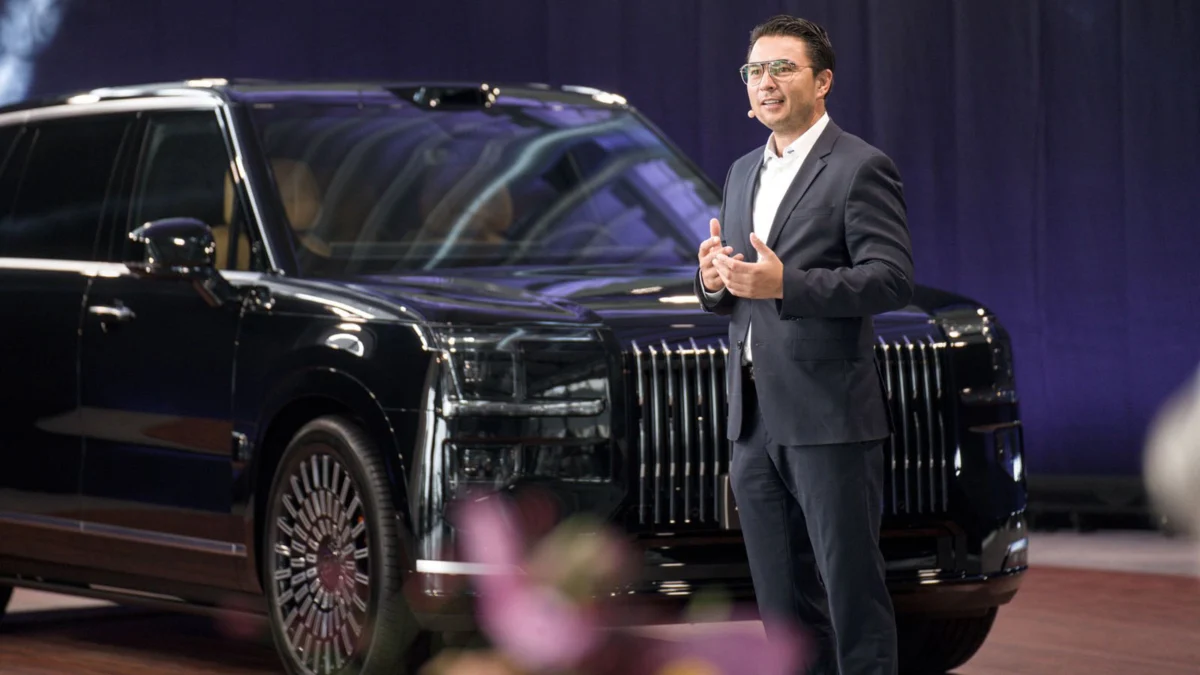
In a decisive move to secure its competitive standing amidst a rapidly shifting global automotive landscape, BMW has unveiled a comprehensive organizational restructuring plan. By mid-2027, the Munich-based automaker aims to streamline its corporate hierarchy by reducing the number of business units and management functions by 20 percent. This restructuring, announced during the company’s Capital Market Day in Gmund and Munich, represents one of the most significant administrative overhauls in the company’s recent history, signaling a transition toward a leaner, more agile, and technologically integrated corporate structure.
The Core of the Restructuring: Slimming Down the Pyramid
The plan targets a substantial thinning of the upper echelons of BMW’s management. According to reports, the reduction will primarily impact approximately 65 Senior Vice Presidents—the layer directly beneath the executive board—and roughly 400 managers in the subsequent reporting level. In total, the initiative could see the elimination of around 100 high-ranking positions.
While initial headlines and social media discourse suggested that Artificial Intelligence would directly "replace" these managers, BMW has clarified that this is a fundamental misconception. The restructuring is, at its core, a classic organizational optimization process. The objective is to consolidate business units, eliminate redundant management layers, and shorten reporting lines to accelerate decision-making.
AI is not intended to act as a digital manager, but rather as a catalyst for efficiency. By automating routine administrative tasks and providing data-driven insights, AI allows the remaining leadership team to operate with greater focus and speed. The final authority on strategic decisions and personnel management remains firmly in the hands of human leadership.
Financial Context and Market Pressures
BMW’s strategic pivot is a direct reaction to an increasingly hostile market environment. The automotive sector is currently grappling with stagnant demand, narrowing margins, and an existential competitive threat from Chinese manufacturers who have rapidly scaled their electric vehicle (EV) offerings.
The financial forecasts underscore the urgency of these changes. BMW anticipates an EBIT margin in the automotive segment of only 1 to 3 percent for 2026. Through the implementation of its efficiency program, the company aims to improve this to 3 to 5 percent by 2028, with a long-term target of returning to the 8 to 10 percent range that has historically defined the brand’s success. Similarly, the Free Cashflow in the automotive division is projected to climb to over €5 billion by 2028, with expectations of exceeding €7 billion by the early 2030s.
Agentic AI: Moving Beyond Simple Automation
Central to BMW’s modernization is the shift from isolated, "point-solution" AI tools to what the company terms "Agentic AI." Unlike basic automation, agentic systems are specialized software agents capable of pulling data from disparate sources, planning complex work steps, and triggering multi-stage follow-up actions autonomously.
A prime example of this is "AIconic," a multi-agent system currently being piloted in the procurement department. AIconic is designed to handle the end-to-end procurement lifecycle: drafting purchase orders, transmitting them to suppliers, analyzing incoming responses, and even clearing low-risk cases for approval. By removing the manual labor from these repetitive processes, BMW aims to reallocate human talent toward high-value strategic procurement.
Furthermore, in the realm of vehicle development, BMW has deepened its collaboration with the French AI laboratory Mistral AI. By training specialized models on proprietary engineering data, BMW is accelerating the speed of crash simulations and structural integrity testing. On the factory floor, the AIQX platform continues to revolutionize quality control, utilizing real-time sensor and image analysis to identify microscopic defects in production lines long before they become critical issues.
To fund this transformation, BMW has earmarked €200 million for central AI programs over the next three years. The company projects a total value contribution of approximately €1.2 billion from these initiatives—whether through direct cost savings, waste avoidance, or incremental revenue gains.
The Human Impact: 8,000 Jobs and a "Skill-Swap"
The management restructuring is part of a broader, global workforce optimization program. By the end of 2027, BMW plans to reduce its total headcount by approximately 8,000 positions, representing about 5 percent of its 154,000-strong global workforce. Crucially, the production floor is explicitly excluded from these cuts; the focus is strictly on administration, research, development, and planning functions.
In Germany, where BMW employs roughly 85,000 people, the impact will be felt most acutely at the Munich, Regensburg, Dingolfing, and Leipzig sites. Following six weeks of intense negotiations with the Works Council, an agreement on a voluntary severance program was reached in July 2026, slated for implementation in October.
Approximately 40,000 employees are eligible for individual voluntary separation packages. While the program is voluntary, the "organizational pressure" resulting from the shift in company strategy is significant. While there are no plans for compulsory redundancies, the program highlights a delicate balance between maintaining social partnership and the necessity of structural change.
Comparative Industry Analysis: How Rivals Are Responding
BMW’s approach to AI-assisted restructuring is unique in its methodical, human-centric focus. When compared to its primary German rivals, the differences are stark:
- Mercedes-Benz: The Stuttgart-based automaker is pursuing a 10 percent reduction in production costs by 2027. While Mercedes has embraced AI—with over 60 percent of its white-collar staff utilizing AI tools on a weekly basis—it has not announced a specific target for the reduction of management layers, preferring to integrate technology into existing structures rather than mandating a structural "lean-out."
- Volkswagen: In contrast, VW is pursuing a much more aggressive strategy. Faced with massive overcapacity and intense competition from Asia, the company has signaled the potential elimination of 50,000 jobs globally. Unlike BMW, AI is not the primary driver of this narrative; the focus at Volkswagen remains on basic survival and the consolidation of inefficient manufacturing capacities.
- US Automakers (GM, Ford, Stellantis): The North American landscape is characterized by a brutal "Skill-Swap." Companies like GM have cut hundreds of traditional IT and administrative roles while simultaneously hiring aggressively for AI developers, data engineers, and prompt engineers.
BMW’s strategy sits in the middle: it seeks the agility of the US "Skill-Swap" model while operating within the rigorous, protective framework of German labor law and collective bargaining.
Implications for the Future of Automotive Management
The shift BMW is undertaking is indicative of a broader trend: the "de-layering" of the industrial corporation. For decades, large automakers grew increasingly hierarchical, creating silos that slowed innovation. The advent of AI and the transition to software-defined vehicles demand a different kind of organization—one that is flat, data-informed, and capable of pivoting rapidly.
The success of this transition will depend on two critical factors. First, the ability of BMW’s IT infrastructure to successfully scale "Agentic AI" beyond the pilot phase. Second, the company’s ability to maintain employee morale and expertise during a period of sustained downsizing.
As BMW moves toward 2027, the industry will be watching closely. If the Munich-based automaker can successfully reduce its management burden while simultaneously boosting its EBIT margins through AI-led efficiencies, it will provide a blueprint for the entire European industrial sector. If it falters, it may serve as a warning of the complexities involved in integrating disruptive technology into established corporate cultures. For now, BMW remains committed to a path that prioritizes long-term financial health over short-term stability, betting that a leaner, AI-enabled core is the only way to survive the coming decade.