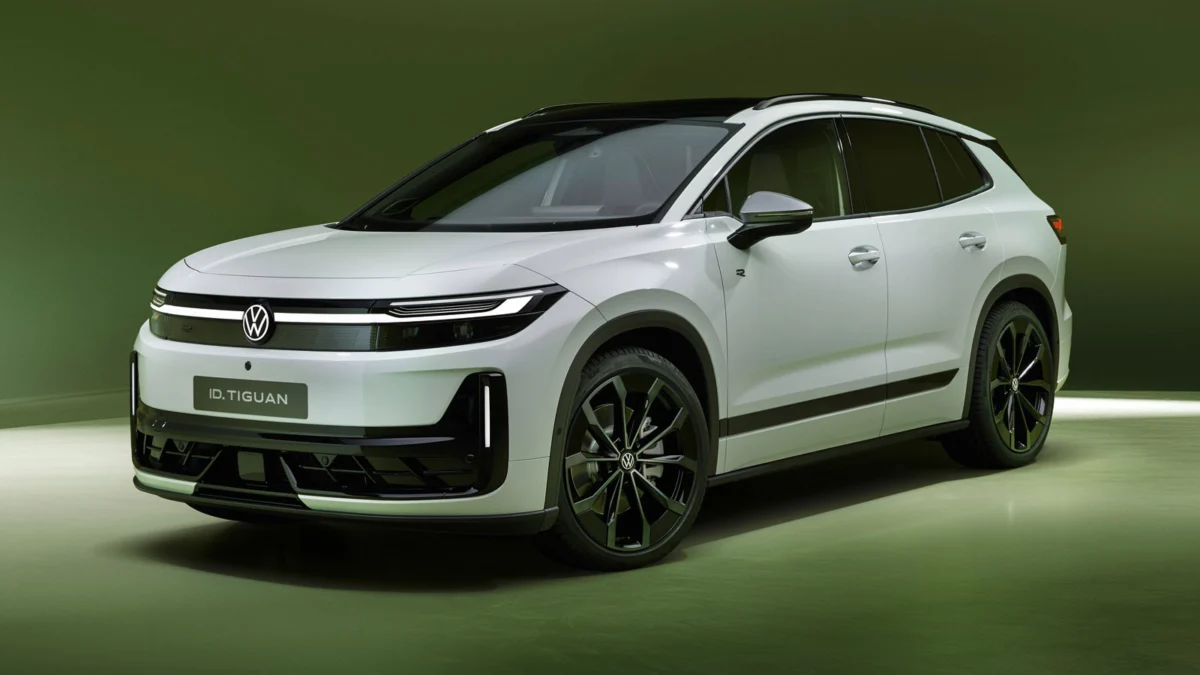
Volkswagen has officially pulled the covers off the "ID. Tiguan," a vehicle that represents more than just a nameplate swap; it is a profound reimagining of the brand’s electrification strategy. By integrating the iconic Tiguan nomenclature into its modular electric platform, Volkswagen is signaling a shift toward brand consolidation, aiming to bridge the gap between its legacy internal combustion engine (ICE) success and its future-focused electric vehicle (EV) lineup.
The ID. Tiguan is, in essence, a comprehensive refinement of the ID.4 platform that has served as the backbone of Volkswagen’s electric transition since 2021. With this release, VW is betting on familiarity, design continuity, and improved technical capabilities to win over a broader customer base.
Main Facts: The New Standard for VW’s Electric SUV
The ID. Tiguan is marketed as a "major product upgrade" rather than a brand-new platform. The exterior design has been carefully recalibrated to align with the visual language of the existing combustion-powered Tiguan models, ensuring that the transition to electric driving feels like a natural evolution for loyal customers.
Technical Core and Battery Configurations
Volkswagen continues to utilize the MEB+ (Modular Electric Drive Matrix Plus) platform, offering two distinct battery configurations designed to meet varying consumer needs:
- The Entry-Level (58 kWh): This variant features a robust LFP (Lithium Iron Phosphate) battery chemistry. It is geared toward cost-sensitive buyers, prioritizing durability and safety. The rear-wheel-drive motor (APP350) delivers 140 kW (190 hp) and 350 Nm of torque. It achieves a 0–100 km/h sprint in 8.5 seconds, with a top speed capped at 160 km/h and an estimated range of 450 km.
- The Long-Range (77 kWh): This performance-oriented variant utilizes high-density NMC (Nickel Manganese Cobalt) cells. It is available in two configurations: a rear-wheel-drive model with 210 kW (285 hp) and a 4Motion all-wheel-drive version with 220 kW (300 hp). The 77 kWh models offer ranges of 600 km and 560 km, respectively, with top speeds limited to 180 km/h.
Chronology of Development
The path to the ID. Tiguan was not instantaneous. It is the result of years of consumer feedback and iterative engineering cycles.
- 2021: The launch of the ID.4 marked VW’s serious entry into the electric SUV market. While successful, the model faced criticism regarding software maturity, interior material quality, and charging efficiency.
- 2022–2023: Volkswagen began internal discussions regarding the "ID" naming convention. Data indicated that customers were more comfortable with familiar names like "Polo" or "Tiguan." The decision was made to gradually transition the ID lineup to adopt these classic names.
- Early 2024: Final testing of the MEB+ platform refinements concluded, focusing on optimizing the thermal management of the new LFP battery architecture.
- Current Date: The formal announcement of the ID. Tiguan confirms that the vehicle is ready for market, incorporating the "lessons learned" from the ID.4’s three-year life cycle.
Supporting Data and Performance Metrics
Volkswagen has taken a conservative approach to its performance claims, often "under-promising" to ensure the vehicle exceeds expectations in real-world conditions.

Charging Performance
One of the most debated aspects of the ID.4 was its charging curve. For the ID. Tiguan, Volkswagen has refined the charging protocols.
- The 58 kWh (LFP) Battery: Officially rated for a maximum of 105 kW charging power. VW claims a 10% to 80% charge time of 26 minutes. However, industry testing suggests that the hardware is capable of peaking at 127 kW under optimal conditions, suggesting that Volkswagen is providing a "worst-case scenario" estimate to maintain customer trust.
- The 77 kWh (NMC) Battery: This system peaks at 165 kW. Despite the larger capacity, it requires 29 minutes to charge from 10% to 80%. The average net charging power in this window is approximately 111 kW.
Utility and Practicality
Volkswagen has addressed one of the most common complaints regarding the ID.4: the lack of a "frunk" (front trunk). The ID. Tiguan now features a dedicated storage space under the hood, perfectly sized for charging cables and small items. Furthermore, towing capacity has been increased to 1,800 kg for the entry-level model and 2,000 kg for the long-range variants, making it a legitimate utility vehicle for families.
Official Responses and Strategic Vision
In internal communications and industry briefings, Volkswagen executives have emphasized that the ID. Tiguan is a response to the "democratization" of electric mobility. By opting for LFP cells in the entry-level model—contrary to the NMC-only approach of sibling brands like Audi (Q4 e-tron) and Skoda (Peaq)—Volkswagen is making a strategic play to lower the price point for the average consumer.
"We are listening," a company representative noted in a recent press release. "The ID. Tiguan represents the maturation of our electric ecosystem. We are moving away from purely experimental designs and toward vehicles that fit seamlessly into the lives of our traditional, multi-generational customer base."
The choice of LFP chemistry for the base model is a deliberate move to ensure long-term battery health, as these cells are known for their tolerance to frequent 100% charging cycles—a major selling point for commuters.
Implications for the Market
The arrival of the ID. Tiguan sends a clear message to competitors like the Kia EV5, the Renault Scénic E-Tech, and the Tesla Model Y.

1. Brand Equity as a Competitive Advantage
By leveraging the "Tiguan" name, Volkswagen is effectively shielding its electric transition from the "uncertainty" often associated with new, unrecognizable sub-brands. Customers who have driven a Tiguan for a decade are now far more likely to upgrade to the ID. Tiguan than to an "ID.4." This is a masterclass in brand continuity.
2. The Charging War
While the 400-volt architecture remains the industry standard, the ID. Tiguan’s consistent charging performance puts pressure on the Tesla Model Y. By prioritizing a stable, flat charging curve over high, short-lived "peak" speeds, Volkswagen is focusing on a more predictable user experience.
3. Future-Proofing the Platform
The inclusion of bidirectional charging capabilities and increased towing capacity suggests that Volkswagen is positioning the ID. Tiguan as a versatile "Swiss Army Knife" of the electric world. As the grid infrastructure improves, the ability to power external devices—or potentially even homes—will become a standard requirement, and the ID. Tiguan is built to handle these demands.
4. The Price Gap
By segmenting the battery chemistry (LFP for entry, NMC for range), VW has created a price ladder that allows it to compete with budget-friendly Chinese imports while still offering a premium experience for those who need higher performance and range.
Conclusion
The Volkswagen ID. Tiguan is more than just a facelift of the ID.4. It is a strategic pivot that addresses the functional, emotional, and economic requirements of the modern car buyer. By combining the legendary reliability and design language of the Tiguan with the cutting-edge (and now, more practical) MEB+ electric platform, Volkswagen is well-positioned to dominate the mid-size electric SUV segment.
As the automotive industry continues its rapid shift away from fossil fuels, the ID. Tiguan stands as a testament to the fact that the most successful electric cars will be those that feel the most familiar. Whether it is the inclusion of the "frunk," the increased towing capacity, or the deliberate choice of robust LFP batteries, Volkswagen has clearly done its homework. The ID. Tiguan is not just an electric car; it is the electric car for the masses.