Since the German government implemented its latest fuel tax reduction on October 1st, a heated debate has erupted between economic researchers, consumer advocacy groups, and the energy industry. At the heart of the controversy is a simple question: Is the state-funded subsidy—designed to cushion the burden of soaring energy costs—actually reaching the drivers, or is it being absorbed by oil companies to pad their profit margins?
Recent analyses from the Ifo Institute and the ADAC (Germany’s largest automobile club) suggest that the relief is, at best, being passed on only partially and inconsistently. As motorists navigate the volatility of the pump, the efficacy of this multi-billion euro fiscal policy is being called into question.
The Main Facts: A Discrepancy in Savings
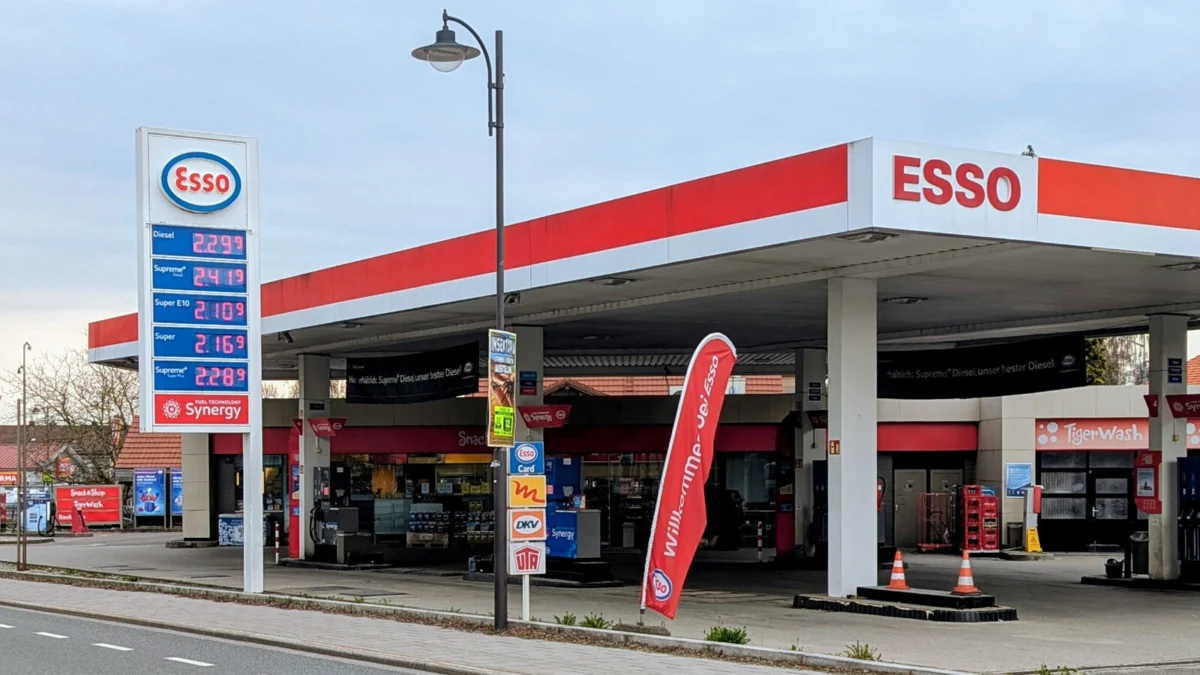
The German government’s intervention aims to reduce the financial strain on households by slashing energy and value-added taxes by approximately 16.7 cents per liter. However, data from the first five days of the policy reveals a mismatch between this theoretical relief and the actual price tags at gas stations.
According to Florian Neumeier, an energy expert at the Ifo Institute, the transmission of these savings is far from uniform. "For diesel, gas stations passed on an average of 15 cents of the 17-cent tax reduction per liter during the first five days," Neumeier notes. The situation for gasoline is slightly better but equally inconsistent: Super E5 saw an average reduction of 16 cents, while Super E10 lagged behind at 15 cents.
The ADAC corroborates these findings, pointing to a "noticeable gap" for E10 fuel in particular. While diesel drivers have seen a significant portion of the tax relief reflected in their costs, the ADAC maintains that there is still considerable room for lower prices across the board. The fundamental expectation was a near-total transfer of the 17-cent reduction; the fact that this target is consistently missed has fueled public skepticism regarding the transparency of the fuel market.
Chronology of Market Fluctuations
The "pass-through" rate—the metric economists use to measure how much of the tax break reaches the end consumer—has been anything but stable. Ifo researchers have observed daily oscillations that suggest external factors are influencing pricing strategies far more than the government’s tax policy alone.
- October 1st (The Launch): On the first day of the tax relief, the pass-through was virtually complete. Consumers enjoyed the full benefit of the policy as prices dropped in line with expectations.
- The Weekend Effect: By the weekend, the transmission rate dropped significantly. Ifo’s data shows that the pass-through for Super E10, in particular, plummeted by approximately 7 cents between Thursday and Sunday. This pattern of "weekend volatility" is a long-standing grievance for German motorists, but its occurrence during a period of state-funded relief has drawn renewed criticism.
- Post-Weekend Recovery: By Monday, the data showed a return to a more favorable pass-through rate of over 15 cents. Diesel followed a similar, albeit less volatile, trend, suggesting that market pricing mechanisms may be attempting to "smooth out" the tax break impact, or perhaps capitalize on demand surges during the work week.
Comparative Methodologies: The French Benchmark
The ongoing debate is complicated by differing methodologies used by the ADAC and the Ifo Institute. The ADAC’s analysis focuses on domestic market conditions, looking at daily price movements within Germany. In contrast, the Ifo Institute employs a more sophisticated comparative model: it compares German fuel prices against those in France.
The logic behind the Ifo approach is to filter out "noise"—general market fluctuations caused by global oil price movements, refinery maintenance, or logistics costs. By using France as a control group, the researchers aim to identify what the prices in Germany should have been under normal circumstances, had the tax cut not been implemented. This comparative lens allows Ifo to isolate the specific impact of the tax policy, providing a more robust, albeit theoretical, baseline for determining whether oil companies are holding back savings.
Official Responses and Industry Defense
The industry association, Fuels and Energy (en2x), has vehemently denied accusations of "pocketing" the tax relief. Representing roughly half of Germany’s 14,000 gas stations, the organization argues that the criticism fails to account for the complexity of fuel pricing.
"Without the tax reduction, the prices at our stations would have been exactly 17 cents per liter higher at every moment since the beginning of October," an en2x spokesperson stated. The industry group argues that while they cannot speak for the entire market, their members have strictly applied the tax cut. They suggest that the "missing" cents observed by researchers are likely the result of market-driven price adjustments that would have occurred regardless of the policy.
This defense, however, does little to placate economic critics who argue that the structure of the fuel market in Germany lacks sufficient competition, allowing providers to adjust margins precisely when state subsidies are introduced.
Socio-Economic Implications: A Critically Flawed Policy?
Beyond the immediate question of price transmission, the fuel tax relief has faced intense scrutiny from the academic community. Economists, including those at the Ifo Institute, have labeled the measure "inefficient" and "poorly targeted."
1. The Disincentive for Efficiency
Christian Gräuus, a researcher at the Ifo Institute, warns that the subsidy distorts market signals. High fuel prices are designed to encourage energy conservation and a shift toward more efficient vehicles. By artificially lowering the price, the government is effectively subsidizing the consumption of fossil fuels, undermining climate goals and discouraging the adoption of electric mobility. As Neumeier points out, a consumer buying a gasoline-powered car today is locking themselves into a long-term dependency on the volatile oil markets of the Gulf region—a dependency the government should be signaling as an economic risk rather than subsidizing.
2. Lack of Social Equity
Perhaps the most damning criticism concerns social equity. "The fuel tax rebate is not targeted," says Gräuus. "Households with low incomes, small, fuel-efficient cars, and lower annual mileage benefit very little from this package." Because the relief is applied per liter, it disproportionately rewards those who drive the most—typically high-income earners with larger, more powerful vehicles—while offering only marginal assistance to lower-income households who may have already optimized their fuel consumption.
3. The "Tracker" Transparency Effort
To maintain pressure on the energy sector, the Ifo Institute has committed to maintaining a live "pass-through tracker" for the duration of the tax cut. This initiative mirrors a similar project from the summer of 2026, which concluded that previous relief efforts were also not fully passed on to consumers. By providing real-time data to the public, the institute hopes to exert "reputational pressure" on oil companies, forcing them to be more transparent with their pricing strategies.
Conclusion: A Temporary Band-Aid?
As the government continues to monitor the impact of the tax relief, the gap between political intent and economic reality remains wide. While motorists are undeniably paying less than they would have in an environment without the tax cut, the failure to achieve a full 17-cent reduction has eroded public trust in the policy.
The fuel tax rebate serves as a poignant case study in the difficulties of government intervention in highly complex, globalized markets. While intended as a swift, broad-based relief for the population, it has become a lightning rod for broader concerns regarding corporate transparency, climate policy, and the efficacy of government spending. For now, the German driver is left to navigate a market where the price at the pump is determined not only by the cost of oil but by a tug-of-war between state policy and corporate margin management. Whether this measure will be extended or phased out will likely depend on whether the pass-through rates stabilize in the coming weeks—or if the "missing" cents continue to spark public and political outrage.