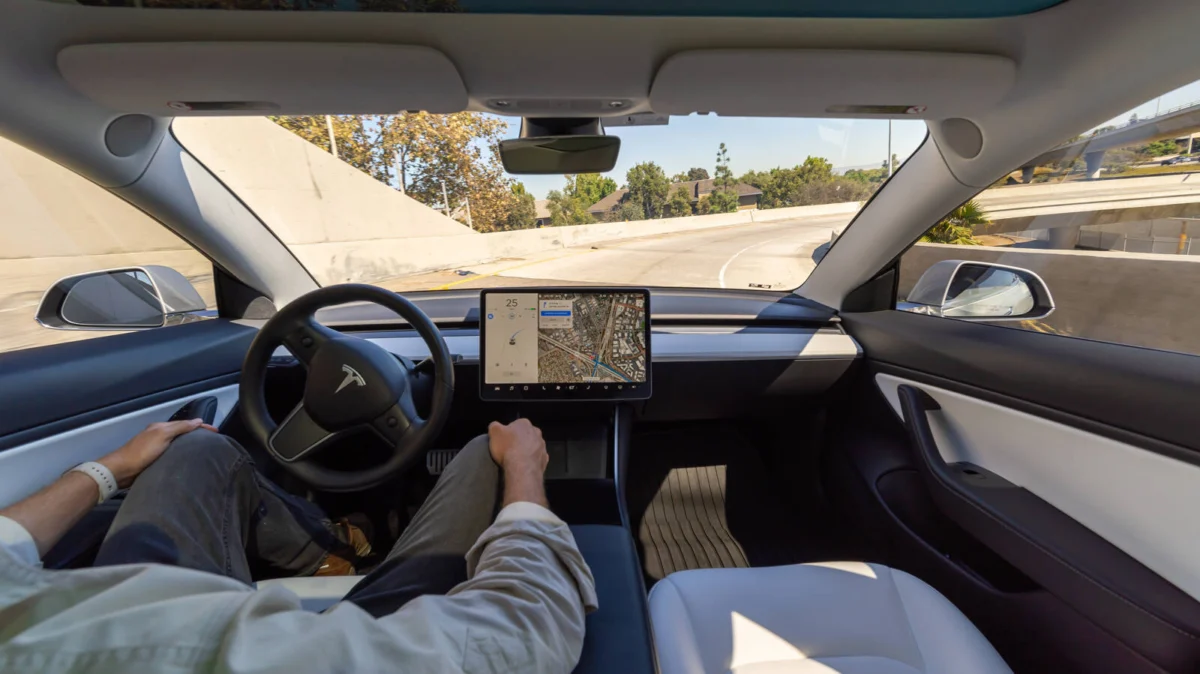
After years of intense regulatory pressure and public criticism, Tesla has initiated a significant rebranding of its driver-assistance software in European markets. The company has officially moved away from the contentious terminology that critics argued misleadingly suggested full autonomy. Across its German and wider European digital platforms, the feature once marketed as "Full Self-Driving (Supervised)" has been rebranded as "Tesla Assisted Driving."
This shift, while seemingly semantic, marks a pivot point in the relationship between the world’s most valuable electric vehicle manufacturer and European automotive regulators. It acknowledges a fundamental reality that industry experts and safety advocates have long championed: the technology, in its current state, remains an advanced driver-assistance system (ADAS), not a self-driving solution.
The Chronology of Controversy
To understand why this name change is significant, one must look at the decade-long tension between Tesla’s marketing and the technical capabilities of its software.
The Rise of "Autopilot" and "FSD"
Tesla’s branding strategy has always been aggressive. The term "Autopilot," introduced years ago for basic lane-keeping and cruise control, drew early ire from consumer watchdogs who argued the term implied a level of automation that did not exist. Legal battles followed, including notable disputes in California regarding the marketing of these systems.
Despite these controversies, Elon Musk pressed forward with "Full Self-Driving" (FSD). Since 2014, Musk has repeatedly promised that Tesla vehicles would achieve true Level 5 autonomy "by the end of the year"—a deadline that has been missed consistently for a decade. The software evolved, eventually requiring constant human supervision, leading to the addition of the "(Supervised)" suffix. Yet, even with that caveat, the core promise remained tied to the vision of a car that could navigate complex urban environments without human intervention.
The Robotaxi Impasse
The tension reached a new height recently when Tesla unveiled its vision for a "Robotaxi"—a vehicle designed specifically without a steering wheel or pedals. This bold design choice directly challenged existing safety regulations in both the United States and Europe. In the US, the National Highway Traffic Safety Administration (NHTSA) has expressed concerns, as current regulations mandate physical control mechanisms. Tesla’s failure to seek specific exemptions for these novel designs has further complicated its path to market, leaving the company in a regulatory limbo where its hardware vision outpaces its legal authorization.
The Technical Divide: Cameras vs. Sensors
At the heart of the debate regarding Tesla’s branding is the technical approach to machine perception. Tesla has staked its entire future on a "vision-only" system. While the industry standard for autonomous vehicle (AV) development typically involves a multi-modal approach—incorporating high-resolution LiDAR (laser-based sensors), radar, and cameras—Tesla insists that human-like sight, processed through its proprietary neural networks, is sufficient for safe driving.
The Critique of the Vision-Only Approach
Competitors such as Waymo, Cruise, and various legacy automotive manufacturers argue that cameras alone are insufficient for safety-critical scenarios. Critics point to the inherent limitations of optics:
- Adverse Weather: Rain, snow, and fog can easily obscure camera lenses, creating "blind spots" that LiDAR would easily penetrate.
- Lighting Conditions: Low-angle sun, extreme darkness, or rapid changes in light intensity (e.g., exiting a tunnel) can overwhelm image sensors.
- Depth Perception: While neural networks have become remarkably adept at estimating distance, the redundancy provided by active sensors like radar is viewed by many safety experts as a mandatory "fail-safe" for fully autonomous systems.
Tesla maintains that as its "Full Self-Driving" AI improves, it will eventually surpass human performance. However, until that "superhuman" capability is proven and validated by third-party regulators, the label "Assisted Driving" serves as a necessary acknowledgment of the system’s current limitations.
Official Responses and Regulatory Pressure
The transition to "Assisted Driving" in Europe did not happen in a vacuum. It is the result of a deliberate, behind-the-scenes negotiation process between Tesla and European transport authorities.
The German Connection
In Germany, a country with a rigorous tradition of automotive engineering and strict safety standards, the Federal Ministry for Digital and Transport has been a key interlocutor. Federal Minister Steffen Bilger has signaled support for a broader European rollout of Tesla’s advanced features, provided that specific safety benchmarks are met.
The ministry’s conditions for approval are telling. They include:
- Strict Liability: A clear legal framework confirming that the driver remains "100 percent responsible" for the safe operation of the vehicle at all times.
- Operational Parameters: The system must adhere to specific performance envelopes, including speed limitations (the system is permitted to exceed speed limits by only 10% under specific conditions).
- Naming Transparency: As part of the negotiation, Tesla offered to rebrand the software to "Assisted Driving." This move was welcomed by regulators as a sign of transparency and a reduction in potential consumer confusion.
This collaborative approach suggests a path forward for Tesla in Europe: the company gains access to a lucrative market by accepting the regulatory reality that it is selling an aid, not a replacement for a human driver.
Implications for the Future of Mobility
The rebranding of FSD in Europe holds significant implications for the automotive industry at large.
A Global Split in Strategy
We are now witnessing a divergence in Tesla’s global operations. In the United States, Tesla continues to market the technology as "Full Self-Driving (Supervised)," reflecting a more lenient regulatory environment and a culture that is generally more tolerant of "beta" technology in public spaces. In contrast, Europe is forcing Tesla to adopt a more conservative, safety-first marketing posture. This bifurcation will likely force Tesla to develop regional software architectures that comply with distinct safety protocols.
The Liability Shift
The insistence by regulators that the driver remains "100 percent responsible" acts as a major bottleneck for the "Robotaxi" dream. If the driver is legally responsible, the system cannot be considered truly autonomous. This creates a difficult transition period for Tesla: how to bridge the gap between an "assistant" that requires constant vigilance and a "robot" that operates independently? The further Tesla drifts from its promise of full autonomy, the more it risks alienating the core user base that purchased vehicles specifically for the promise of self-driving capabilities.
Consumer Confidence and Market Trust
The term "Assisted Driving" is arguably more accurate, but it also carries less marketing weight. Tesla has built its brand equity on the idea of being a technology pioneer. By leaning into the "assistant" label, the company is effectively repositioning itself as a premium manufacturer of advanced safety systems—similar to Mercedes-Benz or BMW—rather than a disruptor that has solved the riddle of human driving.
While this may hurt the "hype" surrounding its stock in the short term, it may lead to long-term market stability. Consumers who were previously confused by the terminology may now have clearer expectations, potentially reducing the number of accidents caused by "automation complacency"—the dangerous tendency for drivers to trust the software more than their own instincts.
Conclusion
Tesla’s pivot to "Assisted Driving" in Europe is a pragmatic concession to the reality of 21st-century traffic safety laws. By aligning its marketing with the actual functionality of its software, Tesla is signaling a maturation of its business model. The company is no longer solely a disruptor ignoring the status quo; it is now an incumbent manufacturer navigating the complexities of international law.
Whether this transition marks a temporary detour on the road to full autonomy or a permanent change in philosophy remains to be seen. However, for the millions of drivers on European roads, the change brings a much-needed clarity: the steering wheel is in their hands, the responsibility remains theirs, and the technology is, as the name now suggests, merely a helping hand.