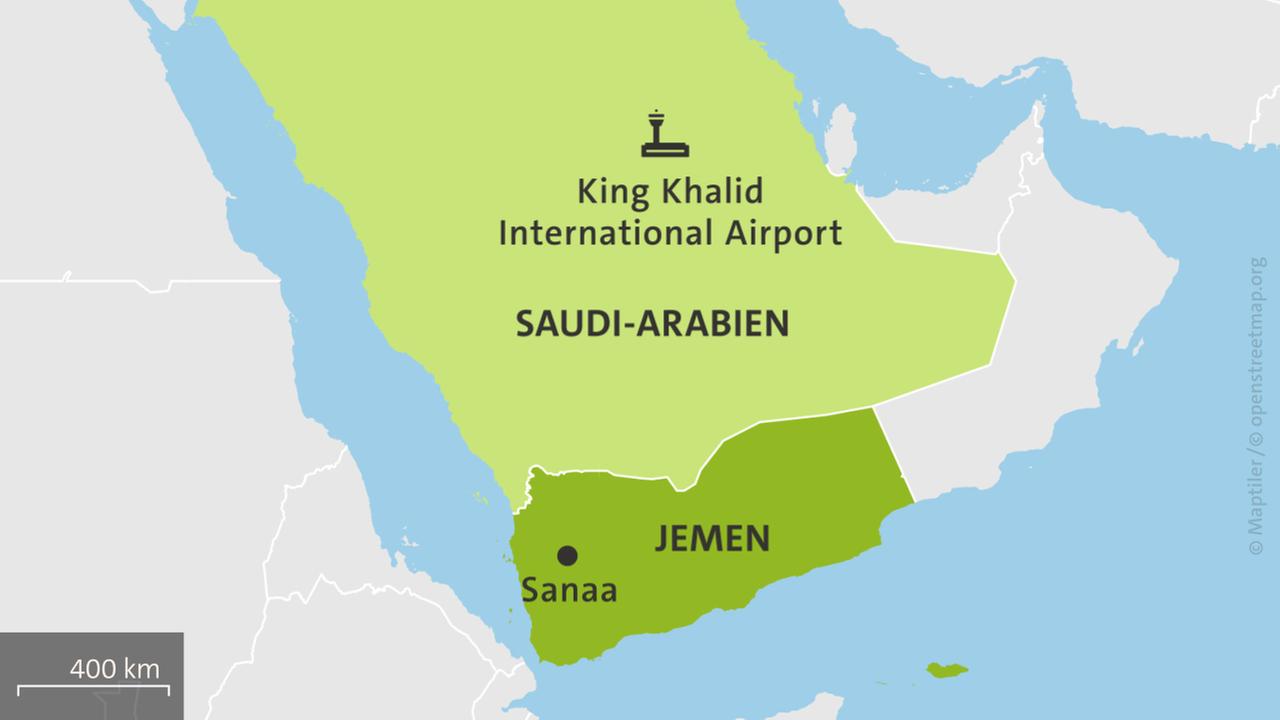
Riyadh, Saudi Arabia – [Date of publication, e.g., October 12, 2023] – In a significant and alarming escalation of the protracted conflict in Yemen, Houthi militants have launched a series of sophisticated missile and drone attacks targeting major civilian infrastructure in Saudi Arabia, including the King Khalid International Airport in the capital, Riyadh, and the King Fahd International Airport in Dammam. These assaults, which resulted in at least one fatality and multiple injuries, underscore the Houthi movement’s continued capacity to project power deep into Saudi territory and threaten regional stability. The attacks have drawn widespread international condemnation, with a coalition of nations warning of a "dangerous escalation" in violation of international law.
The latest wave of aggressions saw a Pakistani national killed and eleven other individuals wounded in an attack on King Khalid International Airport. The Saudi Civil Aviation Authority confirmed the casualties and stated that assessments of the material damage were ongoing. This incident follows an earlier, separate attack on Riyadh’s international airport that reportedly claimed the lives of twelve people, highlighting a worrying trend of increasing lethality and frequency in Houthi operations against the Kingdom. Beyond the civilian aviation hubs, the Iran-backed Houthi movement also claimed responsibility for targeting critical energy infrastructure, including a gas facility and a refinery operated by the state-owned oil giant Aramco, signaling a deliberate strategy to disrupt Saudi Arabia’s economic lifelines.
The intensification of these cross-border attacks comes amid a fragile international environment, with ongoing efforts to broker a lasting peace in Yemen repeatedly faltering. Saudi Arabia, leading a military coalition since 2015 to support the internationally recognized Yemeni government against the Houthis, views these actions as blatant acts of terrorism and a direct threat to its national security and the broader stability of the Arabian Peninsula.
Main Facts: A Resurgence of Hostilities
The recent Houthi offensives represent a stark reminder of the enduring volatility of the Yemeni conflict and its regional spillover effects. Key facts emerging from the latest developments include:
- Targeted Civilian Infrastructure: The primary targets were the King Khalid International Airport (RUH) in Riyadh and the King Fahd International Airport (DMM) in Dammam, both vital civilian aviation hubs. This marks a deliberate shift towards high-profile, economically significant, and symbolically important civilian sites.
- Casualties and Damage: An attack on King Khalid Airport resulted in the death of a Pakistani citizen and injuries to eleven others. While the full extent of property damage is still being evaluated, previous attacks on similar facilities have caused significant disruption and repair costs.
- Broader Offensive: The Houthi military command claimed responsibility for four separate attacks within a 24-hour period. These included the two aforementioned airports, as well as a critical gas facility and an oil refinery belonging to Aramco, Saudi Arabia’s national oil company.
- Advanced Weaponry: The attacks reportedly involved a combination of ballistic missiles, cruise missiles, and unmanned aerial vehicles (UAVs) or drones, indicating a sophisticated and evolving arsenal at the Houthis’ disposal, allegedly supplied or enhanced with Iranian technology and expertise.
- Houthi Justification and Threats: The Houthi leadership reiterated its stance that Saudi airports and airspace, with the sole exception of the holy cities of Mecca and Medina, are "legitimate targets" in retaliation for the Saudi-led coalition’s military operations in Yemen.
- Saudi Counter-Claims: Concurrently, the Houthis accused Saudi Arabia of conducting over 120 airstrikes on the Yemeni capital, Sanaa, and other provinces within the same timeframe. These claims, typical of the tit-for-tat nature of the conflict, could not be independently verified but underscore the continuous cycle of violence.
- International Condemnation: The R4 Group, comprising Turkey, Egypt, Pakistan, and Saudi Arabia, issued a joint statement condemning the Houthi attacks as a "flagrant violation of international law" and a "dangerous escalation" that cannot be justified.
These incidents underscore a troubling trend where civilian targets are increasingly drawn into a conflict that has already devastated Yemen and caused immense human suffering.
Chronology of Escalation: A Decade of Conflict
The recent attacks are not isolated incidents but rather the latest chapter in a long and brutal conflict that has its roots in a complex interplay of internal Yemeni dynamics and regional power struggles.
2014-2015: Houthi Ascendancy and Saudi Intervention
The conflict formally began in late 2014 when the Houthi movement, a Zaidi Shia group, capitalized on widespread discontent to seize control of Sanaa, the Yemeni capital, and subsequently large swathes of the country. This move ousted the internationally recognized government of President Abdrabbuh Mansur Hadi. Fearing the establishment of an Iran-aligned proxy on its southern border, Saudi Arabia, leading a coalition of Arab states, launched "Operation Decisive Storm" in March 2015. The stated aim was to restore Hadi’s government and counter Iranian influence.
Early Houthi Retaliation (2015-2018):
From the outset, the Houthis responded to the Saudi-led intervention with cross-border attacks, primarily targeting southern Saudi border towns and military installations using Katyusha rockets and improvised projectiles. These early attacks, while disruptive, rarely reached major urban centers or caused significant strategic damage.
The Rise of Sophisticated Attacks (2018-2019):
The Houthis’ capabilities significantly evolved, coinciding with increased allegations of Iranian support. In 2018, they began deploying more advanced ballistic missiles and drones, reaching further into Saudi territory. Abha International Airport, a civilian facility, became a frequent target, experiencing numerous missile and drone strikes that caused injuries and flight disruptions.
Aramco Attacks (September 2019):
A watershed moment occurred in September 2019 when coordinated drone and missile attacks struck the Abqaiq oil processing facility and Khurais oil field, two of the world’s most critical oil infrastructure sites. While the Houthis claimed responsibility, Saudi Arabia and the United States pointed fingers directly at Iran, citing the sophistication and trajectory of the weapons. These attacks temporarily halved Saudi Arabia’s oil production and sent global oil prices soaring, demonstrating the Houthis’ (or their patrons’) capacity to inflict significant economic damage.
Sustained Pressure (2020-2022):
Despite Saudi air defense systems intercepting numerous projectiles, Houthi attacks persisted throughout 2020, 2021, and into 2022. Targets included airports (Jazan, Najran, Abha), military bases, and various energy sites. The Houthis often announced these operations as retaliation for coalition airstrikes within Yemen, maintaining a cycle of violence. A notable period of relative calm was observed during a UN-brokered truce in April 2022, which largely held for six months, offering a glimmer of hope for peace. However, the truce ultimately collapsed in October 2022, reigniting large-scale hostilities.
Renewed Escalation (2023-Present):
Following the collapse of the truce, Houthi attacks on Saudi Arabia, though initially less frequent than in peak periods, have recently seen a dangerous resurgence, culminating in the current wave targeting Riyadh and Dammam airports and critical energy infrastructure. This latest escalation appears to be a direct response to continued Saudi-led operations and perceived stalemates in peace negotiations, emphasizing the Houthis’ strategy of using cross-border attacks as leverage. The repeated targeting of civilian airports, now with confirmed fatalities and significant injuries, marks a particularly grim turn in this long-running conflict.
Supporting Data: The Tools and Toll of Conflict
The nature and impact of these attacks are underscored by several crucial pieces of supporting data, highlighting the Houthis’ evolving arsenal, the humanitarian toll in Yemen, and the broader regional implications.
Houthi Weaponry:
The Houthis have demonstrated an increasing capability to launch long-range attacks using a mix of ballistic missiles, winged cruise missiles, and explosive-laden drones.
- Ballistic Missiles: Initially relying on Scud variants from the former Yemeni army arsenal, the Houthis have reportedly received technical assistance, components, and even fully assembled missiles from Iran, allowing them to develop and deploy more advanced, precision-guided variants like the "Badr" and "Quds" series. These missiles, with ranges exceeding 1,000 kilometers, can reach targets deep within Saudi Arabia.
- Cruise Missiles: The use of winged cruise missiles, which fly at lower altitudes and can maneuver, poses a different challenge to air defenses. The Houthis have displayed variants similar to Iranian models, capable of evading radar detection for longer periods.
- Unmanned Aerial Vehicles (UAVs)/Drones: Perhaps the most frequently deployed and adaptable weapon, Houthi drones range from simple, commercially available models modified for attack to more sophisticated, long-range "Samad" and "Qasef" series drones. These can be packed with explosives and are often used in swarms to overwhelm air defense systems. Iran’s role in providing drone technology, components, and training is widely cited by Saudi Arabia and Western intelligence agencies.
Impact on Saudi Arabia:
- Civilian Casualties and Disruption: The targeting of airports, schools, and residential areas has led to hundreds of civilian casualties in Saudi Arabia since 2015. Beyond direct harm, these attacks cause immense psychological distress, disrupt daily life, and impose significant economic costs through damage repair, increased security measures, and lost economic activity.
- Economic Vulnerability: The attacks on Aramco facilities highlight Saudi Arabia’s vulnerability as the world’s largest oil exporter. While the Kingdom has robust contingency plans, sustained or more successful attacks could disrupt global energy markets, impact investor confidence in Vision 2030 projects, and divert resources from development to defense.
- Air Defense Strain: Saudi Arabia operates a sophisticated air defense network, including Patriot missile systems provided by the U.S. and other advanced interceptors. While highly effective at intercepting a large percentage of incoming threats, the sheer volume and varied nature of Houthi attacks – especially drone swarms – place a considerable strain on these systems and demonstrate that no defense is impenetrable.
The Humanitarian Crisis in Yemen:
The backdrop to these cross-border attacks is the world’s worst humanitarian crisis in Yemen.
- Famine and Disease: Years of conflict, economic collapse, and blockades have pushed millions to the brink of famine. The UN estimates that over 21 million people (two-thirds of the population) require humanitarian assistance, and millions are internally displaced.
- Infrastructure Collapse: Healthcare systems, water networks, and other vital infrastructure have been decimated, leading to outbreaks of preventable diseases like cholera and diphtheria.
- Civilian Toll: Over 150,000 people have died directly from the fighting, and hundreds of thousands more from indirect causes like lack of food, water, and healthcare. The Houthis frequently cite this devastating humanitarian situation as justification for their retaliatory attacks on Saudi Arabia.
International Law and War Crimes:
The targeting of civilian airports and infrastructure, if proven to be intentional and indiscriminate, constitutes a serious violation of international humanitarian law and could be considered a war crime. While the Houthis claim their targets are legitimate military objectives, the presence of civilian passengers and workers at airports, and the inherent risk to civilian populations from such broad attacks, raise significant legal and ethical concerns.
Official Responses: Condemnation, Resolve, and Calls for Peace
The recent Houthi attacks have triggered a flurry of official responses from various stakeholders, reflecting a mix of condemnation, resolve, and urgent calls for de-escalation and a political solution.
Saudi Arabia and the Coalition:
Saudi Arabia’s official response has been swift and unequivocal. The Saudi Press Agency (SPA) and spokespersons for the Ministry of Defense and the Civil Aviation Authority have condemned the attacks as "cowardly terrorist acts" targeting civilian infrastructure and innocent lives. They have consistently affirmed Saudi Arabia’s inherent right to self-defense and vowed to take all necessary measures to protect its citizens and territory.
- Accusations against Iran: Saudi officials routinely accuse Iran of arming, financing, and training the Houthi rebels, enabling their cross-border aggression. They view these attacks as part of Iran’s broader destabilizing agenda in the region.
- Commitment to Yemen: While defending its borders, Saudi Arabia also reiterates its commitment to supporting the legitimate Yemeni government and working towards a comprehensive political solution in Yemen, often emphasizing its humanitarian aid efforts.
The R4 Group (Turkey, Egypt, Pakistan, Saudi Arabia):
The joint statement from the R4 Group, comprising influential regional and Islamic nations, represents a significant show of solidarity with Saudi Arabia. Their condemnation of the attacks as a "flagrant violation of international law" and a "dangerous escalation" underscores a shared concern about the Houthis’ actions. This collective voice aims to exert diplomatic pressure and reinforce the message that such targeting of civilian areas is unacceptable on the international stage. The involvement of Pakistan, which has a large expatriate community in Saudi Arabia and has previously contributed troops to the coalition, is particularly notable given the death of a Pakistani national in the King Khalid attack.
The Internationally Recognized Yemeni Government:
The Yemeni government, currently operating from Aden, strongly condemns the Houthi attacks on Saudi Arabia. They view these actions as further evidence of the Houthis’ rejection of peace and their alignment with Iran. The government consistently calls on the international community to label the Houthis as a terrorist organization and to support efforts to restore state authority across Yemen.
Iran’s Position:
Iran, while denying direct military support to the Houthis, acknowledges its political and spiritual backing for the group. Tehran typically frames Houthi attacks as legitimate acts of self-defense against the Saudi-led "aggression" in Yemen. Iran often calls for an end to the Saudi blockade and military intervention, advocating for a political resolution that respects Yemeni sovereignty.
United Nations and International Community:
The UN Special Envoy for Yemen and various UN agencies have consistently condemned attacks on civilians and civilian infrastructure by all parties to the conflict. They repeatedly call for an immediate and comprehensive ceasefire, unimpeded humanitarian access, and a renewed commitment to a political dialogue under UN auspices. The UN Security Council has passed resolutions condemning Houthi actions and urging de-escalation.
- United States: The U.S. State Department typically condemns Houthi cross-border attacks, reiterates its support for Saudi Arabia’s security, and calls for an end to the conflict through diplomacy. While the Biden administration has sought to re-engage diplomatically with Iran and end the Yemen war, it continues to provide defensive support to Saudi Arabia.
- European Union: EU member states generally align with the UN position, condemning violence, calling for respect for international humanitarian law, and supporting efforts towards a political settlement.
The confluence of these official responses highlights the complex diplomatic landscape surrounding the Yemen conflict, where condemnation of violence is often paired with calls for a political process that has, thus far, remained elusive.
Implications: A Widening Vortex of Instability
The recent Houthi attacks carry significant implications, threatening to unravel fragile peace efforts, exacerbate regional tensions, and deepen the humanitarian catastrophe in Yemen.
Undermining Peace Efforts:
The most immediate and critical implication is the severe setback to any prospects for a peaceful resolution in Yemen. The UN-brokered truce in 2022 offered a glimmer of hope, but its collapse and the subsequent escalation demonstrate the Houthis’ continued willingness to pursue military solutions and use cross-border attacks as a bargaining chip. Such aggressive actions make it incredibly difficult for Saudi Arabia to trust in a negotiated settlement, pushing the conflict further from a diplomatic end. International mediators face an uphill battle to bring parties back to the negotiating table in good faith when such destructive actions are ongoing.
Escalation of Regional Tensions:
The targeting of critical Saudi infrastructure, particularly oil facilities, risks a broader regional conflagration. The 2019 Aramco attacks briefly brought the region to the brink of war. Should future attacks inflict similar or greater damage, or result in a higher civilian death toll, Saudi Arabia might feel compelled to respond with overwhelming force, potentially dragging other regional and international actors into a more direct confrontation. The proxy nature of the conflict, with Saudi Arabia and Iran backing opposing sides, means any significant escalation could easily spill over into a direct confrontation between the two regional rivals. This could destabilize global oil markets and shipping lanes, particularly the Bab el-Mandeb Strait, a vital chokepoint for international trade.
Humanitarian Crisis Deepens:
For the people of Yemen, the escalation means an even bleaker future. Increased Saudi-led coalition airstrikes in retaliation for Houthi attacks will inevitably lead to more civilian casualties and further destruction of what little infrastructure remains. The ongoing blockade, often intensified during periods of Houthi aggression, will continue to restrict the flow of essential goods, food, and medicine, deepening the world’s worst humanitarian crisis. The cycle of violence further entrenches the internal divisions within Yemen, making reconciliation and national recovery seem an ever more distant dream.
Impact on Saudi Vision 2030:
Saudi Arabia’s ambitious Vision 2030 plan aims to diversify its economy, attract foreign investment, and transform the Kingdom into a global hub for tourism and business. Repeated attacks on its capital’s international airport and key economic infrastructure directly undermine this vision. Such incidents deter foreign investors, raise insurance premiums, and damage the country’s image as a safe and stable destination for commerce and tourism. Maintaining security is paramount for the success of Vision 2030, and these attacks pose a direct challenge to that objective.
Challenges to International Law and Norms:
The deliberate targeting of civilian airports and energy infrastructure by non-state actors, especially with weapons allegedly supplied by a state actor, poses a significant challenge to international law and norms governing armed conflict. It raises questions about accountability for war crimes and the effectiveness of international mechanisms to prevent such acts. The lack of a robust international response or enforcement mechanism could embolden other non-state actors to employ similar tactics in other conflict zones.
In conclusion, the recent wave of Houthi attacks on Saudi Arabia is a critical moment in the Yemen conflict. It signifies a dangerous re-escalation, a deliberate targeting of civilian life and critical infrastructure, and a profound challenge to regional stability. Without a concerted and effective international effort to de-escalate tensions and reignite a meaningful peace process, the risk of the Yemen conflict spiraling into an even wider and more devastating regional confrontation remains perilously high. The immediate future for millions in Yemen and the broader Gulf region hinges on breaking this cycle of violence.