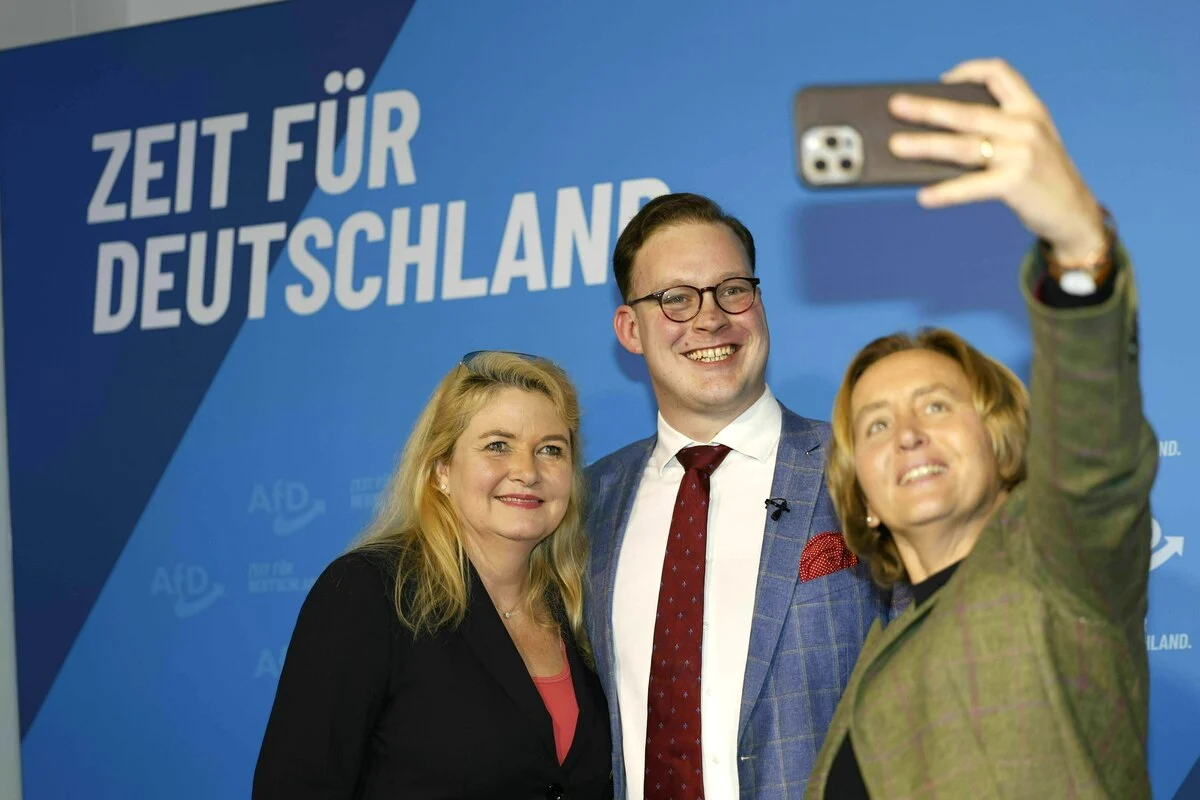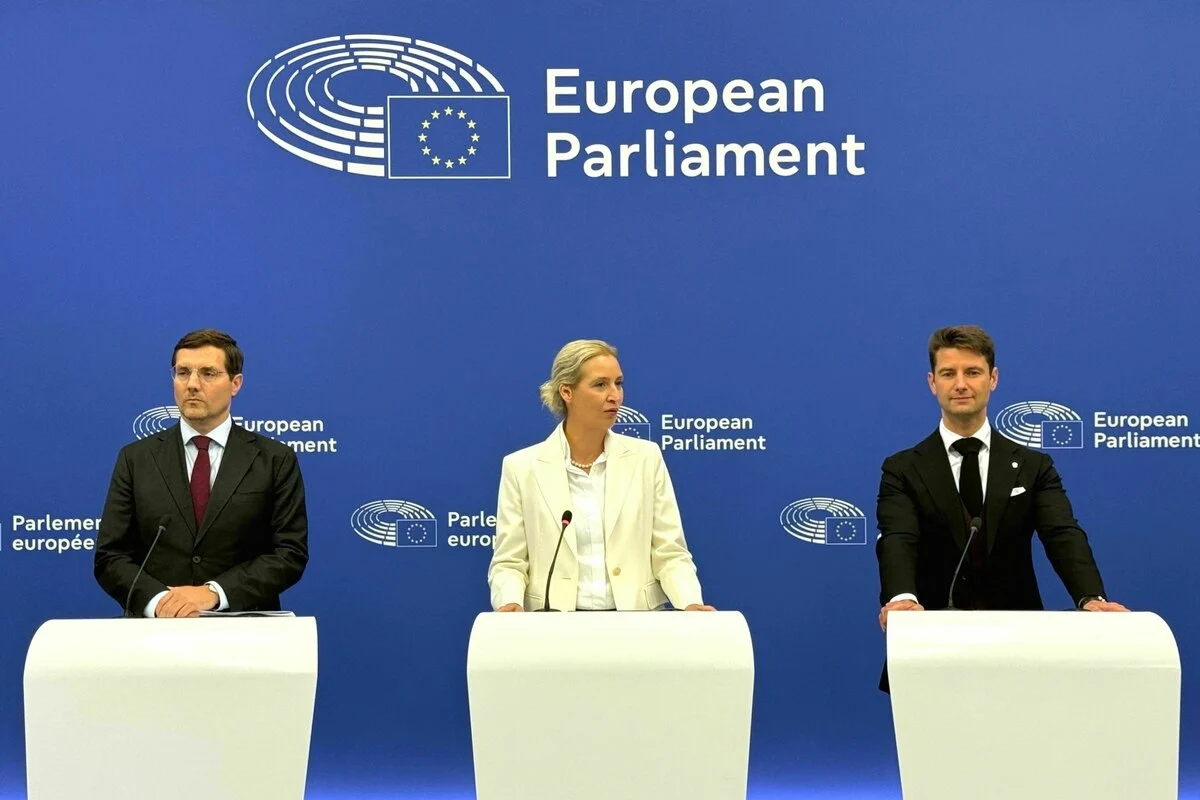
In a move that signals a significant tactical recalibration, Alice Weidel, co-chair of the Alternative for Germany (AfD), has unveiled a comprehensive new European policy framework. Presented directly from the heart of the European Parliament in Strasbourg, the 25-page document outlines a radical plan to dismantle the current institutional architecture of the European Union. While the party’s rhetoric has historically been defined by an aggressive push for a “Dexit”—a full withdrawal of Germany from the European Union and the Eurozone—this latest proposal marks a sophisticated, if no less extreme, pivot: the AfD no longer explicitly advocates for an exit, but rather for the systematic hollow-out of EU institutions to facilitate a “German Europe” dominated by “patriotic forces.”
Main Facts: A Blueprint for Institutional Deconstruction
The AfD’s “New Deal for Europe,” as presented by Weidel, aims to strip the European Commission of its supranational powers, effectively reducing it to a mere secretariat for the 27 heads of state and government. Under this framework, the Commission would lose its ability to act as an independent executive body, shifting the balance of power decisively toward national capitals.
Central to this vision is the concept of the “opt-out.” The AfD proposes that Germany, the EU’s largest economy, should unilaterally opt out of significant community tasks, including migration, social policy, and foreign policy. By drastically slashing Germany’s financial contributions to the EU budget, the party seeks to end what it labels as Germany’s status as the “overburdened paymaster” of the bloc.

Furthermore, the document envisions a radical transformation of the European Parliament. The AfD proposes that the current directly elected legislative body be replaced by a powerless chamber composed of delegates sent from national parliaments. This effectively calls for the abolition of the European elections, arguing that political legitimacy can only be derived from national mandates.
Chronology of the AfD’s European Strategy
The evolution of the AfD’s stance on Europe has been a journey from fringe Euro-skepticism to systemic institutional opposition.
- 2013–2016: The party was founded primarily on an anti-Euro platform. During this period, the central demand was the dissolution of the Eurozone and a return to national currencies.
- 2017–2023: As the party moved further to the right, the “Dexit” narrative gained momentum. During the 2024 European election campaign, Alice Weidel famously described the British Brexit as a “model for Germany,” suggesting that the UK’s path should be emulated.
- Late 2024–Present: Recognizing that a hard exit strategy alienates segments of the electorate concerned about economic stability, the AfD has shifted toward the “Reform from Within” narrative. This tactical maneuver mirrors the strategies employed by other European right-wing populist leaders, most notably France’s Marine Le Pen.
Supporting Data and Ideological Context
The AfD’s current strategy is heavily influenced by a desire to emulate the “moderate” branding currently being tested by the Rassemblement National (RN) in France. By softening the edges of their anti-EU rhetoric, party leadership hopes to normalize their presence in the mainstream political discourse.

However, the substantive policy shifts remain profound. The insistence that decisions on “war and peace” must remain the sole, inviolable right of the nation-state is a direct challenge to the EU’s collective security architecture. This policy, while presented under the guise of national sovereignty, serves as a thinly veiled mechanism to justify the cessation of military and financial aid to Ukraine—a recurring, if sometimes muted, theme in the party’s recent legislative contributions.
Data from recent parliamentary activity shows that the party is not merely campaigning; it is actively integrating into the legislative machinery of the EU. Despite the existence of a “cordon sanitaire” (the so-called “Brandmauer”) in Berlin, European-level cooperation between center-right factions and the far-right is already occurring. In specific instances, such as the debate over EU asylum reform, conservative and right-wing blocs have found common ground, effectively eroding the barriers that were supposed to isolate the AfD from power.
Official Responses and Political Implications
The proposal has been met with sharp criticism from across the political spectrum in Germany. Pro-European parties have accused Weidel of attempting to destroy the EU’s capacity to act in an increasingly unstable global environment. Critics argue that the “reform” proposed by the AfD is a euphemism for the total paralysis of the European project.

Conversely, the AfD’s attempt to paint itself as a reformist force has created an uncomfortable dynamic for the CDU/CSU. While leaders like Friedrich Merz continue to preach the necessity of the “Brandmauer,” the reality in Strasbourg tells a different story. The increasing frequency of “punktuell” (selective) cooperation on votes related to migration and bureaucratic deregulation has led to accusations that the center-right is being pulled into the AfD’s orbit, even if inadvertently.
The implications of this shift are twofold. First, it signifies that the AfD has abandoned the idea of being a protest party on the margins and is now positioning itself as a party of government. By targeting the mechanics of the EU, they are attempting to exert influence from within the system to ensure that, should they ever come to power, the institutional tools required to reverse integration are already in place.
Second, the “normalization” of these positions risks shifting the “Overton Window” of European politics. When a major party suggests that the European Commission should be reduced to a secretariat, it forces other parties to respond, often by moving closer to the right-wing position to remain competitive. This creates a feedback loop where the radical dismantling of the EU becomes a legitimate topic of debate rather than a fringe demand.

Implications for the Future of European Integration
The strategic pivot of the AfD toward a “German Europe” is not merely a change in branding; it is a fundamental shift in the party’s approach to power. By abandoning the demand for an immediate exit, the AfD has bought itself the political space to work toward the gradual erosion of European unity from within.
If the AfD were to gain significant influence in a future German government, the impact on the EU would be seismic. Germany, as the primary economic engine of the bloc, holds the power to veto, slow, or reform nearly every major initiative. An AfD-led, or even an AfD-influenced, government could effectively halt the process of European integration, leading to a fragmented, disorganized union that would be unable to speak with a single voice on the global stage.
Furthermore, the party’s influence is growing not just in Germany, but through its participation in cross-border right-wing alliances. The recent scrutiny of the "Europe of Sovereign Nations" (ESN) parliamentary group—to which the AfD belongs—highlights that the party is part of a larger, transnational movement aimed at dismantling the supranational character of the EU.

In conclusion, Alice Weidel’s new European program is a masterclass in political maneuvering. By masking radical deconstruction as a common-sense “New Deal,” the AfD is attempting to make the unthinkable appear inevitable. Whether this strategy will succeed in attracting a broader base of voters remains to be seen, but the threat it poses to the existing European order is clearer than ever. As the lines between protest and governance blur in the halls of Strasbourg, the future of the European Union increasingly depends on whether the remaining mainstream parties can sustain a credible defense against this systematic, institutional challenge.