

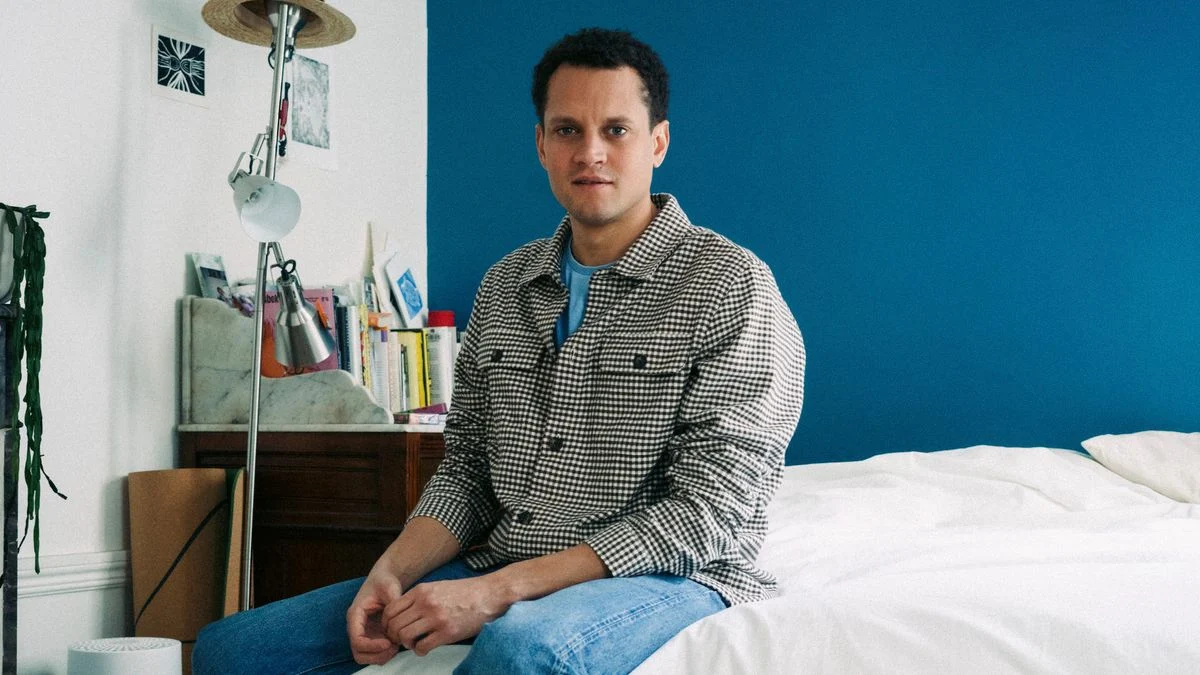
In the digital age, the barrier to entry for the stock market has never been lower. With a smartphone, a few taps, and a credit line, anyone can transform from a novice retail investor into a high-stakes player. But for Alexander Hurst, this accessibility proved to be a double-edged sword that ultimately cut through his financial, personal, and mental stability.
Hurst, a 35-year-old former student who once lived in the precarious uncertainty of a “starving student” lifestyle in Paris, experienced a meteoric rise to wealth—and an equally devastating collapse. In his newly published book, “The Best 1.2 Million Dollars I Ever Lost,” he chronicles his transition from a struggling academic to a day-trading millionaire, and the subsequent ruin that followed.
The Genesis of an Obsession: From Reddit to Riches
The seeds of Hurst’s financial tragedy were sown in the spring of 2020. As the COVID-19 pandemic paralyzed the global economy, Hurst found himself confined to a cramped Parisian apartment, struggling to make ends meet. The boredom of lockdown, coupled with the existential anxiety of his situation, pushed him toward the burgeoning corners of the internet where amateur traders gathered to discuss “get-rich-quick” schemes.
It was on the infamous Reddit forum WallStreetBets that Hurst found his inspiration. The community was abuzz with tales of ordinary people turning modest sums into fortunes through aggressive stock options trading, particularly in companies like Tesla.
“I was 29 and broke,” Hurst recalls. “I didn’t want to live like a student anymore. I thought that my dating life would become easier if I weren’t living in a flat where a thin piece of plasterboard separated me from my roommate.”
Driven by a mix of social insecurity and a desire for upward mobility, Hurst took a bold, if not reckless, step: he secured a 12,500-euro bank loan. Without formal financial training or a background in investment strategy, he poured this capital into the markets.
A Chronology of a Financial Fever Dream
The timeline of Hurst’s rise and fall is a textbook example of how the gamification of finance can distort reality.
- Early 2020: The "Initial Spark." Prompted by pandemic lockdowns, Hurst borrows 12,500 euros and begins trading options, viewing the volatility of the market as an opportunity rather than a risk.
- Mid-2020: The "Exponential Phase." As the pandemic accelerated, so did his portfolio. Hurst describes witnessing the same exponential growth in his personal wealth that he was seeing in global infection statistics. The psychological feedback loop was instantaneous.
- Late 2020 to 2021: The "Peak." Hurst’s net worth balloons to over 1.2 million dollars. He is no longer just a trader; he is, in his own words, “a man possessed.” The thrill of the win begins to override his capacity for rational judgment.
- The Downward Spiral: The volatility of the market eventually turned against him. The same mechanisms that propelled him to the top—high-leverage options trading—drove him into a deep hole once the trend shifted.
- The Aftermath: By the end of his journey, Hurst was left with nothing. He faced a six-figure debt to the US tax authorities and various lending institutions.
The Anatomy of the "Retail Gambler"
Hurst’s experience highlights a growing trend among millennials and Gen Z: the nihilistic "I-don’t-care" attitude toward financial risk. He admits that his background provided him with no framework for understanding wealth. His parents, whom he describes as "destitute hippies," had never engaged in financial planning. To them, a bank account was simply a place to store cash, not an engine for growth.

This lack of financial literacy, when combined with modern trading apps designed to feel like mobile games, created a dangerous cocktail. “There is this pervasive nihilism among my generation,” Hurst says. “We look at the world and think, ‘The system is broken, so why not take a massive risk?’ It’s a collective shrug of the shoulders while we gamble with money we don’t really have.”
The psychological toll was profound. Hurst describes becoming an "arrogant version of himself." He stopped seeing money as a medium of exchange and began viewing it as a scorecard. This detachment from reality meant that losing 100,000 dollars in a single day felt less like a financial disaster and more like a frustrating level-loss in a video game—until the real-world consequences arrived.
Data and Disparity: The Rise of the Amateur Investor
Hurst is far from an outlier. During the pandemic, the number of retail investors in the market surged globally. According to market data from 2020 and 2021, platforms like Robinhood and eToro saw millions of new accounts opened by individuals under the age of 35.
Supporting data from regulatory bodies indicates that while a small percentage of these retail traders achieved significant short-term gains, the vast majority—nearly 80% according to some studies—suffered net losses over a two-year period. The "gamification" of trading—using bright colors, confetti animations upon trades, and leaderboard-style notifications—is explicitly designed to encourage frequent engagement.
Experts warn that this creates a "casino effect," where the dopamine rush of the trade becomes more addictive than the asset itself. The anonymity of online forums like Reddit further exacerbates this, creating an echo chamber where only the "wins" are celebrated, while the crushing, quiet losses of the majority remain hidden.
The Institutional and Regulatory Response
While individual traders like Hurst bear the responsibility for their decisions, regulators have begun to cast a critical eye on the platforms that facilitate this behavior.
In the United States, the Securities and Exchange Commission (SEC) has held hearings regarding the "best interest" standards for broker-dealers. The question is: To what extent are apps responsible for the behavioral nudges they provide to users?
The consensus among financial psychologists is that current disclosure warnings are insufficient. "A disclaimer at the bottom of a screen is not an effective counter-measure against the neurological impulses triggered by a ‘buy’ button," says one financial analyst.

Hurst himself has become an advocate for a more sober approach. He emphasizes that investing is a tool for long-term stability, not a mechanism for overnight wealth. "We need to talk about the ‘why’ behind the gambling," he asserts. "If you are playing the market to escape a reality you hate, you have already lost."
The Long Road to Recovery: Implications for the Future
Today, Hurst stands at a financial baseline—or close to it. Through negotiation with the IRS, he managed to reduce his tax burden to 29,000 dollars, an amount he is slowly paying back. He finds himself in the same financial position he occupied before his 2020 odyssey.
However, the non-financial costs remain. The experience changed his perspective on relationships, success, and the meaning of "security."
The implications for others are clear: the democratization of the stock market is a positive development only if it is paired with a democratization of financial literacy. Without it, the market becomes a dangerous arena where the vulnerable are harvested by the volatility they seek to master.
As Hurst reflects on his journey, his message is one of cautionary realism. "The greed didn’t just turn on my desire for wealth; it turned off my common sense," he admits. "I was possessed by the idea that I could beat a system designed to keep me in my place. But the system doesn’t care if you win or lose. It only cares that you keep playing."
For those currently eyeing the charts on their smartphones, hoping for the next big breakout, Hurst’s story serves as a stark reminder: the house always has the edge, and in the game of extreme speculation, the only real winner is the market itself.


















Leave a Reply