New Delhi, a city synonymous with both vibrant culture and suffocating smog, has officially declared war on its own air quality. As the Indian capital consistently ranks among the most polluted cities globally, the regional administration has unveiled a sweeping, multi-year strategy designed to fundamentally alter the city’s transport landscape. By pivoting aggressively toward electric mobility, Delhi aims to dismantle the reliance on internal combustion engines that have long choked its residents.
The initiative, characterized by a mix of financial incentives and hard-line regulatory mandates, marks a turning point in the city’s environmental policy. With a roadmap extending to 2030, the government is betting that a transition to zero-emission vehicles is the only viable path to restoring breathable air to its 33 million residents.
The Core Mandate: Facts and Figures
At the heart of the new policy is a robust subsidy structure designed to make the transition to electric vehicles (EVs) financially accessible for the average commuter and small-scale transport operator.
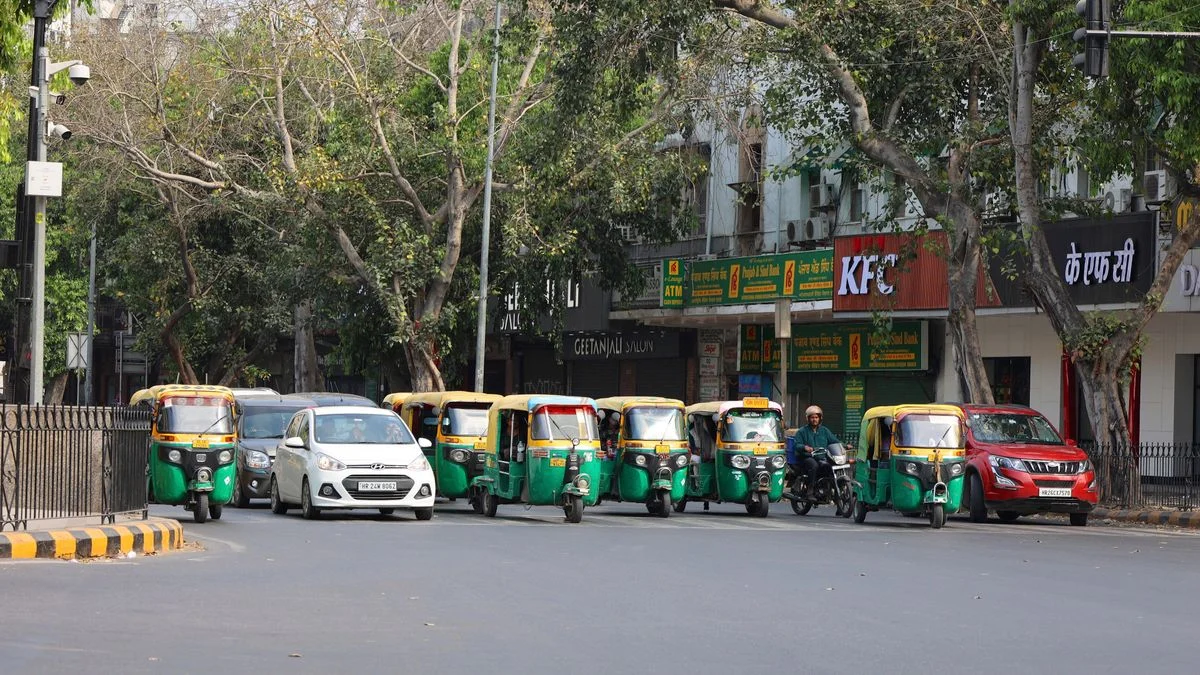
Beginning immediately and running through the end of March 2030, the administration is offering a direct subsidy of 30,000 Indian Rupees (approximately €280) to any resident who trades in their traditional internal combustion engine (ICE) motorcycle or scooter for a new electric two-wheeler. For the iconic three-wheeled tuk-tuks—the lifeblood of Delhi’s last-mile connectivity—the subsidy jumps to 50,000 Rupees.
However, the carrots are balanced by significant sticks. The government has set a strict timeline for the phase-out of fossil-fuel vehicles:
- January 2027: Only electric auto-rickshaws and small electric delivery vans will be eligible for new vehicle registration.
- January 2028: The registration ban extends to all new two-wheeled vehicles powered by gasoline or diesel.
This policy transition is not merely a suggestion; it is a structural redesign of Delhi’s transport sector, effectively setting a "death date" for the purchase of new petrol-powered light vehicles within the National Capital Territory.
Chronology of a Crisis: Why Delhi Needs a Change
The urgency behind these measures is rooted in decades of environmental degradation. To understand the gravity of this policy, one must look at the timeline of Delhi’s atmospheric decline.
The Early 2000s: As India’s economy boomed, so did the number of private vehicles. Despite early efforts to move public transport to Compressed Natural Gas (CNG), the sheer volume of personal cars and two-wheelers quickly overwhelmed the city’s infrastructure.
2015–2019: The "Great Smog" years. Delhi began appearing at the top of IQAir’s global rankings for the worst air quality. Annual events—such as the burning of crop stubble in neighboring states combined with winter temperature inversions—turned the city into a gas chamber.
2020–2022: The COVID-19 pandemic provided a brief, accidental glimpse of what a cleaner Delhi could look like during the strict lockdowns. The temporary cessation of traffic resulted in clear blue skies, creating significant political pressure for the government to find ways to maintain cleaner air once normalcy returned.
2023–2024: The administration intensified its research into transport emissions, identifying that while industrial pollution and waste burning are factors, the "mobile sector" contributes a disproportionate amount of nitrogen oxides and fine particulate matter (PM2.5) directly at street level.
2025 and Beyond: The current policy marks the transition from reactive, short-term measures (such as "odd-even" traffic rationing) to a long-term, structural transformation.
Supporting Data: The Anatomy of Delhi’s Smog
To justify such aggressive mandates, the administration has relied on granular data. The environmental profile of New Delhi is a complex tapestry of pollutants, but the contribution of the transport sector is undeniable.
The Role of Two-Wheelers and Rickshaws
While heavy-duty trucks and diesel buses are often blamed, it is the sheer density of two-wheelers—scooters and motorcycles—that creates the "background noise" of pollution in the city. Because these vehicles are frequently poorly maintained and lack sophisticated catalytic converters, their emissions per kilometer are disproportionately high.
The Energy Cost of Transport
Data from the Ministry of Petroleum and Natural Gas indicates that Delhi’s transport sector is a major consumer of imported fossil fuels. By transitioning to electricity, the government hopes to not only clean the air but also reduce the city’s reliance on volatile global oil markets. Furthermore, as India expands its solar and wind energy capacity, the "well-to-wheel" carbon footprint of an electric vehicle in Delhi is expected to drop significantly over the next decade.
Health Implications
Medical research conducted by the All India Institute of Medical Sciences (AIIMS) has highlighted a direct correlation between peak traffic hours and emergency room admissions for respiratory distress. Children and the elderly remain the most vulnerable, with studies suggesting that long-term exposure to the current levels of PM2.5 in Delhi shortens the average life expectancy of a resident by several years.
Official Responses and Political Will
The policy has been championed by Delhi’s administrative leadership, most notably Rekha Gupta, the head of the administration. In a recent press conference, Gupta labeled the program a "historic step" toward environmental sovereignty.
"We are not just changing vehicles; we are changing the paradigm of urban living," Gupta stated. "The cost of inaction has become too high. We have reached a point where the air we breathe dictates our health, our productivity, and our future. This move to force the transition to EVs is a necessary intervention to effectively contain the pollution caused by road traffic."
However, the reaction from the public and industry stakeholders has been mixed. While environmentalists have lauded the move, trade associations representing small-scale delivery riders and auto-rickshaw drivers have expressed concerns regarding the infrastructure required to support this shift. "We are willing to move to electric," noted a representative for a Delhi rickshaw union, "but the charging network must be as ubiquitous as the petrol pump."
Implications: The Road Ahead
The implications of this policy extend far beyond the city limits of New Delhi. If the capital succeeds, it will provide a blueprint for other Tier-1 cities in India—such as Mumbai, Bangalore, and Kolkata—to follow suit.
Challenges to Implementation
- Charging Infrastructure: The most significant hurdle remains the "range anxiety" and the availability of charging stations. The government has committed to installing thousands of fast-charging kiosks, but scaling this to meet the needs of millions of vehicles will require massive private-public partnerships.
- Grid Stability: Integrating millions of electric vehicles into the city’s power grid requires a smart-grid upgrade to handle the surge in electricity demand, particularly during peak evening hours when most commuters charge their vehicles.
- Economic Disruption: For the lower-income demographic, the transition represents a financial burden, even with subsidies. Ensuring that credit remains available for these buyers to purchase new vehicles is essential to avoid mass job losses in the transport sector.
A Global Model for Emerging Economies
Delhi is now essentially a living laboratory for the Global South. Many cities in developing nations struggle with the exact same triad of issues: high population density, aging vehicle fleets, and extreme air pollution. If India’s capital can prove that a rapid transition to electric mobility is possible without paralyzing its economy, it will set a powerful precedent for other rapidly urbanizing nations in Asia and Africa.
The Long-Term Vision
By 2030, the goal is for the streets of Delhi to be fundamentally quieter and significantly cleaner. The shift away from the constant drone of internal combustion engines toward the near-silent operation of electric motors is expected to reduce noise pollution as well—a frequently overlooked benefit of the transition.
As the program begins, the eyes of the world are on Delhi. The city has long been a cautionary tale of environmental neglect; it is now attempting to write a new narrative as a pioneer of green urbanism. The road ahead is paved with significant logistical challenges, but for a city that has struggled to breathe for far too long, the switch to electric represents more than just a technological upgrade—it is a collective aspiration for a future where the sky is once again visible, and the air is safe to inhale.