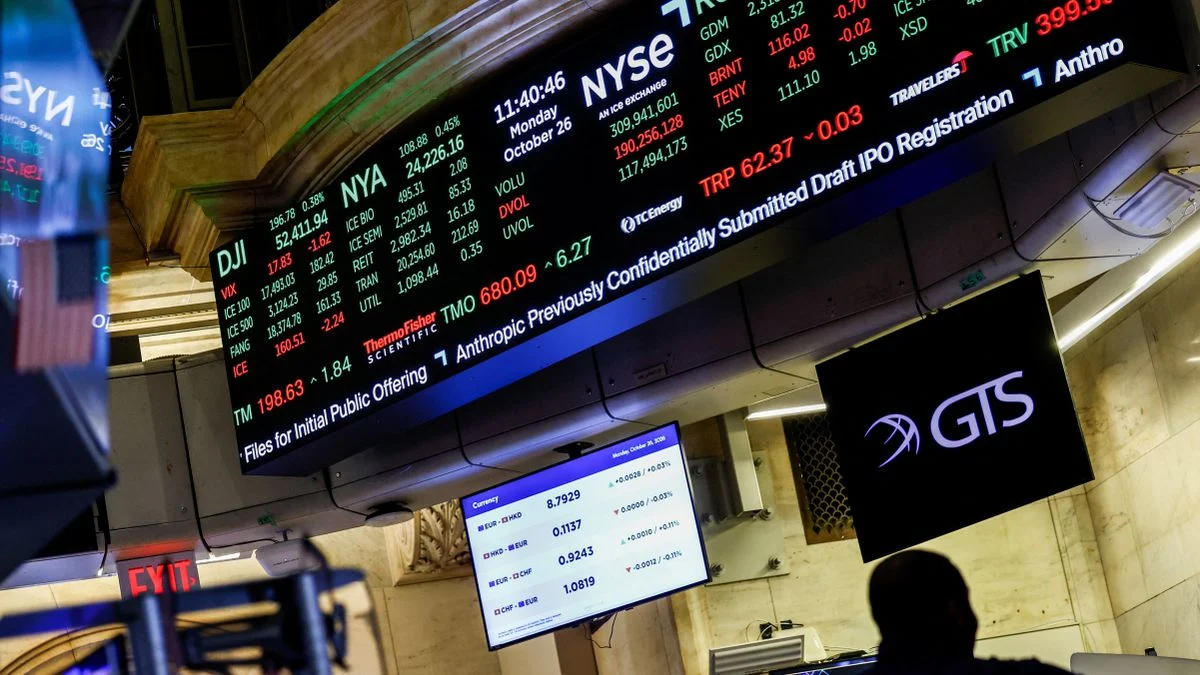
In a move that marks a definitive turning point for the generative artificial intelligence sector, San Francisco-based AI powerhouse Anthropic has officially filed for an Initial Public Offering (IPO) in the United States. The company, celebrated as the developer of the sophisticated "Claude" chatbot series, has submitted its formal registration documents to the U.S. Securities and Exchange Commission (SEC). If the regulatory process proceeds as anticipated, Anthropic will debut on the Nasdaq exchange under the ticker symbol "ANT," positioning itself as the latest multi-billion-dollar titan to challenge the status quo of the technology sector.
The Mechanics of the IPO: A Strategic Market Entry
The planned public listing is being orchestrated by an elite syndicate of financial institutions, with Wall Street giants Goldman Sachs and Morgan Stanley serving as lead underwriters. According to the preliminary prospectus filed with the SEC, the offering will comprise a dual-pronged approach: the issuance of new equity to fuel the company’s capital-intensive research operations, and the sale of existing shares by early investors looking to achieve liquidity.
While the specific number of shares to be offered and the projected valuation—the "price tag" of the company—remain subject to market conditions, the timeline for the "roadshow," the critical period during which company executives market the offering to institutional investors, is scheduled to commence in the week of November 9. This high-profile launch is expected to be one of the most scrutinized IPOs in recent memory, serving as a litmus test for investor appetite regarding the long-term sustainability of the AI boom.
Chronology: From Research Lab to Wall Street Contender
Anthropic’s ascent has been nothing short of meteoric. Founded in 2021 by former OpenAI executives, including siblings Dario and Daniela Amodei, the company was built on the premise of "Constitutional AI"—a design philosophy that prioritizes safety, ethics, and steerability in large language models.
- 2021–2022: The Incubation Phase: Anthropic began its journey with significant private funding, focusing on developing the foundational models that would eventually become the "Claude" family. Unlike competitors who raced toward consumer adoption, Anthropic initially prioritized a more measured approach, working closely with researchers to mitigate the risks of model "hallucinations" and biased outputs.
- 2023: The Breakthrough: The release of Claude 2 and subsequent updates thrust the company into the global spotlight. It quickly became the primary alternative to OpenAI’s ChatGPT, winning favor among enterprise clients for its longer context window and superior reasoning capabilities.
- 2024–2025: The Scaling Era: A series of massive capital injections from tech giants like Amazon and Google cemented Anthropic’s position as a heavyweight. These partnerships were not merely financial; they provided the cloud infrastructure necessary to train models of unprecedented scale.
- 2026: The IPO Filing: Following a year of explosive revenue growth, the company determined that the public markets are the logical next step to provide the massive, sustained liquidity required to maintain its lead in the global AI arms race.
Financial Snapshot: The Paradox of Growth and Burn
The financial data disclosed in the SEC filing paints a stark, if somewhat startling, picture of the modern AI economy. Anthropic’s growth trajectory is unparalleled, but it comes at a staggering cost.
A Triple-Digit Surge in Revenue
In the first half of 2026, Anthropic reported a revenue figure of $16.3 billion, a massive leap from the $1.2 billion recorded in the same period of the previous year. This growth is driven primarily by the company’s pivot toward enterprise-grade AI solutions, where corporations are paying record sums to integrate Claude into their internal workflows, coding suites, and customer support infrastructure.
The Cost of Innovation
Conversely, the "burn rate" associated with this growth has reached historic proportions. The company reported a net loss of $80.7 billion for the first half of 2026, compared to $13 billion in the first half of 2025.
Market analysts point out that this discrepancy is inherent to the business model of frontier AI developers. Training a state-of-the-art model requires tens of thousands of high-end graphics processing units (GPUs) from suppliers like NVIDIA, along with the massive energy costs required to power data centers. When companies like Anthropic "scale," they are essentially trading billions of dollars in liquidity for the computing power necessary to maintain a competitive edge.
Competitive Landscape: The Battle for the AI Throne
Anthropic is not operating in a vacuum. It is locked in a fierce, zero-sum game for dominance with the "Big Three" of the AI world: OpenAI (backed by Microsoft), Google, and Meta.
Each of these entities possesses a distinct strategic advantage. Google controls the hardware and the cloud ecosystem; Microsoft provides the distribution network; and OpenAI maintains the "first-mover" advantage in consumer recognition. Anthropic’s competitive thesis rests on its reputation for safety and its specialized, highly reliable enterprise models. By going public, Anthropic aims to secure the "war chest" required to keep pace with these behemoths, ensuring that it is not forced to compromise its research trajectory due to funding constraints.
Strategic Implications: Why an IPO?
The decision to go public is a strategic maneuver designed to solve three fundamental challenges:
- Capital Access: While venture capital has been generous, the scale of current AI infrastructure requirements—which some experts estimate will require trillion-dollar investments over the next decade—demands the depth and liquidity of the public equity markets.
- Corporate Governance and Transparency: Publicly listing mandates a level of financial reporting and transparency that can, in some cases, increase the trust of Fortune 500 enterprise clients who are wary of the "black box" nature of private AI firms.
- Talent Retention: In the battle for top-tier AI researchers, public stock options are a potent currency. By offering shares that are easily tradable on the Nasdaq, Anthropic significantly improves its ability to attract and retain the world’s most sought-after engineers.
Official Responses and Market Sentiment
While Anthropic executives have maintained a quiet posture—typical of the "quiet period" mandated by the SEC—industry observers are divided. Skeptics point to the ballooning losses as a sign that the AI bubble may be nearing a correction, questioning whether any single model can generate enough revenue to justify the massive overhead of modern data centers.
Conversely, proponents argue that Anthropic is an essential pillar of the future global economy. They suggest that the $80.7 billion loss is not a "waste," but rather a massive capital expenditure on the most valuable resource of the 21st century: machine intelligence.
"The market is essentially betting on the long-term utility of the product," says Sarah Jenkins, a lead analyst at TechFinance Global. "Anthropic is not just selling software; they are building the utility layer of the internet. The IPO is the market’s way of saying, ‘We believe in the infrastructure.’"
Conclusion: A New Chapter for Silicon Valley
As the November 9th start date for investor outreach approaches, all eyes will be on the Nasdaq. The success or failure of the "ANT" listing will likely set the tone for the entire tech sector for the next several years. If the offering is met with strong demand, it could trigger a wave of further AI-focused IPOs, potentially ushering in a new "Gold Rush" era for the industry.
However, should the market respond with caution regarding the company’s net losses, it could signal a cooling period for AI valuations, forcing startups to pivot toward profitability over raw expansion. Regardless of the outcome, one thing is certain: Anthropic has officially graduated from a research laboratory to a global financial entity, and its next chapter will be defined not just by the intelligence of its code, but by the rigor of its balance sheet.