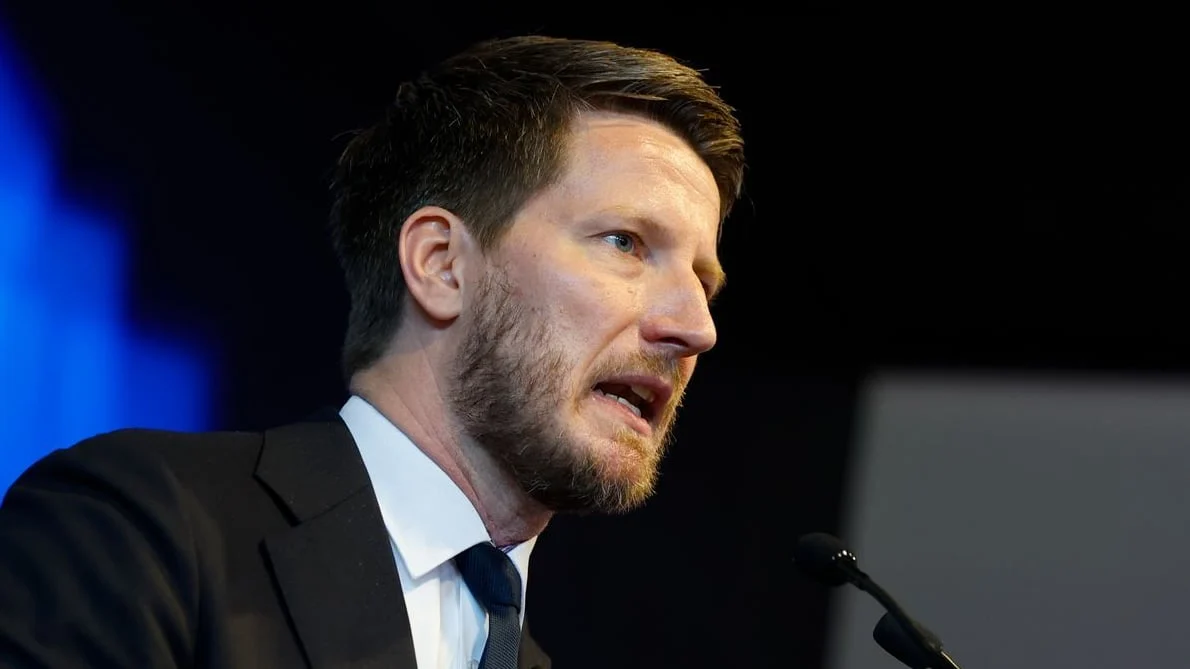
DÜSSELDORF – In a significant pivot aimed at averting a full-scale institutional crisis, Martin Vincentz, the state chairman of the Alternative for Germany (AfD) in North Rhine-Westphalia (NRW), has adopted a conciliatory tone toward the party’s federal leadership. Following days of intense public hostility and legal maneuvering, Vincentz is signaling a tactical retreat, hoping to stabilize the fractured state chapter ahead of critical upcoming electoral challenges.
The Shift Toward De-escalation
In a formal communication addressed to federal party co-chairs Alice Weidel and Tino Chrupalla, Vincentz expressed regret over the "mutual escalation" that has dominated headlines and internal discourse for the past week. The correspondence, obtained by the German Press Agency (dpa), reveals a desire to move past the inflammatory rhetoric that threatened to alienate the party’s base and provide ammunition for political rivals.
Vincentz attributed the rapid deterioration of relations to a fundamental disconnect between the federal board and the regional reality. He argued that the national leadership was forced to make decisions based on a "completely different state of knowledge" than that possessed by those on the ground during the contentious state party convention. By shifting the blame to a communication failure rather than ideological malice, Vincentz is attempting to carve out a path for reconciliation.
"The goal now must be to de-escalate and return to a calm working mode," Vincentz wrote. He emphasized that for the party to succeed in the upcoming state elections in Saxony-Anhalt, Berlin, and Mecklenburg-Vorpommern, it is paramount to prevent further damage to the party’s public image.
Chronology of a Fractured State
To understand the gravity of the current truce, one must look at the deep-seated divisions that have paralyzed the NRW branch of the AfD for years.
The Structural Divide
The NRW AfD has long been a microcosm of the party’s national ideological tensions. The state association is effectively split between two distinct factions:
- The Pragmatists: Centered around state chairman Martin Vincentz, this faction is generally perceived as more aligned with the party’s "moderate" wing, focused on electoral viability and institutional stability.
- The Hardliners: This camp, which gravitates around the controversial Bundestag member Matthias Helferich, pushes for a more aggressive, right-wing ideological profile, often clashing with the party’s attempts at broader mainstream appeal.
The Nomination Crisis
The latest eruption occurred during the process of assembling the candidate list for the upcoming state legislative elections. Tensions reached a boiling point when the Helferich-aligned wing accused the Vincentz camp of "cronyism"—alleging that the list was being curated to exclude rival factions and ensure that only loyalists to the state board were positioned for office.
The Federal Intervention
As internal complaints mounted, the AfD federal leadership stepped in. In an unusual display of top-down authority, Weidel and Chrupalla publicly accused Vincentz of procedural irregularities during the candidate nomination process. They demanded a halt to the proceedings and a total restart of the convention.
However, the rank-and-file delegates proved resilient. The majority of those present backed Vincentz, defying the federal mandate and pushing through with the convention. This act of defiance prompted the state board to file for an injunction at the Düsseldorf Regional Court, marking a rare moment where a state branch sought legal remedy against its own federal executive.
Legal and Administrative Implications
The announcement that the NRW branch is withdrawing its legal petition against the federal board is a pivotal moment in this standoff. Vincentz framed the move as an act of "trust," stating that he expects the federal board to match his conciliatory approach so that the party can "let grass grow over the matter" in the eyes of the public.
However, the administrative shadow of the federal board remains. As a direct consequence of the dispute, the federal leadership has established an investigative commission. This body is tasked with conducting a rigorous audit of the NRW chapter’s finances and scrutinizing the admission practices for new members. While the courtroom drama may be subsiding, the bureaucratic pressure on the NRW leadership is likely to continue for the foreseeable future.
Analyzing the Strategic Implications
The decision to withdraw the injunction is not merely an act of kindness; it is a calculated survival strategy.
The Electoral Necessity
The AfD is entering a critical cycle of state-level elections. The party’s electoral success is highly dependent on its ability to present a unified front to the electorate. Internal squabbles in the country’s most populous state, North Rhine-Westphalia, are a liability that could depress voter turnout and drive swing voters toward other conservative alternatives. By cooling the conflict, Vincentz is attempting to insulate the party’s image from being defined by its own internal civil war.
The Power Balance
Despite the withdrawal of the legal challenge, the core ideological dispute remains unresolved. The existence of the federal commission indicates that the national leadership is not satisfied with the status quo in NRW. For Vincentz, the next few months will be a test of political endurance. He must maintain control of the state board while navigating the scrutiny of a federal commission that is clearly looking for grounds to justify a leadership change or a disciplinary intervention.
Official Responses and Political Context
Observers of German politics note that the AfD’s struggle in NRW is emblematic of a broader transition within the party. As the AfD seeks to solidify its position as a major political force, it faces the constant pressure of balancing its radical grassroots base with the demands of institutional legitimacy.
While Alice Weidel and Tino Chrupalla have not yet issued a detailed public statement in response to the withdrawal of the injunction, the quiet acceptance of the move is expected. The federal leadership is likely aware that an all-out purge of the NRW leadership could trigger a regional backlash that would be far more damaging to their national standing than a temporary, uneasy peace.
Looking Forward: A Fragile Peace
The question remains whether this "peace" will hold. The ideological chasm between the Vincentz and Helferich factions is not bridged by a simple exchange of emails or the withdrawal of a court filing. The underlying issues—membership vetting, candidate selection, and the future direction of the party’s platform in the west—remain explosive.
Furthermore, the federal commission’s mandate to investigate finances is a powerful weapon. If the investigators find evidence of fiscal mismanagement, the federal board will have the political capital to move against Vincentz despite his current attempt at reconciliation.
For now, the AfD has avoided a self-inflicted electoral catastrophe in North Rhine-Westphalia. But as the party gears up for the next wave of state elections, the situation remains precarious. The "calm working mode" that Vincentz calls for is more of a ceasefire than a lasting peace, and the stability of the NRW chapter will remain one of the most closely watched narratives in German internal party politics.
The coming weeks will determine whether this retreat is a genuine effort to stabilize the party or merely a strategic regrouping by a leader whose position, while currently secure, remains under siege from both his regional rivals and the party’s national architects.