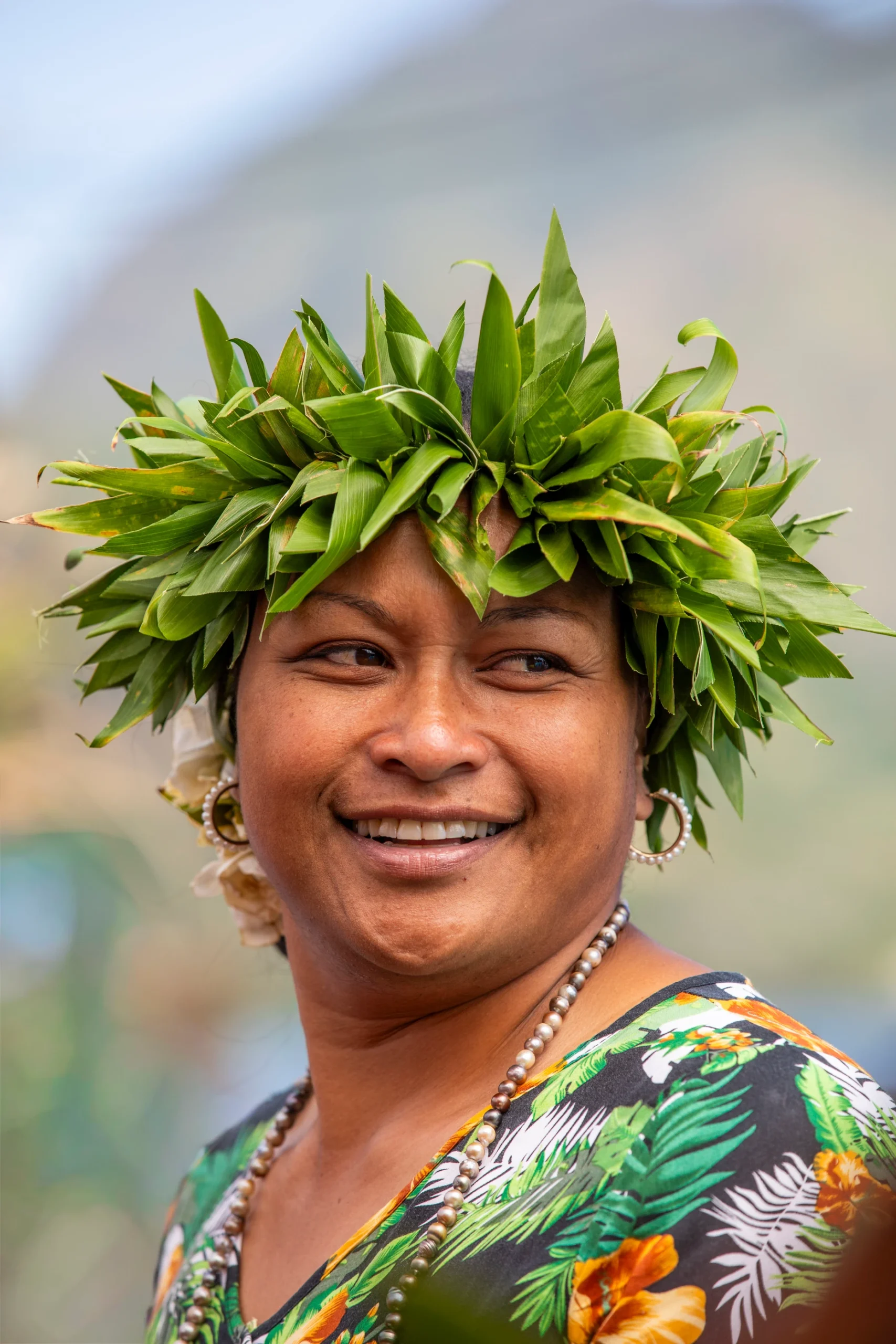
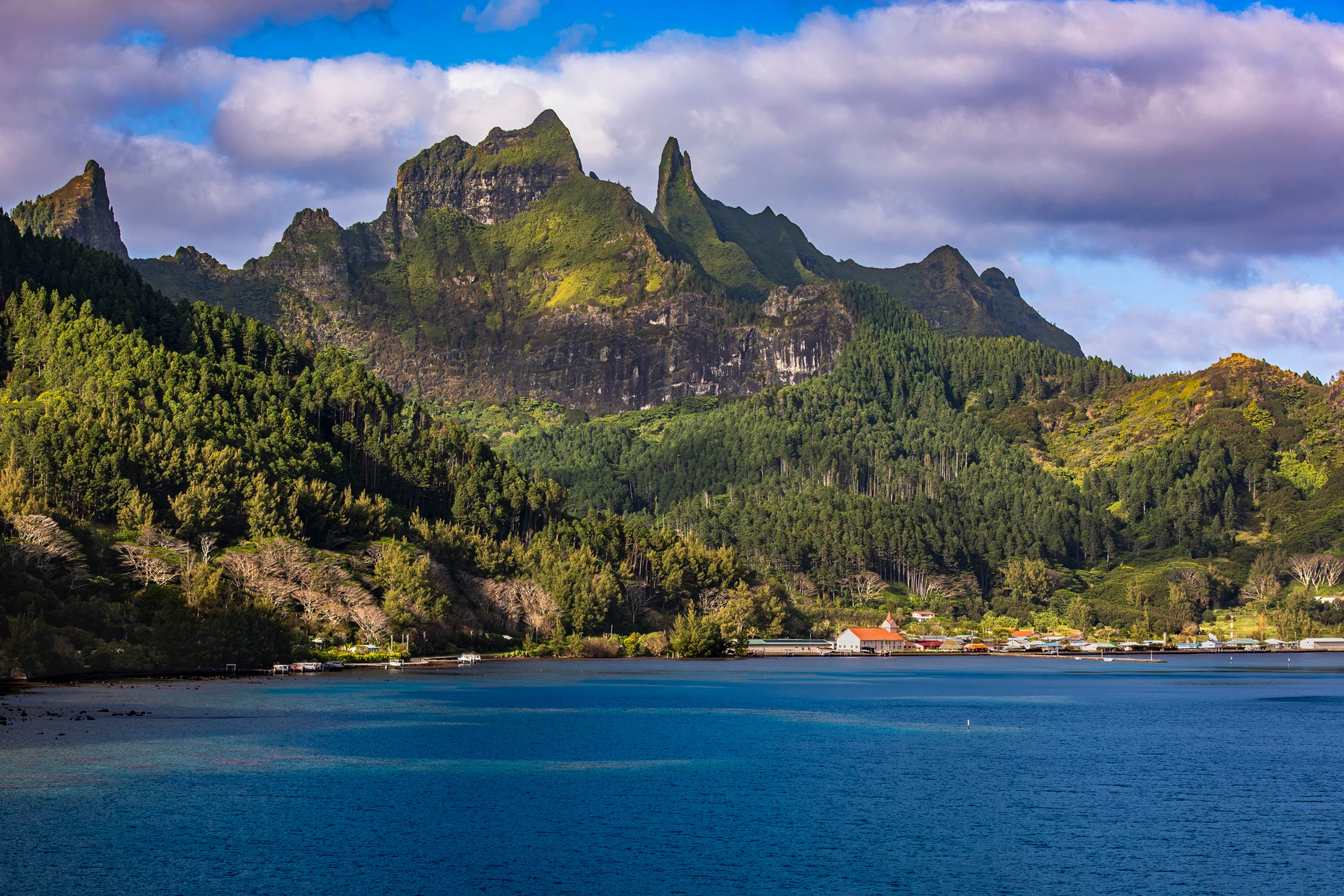
In the vast, azure expanse of the South Pacific, thousands of miles from the bustling tourist hubs of Tahiti or Bora Bora, lies a jagged volcanic relic that time—and tourism—seems to have forgotten. Rapa Iti, a 39-square-kilometer caldera rising defiantly from the ocean, serves as a geographical and cultural outlier within the Austral Islands of French Polynesia. It is a place where the air is crisp, the mountains are sharp, and the local government—a council of seven elders—has effectively declared a moratorium on the modern world.
The Precarious Approach: A Maritime Masterclass
The journey to Rapa Iti is an exercise in nerves. Passengers aboard the MS Aranoa, the lifeline of this remote archipelago, watch with bated breath as the ship inches into the narrow fjord leading to the village of Ahurei. The water is so transparent that the vibrant, multi-layered coral banks seem to brush against the hull, mere inches from the steel. On deck, officers monitor the passage with clinical intensity, while guests, standing 25 meters above the surface, remain silent.
This is the prologue to one of the most isolated human settlements on Earth. There is no airport, no landing strip, and no tourist infrastructure. The Aranoa, a hybrid cargo-passenger vessel, serves as the island’s sole umbilical cord to the outside world, arriving only a handful of times per year to deliver supplies and allow a select few travelers a brief, 24-hour glimpse of a society that chooses to remain autonomous.

Chronology of Isolation and Discovery
While Rapa Iti is technically a part of French Polynesia, its history is a distinct narrative. Geologically, it is the remnants of a collapsed volcanic cone, creating a dramatic, folded landscape that defies the tropical cliché. Linguistically, it stands apart: the 451 residents speak a unique, autochthonous Polynesian dialect alongside French, marking it as a cultural bastion.
The island’s modern history is perhaps best defined by the strange case of Marc Liblin. In the early 1980s, a Frenchman from the Vosges region began experiencing recurring, haunting dreams—dreams filled with an unknown, ancient language. Driven by an inexplicable pull, Liblin abandoned his family business and life in France to search for the origin of these words in the dockside taverns of Brittany.
His search led him to Meretuini Make, a woman from Rapa Iti. Upon hearing him speak, she immediately identified the language as the ancient, ancestral tongue of her people. Liblin followed her to the island, married her, and integrated fully into the culture, eventually teaching the language to the local children before his death in 1996. His life remains the subject of Eric Viennot’s 2023 biography, L’homme qui rêvait dans une langue inconnue, a testament to the island’s enduring mystery.
Supporting Data: The Economy of Self-Reliance
Rapa Iti operates on a principle of radical self-determination. The island’s climate is temperate—subtropical rather than tropical—meaning the quintessential coconut palm is conspicuously absent. Instead, the landscape is defined by hardy vegetation, fruit-bearing trees, and the cultivation of Taro. This thick-leaved tuber, once boiled and kneaded into the sticky, staple dough known as "Poi Poi," forms the backbone of the local diet.
The Council of Elders governs all aspects of life, strictly limiting the influence of foreign capital. Their policy is clear: Pas de touristes (No tourists). This is not merely a suggestion but a codified protective measure.
- Land Ownership: Reserved exclusively for long-standing local families.
- Inheritance: Sale or transfer of land to non-islanders is strictly prohibited.
- Visitor Access: Stays are limited to those with direct kinship or deep-rooted friendships with locals, and even then, only for a maximum of three weeks depending on shipping schedules.
Despite this guarded posture, the islanders are remarkably hospitable. This warmth is likely fueled by the reality of their diaspora; roughly 1,500 Rapa natives live in Tahiti, and others work in the resorts of Bora Bora or serve in the French military, creating a constant, albeit distant, connection to the outside world.
Official Responses and Governance
The current president of the Council of Elders, Roti Make, embodies the island’s unique duality. Born on Rapa in 1953 to a local mother and a French father, she spent her youth in Basel, Switzerland, after her mother remarried. She grew up navigating the starkly different worlds of Swiss efficiency and Rapa tradition.
"My grandmother taught me that dreams allow for a spiritual connection and can lead one on a specific path," she reflects. Under her leadership, the Council has taken steps to formalize their sovereignty, including the recent, complex task of registering ancestral land titles into the official French cadastre.
When asked about the skepticism surrounding the "xenoglossy" (the phenomenon of speaking a foreign language without prior learning) attributed to Marc Liblin, Roti Make remains philosophical. Her own life—speaking German, French, and the local Rapa dialect—serves as a bridge between the island’s isolation and the global stage. She argues that the skepticism of Western observers often fails to account for the depth of cultural memory and the potential for non-linear human connections.

The Implications of "The Last Stand"
Rapa Iti exists as a living laboratory for the preservation of indigenous culture in the face of globalization. While many Pacific islands have succumbed to the economic pressures of mass tourism, Rapa Iti has opted for a path of controlled subsistence and ancestral preservation.
The implications for the future are significant. As climate change threatens low-lying Pacific atolls, the high-altitude, volcanic resilience of islands like Rapa Iti may become increasingly vital. However, the islanders show no desire to open their borders to climate refugees or commercial developers. Their resistance is a deliberate act of cultural defense.
For the intrepid traveler, the MS Aranoa provides a rare, regulated window into this world. A 13-day voyage to the Austral Islands, including a stop at Rapa, ranges from 4,400 to 6,800 euros. It is not a holiday in the traditional sense, but a pilgrimage to one of the few places left on the planet where the "unknown" still has a home.
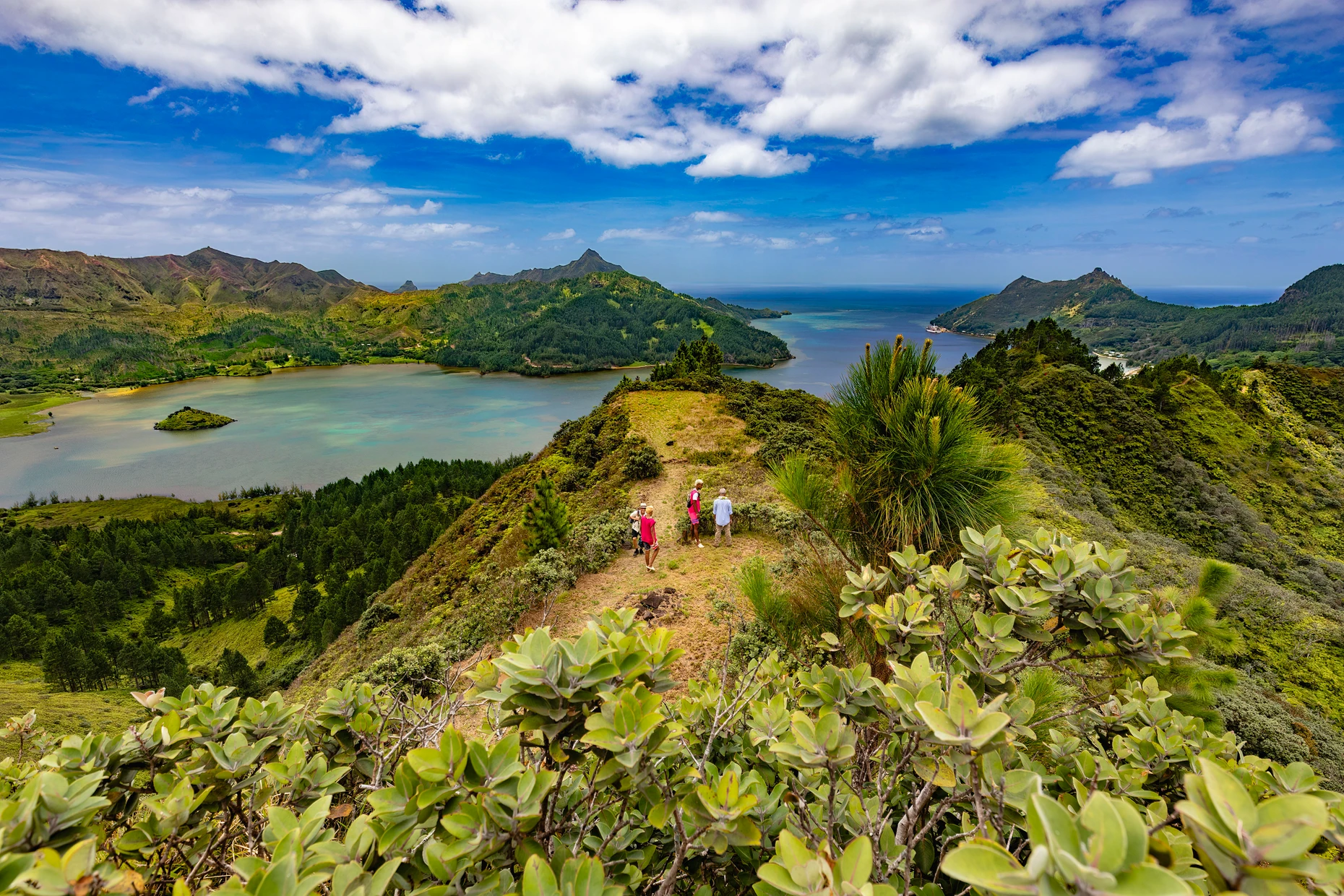
Whether one views the story of Marc Liblin as a miracle of linguistics or a manifestation of the "Pareidolia" effect—the human tendency to perceive patterns where none exist—the reality of Rapa Iti remains undeniable. It is a place that demands respect, a place that is not for sale, and a place that continues to dream in a language that, to most of the world, remains entirely unknown.
As the Aranoa pulls away from the pier, the jagged peaks of the Mont Perahu fade into the mist, leaving visitors with the lingering question: in a world that is increasingly mapped, documented, and exposed, is the greatest luxury of all to remain hidden? For the people of Rapa Iti, the answer is not spoken—it is simply lived.