By Investigative Staff
October 19, 2026
In the heart of Amsterdam’s historic canal district, the air is thick with the scent of deep-fried potatoes, truffle-infused mayonnaise, and the rising tension of a neighborhood at a breaking point. "Fabel Friet," a snack bar that has become a global pilgrimage site for foodies, is currently at the center of a high-stakes legal battle. What began as a local culinary success story has spiraled into a bitter conflict between viral social media fame and the quality of life for long-term residents. As a court prepares to rule on the shop’s future this November, the case has become a lightning rod for the broader debate surrounding "overtourism" in the Dutch capital.
The Rise of a Viral Phenomenon
The "Fabel Friet" story is a textbook example of the power—and the double-edged sword—of the digital age. Since 2022, the shop, located in the charming "Negen Straatjes" (Nine Streets) district, has been propelled to international stardom by TikTok and Instagram. The allure is simple but potent: premium, hand-cut fries smothered in signature truffle mayonnaise and topped with a generous mountain of aged Parmesan cheese.
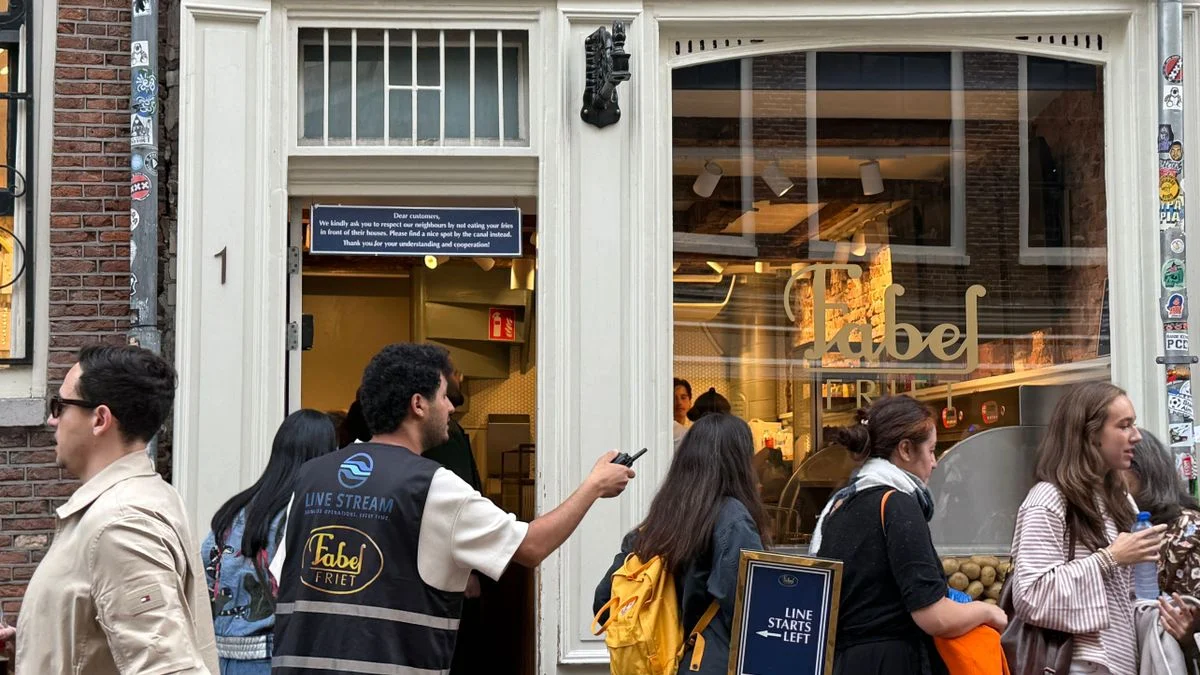
For the modern tourist, a trip to Amsterdam is incomplete without a photo of the iconic Fabel Friet cone. During the peak summer season, queues for the shop routinely stretch around the block, with visitors waiting upward of an hour for a serving.
"They are just so delicious," says 14-year-old Johann, who traveled from Plauen, Germany, with his family. "And they are actually filling. We saw the hype on TikTok, and we knew we had to try them." His sentiment is echoed by thousands of international travelers who view the shop as an essential "must-do" experience.
Chronology of a Neighborhood Conflict
The friction between the business and the residents did not occur overnight. It is a story of gradual encroachment that eventually reached a boiling point.

- 2022: The Inflection Point: Fabel Friet gains massive traction on social media. The narrow streets of the historic district, designed centuries ago for foot traffic and small carts, are suddenly overwhelmed by thousands of daily visitors.
- 2023: Escalation of Complaints: Residents begin reporting a significant increase in litter, noise pollution, and sanitation issues. The presence of food debris attracts seagulls and, increasingly, rats to the residential area.
- Spring 2026: Administrative Renewal: When the snack bar’s operating permit came up for renewal, the local neighborhood association took a stand. They filed a formal legal challenge, demanding that the court revoke the license or severely restrict the shop’s operations.
- November 2026: The Impending Verdict: After months of testimony and procedural wrangling, a Dutch administrative judge is scheduled to deliver a ruling on the shop’s future on November 10.
Supporting Data: The Anatomy of Overtourism
The plight of the Nine Streets district is a microcosm of Amsterdam’s struggle with its own popularity. With nearly 24 million tourists descending upon a city of roughly 900,000 residents annually, the infrastructure is showing signs of systemic collapse.
The Negen Straatjes are characterized by extremely narrow sidewalks and dense, centuries-old residential architecture. When hundreds of people queue outside a single storefront, the ripple effect is immediate:
- Traffic Paralysis: Delivery vehicles, bicycles, and emergency services often find themselves blocked by the sheer volume of people standing in the street.
- Public Space Misuse: With nowhere to sit, customers often spill onto the stoops of private homes, private garden fences, and window ledges, leaving behind grease, paper wrappers, and discarded containers.
- Sanitation Risks: The discarded food has created a secondary ecosystem of pests. Residents have documented an uptick in seagull aggression and vermin, which they attribute directly to the concentration of food waste from the shop.
Niek van der Heijden, a local resident, testified in court about the tangible difference the shop makes on the neighborhood’s quality of life. "Everything here revolves around the fries," he stated. "Last year, when the shop experienced a power outage and had to close for a day, the difference was immediate. Without the crowds, the streets returned to a peaceful, livable state."
Official Responses and Owner Defense
The legal proceedings have pitted the rights of a successful small business against the rights of the community to enjoy their homes.
The City’s Dilemma
Representatives from the City of Amsterdam find themselves in an unenviable position. They acknowledge the distress of the residents but note that, strictly speaking, the owners of Fabel Friet have complied with all current regulations. The city has already implemented drastic measures to curb overtourism—including a ban on new hotel construction, strict Airbnb regulations, and increased tourist taxes—yet the influx of visitors remains relentless.
The Owners’ Perspective
Abel Klatser (29) and Floris Feilzer (31), the proprietors of Fabel Friet, argue that they have been proactive in addressing the issues.
"We want to be good neighbors," the duo stated in a recent interview. Their efforts include:

- Crowd Management: Hiring dedicated stewards to manage the queues and ensure that customers do not block doorways or driveways.
- Waste Management: Emptying trash bins up to four times a day to prevent overflow.
- Pest Control: Attempting innovative, albeit unsuccessful, solutions such as using a falconer to deter the persistent seagull population.
"We have done so much to avoid inconveniencing the neighbors," the owners maintain. Some tourists agree. Lex, a visitor from Texas, noted, "There are security guards everywhere and signs asking people to respect the neighbors and not feed the birds. It seems like the owners are actually trying to handle a situation that is largely caused by the sheer volume of people in the city."
Broader Implications: A City at a Crossroads
The case of Fabel Friet is ultimately a battle over the soul of Amsterdam. As historic districts are increasingly hollowed out by souvenir shops, Nutella-waffle stands, and viral snack bars, the question arises: at what point does a city cease to be a home and become a theme park?
For the residents, the court case is a last-ditch effort to reclaim their neighborhood. For the business owners, it is a risk to their rapidly expanding empire, which has already grown to five locations across the city.
The November verdict will set a critical precedent. If the court rules in favor of the residents, it could trigger a wave of similar legal challenges against other businesses that rely on social media-driven mass foot traffic. If the court sides with the business, it may signal that the city is willing to prioritize its "tourist economy" over the localized tranquility of its residents, further fueling the fire of the anti-overtourism movement.
As the court date approaches, the mood in the Nine Streets remains tense. The smell of truffle mayo continues to drift through the narrow alleys, a scent that for some represents the pinnacle of modern culinary trends, and for others, the bitter smell of a neighborhood losing its fight for survival.