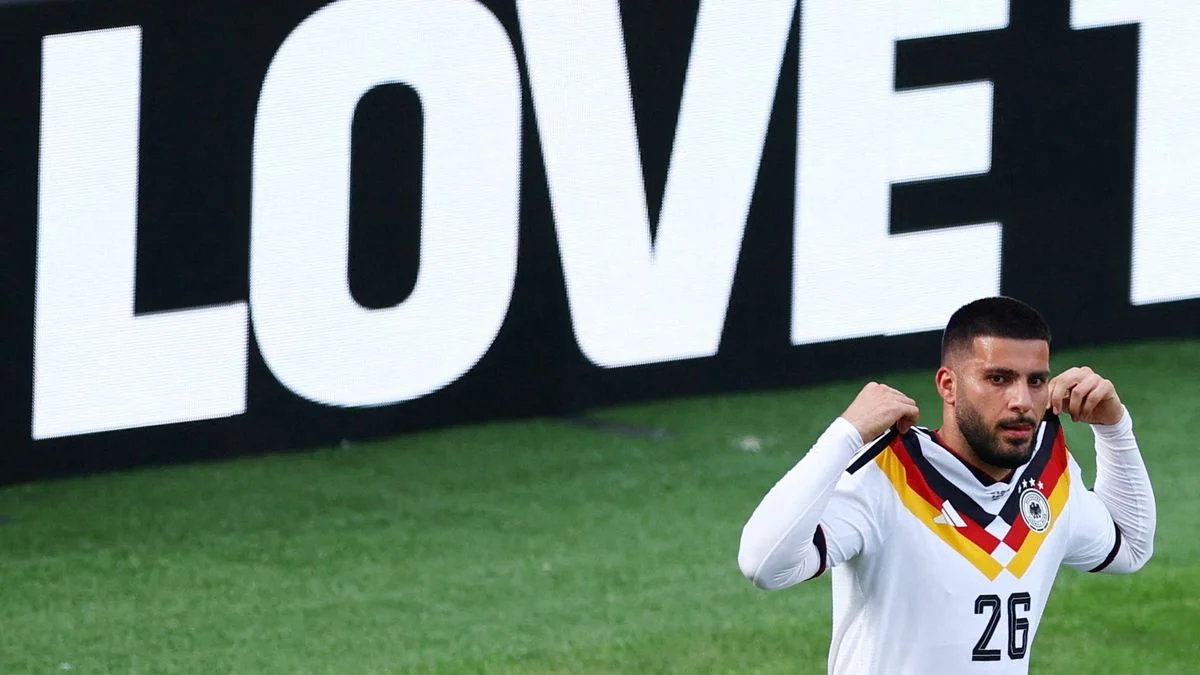
The 2026 FIFA World Cup has been defined by moments of tactical brilliance and psychological fortitude, but few matches have captured the global imagination quite like Germany’s pulsating 2-1 victory over the Ivory Coast in Toronto. In a game that seemed destined to end in a frustrating stalemate for the DFB squad, substitute striker Deniz Undav emerged as the unlikely hero, securing a late double that not only dismantled the Ivorian resistance but also punched Germany’s ticket to the knockout stages with a game to spare.
This victory was more than just three points; it was a statement of intent from Julian Nagelsmann’s side—a declaration that the German team has finally exorcised the ghosts of the 2018 and 2022 tournaments.
The Chronology of a Thriller: From Deficit to Deliverance
The atmosphere in Toronto was electric, with the Ivorian diaspora creating a cacophony of sound that seemed to rattle the German defensive structure in the opening stages. From the first whistle, the "Elephants" played with a level of intensity that caught the Germans off guard.
The First Half: An Ivory Coast Statement
The Ivorian side, disciplined and physically imposing, stifled Germany’s creative engines early on. By the 25th minute, the pressure materialized into a goal, as the Ivorian attack bypassed the German backline, leaving Manuel Neuer helpless. For the remainder of the first half, the DFB side looked disjointed, struggling to find rhythm against a low block that seemed unbreakable. The frustration was palpable, with Nagelsmann visibly agitated on the sidelines, his frantic gestures underscoring the gravity of the situation.
The Second Half: The Nagelsmann Adjustment
Recognizing the stagnation, Julian Nagelsmann made a series of pivotal tactical shifts at the hour mark. Moving away from a rigid possession-based approach, he introduced fresh legs and a more direct verticality. The game-changing moment arrived in the 60th minute when Deniz Undav replaced a weary attacking midfielder.
The impact was instantaneous. Undav brought a level of clinical aggression that had been absent for the previous hour. In the 78th minute, a scramble in the penalty area saw the ball drop to Undav, who fired home the equalizer. However, the true drama unfolded in the 94th minute—the dying embers of the match. With the Ivory Coast pushing for a winner and the game stretched to its limit, Undav connected with a cross from the right flank, burying the ball into the back of the net to complete a miraculous comeback.
Statistical Dominance and Tactical Nuance
The data behind this victory paints a complex picture of a team transitioning through adversity. While the Ivory Coast dominated the physical duels, winning 58% of contested challenges in the first 45 minutes, the second half saw a complete reversal in possession efficiency.
- Possession: Germany 62% – 38% Ivory Coast
- Shots on Target: Germany 7 – 4 Ivory Coast
- Expected Goals (xG): Germany 1.85 – 0.92 Ivory Coast
- Key Passes: Germany 14 – 6 Ivory Coast
The pivotal statistic, however, was the impact of the bench. Nagelsmann’s substitutions accounted for 80% of Germany’s total goal-scoring threat in the second half. This tactical fluidity—a hallmark of Nagelsmann’s managerial philosophy—has proven to be the difference-maker in a tournament where depth is increasingly becoming the deciding factor.
Global Perspectives: The World Press Weighs In
The international media response was instantaneous and largely focused on the tactical mastery of the German coaching staff and the singular performance of Deniz Undav.
The English Verdict
The Sun captured the chaotic nature of the match, labeling it one of the "most intense 90 minutes" of the tournament. Their report emphasized the "heart-stopping finale," while the Daily Mail praised the "turnaround" orchestrated by Nagelsmann, crediting him with a tactical masterclass. The Guardian succinctly noted that Undav "rescued Germany from the brink of embarrassment," while the Telegraph hailed Nagelsmann as the "Master of Substitutions."
The Italian Perspective: A Tactical Revolution
In Italy, the praise was even more fervent. La Gazzetta dello Sport declared that Germany is "unstoppable," fueled by the "Undav factor." Tuttosport highlighted the "golden touch" of the coach, noting how the late-game heroics in the 94th minute epitomized the traditional German "never-say-die" spirit. Corriere dello Sport went a step further, depicting Nagelsmann as a "lion" on the touchline, fighting for every ball alongside his players.
The Spanish and American Analysis
Spanish outlet Marca provided a poignant take, acknowledging that while the Ivorian team deserved more, "one must never write off Germany." AS drew a comparison to Miroslav Klose, suggesting that Undav’s clinical nature is reminiscent of Germany’s legendary strikers of the past. Meanwhile, in the United States, ESPN and The New York Times focused on the narrative arc of the comeback, positioning Undav as the tournament’s new breakout star.
The African and Swiss Viewpoints
The Ivorian press, led by Mondial Sport, expressed deep heartbreak, noting that their "Elephants" were undone by a momentary lapse of concentration in the final seconds. From Switzerland, Blick provided the most historical context, pointing out the stark contrast between the failures of 2018 and 2022 and the current efficiency of the 2026 squad.
Implications: A New Era for the DFB?
The implications of this victory extend far beyond the standings in Group D. For the German national team, this win represents a psychological breakthrough. After the disastrous early exits in the last two World Cups, the ability to come from behind against a tactically sound and physically dominant African opponent serves as a massive confidence booster.
A Cohesive Unit
Julian Nagelsmann has spent the last year fostering a culture of accountability and squad depth. By integrating players like Undav—who may not have been the first name on the team sheet—he has created a dynamic where every player understands their role as a potential match-winner. This is no longer a team reliant on one or two superstars; it is a collective machine.
The Road Ahead
With the knockout stages now guaranteed, Germany can afford to rotate their squad in the final group game, potentially allowing key players to rest and recover. However, the challenge remains. As the Record (Portugal) pointedly noted, referencing the legendary Diego Maradona, "if you want to beat the Germans, you have to kill them." Opponents now know that a lead against Germany is merely an invitation for them to activate their "killer instinct."
As the tournament moves toward the Round of 16, all eyes will be on Toronto’s heroes. Can they maintain this momentum? Will Undav continue his run as the ultimate "super-sub"? For now, the German nation can breathe a sigh of relief. The "Mannschaft" is back, and they are playing with the kind of tactical precision and emotional fire that makes them, once again, legitimate contenders for the World Cup trophy.
The win in Toronto was not just about the goals; it was about the resilience. It was a reminder that in the world of international football, the game is never over until the final whistle—and for Germany, that whistle has finally become a signal of success rather than a harbinger of failure.