In the world of cutting-edge robotics, the name of a project often serves as a beacon for its core mission. For researchers at the Singapore University of Technology and Design (SUTD), the acronym "Albatross"—short for "Airborne Lander with Buoyant AuToROtating Sailing Sensor"—is more than just a clever play on words; it is a manifesto for a new era of environmentally aware, cost-effective, and highly efficient robotic systems.
By synthesizing the flight mechanics of maple seeds with the navigational prowess of racing yachts, a team led by Shane Kyi Hla Win has developed a groundbreaking robot capable of transitioning seamlessly from an aerial drop to an autonomous aquatic survey vessel. The study, which has been peer-reviewed and published in the prestigious journal Science Robotics, marks a significant milestone in multimodal robotics, proving that nature’s design language is often the most sophisticated engineering blueprint available.
The Core Concept: Nature as an Engineer
At its heart, Albatross is a multimodal robotic platform designed to tackle one of the most persistent challenges in robotics: mobility across disparate environments. Most existing robots are specialized—they are built either for flight, land traversal, or underwater exploration. Combining these capabilities typically results in "over-engineered" machines that are heavy, expensive, and fragile due to a reliance on complex, power-hungry hardware.
The SUTD team took a different path. Weighing in at just one kilogram and equipped with only three actuators and three sensors, the Albatross relies on physical principles rather than raw computational power to navigate. By offloading the "work" of landing and stabilization to aerodynamics and buoyancy, the researchers have created a device that is as elegant as it is effective.
Key Technical Specifications
- Weight: ~1.0 kg
- Actuators: 3 micro-servos
- Navigation: Integrated GPS and Compass
- Deployment: Aerial drop (via drone or aircraft)
- Propulsion: Wind-assisted sailing and bio-inspired oscillating tail fin
A Chronology of Innovation: From Concept to Lake Surface
The development of the Albatross project was a multi-year journey defined by iterative design and rigorous environmental testing.
Phase 1: The Descent (Aerial Autonomy)
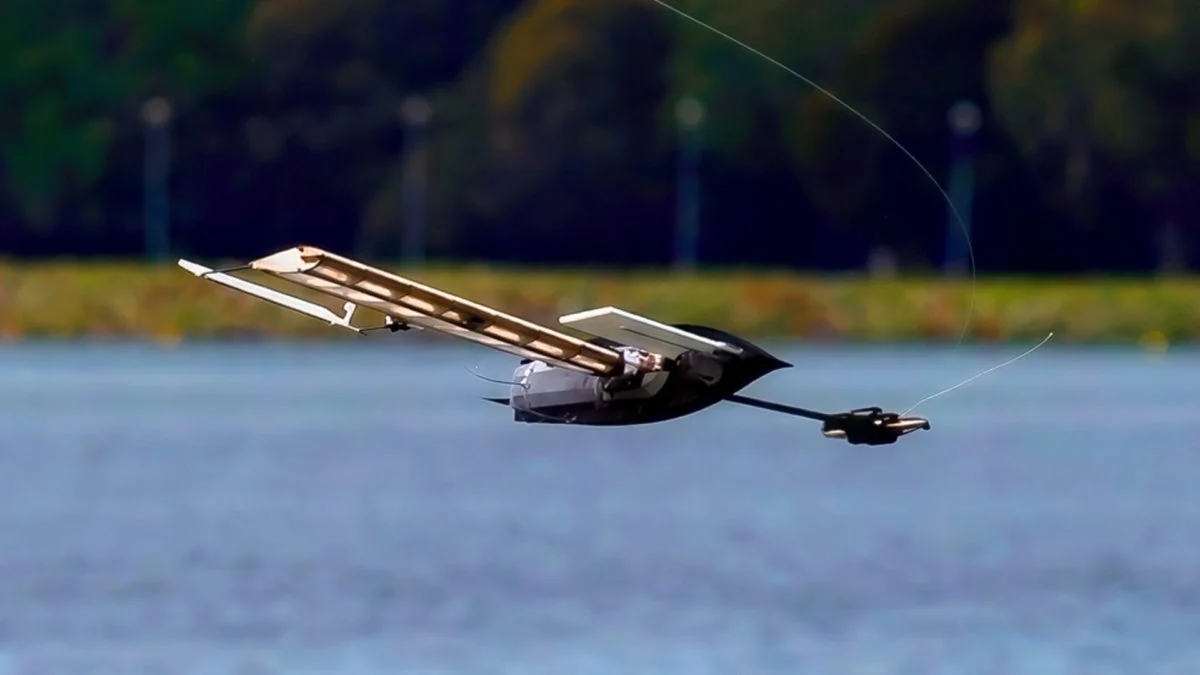
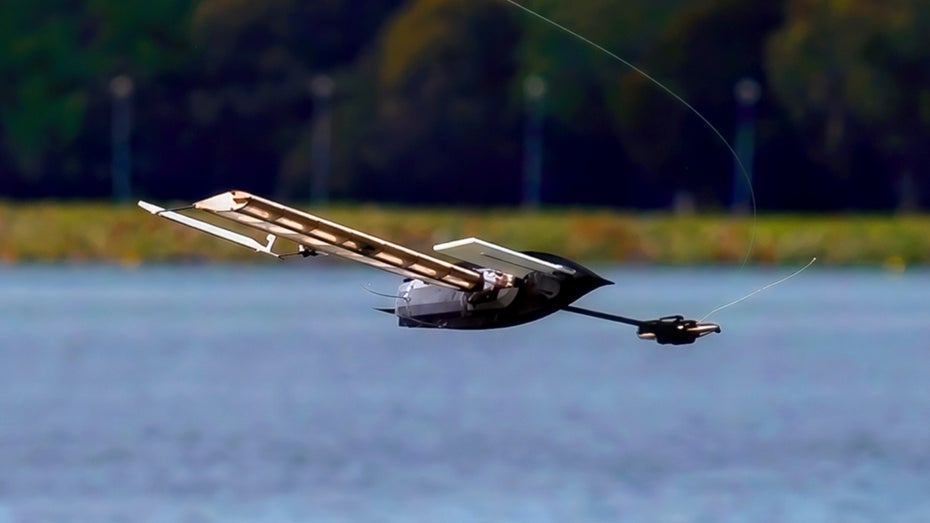
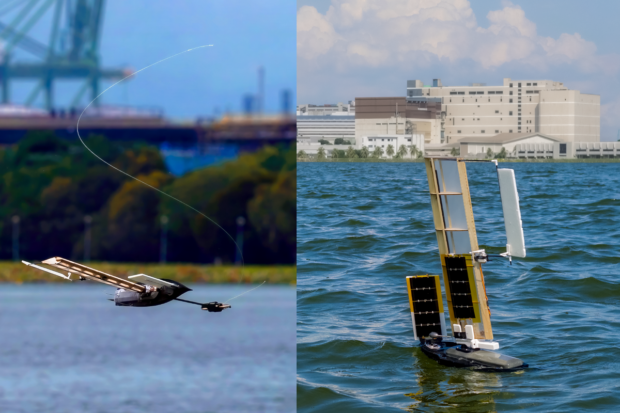
The primary hurdle was creating a landing mechanism that did not require bulky parachutes or complex rotors. The team drew inspiration from the Acer (maple) seed. By designing the robotic wings to undergo "autorotation"—a phenomenon where the device spins as it falls—the Albatross generates lift. This rotation slows the descent significantly, allowing the device to survive a drop from as high as 150 meters without the need for an active landing gear system.
Phase 2: The Transition (Marine Adaptation)
Upon hitting the water, the robot’s design ensures immediate stability. With a low center of gravity, the Albatross rights itself instantly, transitioning from a spinning descent vehicle to a buoyant vessel. The rigid wings that provided the aerodynamic braking during flight now double as sails. A central, free-rotating main sail, paired with a jib and a wind vane at the stern, allows the robot to tack and navigate relative to the wind, mimicking the control mechanisms of high-end sailing yachts.
Phase 3: Field Validation
Following successful wind tunnel simulations, the team moved to the real world. Testing at a reservoir in Singapore, the Albatross proved its mettle. Over several three-hour missions, the robot autonomously navigated to specific waypoints, adjusted its course based on wind shifts, and continuously recorded vital environmental data, including air humidity and water temperature.
Supporting Data: Efficiency Through Physics
The true brilliance of the Albatross lies in its "dual-use" philosophy. In traditional robotics, components are often dedicated to a single function. In the Albatross, the components serve multiple roles:
- Wings: Act as aerodynamic rotors for landing and as sails for propulsion.
- Tail Fin: Acts as a stabilizer during flight and as a fish-inspired rudder for steering.
- Hull: Serves as the structural frame during flight and as the buoyant chassis for aquatic movement.
This integration reduces the hardware footprint significantly. By using a fish-inspired tail fin that oscillates, the robot can generate a "kick" of thrust—up to 0.5 meters per second—even in low-wind conditions. This eliminates the need for heavy batteries or high-capacity motors, allowing the system to dedicate more of its weight capacity to sensors, such as chemical sniffers or pollution detectors.
Expert Perspectives and Academic Reception
The robotics community has taken notice of this "less is more" approach. In a companion article to the study, researchers Raphael Zufferey and Andre Farinha noted that the Albatross serves as a vital case study for the future of the field.
"Nature does not provide a turnkey solution, but it does provide useful components," Zufferey remarked. The challenge with multimodal robots has always been the "jack of all trades, master of none" trap. However, the SUTD team has managed to avoid this by not attempting to replicate complex animal behavior, but rather by mimicking the physical effects—gravity, drag, buoyancy, and wind resistance—that govern those behaviors.
The consensus among experts is that while Albatross is not a "perfect" robot—it cannot take off from the water, limiting its mission life to a one-way trip—it is a highly practical one. Its low cost makes it expendable, meaning a swarm of these devices could be deployed over an oil spill or an algae bloom, providing real-time, localized data that a single, expensive autonomous underwater vehicle (AUV) could not hope to match in terms of coverage.
Implications: The Future of Environmental Monitoring
The potential for Albatross-like systems is immense, particularly in the context of climate change and environmental protection.
1. Disaster Response
In the event of a catastrophic oil spill, time is the greatest enemy. Traditional monitoring often relies on satellites (which lack resolution) or manual boat patrols (which are slow and risky). A fleet of Albatross-class robots could be deployed via aircraft over a vast disaster zone, providing high-resolution, real-time data on the plume’s movement and composition within minutes.
2. Oceanography and Climate Science
Because the system is cost-effective, researchers could deploy hundreds of units across remote areas of the ocean. These units could serve as a mobile sensor network, collecting long-term data on water temperature, salinity, and acidification without the need for ships to retrieve them.
3. The "Expendable" Advantage
By reducing the reliance on high-end electronics, the Albatross lowers the barrier to entry for environmental research. For institutions with limited budgets, the ability to deploy a robust, autonomous system that costs a fraction of traditional drones is a game-changer.
Looking Ahead: The Final Hurdle
While the current version of the Albatross is a triumph of design, the research team remains focused on future improvements. The most obvious limitation—the inability to re-launch from the water—remains the "holy grail" of the project. To be a true albatross, the machine must be able to take flight again.
Developing a mechanism that allows a one-kilogram robot to transition from the water surface back into the air would require a paradigm shift in energy storage or propulsion. However, given the team’s success in utilizing passive physical effects to solve the descent and sailing problems, many in the field remain optimistic.
"We are proving that you don’t need to fight physics; you just need to design with it," says Shane Kyi Hla Win.
The Albatross is a testament to the fact that the most advanced technology is not always the most complicated. Sometimes, it is the one that looks to the maple tree and the sailing yacht to find the most efficient path forward. As we face increasingly complex environmental challenges, such bio-inspired, cost-effective solutions will likely become the backbone of our global monitoring efforts, ensuring that even when we cannot be there, our robots can.