Our solar system is not just a collection of planets orbiting a star; it is a survivor in a vast, often violent cosmos. Recent research published in the Monthly Notices of the Royal Astronomical Society suggests that our corner of the Milky Way is significantly more protected from lethal radiation than most other regions of the universe. By utilizing advanced supercomputer simulations, an international team of astrophysicists has concluded that our existence is, to a large extent, a result of being in the right place at the right time—a "galactic golden zone" that has remained relatively quiet during a critical window of biological development.
The Main Facts: A Galactic Safety Zone
The study, led by researchers utilizing the prestigious EAGLE (Evolution and Assembly of GaLaxies and their Environments) project at Durham University, highlights that the Milky Way has moved past its most volatile phase of star formation. For life to flourish, a planet requires more than just a temperate orbit around its sun; it requires a stable neighborhood.
The researchers define this "galactic habitable zone" through a delicate balance. If a solar system is too close to the dense, turbulent center of the galaxy, it is bombarded by lethal cosmic rays and frequent gravitational disturbances. If it is too far out on the galactic fringe, the environment lacks the "metals"—astronomical shorthand for heavy elements like carbon, iron, and silicon—necessary to form rocky planets and liquid water. Our solar system sits in a "Goldilocks" region: chemically rich enough to build worlds, but far enough from the chaotic galactic core to avoid catastrophic interference.
The EAGLE Project: Simulating the History of the Cosmos
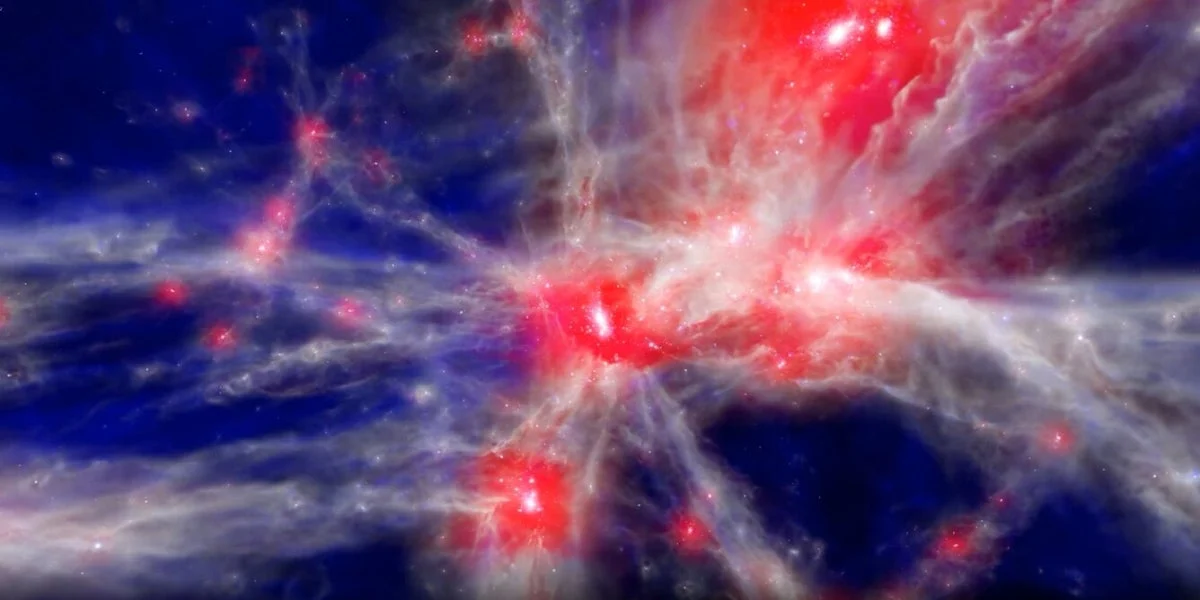
To reach these conclusions, the team turned to the EAGLE project, a high-fidelity simulation that models the expansion of space, the intricate pull of gravity, and the complex feedback loops involving gas, stars, and supermassive black holes.
Unlike older models that focused primarily on the circumstellar habitable zone (the distance from a star where liquid water can exist), the EAGLE simulation provides a macro-view of galactic evolution over hundreds of millions of years. By tracking the life cycles of stars and the trajectories of gas clouds, the model creates a predictive framework for how radiation flows through a galaxy. This allows scientists to map not just where planets form, but where they are likely to survive long enough for complex chemistry to evolve into biological life.
The Parameters of the Secure Zone
The study outlines specific parameters that define a "safe" region in the galaxy. One of the most significant findings is the "metallicity threshold." Heavy elements are forged in the hearts of previous generations of stars and dispersed through supernova explosions. Without these elements, planetary crusts cannot form.
However, the research warns that there is a dangerous "too much of a good thing" scenario. In regions with an excess of heavy elements, the simulation indicates a higher probability of forming giant gas planets. These gas giants often migrate inward, acting as gravitational "snowplows" that either consume smaller rocky planets or eject them from the system entirely. Thus, the ideal environment for life is a Goldilocks zone of chemical composition: enough metals to form rocks, but not enough to trigger the formation of disruptive gas giants.
Chronology: A History of Cosmic Threats
To understand why we are here, one must look at the timeline of cosmic threats that have historically plagued the universe. The model differentiates between "transient" threats—events that might cause a mass extinction but allow for later recovery—and "total destruction" events that strip a planet of its atmosphere and boil its oceans.
The Era of Supernovae (Early History)
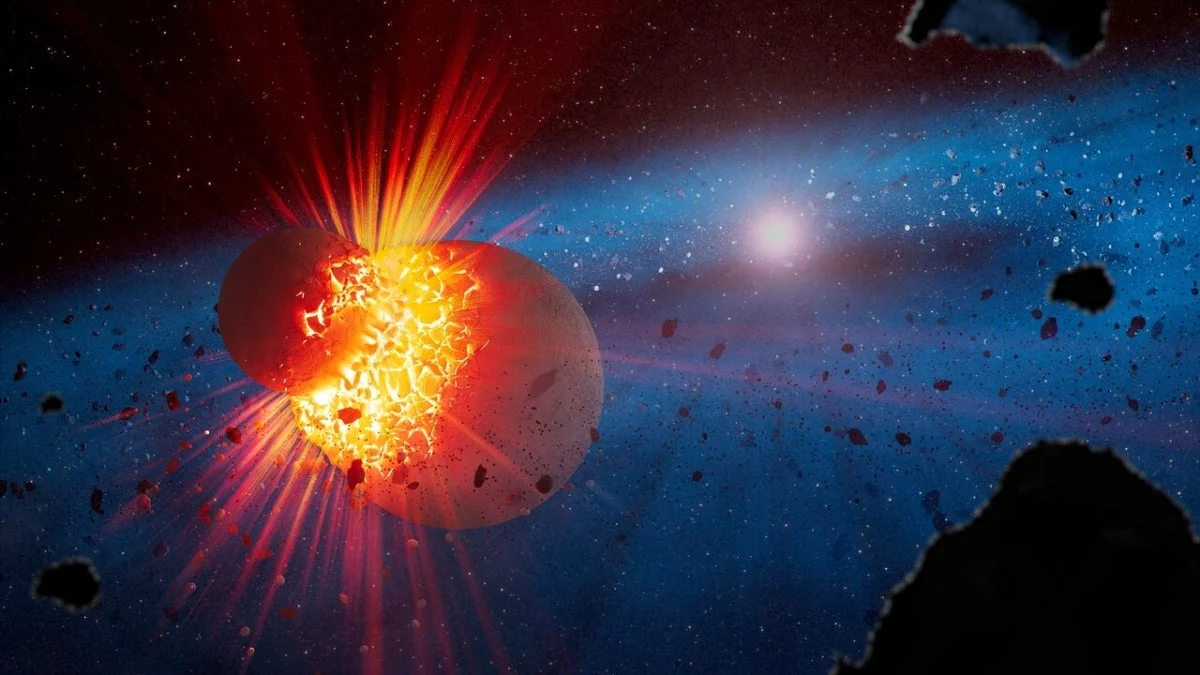
In the early universe, the rate of star formation was significantly higher, leading to a higher frequency of core-collapse supernovae. These explosions, the death throes of massive stars, were the primary cause of planetary sterilization.
The Era of Active Nuclei
As galaxies matured, a new threat emerged: the active galactic nucleus (AGN). Supermassive black holes at the center of galaxies, when feeding on large amounts of matter, create quasars—incredibly bright beacons that emit massive amounts of X-ray and UV radiation. Over millions of years, this radiation can "strip" the atmospheres of planets, leaving behind barren, irradiated husks.
The Era of Gravitational Instability
Over the last five billion years, a more subtle, mechanical threat has dominated: gravitational disturbance. As galaxies densify, stars pass closer to one another. Even if they don’t collide, the gravitational "tugging" of a passing star can throw a planet out of its stable orbit. According to the EAGLE simulation, this is a major cause of "rogue planets" wandering the interstellar void.
Supporting Data: The Modern Stability of the Milky Way
The simulation provides startling statistics regarding the current state of our galaxy. Today, only one in every thousand stars in the Milky Way is subjected to a truly catastrophic, life-ending event. We live in a period of relative calm.
The data suggests that the Milky Way’s star formation rate has tapered off significantly. This reduction in activity means that the "fireworks" of the early universe have largely ceased in our neighborhood. The galaxy has entered a phase of mature stability. By comparing our location to other simulated galaxies of similar mass and age, the researchers confirmed that the Milky Way is not an outlier, but it is certainly a high-performer when it comes to long-term habitability.
Official Responses and Scientific Context
While the findings are compelling, the research team is careful to note the limitations of their work. The resolution of current simulations, while impressive, cannot yet capture small-scale structures like local star clusters or individual asteroid belt dynamics.
Furthermore, the "habitable zone" definition used in the study is inherently anthropocentric. It assumes that life requires the same conditions that allowed for our evolution—namely, carbon-based biology on a rocky, water-rich planet. Whether life could flourish under different chemical compositions or in environments we currently consider "lethal" remains an open question in astrobiology.
"We are modeling the conditions that allowed us to emerge," one researcher noted. "The simulation does not prove the existence of aliens, nor does it rule out the possibility of life evolving in ways that are currently invisible to our mathematical models."
Implications: The Rare Earth Hypothesis Revisited
This study adds weight to the "Rare Earth" hypothesis, which posits that the conditions necessary for complex life are exceptionally uncommon. By demonstrating that even in a galaxy as "quiet" as the Milky Way, there are vast regions rendered uninhabitable by either chemical excess or cosmic radiation, the research implies that we may be part of a very small, lucky minority.
The implications for the search for extraterrestrial intelligence (SETI) are profound. If we are looking for life, we should perhaps focus our efforts on the "quiet" outskirts of mature galaxies, rather than the bustling, energetic centers. The study suggests that our location—at the edge of the galaxy, in a chemically balanced region, during a period of relative galactic peace—is a fundamental pillar of our existence.
Conclusion: A Lucky Existence
The Milky Way is a complex, evolving entity, and our solar system is a passenger on a journey through its spiral arms. The EAGLE project’s analysis serves as a sobering reminder of the violent history of our universe and the improbable series of events that kept our planet intact. While we may not be the center of the universe, we are, by the grace of galactic geography, in the safest place to observe it.
As we look toward the future, the integration of higher-resolution simulations and data from the James Webb Space Telescope will continue to refine these models. For now, we can view our solar system not just as a random grouping of matter, but as a protected sanctuary, shielded by the sheer scale and fortunate timing of the cosmos itself. We are the beneficiaries of a galaxy that, after billions of years of trial and error, finally settled into a state of quiet, life-sustaining harmony.