In a move that sends shockwaves through the telecommunications industry, Elon Musk’s SpaceX has taken a massive step toward transforming its Starlink satellite constellation from a niche internet service provider into a comprehensive, terrestrial-integrated global mobile carrier. By securing a deal to acquire nationwide low-band frequency licenses from Grain Management, SpaceX is positioning itself to challenge the long-standing dominance of telecommunications giants AT&T, T-Mobile US, and Verizon.
This aggressive expansion strategy, which includes a reported $8 billion cash outlay, is designed to solve one of the most persistent problems in satellite communications: building penetration. By marrying the reach of orbital satellites with the signal-passing power of terrestrial radio frequencies, SpaceX is aiming to eliminate "dead zones" once and for all.
The Strategic Acquisition: Bridging the Signal Gap
The core of the recent announcement centers on the acquisition of up to 14 megahertz of spectrum in the 800 MHz band. These frequencies, previously held by T-Mobile US—and divested following its merger with Sprint—were managed by Grain Management until this landmark agreement.
Why 800 MHz Matters
For years, the Achilles’ heel of satellite-to-phone technology has been the physics of radio waves. High-frequency satellite signals often struggle to penetrate dense urban materials, such as reinforced concrete or steel-framed office buildings. The 800 MHz band, however, is a "sweet spot" in the radio spectrum; it travels further, requires less power, and most importantly, is supported by nearly every smartphone currently on the market.
By integrating this low-band spectrum with its existing 65 MHz of 2 GHz bandwidth—acquired from EchoStar for $17 billion in May 2026—SpaceX is creating a two-tiered network. The 2 GHz band serves as the high-capacity "highway" for data, while the 800 MHz band acts as the "foundation," ensuring connectivity in deep indoor environments and remote rural pockets where signal attenuation would otherwise be a dealbreaker.
Chronology of a Telecommunications Power Play
The path to this moment has been paved with strategic acquisitions and regulatory maneuvering that dates back to the inception of the Starlink Mobile project.
- 2023–2025: The Foundation: SpaceX begins the initial deployment of its "Direct-to-Cell" capability, testing satellite-to-SMS services with partner carriers.
- May 2026: SpaceX finalizes a massive $17 billion deal to purchase 65 MHz of spectrum in the 2 GHz band from EchoStar, signaling its intent to enter the mobile market independently.
- October 2026: Reports emerge that SpaceX has reached an agreement with Grain Management for the 800 MHz licenses.
- Late 2026: The Federal Communications Commission (FCC) approves the launch of 15,000 second-generation "Direct-to-Device" satellites, specifically designed to handle the increased load of mobile traffic.
- Present Day: SpaceX awaits final regulatory clearance for the frequency transfer, while competitors scramble to consolidate their own defenses.
Supporting Data: A New Technical Architecture
Unlike traditional mobile networks that rely on massive, expensive cellular towers spaced at regular intervals, SpaceX is proposing a decentralized, hybrid architecture.
The company plans to deploy a vast array of small-scale, localized base stations. In a unique twist, these stations will include existing Starlink satellite antennas already installed on residential rooftops. These units will act as local "relays," catching signals from the overhead satellite constellation and redistributing them locally via the 800 MHz spectrum.
The Second-Generation Satellite Fleet
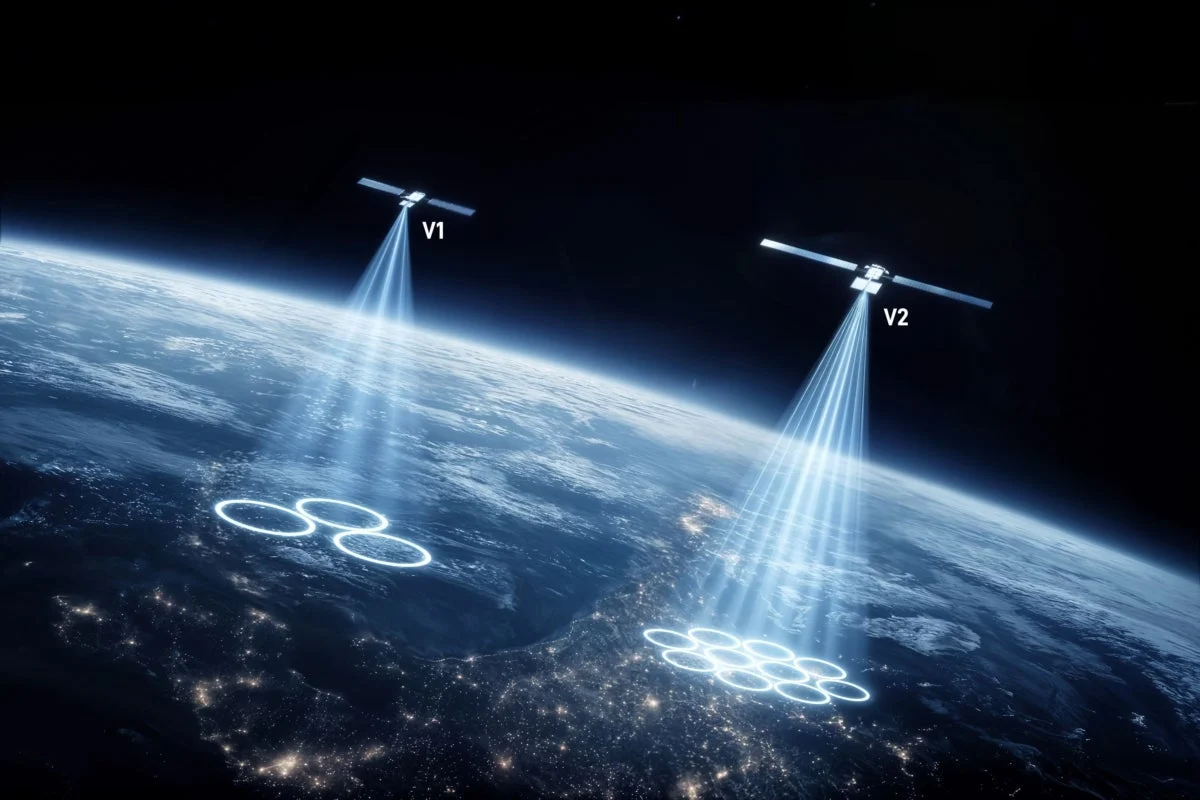
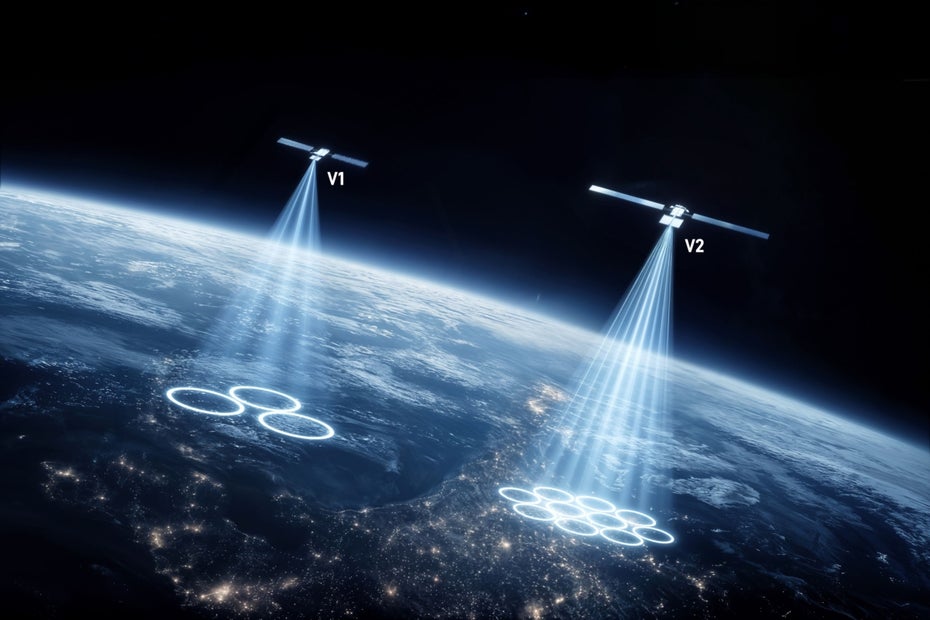
The FCC’s recent approval of 15,000 new satellites is the engine room of this expansion. These second-generation (Gen2) satellites are significantly larger and more capable than their predecessors. They are equipped with advanced phased-array antennas that can focus beams precisely on mobile devices, even when the user is moving at high speeds or located inside a structure. The combination of these orbiting assets and the newly acquired terrestrial spectrum creates a closed-loop system where the sky and the ground are inextricably linked.
Official Responses and Market Disruption
The reaction from the telecommunications sector was swift and visceral. Immediately following the news of the $8 billion deal, shares of major incumbents—AT&T, Verizon, and T-Mobile US—experienced notable dips, as did those of rival satellite operator AST SpaceMobile.
The Incumbent Counter-Attack
Recognizing the existential threat, the "Big Three" U.S. carriers have taken the unusual step of forming a collaborative joint venture. The goal is to pool their own frequency assets and develop a standardized, cross-carrier interface for software developers and device manufacturers. By creating a unified ecosystem, these legacy carriers hope to reduce their dependency on any single provider and build a "walled garden" that can compete with the vertically integrated SpaceX model.
The Regulator’s Dilemma: The FCC’s Role
The FCC is currently caught between encouraging innovation and preventing a monopoly. The commission has proposed a new framework, "Supplemental Coverage from Space" (SCS), which would open up an additional 482 MHz of spectrum for satellite-terrestrial use. While this would help lower the barrier to entry for smaller players, it also risks triggering a "spectrum land grab" where only the wealthiest corporations can afford the bidding wars.
Implications: A Monopolistic Future?
The implications of this move go far beyond mere data speeds or coverage maps. If successful, SpaceX will have effectively built a private, global, space-to-ground telecommunications infrastructure.
Technical Centralization
There is significant concern regarding the concentration of power. By controlling the entire stack—from the satellite launch vehicle to the orbital constellation, the terrestrial frequency licenses, and the ground-based relay hardware—SpaceX would occupy a position of unprecedented influence.
Critics, including the Rural Wireless Association, have warned that this centralization creates a "single point of failure." If the network experiences a global outage, or if Musk decides to alter the service’s terms of use, millions of users in rural and remote regions could be left without communication, with no local infrastructure to fall back on.
The End of the "Rural Divide"?
On the positive side, the project represents the best chance in decades to close the digital divide. For inhabitants of remote regions, mountainous areas, or disaster zones, the promise of a truly global, ubiquitous mobile network is transformative. The hybrid model means that a user in the middle of the desert could potentially have the same signal quality as a user in downtown Manhattan.
Conclusion: The Final Frontier of Wireless
As the FCC deliberates on the final approval of the grain management deal, the telecommunications industry finds itself at a crossroads. We are witnessing the end of the traditional "cellular tower" era and the beginning of a truly "global sky" era.
While the incumbents fight to preserve their legacy business models through consolidation and standard-setting, SpaceX is betting that the future of connectivity lies not in the ground, but in the seamless integration of both. Whether this will lead to a new era of democratized, low-cost access or a new era of centralized control remains the defining question of the next decade of mobile technology.
For now, the world waits to see if the regulatory gatekeepers will allow the rocket manufacturer to effectively become the world’s largest, and perhaps most powerful, mobile operator. The battle for the spectrum is no longer just about MHz; it is a battle for the future of human communication.