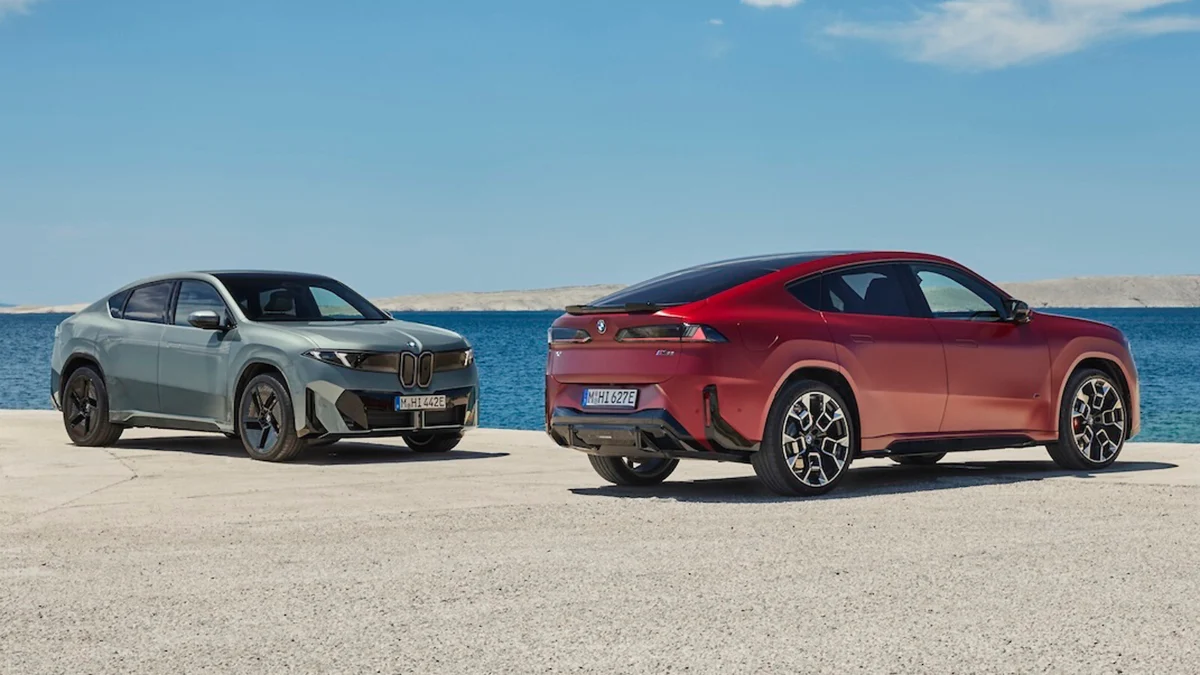
In the automotive world, commercial success is rarely dictated by consensus. If market trends followed the expectations of critics, niche segments might never have blossomed. BMW’s history with the X4 and X6 models serves as the ultimate case study in this phenomenon; while initially dismissed by many as niche experiments, they evolved into global pillars of the brand’s sales strategy. Recognizing this, the Munich-based manufacturer is now applying the same formula to the electric era. Following the introduction of the iX3, the first emissary of the “New Class” (Neue Klasse), BMW is expanding its electrified portfolio with the introduction of the iX4—a battery-electric SUV-coupe designed to trigger visceral reactions and capture a premium, design-conscious demographic.
Main Facts: The iX4 Profile
The iX4 enters the market as a bold, assertive statement in the premium electric vehicle (EV) segment. Measuring 4.78 meters in length, the vehicle carries the distinctive, voluminous design language that has defined BMW’s SUV-coupe lineage.
Unlike the entry-level iX3, which recently introduced a rear-wheel-drive configuration to lower the barrier to entry, the iX4 leans heavily into the brand’s performance identity. At launch, the vehicle will be offered exclusively with all-wheel drive. The entry-level model, the iX4 40 xDrive, boasts 275 kW of power paired with an 83-kWh battery pack. Pricing is set at 70,900 euros—a nominal premium over the iX3, which, at 69,700 euros for a similar configuration, suggests that BMW is positioning the iX4 as an emotional upgrade rather than a functional alternative.
For those seeking higher performance, the iX4 50 xDrive delivers 345 kW of power and utilizes a larger 109-kWh battery. With a starting price of 75,900 euros, this variant offers significant gains in both range and charging capability.

Chronology: From Concept to Production
The journey of the iX4 is deeply intertwined with the development of the "New Class" platform. BMW’s strategy has been one of gradual electrification, moving from retrofitted platforms to dedicated EV architectures.
- The Foundation: The rollout of the iX3 established the baseline for BMW’s mid-sized electric SUV strategy.
- The Expansion: Recognizing the demand for a more emotive, athletic silhouette, BMW engineering teams began development on the iX4 concurrently with the latest iteration of the iX3.
- Technological Integration: The integration of 800-volt architecture capabilities and optimized aerodynamics allowed the iX4 to surpass the range metrics of its square-backed sibling, the iX3, effectively using the "coupe" aesthetic as a functional benefit rather than a mere design choice.
- The Performance Peak: The announcement of the M60 xDrive variant marks the current summit of the lineup, with BMW hinting at even more potent iterations from the M Division arriving in the coming years.
Supporting Data: Efficiency and Performance
The technical specifications of the iX4 are engineered to address the two primary concerns of the modern EV buyer: range anxiety and charging speed.
Charging and Range Metrics
The 40 xDrive model features a robust charging capacity of 300 kW, while the 50 xDrive and M60 xDrive variants push this to 400 kW. While 400-kW charging infrastructure remains in its infancy, the capability ensures the vehicle is future-proofed for the next decade of grid expansion.
The range improvements are particularly noteworthy. The 50 xDrive offers a WLTP-certified range that is 190 km higher than the base 40 model, totaling an impressive 828 km. The flagship M60 xDrive, despite its massive 450 kW power output, still maintains a respectable 780 km WLTP range—30 km more than the corresponding iX3 M60.

To put this into practical context: a long-distance journey of over 1,200 km is theoretically achievable with a single 22-minute charging stop, provided the driver manages the battery from 10% to 80% charge. Even under conservative estimates, factoring in highway speeds and real-world efficiency of 24 kWh/100 km, the iX4 delivers a realistic, stress-free range of approximately 720 km between stops.
Official Responses and Design Philosophy
BMW’s design team has been explicit: the iX4 is not intended to be a "crowd-pleaser" in the traditional sense. In the words of company spokespeople, the vehicle is designed to be "emotionally charged." This philosophy centers on the idea that the polarizing nature of the SUV-coupe silhouette is a feature, not a bug.
By prioritizing a "wuchtig" (massive/voluminous) aesthetic, BMW aims to signal prestige and road presence. The design is a calculated move to capture buyers who value individualistic expression over utility—a demographic that has proven to be incredibly loyal to the X4 and X6 nameplates.
Inside the cabin, the experience is familiar yet refined. The interior design largely mirrors the iX3, ensuring a seamless transition for existing BMW customers. However, the standard equipment levels are significantly elevated: even the base model arrives with an M Sport package, 20-inch alloy wheels, a premium Hi-Fi system, and a panoramic glass roof. The M60 variant further distinguishes itself with 21-inch wheels and an advanced adaptive suspension system.

Implications: The Future of the "New Class"
The launch of the iX4 carries significant implications for the automotive market and BMW’s standing within it:
- Brand Identity: BMW is doubling down on its "M" performance heritage in the electric space. With rumors of a future M-Division model exceeding 500 kW, the manufacturer is clearly aiming to reclaim the mantle of the "Ultimate Driving Machine" in an era where torque delivery is instantaneous.
- Market Segmentation: By pricing the iX4 closely to the iX3, BMW is attempting to prevent "cannibalization" while offering a distinct choice. It forces the consumer to decide between the practical, traditional SUV form factor and the aggressive, status-driven coupe aesthetic.
- The Infrastructure Gap: BMW’s decision to implement 400-kW charging hardware ahead of widespread global adoption is a bold bet. It signals that BMW is confident in the rapid expansion of ultra-fast charging networks and is positioning its vehicles as the catalyst for, rather than a passenger of, that transition.
- The Polarization Strategy: Perhaps the most critical takeaway is BMW’s acceptance of polarizing design. By intentionally moving away from "graceful elegance" in favor of "voluminous, assertive presence," BMW is betting that the emotional connection—even if it sparks debate—is a more effective sales tool than bland, mass-market appeal.
In conclusion, the BMW iX4 is not just an electrified X4; it is a declaration of intent. It demonstrates that the transition to electric mobility does not require a sacrifice of the design identities that have built the brand’s reputation. Whether this bold, polarizing approach will continue to yield the global success BMW expects remains to be seen, but the numbers suggest that for every buyer turned off by its silhouette, there is another waiting to embrace its distinct, powerful, and technologically advanced profile. The iX4 stands as a testament to the idea that in the luxury automotive market, being unforgettable is far more profitable than being agreeable.