What was once dismissed as a minor distraction—a quick glance at a screen or a brief tap to change a song—has evolved into one of the most significant threats to road safety in the 21st century. As digital connectivity becomes an inseparable part of modern existence, the habit of checking one’s smartphone has migrated from the couch and the office chair to the driver’s seat. According to accident researchers, the consequences are becoming increasingly dire, with younger generations of drivers leading a trend that is as dangerous as it is pervasive.
The Growing Crisis: A Look at the Main Facts
Siegfried Brockmann, a prominent accident researcher associated with the Björn Steiger Foundation in Winnenden, Germany, warns that the current situation is merely the tip of the iceberg. The root of the problem lies in the psychological makeup of "Digital Natives"—the generation that has grown up in an environment of constant, instantaneous communication.
"My prognosis is that we are going to see a lot more of this, because digital natives have just started arriving on the roads, and they simply cannot bear to go a single minute without checking if there is something new," Brockmann explained in an interview.
For these younger, less experienced drivers, the danger is compounded by a lack of situational awareness. Many struggle to accurately judge the critical seconds during which their eyes are diverted from the road. At highway speeds, a driver traveling at 100 km/h covers nearly 28 meters in a single second. Even the briefest interaction with a phone screen can render a driver "blind" for a distance longer than a swimming pool, turning a routine commute into a lethal gamble.
Chronology of a Safety Failure
The normalization of smartphone use behind the wheel did not happen overnight. It followed the rapid adoption of smartphones in the late 2000s and early 2010s.
- The Early Phase: Initially, the concern was primarily focused on voice calls. Legislators introduced hands-free requirements, believing that keeping both hands on the wheel would mitigate the risk.
- The Shift to Texting: As the technology evolved from simple communication devices to portable hubs for social media, messaging, and gaming, the nature of the distraction changed. It was no longer just about auditory distraction; it became a cognitive and visual one.
- The Recognition of the "Dark Figure": Throughout the late 2010s, traffic authorities began to realize that accident reports were failing to capture the true scale of the problem. Because physical evidence of "texting" is hard to verify after a crash, many accidents caused by distraction were officially categorized as "loss of control" or "inattention," masking the digital culprit.
- The Current Era: Today, we are witnessing a plateau of awareness, where the practice is widely known to be dangerous yet socially tolerated among younger drivers, leading to a surge in observed infractions.
Supporting Data: Mapping the Distraction
Quantifying exactly how many people are using their phones while driving is notoriously difficult. However, the Auto Club Europe (ACE) recently provided a stark snapshot of the reality on the ground. Between April and July of this year, volunteers conducted over 300 checks at urban intersections across Germany.
The findings were sobering: on average, 3.3% of drivers were caught using their smartphones in clear violation of traffic laws. However, the aggregate number hides extreme regional variations. At one particular intersection in Stuttgart, observers recorded a violation rate of 17.9%—a staggering figure that suggests nearly one in five drivers is engaged with their device at any given moment.
Conversely, in cities like Braunschweig, Jüterbog, Oschatz, and Trostberg, no violations were recorded during the observation windows. While these represent mere "snapshots," the contrast between regions suggests that enforcement, local traffic density, and perhaps cultural norms play a massive role in how brazen drivers are about their digital habits.
The Challenge of Detection and the "Dark Figure"
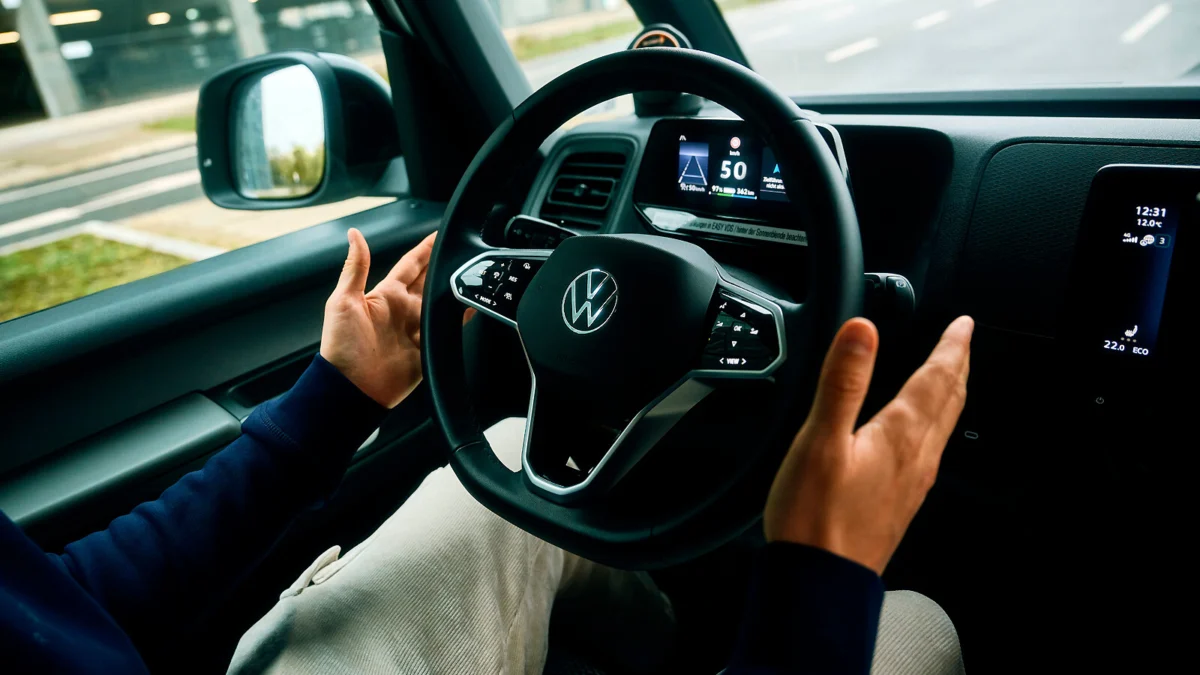
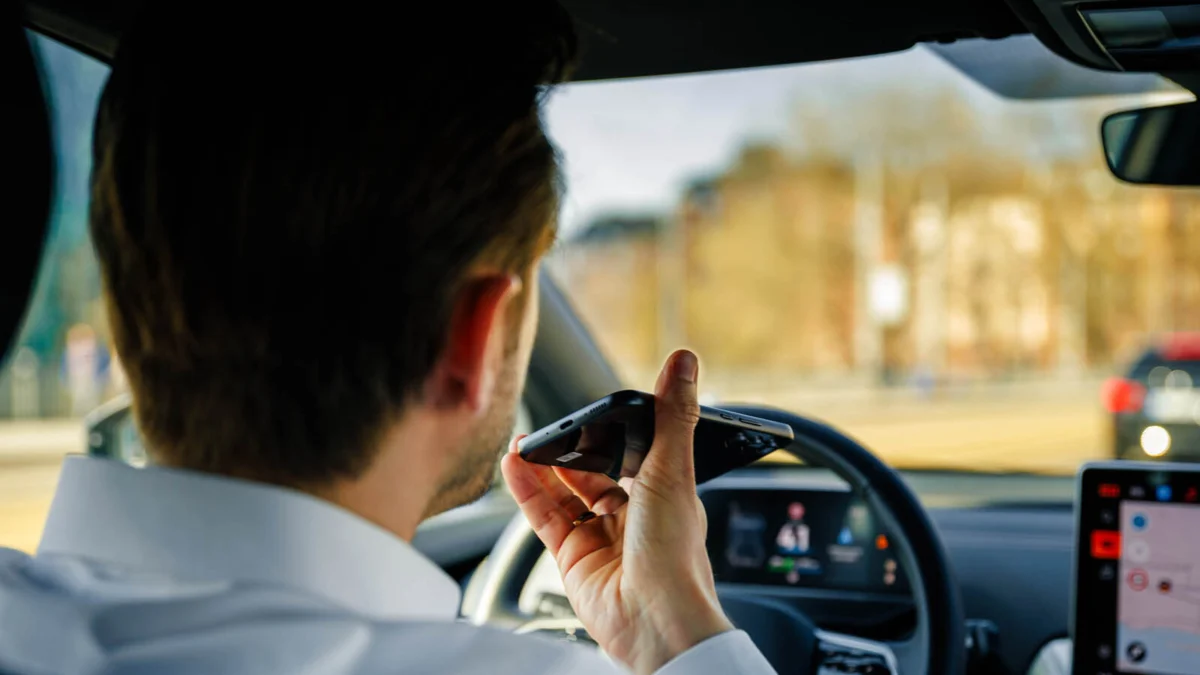
One of the most persistent hurdles in traffic law enforcement is the distinction between "holding" a phone and "interacting" with it. As Brockmann points out, holding a phone to one’s ear is easily spotted by law enforcement officers or traffic cameras. However, the far more common and dangerous practice of resting a phone on one’s lap to read or compose text messages is nearly impossible to detect from the side of the road.
"If someone is reading or writing text messages while driving, this is much harder to prove," Brockmann notes. "In official statistics, this only appears in a very small percentage of cases. But that doesn’t mean it doesn’t happen; it just means it cannot be proven."

This "dark figure" of unreported or undetected infractions remains the greatest enemy of road safety. Because the evidence is ephemeral—a thumb swipe on a touchscreen leaves no skid marks—law enforcement has struggled to keep pace with the behavior.
Official Responses and the Debate Over Penalties
The severity of the issue has triggered a heated debate among policymakers and legal experts. Earlier this year, at the German Traffic Court Day (Verkehrsgerichtstag) in Goslar, experts proposed a significant hardening of the legal consequences.
Currently, a driver caught using a mobile phone faces a fine and a single point on their license. The proposal from the experts was far more stringent:
- Points: Increasing the penalty to two points on the license to serve as a stronger deterrent.
- Fines: Raising the standard fine from 100 euros to a minimum of 250 euros.
- Escalation: In cases where the behavior leads to a hazardous situation, the fine should rise to 500 euros; if an accident resulting in damage occurs, the penalty should hit 750 euros.
However, these proposals have yet to be implemented, leaving a gap between the severity of the threat and the current legislative response.
Implications: The Path Forward
Despite the calls for harsher financial penalties, some experts remain skeptical about the efficacy of a "punitive-only" approach. Brockmann argues that the current classification of the offense—under Paragraph 23 of the German Road Traffic Act—is already appropriate in terms of the perceived risk. The issue is not the lack of severity in the law, but the low probability of being caught.
"You won’t manage to get younger people to put their phones away with any punishment in the world," Brockmann contends. Instead of focusing solely on the "stick," he suggests a shift toward a combination of enforcement technology and design innovation.
Rheinland-Pfalz has already begun piloting "mobile phone speed cameras"—specialized hardware that monitors drivers from a high angle, looking down into the cockpit to capture images of illegal device use. While effective, these tools are currently limited in their deployment.
Ultimately, the long-term solution may lie in technology that bridges the gap between the driver’s need for connectivity and the safety of the road. Improved voice-to-text integration, which allows drivers to manage communications without looking at a screen or taking their hands off the wheel, represents the most promising frontier.
As we look toward the future of autonomous driving, the "human factor" remains the weakest link. Until fully self-driving cars become the norm, the battle against the glowing screen in the driver’s lap will remain one of the most critical challenges for modern traffic safety. The evidence is clear: the digital age has brought us closer together, but it has also created a dangerous distance between the driver and the road.