Executive Summary: A City Landmark in Distress
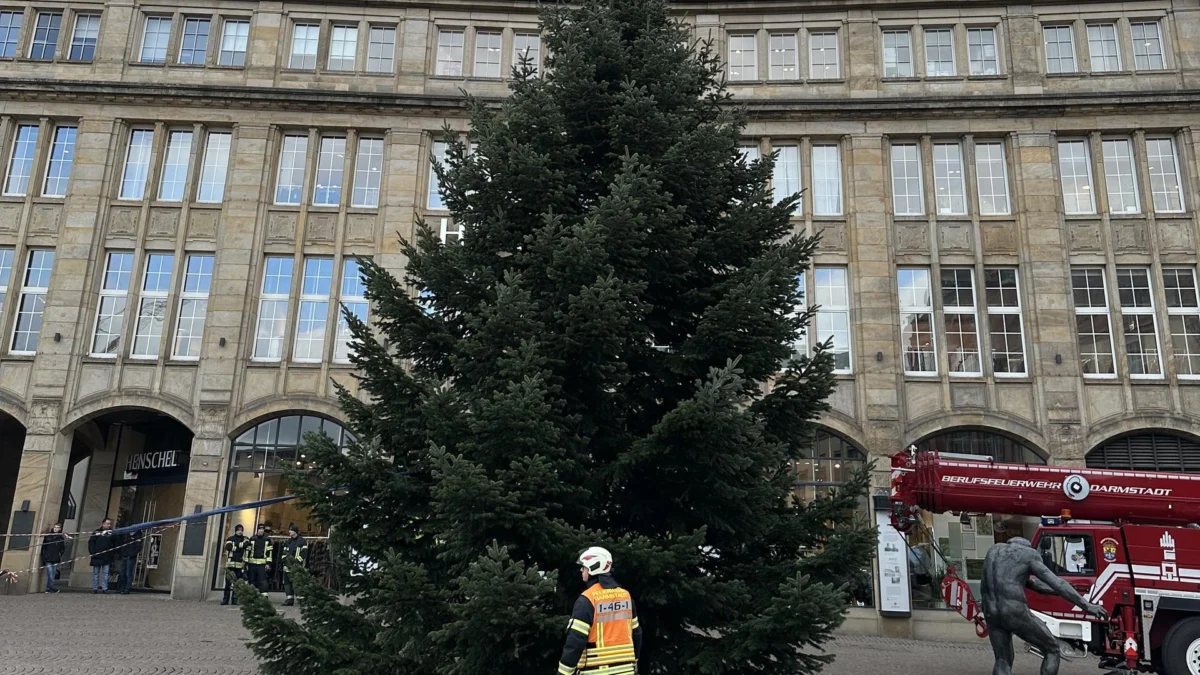
In the early hours of Thursday, the city of Darmstadt experienced a vivid reminder of the volatility of autumn weather as severe gusts brought a major municipal Christmas tree to a precarious, leaning position. The incident, which occurred ahead of the official holiday inauguration period, necessitated an urgent response from local emergency services. While no injuries were reported, the sight of the leaning conifer—a staple of the city’s seasonal identity—served as a stark narrative of the challenges posed by increasingly unpredictable weather patterns across the Hessian region.
The event, which dominated local headlines in the Hessen am Morgen news cycle, highlights the logistical complexities involved in maintaining public infrastructure during the transition from autumn to winter. As the city attempts to restore its festive decor, authorities are balancing public safety with the symbolic necessity of maintaining holiday morale.

Chronology of the Incident
The sequence of events unfolded rapidly as a cold front moved through Southern Hesse, bringing localized wind gusts that proved too much for the anchoring systems of the city’s centerpiece tree.
The Midnight Onset
Meteorological data suggests that high-velocity winds began to intensify in the Darmstadt area shortly after midnight. Residents in the vicinity of the central shopping district reported hearing creaking sounds as the structure of the tree, freshly erected in anticipation of the festive season, began to shift.

The Emergency Call
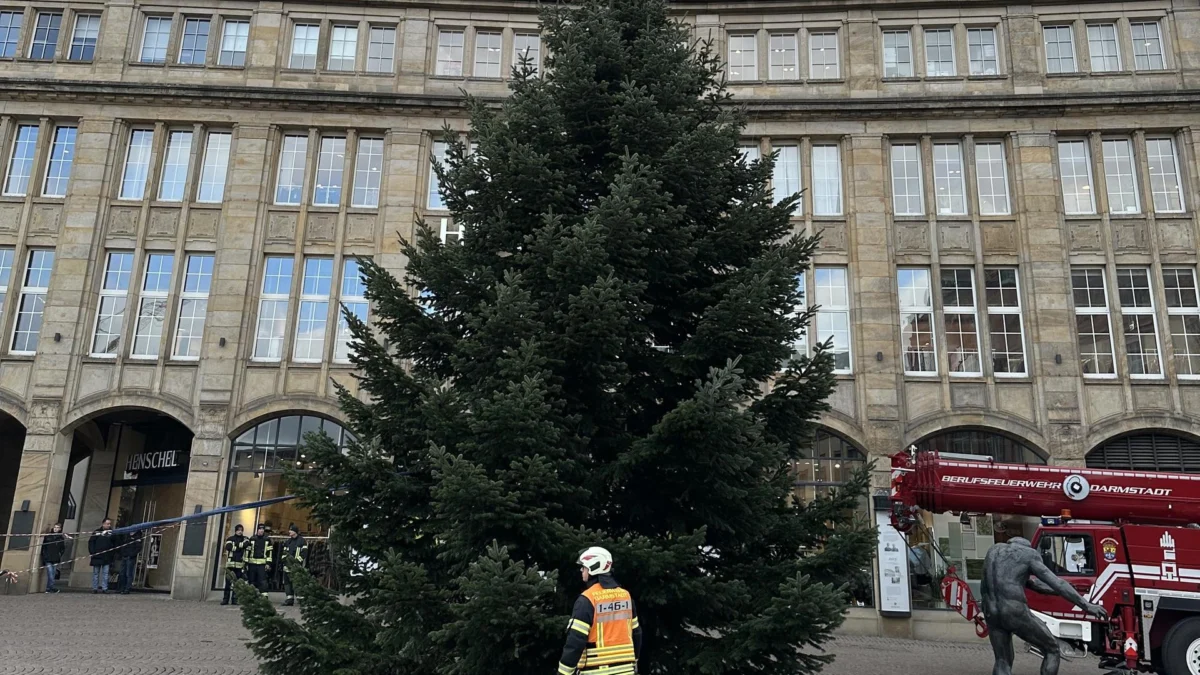
At approximately 3:00 AM, local authorities were alerted to the situation. A concerned passerby noticed that the tree had shifted several degrees from its vertical axis, threatening to spill over into the pedestrian walkway and adjacent storefronts. The Darmstadt Fire Department (Feuerwehr Darmstadt) was dispatched to the scene immediately.
The Stabilization Operation
By 4:00 AM, a specialized heavy-duty fire truck was positioned at the site. The operation required a delicate approach; the goal was not merely to lower the tree, but to ensure that it did not collapse onto the surrounding infrastructure or the emergency responders themselves. Through the use of hydraulic lifts and stabilization ropes, the fire crew successfully secured the tree by daybreak, preventing what could have been a costly property damage event.

Supporting Data: The Meteorological Context
The incident in Darmstadt did not occur in a vacuum. Regional meteorological reports indicate that the state of Hesse has been subject to erratic wind patterns throughout the early week.
Wind Gust Velocity
On the morning of the incident, meteorological stations in Southern Hesse recorded sustained winds in the range of 50 to 60 km/h, with peak gusts reaching upwards of 80 km/h in exposed urban areas. These "urban canyon" effects, where wind is funneled between high-rise buildings, often amplify the force exerted on vertical structures like Christmas trees.

Structural Integrity Challenges
Engineers note that the installation of large conifers (often exceeding 10 meters in height) requires significant ballast and deep-anchor foundations. The soil saturation levels, resulting from heavy rain earlier in the week, likely contributed to the loosening of the ground surrounding the base of the tree, rendering the traditional anchoring methods less effective than in drier conditions.
Official Responses and Public Communication
Following the stabilization of the tree, city officials and the Darmstadt Fire Department issued statements to quell public concern and outline the path forward.

Fire Department Statement
A spokesperson for the Darmstadt Fire Department emphasized the importance of public safety, noting, "The integrity of the tree was compromised by the combination of high wind speeds and the current soil conditions. Our priority was to prevent a spontaneous collapse that could have endangered early-morning commuters. We have successfully secured the site and are now coordinating with municipal arborists to determine if the tree can be re-anchored or if it must be replaced."
Municipal Response
The city’s planning department, responsible for the annual festive layout, is currently conducting a review of all public holiday installations. A city spokesperson remarked, "While we understand the disappointment this causes for citizens looking forward to the holiday season, the safety of the public is non-negotiable. We are currently evaluating the root structure of the tree to see if it remains viable for the rest of the season."

Implications: The Changing Face of Urban Festivities
The leaning tree in Darmstadt has sparked a broader conversation about the implications of climate volatility on traditional urban celebrations.
Infrastructure Resilience
As Germany faces more frequent and intense storm systems, city planners are forced to rethink how they anchor temporary structures. Traditional methods—which have been sufficient for decades—may no longer be adequate. This incident serves as a precursor for a potential shift in municipal policy, potentially mandating deeper foundations, more robust steel bracing, or the use of synthetic alternatives that are less susceptible to the weight-distribution issues inherent in natural timber.

The Economic Cost of Delay
The logistical cost of the fire department’s intervention, combined with the potential expense of replacing or re-installing the tree, poses a budgetary concern for local municipalities. In an era of tightening fiscal constraints, the unexpected costs associated with "weather-proofing" public celebrations could lead to debates over the scale of such displays in future years.
Public Morale and Symbolic Importance
Beyond the logistical and economic concerns, there is the intangible aspect of public morale. In Hesse, the Christmas tree is not merely a decoration; it is a vital symbol of the community’s resilience and shared history. The image of the tree in disarray—though quickly rectified—evoked a sense of unease among locals who look to these symbols as markers of normalcy.

Local businesses, which rely on the festive season to draw shoppers into the city center, have expressed hope that the issue will be resolved swiftly. "The tree is the anchor of our festive marketing," noted a representative from the local chamber of commerce. "We are confident that the city will have it standing tall again soon, but it is a reminder that we are at the mercy of the elements."
Conclusion: A Resilient City
As the sun rose over Darmstadt on Thursday, the fire truck departed, leaving behind a tree that, while still leaning slightly, was firmly anchored and no longer a threat to the public. The event stands as a testament to the efficiency of the Darmstadt emergency services and a stark reminder of the unpredictable nature of the Hessian autumn.

As investigations into the structural failure continue, the city remains committed to its holiday schedule. For the residents of Darmstadt, the sight of the tree—now a minor media sensation—has become part of the lore of this year’s festivities. It is a story of a city that, despite the winds, remains determined to move forward into the holiday season with traditional spirit and a newfound respect for the forces of nature.
The incident serves as a clear directive for other municipalities across Germany: as weather patterns become more extreme, the preparation and maintenance of public symbols must evolve. By adapting engineering standards and emergency response protocols, cities can ensure that their festive traditions remain safe, stable, and ready to welcome the season, regardless of the challenges posed by the winter winds.