


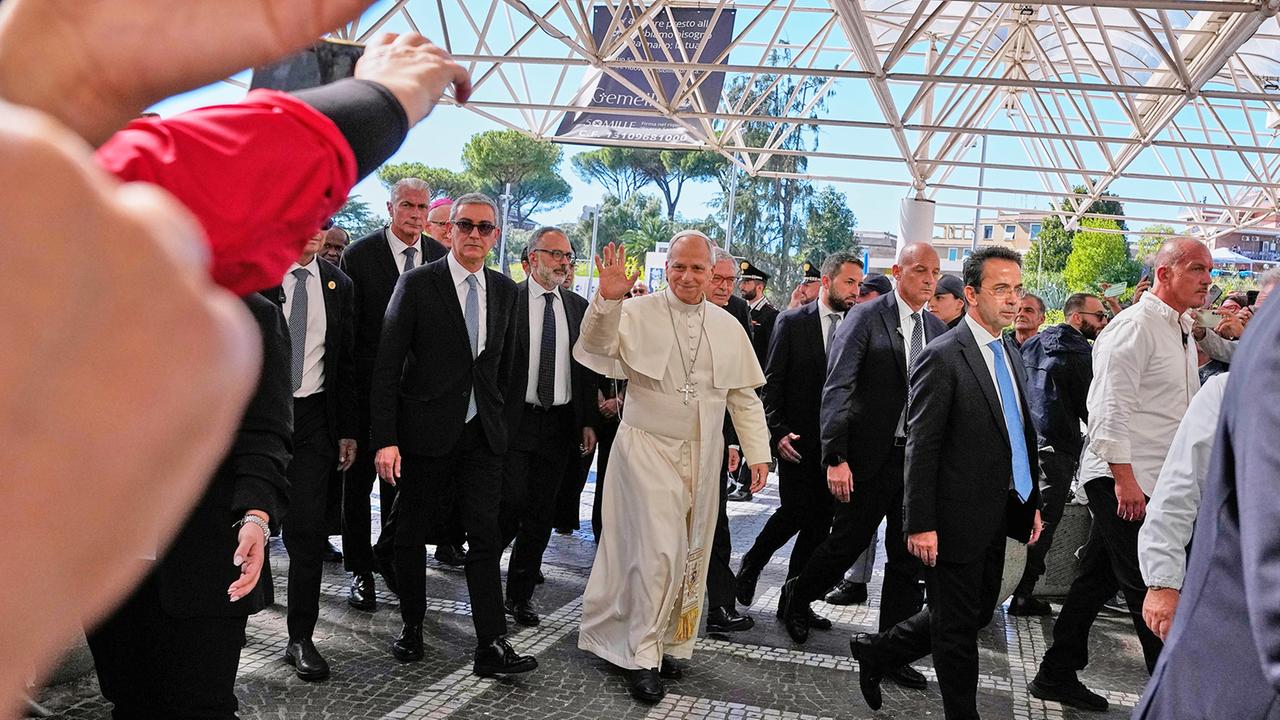
Vatican City, October 13, 2026 – His Holiness Pope Leo XIV was admitted to the prestigious Agostino Gemelli University Polyclinic in Rome this morning for a scheduled surgical procedure to remove a pulmonary nodule. The 71-year-old Pontiff arrived at the renowned medical facility shortly after midday, embarking on a period of convalescence that is expected to last approximately one week. The Vatican has confirmed that all papal audiences have been suspended until October 20th to allow His Holiness to recover fully.
The operation, a thoracic surgery procedure, is set to be performed by a specialized medical team led by Professor Stefano Margaritora. While an exact time for the surgery has not been officially disclosed by the Holy See, it is understood to be scheduled for this afternoon. The Vatican has characterized the nodule as being detected at a "very early stage" and "well-localized," a detail that offers a measure of reassurance amidst the public concern surrounding the Pontiff’s health.
The Agostino Gemelli Polyclinic, located just north of Vatican City, is one of Rome’s largest and most respected healthcare institutions, employing over 5,000 medical professionals and staff. The hospital is known for its advanced medical capabilities and has a dedicated wing for papal stays, though reports suggest Pope Leo XIV will not be housed in the traditional papal apartment due to ongoing renovations.
The news of the Pope’s hospitalization has understandably drawn significant attention, with many faithful gathered outside the clinic to offer their well wishes and prayers for his swift recovery. This event marks a significant moment for the global Catholic community, underscoring the personal vulnerability of its spiritual leader.
Chronology of Events: A Matter of Health and Faith
The decision for Pope Leo XIV to undergo surgery was publicly announced by the Pontiff himself following the Angelus prayer on Sunday. During his address to the faithful gathered in St. Peter’s Square, His Holiness revealed his intention to undergo the procedure "in the coming days." He shared that the pulmonary nodule had been discovered serendipitously and was in an "extremely early stage" of development and "well-localized." He further stated that the removal was being undertaken on the advice of his medical team, a testament to his trust in their expertise and his commitment to maintaining his health to continue his pastoral duties.
This announcement set in motion the preparations for his admission to the Gemelli Polyclinic. This morning, His Holiness was transported to the hospital, marking the commencement of the medical intervention. The Vatican’s communication has been consistent, emphasizing the proactive nature of the medical intervention and the generally positive prognosis given the early detection of the nodule.
The suspension of papal audiences until October 20th signifies a temporary pause in the Pontiff’s public schedule, a necessary measure to prioritize his recovery. This period will allow for rest and recuperation, essential for regaining strength after the surgical procedure.
Supporting Data: Understanding Pulmonary Nodules
The medical term "pulmonary nodule" refers to a small, roundish growth found within the lungs. These nodules are typically detected through imaging tests such as X-rays or CT scans. Their origins can be diverse, ranging from benign conditions to more serious pathologies.
Common Causes of Pulmonary Nodules Include:
- Past Infections and Inflammations: Scar tissue from previous infections like pneumonia or tuberculosis can form nodules.
- Benign Tumors (Non-cancerous): Conditions such as hamartomas, which are overgrowths of normal tissue, can manifest as nodules.
- Granulomas: These are small clusters of inflammatory cells that can form in response to infections or other stimuli.
- Malignant Tumors (Cancerous): This category includes primary lung cancer, where the tumor originates in the lung, or metastases, which are secondary tumors that have spread from cancer elsewhere in the body.
The Vatican’s statement that the nodule was found in a "very early stage" and was "well-localized" is critical. Early detection significantly improves treatment outcomes, particularly in cases of malignancy. A biopsy, which involves taking a sample of the nodule’s tissue for examination under a microscope, is often the definitive method for determining whether a nodule is benign or malignant. Many nodules discovered incidentally during medical imaging are found to be non-cancerous. The fact that the Pope’s medical team advised its removal suggests a precautionary approach, aiming to address any potential risk at the earliest possible juncture.
The Agostino Gemelli Polyclinic’s commitment to advanced thoracic surgery, with Professor Margaritora at its helm, provides a strong assurance of the quality of care Pope Leo XIV will receive. The hospital’s sophisticated diagnostic and surgical capabilities are well-equipped to handle such procedures.
Official Responses and Vatican Communications
The Holy See has maintained a measured and transparent approach in its communications regarding Pope Leo XIV’s health. The initial announcement from the Pope himself, followed by official statements from a Vatican spokesperson, has aimed to keep the faithful informed without causing undue alarm.
The Vatican spokesperson emphasized that the decision for surgery was based on medical advice and that the nodule’s early detection was a positive factor. The confirmation of the suspension of papal audiences until October 20th was a clear indication of the expected recovery period and the need for the Pope to rest.
The description of the nodule as "very early stage" and "well-localized" serves to contextualize the medical intervention as a proactive measure rather than a response to an advanced or critical condition. This phrasing is designed to reassure the global Catholic population and demonstrate the Church’s commitment to the health and well-being of its leader.
The Vatican’s consistent messaging highlights the importance of the Pope’s health for the continued spiritual leadership and operational capacity of the Holy See. The careful management of information reflects a deep understanding of the public’s interest and the symbolic significance of the Papacy.
Implications for the Church and the Faithful
Pope Leo XIV’s hospitalization, while a personal health matter, carries broader implications for the Catholic Church and its global following. The Papacy is not merely a spiritual office but also a significant institutional and diplomatic force. Any disruption to the Pope’s ability to perform his duties, however temporary, is keenly felt.
Key Implications Include:
- Continuity of Papal Duties: The suspension of audiences and the projected week-long recovery period will necessitate a temporary adjustment in the Vatican’s public engagements. However, the Church has robust mechanisms in place to ensure the continuity of essential functions. Key decisions and administrative matters will likely continue to be managed by Vatican departments and cardinals, with the Pope’s input sought as his health permits.
- Spiritual Leadership and Prayer: The news is likely to galvanize prayer and spiritual support from Catholics worldwide. This period of convalescence often becomes an occasion for communal prayer and reflection, reinforcing the bonds of faith.
- Public Perception and Media Scrutiny: The health of the Pope is always a subject of intense global interest. This event will undoubtedly lead to increased media attention on the Vatican and its operations. The transparent and measured communication from the Holy See will be crucial in managing public perception.
- The Papacy as a Symbol of Vulnerability: The Pontiff, while seen as a spiritual beacon, is also a human being subject to the same health challenges as anyone else. This event serves as a reminder of the vulnerability of even the most revered figures, fostering a sense of shared humanity among the faithful.
- Focus on Preventative Healthcare: The "very early stage" discovery of the nodule highlights the importance of regular medical check-ups and proactive healthcare. This can serve as an indirect message to the faithful about the value of prioritizing their own health.
As Pope Leo XIV recovers, the global Catholic community will undoubtedly be united in prayer for his speedy and complete return to health. The successful outcome of this surgical procedure, coupled with the careful management of his recovery, will be vital for the continued spiritual guidance and leadership of the Holy See. The resilience and dedication of the Vatican apparatus, along with the unwavering faith of millions, will ensure that the Church navigates this period with strength and unity.


