By Max Fallert
Published: October 13, 2026
In the quiet laboratories of the Martin Luther University Halle-Wittenberg (MLU), a paradigm shift is underway. For decades, the pharmaceutical industry has relied on the expensive, resource-intensive extraction of rare medicinal compounds from plants. Today, a team of researchers is turning this model on its head by treating what the world calls "agricultural waste" as a goldmine for the next generation of life-saving drugs. By combining green chemistry with the precision of Artificial Intelligence (AI), these scientists are proving that the solution to some of our most complex medical challenges might be sitting in a pile of apple scraps.
The Untapped Potential: Nature’s Hidden "Superpowers"
Plants have evolved for millions of years to survive in hostile environments. To protect themselves from predators, attract pollinators, or combat microbial pathogens, they produce an array of sophisticated secondary metabolites. One of the most famous examples is Xanthohumol, a compound found in hops. These molecules, known technically as "prenylated phenolic compounds," are not merely biological curiosities; they are potent, biologically active substances that hold immense promise for human health.
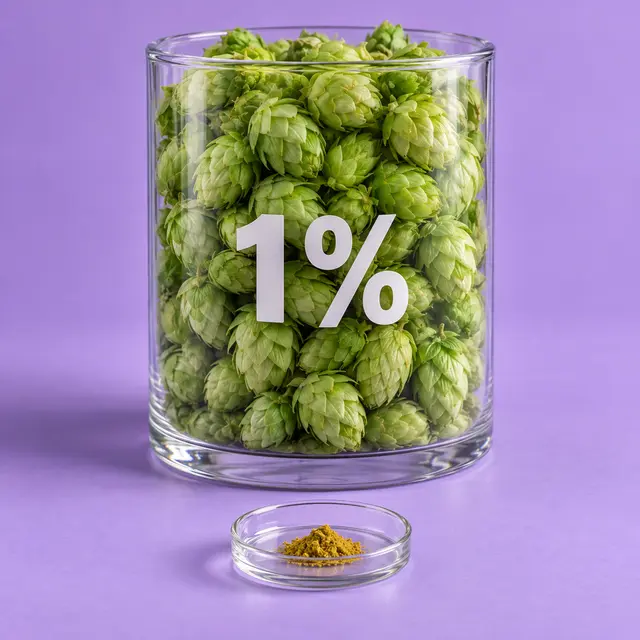
Studies on the cellular level have suggested that these secondary metabolites can stimulate the nervous system, potentially preventing Alzheimer’s disease, inhibiting the growth of cancer cells, regulating inflammatory responses, and managing diabetes. The catch? Nature is stingy. In a hop cone, these desirable compounds might make up as little as one percent of the total mass. Extracting and purifying them at scale has historically been so prohibitively expensive and energy-intensive that it often made commercial production unviable.
From the Field to the Flask: A New Philosophy of "Reststoffe"
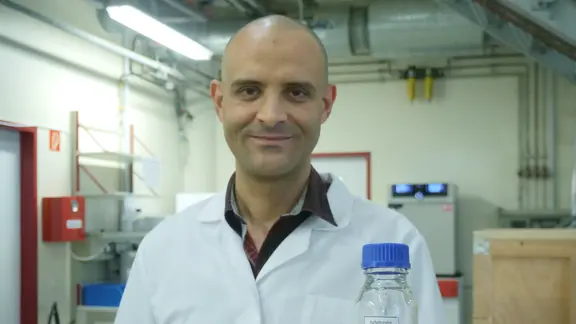
Mohamed Nagia, a pharmacist at the Martin Luther University Halle-Wittenberg, believes the problem is not a lack of resources, but a lack of perspective. "Our motto is simple: there is no such thing as ‘waste’—we call them raw materials," Nagia asserts.
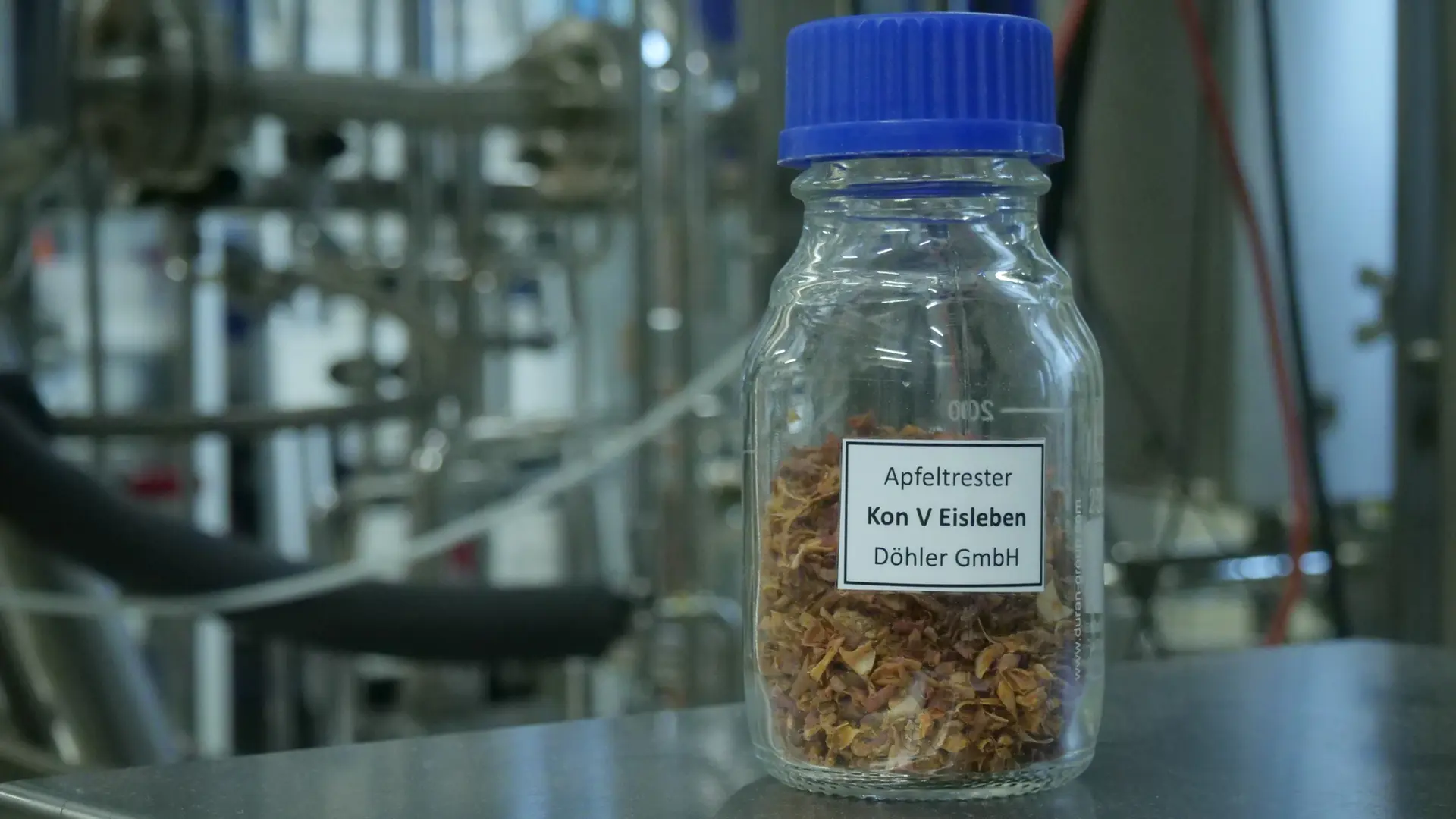
His team is focusing on two primary streams of industrial byproduct: apple pomace—the fibrous residue left over after juice extraction—and lignin, a structural polymer discarded in massive quantities by the paper and pulp industry. The scale is staggering: in Germany alone, the production of roughly 500 million liters of apple juice annually generates up to 250,000 tons of apple pomace. Previously destined for animal feed or composting, this material is now being repurposed as a complex scaffold for pharmaceutical synthesis.
The Digital Needle in a Haystack: The Role of AI
The challenge of converting raw fiber into medical-grade compounds is immense. Nature uses specific enzymes to build these complex molecules, but identifying the exact enzyme to trigger the desired transformation among the thousands of possibilities is akin to finding a needle in a haystack.
This is where the Computational Chemistry group at the Leibniz Institute for Plant Biochemistry (IPB) enters the equation. Mehdi Davari, a lead researcher in the group, explains that manual trial-and-error in the laboratory is no longer sufficient. "We cannot test every biological possibility in the lab; it would take lifetimes," Davari explains. "Instead, we use AI algorithms. The AI parses massive global databases of protein and enzyme structures, cross-referencing them with our chemical goals, and suggests the most promising candidates."
This digital design process acts as a filter, narrowing down thousands of potential enzymes to only the most efficient ones. This "BioCasNavi" platform, as the project is known, not only accelerates the research in Halle but provides a digital blueprint that can be adapted for a wide variety of other chemical and enzymatic processes, significantly reducing both development time and financial overhead.
Chronology of an Innovation
- 2020–2022: Initial research phases identify the potential of apple pomace and lignin as bio-feedstocks. Preliminary studies confirm the presence of high-value precursors for secondary metabolites.
- 2023: The launch of the "Digitalization of Plant-Based Value Chains" (DiP) initiative. Federal funding of €100 million is secured as part of the structural transition package for Germany’s coal-mining regions.
- 2024: Integration of AI-driven enzyme discovery. The research team successfully uses algorithms to identify enzymes capable of converting apple-derived precursors into medical-grade compounds.
- 2025: Proof-of-concept for "molecular cell factories." Researchers successfully modify yeast cells to serve as bio-reactors, producing higher concentrations of the desired compounds using the optimized enzymes.
- 2026 (Current): The transition from laboratory-scale proof to pilot-scale production, with a focus on industrial integration and scaling for pharmaceutical partners.
The Next Frontier: Molecular Cell Factories
Once the correct enzymes are identified, they must be put to work. The researchers are utilizing "molecular cell factories"—essentially, genetically adapted yeast cells. By modifying the metabolism of these yeasts, the team can turn them into microscopic production plants that churn out the targeted secondary plant compounds in significantly higher volumes than the original plants could ever provide.
This approach represents a "toolset" for the pharmaceutical industry. By providing a reliable, sustainable, and scalable way to produce these complex molecules, Nagia’s team is opening doors for drug developers who have long been interested in natural compounds but were deterred by the instability of supply chains and the high costs of traditional harvesting.
Implications: A Model for Economic Transition
The implications of this research extend far beyond the laboratory. The region of Southern Saxony-Anhalt, a historic heartland of the coal industry, is currently navigating a difficult economic transition. The federal government’s €100 million investment in this research cluster is not just about medicine; it is about building a new, sustainable economic pillar.
Klaus Pillen, an agricultural scientist at the University of Halle who coordinates the DiP research network, emphasizes the regional importance of the project. "We are creating a model region for the bioeconomy," Pillen states. "There is often more economic value in the ‘waste’ of an apple than in the juice itself. By turning agricultural byproducts into high-value pharmaceutical precursors, we are providing farmers and local industries with entirely new, high-growth market opportunities."
This transition is a hallmark of the burgeoning Bioeconomy, a movement aimed at replacing fossil-fuel-based raw materials in the construction, chemical, and pharmaceutical sectors with renewable, circular alternatives.
Official Perspectives and Supporting Data
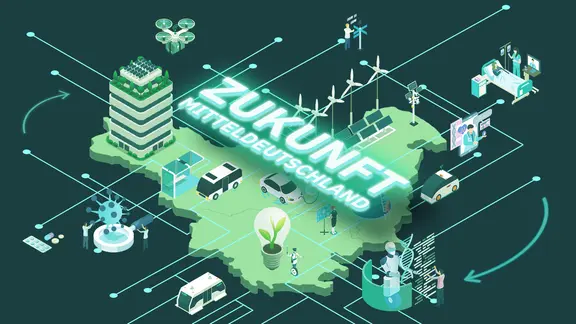
According to the BioEconomy e.V., a cluster organization based in Central Germany, the bioeconomy has become a significant economic driver for the region. Currently, more than 2,600 professionals are employed in the sector across research and manufacturing. The goal is to create a closed-loop system where carbon-based resources are kept in the cycle for as long as possible.
Key Statistics:
- Input Potential: ~250,000 tons of apple pomace per year in Germany alone.
- Funding: €100 million in federal structural transition funds dedicated to the digitalization of plant-based value chains.
- Employment: 2,600+ jobs currently supported in the regional bioeconomy cluster.
- Efficiency: AI-driven design reduces the time required for enzymatic screening by an estimated 60-70% compared to traditional laboratory screening.
Conclusion: The Future is Circular
The work being done at the University of Halle and the Leibniz Institute represents a sophisticated marriage of ancient botanical wisdom and cutting-edge digital technology. By refusing to accept that "waste" is the end of the line, these researchers are creating a blueprint for a future where medicine is not only more affordable and accessible but also fundamentally more sustainable.
As the region moves away from its dependence on coal, the "Bioeconomy" offers a path forward that is rooted in the soil but powered by the silicon of the computer age. Whether it is fighting cancer, managing chronic inflammation, or simply finding more efficient ways to produce the building blocks of health, the message from the researchers is clear: the future of medicine is growing in our own backyards, waiting to be unlocked by the next generation of digital innovation.