Washington D.C., [Hypothetical Date in Late 2026/Early 2027] – The American political and corporate landscape is currently a maelstrom of unprecedented legal battles, high-stakes elections, and controversial policy decisions. Tech giant Meta (formerly Facebook) has been ordered to pay a staggering $25 billion fine in a landmark ruling stemming from the notorious Cambridge Analytica data scandal, marking a significant victory for consumer privacy advocates. Simultaneously, the hypothetical second term of President Donald Trump continues to be defined by intense internal and external conflicts, from judicial challenges to his administrative policies to escalating rhetoric against the media and a record-breaking campaign spending spree ahead of the crucial November 3rd midterm elections.
This period is characterized by a potent mix of digital accountability, executive branch overreach, and a deeply polarized political arena, painting a vivid picture of a nation grappling with its fundamental values and future direction.
The Digital Accountability Frontier: Meta’s $25 Billion Reckoning
Main Facts:
In a significant legal development that reverberated through Silicon Valley, a U.S. court has levied a monumental $25 billion penalty against Meta Platforms, the parent company of Facebook. The ruling, handed down by Judge Francis Mathew, found the social media behemoth in violation of consumer protection statutes within the state of New Mexico. This decision serves as a powerful reminder of the enduring legal repercussions of the Cambridge Analytica scandal, which exposed the vulnerabilities of user data and the potential for its misuse in political campaigns.
Chronology and Background:
The Cambridge Analytica scandal, which first broke into public consciousness in 2018, centered on the illicit harvesting of personal data from millions of Facebook users by the British political consulting firm, Cambridge Analytica. This data was subsequently used for psychological profiling and targeted political advertising, notably in connection with the 2016 U.S. presidential election and the Brexit referendum. The revelation sparked a global outcry over data privacy, leading to widespread investigations, congressional hearings, and a significant erosion of public trust in Facebook.
For years, Meta has faced a barrage of lawsuits and regulatory actions across multiple jurisdictions, grappling with the fallout from its lax data handling practices. While previous settlements and fines have been substantial, the New Mexico ruling stands out due to its sheer scale and the explicit finding of consumer protection violations at the state level. The scandal fundamentally altered the discourse around data governance, prompting calls for more stringent regulations like Europe’s GDPR and California’s CCPA.
Supporting Data:
The $25 billion fine represents one of the largest penalties ever imposed on a technology company for data privacy breaches. For context, Meta had previously agreed to a $5 billion settlement with the U.S. Federal Trade Commission (FTC) in 2019 over the same issue, alongside other multi-million dollar fines in various countries. The magnitude of this latest judgment underscores the severity with which courts are beginning to view persistent data privacy infractions and could set a new benchmark for accountability. The fine is expected to put considerable pressure on Meta’s financial performance, potentially impacting its investment in new ventures like the metaverse, and forcing a strategic re-evaluation of its data collection and monetization models.
Official Responses:
While the specific details of Meta’s response to this particular ruling are still emerging, the company has historically expressed regret for its past actions while simultaneously defending its overall data security framework. Judge Mathew’s declaration that Meta "violated consumer protection laws" in New Mexico highlights the court’s stance that the company’s actions directly harmed individual users within the state by compromising their personal information without adequate consent or transparency. This ruling will likely embolden other states to pursue similar litigation, potentially creating a cascade of legal challenges for Meta.
Implications:
The $25 billion fine is more than just a financial setback for Meta; it is a profound signal to the entire tech industry. It underscores a growing judicial and public intolerance for exploitative data practices and marks a potential turning point in the battle for digital privacy. This ruling could prompt tech giants to fundamentally overhaul their data collection, storage, and usage policies, prioritizing user consent and data security over aggressive data monetization. It also reinforces the role of state-level consumer protection laws as a powerful tool in regulating national and international corporations, potentially leading to a patchwork of varied regulations across the U.S. The decision could also empower consumers with greater confidence to pursue legal recourse against companies that mishandle their personal data, fostering a new era of digital accountability.
The Trump Administration: A Whirlwind of Policy and Power Plays
President Donald Trump’s hypothetical second term is proving to be as tumultuous and controversial as his first, marked by aggressive political maneuvering, numerous legal battles, and a persistent challenge to established norms.
Election Battlegrounds and Unprecedented Campaign Spending
Main Facts:
As the November 3rd congressional elections loom, the financial arms race in American politics has reached unprecedented levels. Campaign groups aligned with President Trump have poured nearly $277 million into supporting Republican candidates nationwide. This figure represents a historical high for a sitting president’s involvement in midterm elections. Trump himself has publicly stated he has personally invested over $300 million in the Republican campaign efforts and anticipates exceeding $400 million by Election Day, channeled into advertising, rallies, and voter mobilization initiatives.
On the Democratic side, billionaire and former New York City Mayor Michael Bloomberg has pledged a formidable $80 million to aid Democratic efforts, with approximately $50 million specifically targeting House campaigns to help the party secure control of Congress.
Chronology and Context:
The intensity of this spending underscores the Republican Party’s deep concern over the prospect of losing their majorities in both chambers of Congress. A key battleground mentioned is Texas, where Republican Ken Paxton faces a challenging re-election bid against Democrat James Talarico, highlighting the vulnerability of even traditionally conservative seats. These midterms are critical, as they will determine the legislative landscape for the latter half of Trump’s second term, potentially impacting his ability to enact his agenda.
Supporting Data:
Detailed financial disclosures reveal that Trump’s primary Super-PAC, Maga Inc., has been a major conduit for these expenditures. Since early September, it has funneled massive sums into affiliated groups: $200 million to "No Going Back Pac" and $25 million to "Safety & Affordability Pac," predominantly for electoral advertising. The sheer volume of these transfers illustrates the strategic effort to consolidate Republican power and counter Democratic momentum.
Implications:
This escalating financial arms race raises profound questions about the role of money in politics. The proliferation of Super-PACs and the influx of "dark money" allow for virtually unlimited spending, potentially overshadowing grassroots movements and distorting public discourse. The record spending reflects the high stakes of these elections, where control of Congress could either empower or significantly impede the Trump administration’s agenda. It also showcases the increasing nationalization of midterm elections, with presidential figures heavily invested in races far beyond their own re-election.
Legal Labyrinths: Judicial Blocks and Whistleblower Incentives
The administration’s tenure continues to be marked by frequent legal clashes and an assertive stance on law enforcement and accountability.

Transgender Inmate Care:
In a significant check on executive power, the U.S. Supreme Court has temporarily blocked the Trump administration’s plans to curtail medical services for transgender inmates in federal prisons. The Court’s decision upholds a lower court’s injunction, ensuring that the existing level of care remains in place until the broader legal dispute is resolved. President Trump had issued a directive instructing the Bureau of Prisons to cease using federal funds for treatments aimed at "adjusting a prisoner’s appearance to that of the opposite sex." The proposed policy would have halted gender-affirming surgeries, gradually phased out hormone therapies, and prohibited gender-conforming accessories like makeup and wigs, although psychological counseling would have continued. Official data from 2025 indicated that approximately 600 inmates were receiving hormone therapy, making the potential impact of the policy substantial.
Fraud Whistleblower Program (WHIP):
In an initiative aimed at combating waste and fraud in federal programs, President Trump and JD Vance unveiled a $25 million "Fraud Whistleblower Incentive Program" (WHIP). This program offers financial rewards of up to $30,000 for individuals whose tips lead to a conviction for fraud or significant federal enforcement actions. Administered by the Justice Department, tips can be submitted via "fraud.gov." Trump stated that whistleblowers would receive a commission of one percent of the amount recovered through their information, and controversially, he asserted his personal authority to arbitrate disputes when multiple individuals claim credit for the same critical tip.
FBI Retaliation Lawsuit:
Adding to the administration’s legal woes, nine former FBI agents, intelligence analysts, and operational specialists have filed a lawsuit seeking reinstatement. They allege that their terminations in February were "unlawful acts of political retaliation." All plaintiffs claim they were involved in various investigations against President Trump, including the inquiry into his handling of classified documents at his Florida estate. The lawsuit contends that they were dismissed for performing their duties impartially and in adherence to facts and law, describing such actions as "heroic" in contrast to the administration’s perceived view of it as an "offense."

Self-Pardon Stance:
Addressing speculation, President Trump stated in an interview with Newsmax that he is not contemplating a self-pardon, asserting, "I think not about it, because I have done nothing wrong." However, he simultaneously reiterated his belief in the sweeping nature of presidential pardon powers, calling it "the most powerful thing a president has." He also expressed a desire to shield his staff and family members from what he characterized as further politically motivated government investigations.
Implications:
These legal developments collectively highlight the deep institutional tensions and the executive branch’s ongoing struggles with the judiciary and federal agencies. The Supreme Court’s block on the transgender inmate policy underscores the limits of executive power and the protection of individual rights. The whistleblower program, while aimed at fighting fraud, also raises questions about oversight and potential for abuse, especially with the President’s direct involvement in reward arbitration. The FBI lawsuit points to a worrying trend of politicization within law enforcement, potentially eroding the independence of crucial federal institutions. Trump’s self-pardon comments, while denying intent, keep the constitutional debate surrounding such a move alive and underscore the unique legal challenges of his presidency.
Confronting the Fourth Estate: White House Press and Public Perception
The relationship between the Trump administration and the media remains fraught, characterized by open hostility and attempts to control narrative and access.

Press Exclusion Plans:
Reports, notably from The New York Times, indicate that President Trump had entertained plans to completely bar all press representatives from the White House. He allegedly tasked former press secretary Karoline Leavitt with executing this controversial directive as her "final legacy" before her resignation in late August. According to the reports, Trump even contemplated converting the historic "Briefing Room" back into a swimming pool, a function it served in 1933 under President Franklin D. Roosevelt before President Richard Nixon repurposed it for press conferences.
Press Secretary Saga (Katie Zacharia):
The White House press office has seen continued instability, with the brief and tumultuous tenure of new press secretary Katie Zacharia. Reports from major outlets like The New York Times, CNN, and Fox News indicated her resignation or dismissal shortly after taking office. President Trump, addressing reporters, framed the situation as him advising Zacharia to reconsider her role due to intense media scrutiny. He remarked, "She suffered in recent days… Maybe it’s not for her," suggesting he merely wanted her to be happy. This followed a "remarkably critical" interview on Fox News with Sean Hannity, a close Trump confidante, where Zacharia admitted to failing a bar exam and not retaking it, raising questions about her professional qualifications.
Public Opinion & Approval Ratings:
Amidst these controversies, President Trump’s approval ratings have reportedly plummeted to a record low of 31%, according to a Reuters/Ipsos poll concluded on Monday. This figure marks a one-point drop in just two weeks and represents the lowest approval recorded during his hypothetical two terms in office. The survey also indicated a significant shift in voter sentiment ahead of the midterms, with 47% of registered voters favoring Democrats compared to 35% for Republicans. This 12-point lead for Democrats is the largest recorded in the current election cycle, driven in part by public dissatisfaction over high gasoline prices.

Trump’s Warning of Unrest:
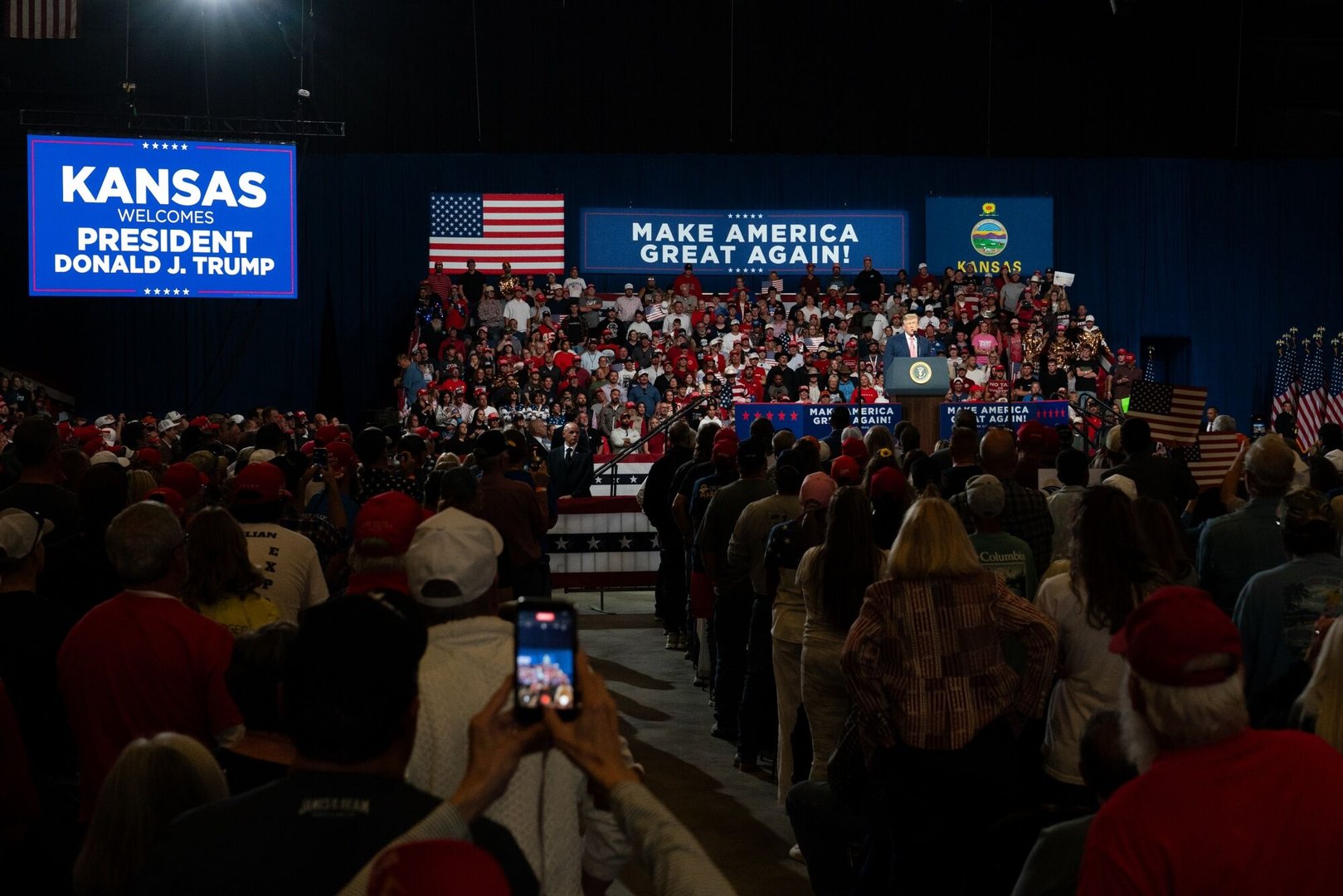
Leveraging recent violent unrest in France, President Trump issued a stark warning to American voters during a campaign rally in Kansas. He cautioned that a similar scenario could unfold in the United States should his political adversaries, whom he controversially labeled "radical ‘Dumocrats’," gain power in the upcoming elections. He urged support for Republican Senator Roger Marshall, whose re-election bid in the traditionally conservative state of Kansas is surprisingly considered vulnerable. The tight race in Kansas, a state Trump hypothetically won by 16 percentage points in the 2024 presidential election, is indicative of the broader challenges facing Republicans in these midterms.
Implications:
The administration’s adversarial relationship with the press and the proposed exclusion from the White House raise grave concerns about transparency and the free flow of information, critical pillars of a democratic society. The rapid turnover and public humiliation of press secretaries underscore the unique pressures and often thankless nature of serving in such a role within this administration. The plunging approval ratings and significant Democratic lead in midterm polling suggest a strong public backlash against the President’s policies and rhetoric. Furthermore, Trump’s use of foreign unrest to stoke fear domestically points to a strategy of political polarization that could further destabilize the nation’s social and political fabric.
Immigration Crackdown and Electoral Integrity Concerns
The Trump administration’s hardline stance on immigration continues to manifest in aggressive policies and legal challenges, even extending into the realm of electoral processes.

Visa Revocations:
In a significant escalation of its immigration enforcement, the Trump administration has revoked more than 300,000 visas during his hypothetical second term. The U.S. State Department announced this, noting an acceleration of revocations, with over 175,000 having been cancelled by August 10th of the current