Rome, Italy – In a swift and decisive move following recent urban unrest, Italian Prime Minister Giorgia Meloni’s government has enacted a new “security decree,” dispatching 500 additional soldiers to Milan’s streets. This latest legislative push, the eighth of its kind under the current right-wing administration, aims to project an image of unwavering resolve and toughness. However, critics argue that these measures are largely performative, unlikely to address the root causes of youth disillusionment and societal fragmentation, and instead risk further inflaming tensions in Italy’s metropolitan areas.
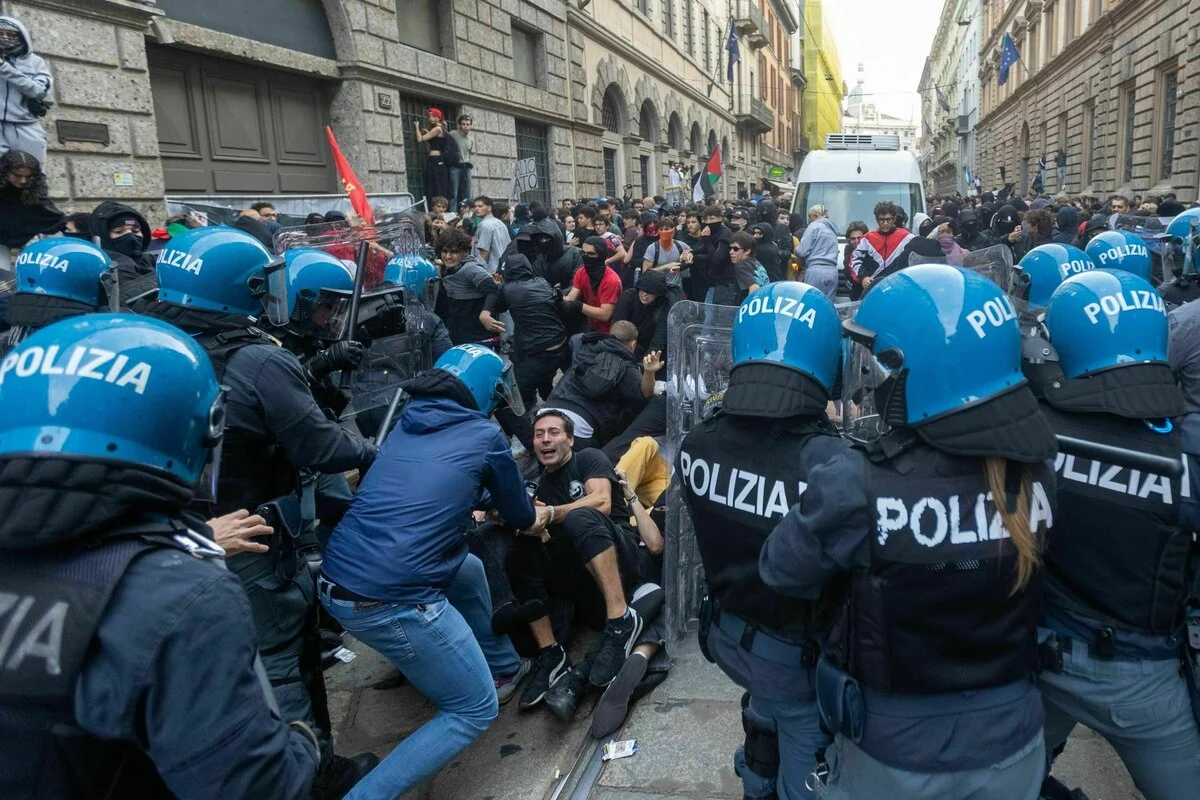
The decree comes in the wake of violent clashes that engulfed parts of Milan last weekend, where hundreds of young people from the city’s disadvantaged suburbs engaged in protracted street battles with police, leaving a trail of destruction and looted businesses in their wake. While the government frames its response as a necessary step to restore order and deter future violence, a deeper analysis reveals a strategy more focused on political optics than on comprehensive problem-solving.
Escalating Tensions in Milan: The Catalyst for the Decree
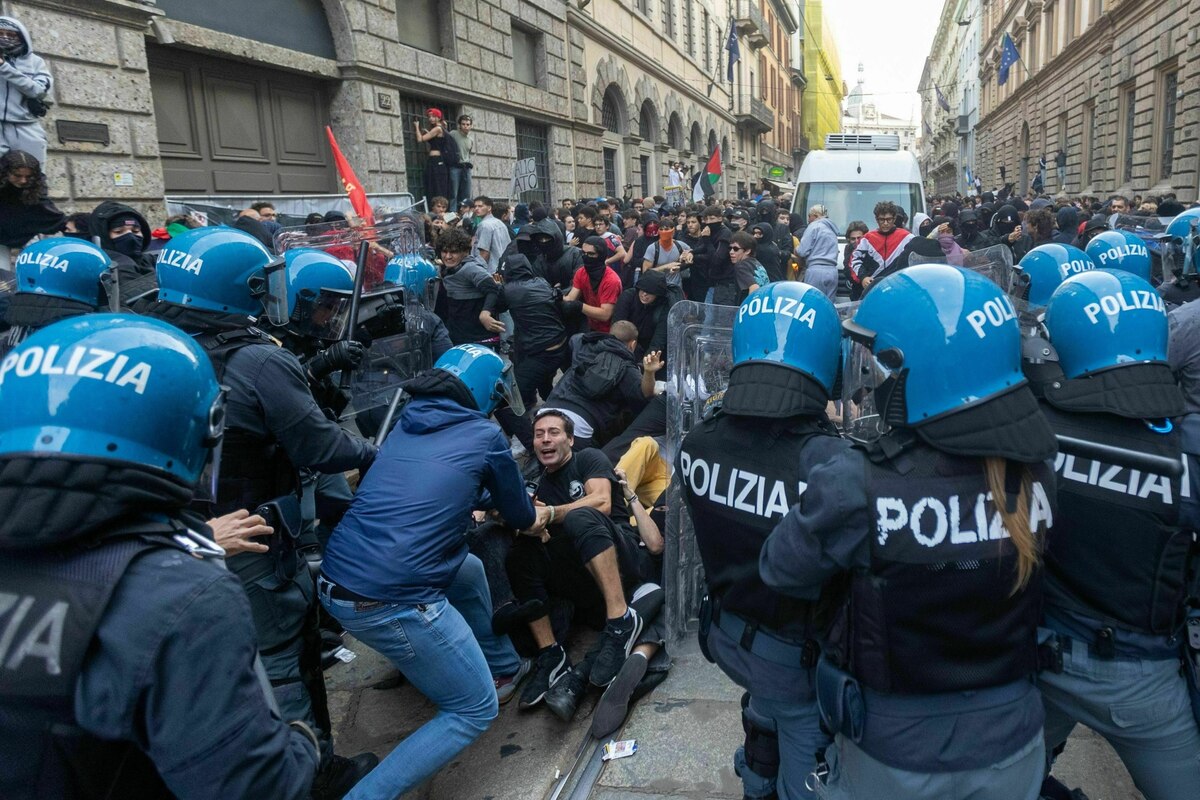
The immediate trigger for Meloni’s latest security push was a weekend of unprecedented violence in Milan. On Saturday and Sunday, the city became a battleground as groups of predominantly young individuals, many reportedly from marginalized suburban communities, clashed fiercely with law enforcement. The unrest saw widespread vandalism, with dozens of shops targeted and looted, and public property damaged. Eyewitness accounts and police reports painted a grim picture of sustained confrontations, involving thrown projectiles, fireworks, and the systematic destruction of storefronts. The scale and intensity of the riots sent shockwaves across Italy, dominating national headlines and fueling calls for a robust government response.
The incidents were not isolated acts of criminality but appeared to be an outpouring of frustration, albeit expressed through destructive means. While the immediate provocations varied, the underlying currents of anger and despair among certain segments of the youth population were palpable. This wave of unrest resonated with similar events seen in other European nations, particularly France, where social protests have often escalated into violent confrontations, highlighting a shared malaise among disaffected young people. The Milan riots served as a stark reminder of deep-seated socio-economic grievances simmering beneath the surface of Italy’s seemingly tranquil urban facade.
Meloni’s Eighth Decree: A Pattern of ‘Tough on Crime’ Politics
Prime Minister Giorgia Meloni’s response, encapsulated in her latest security decree, is consistent with her administration’s well-established "tough on crime" agenda. This is the eighth such decree issued by the right-wing government in its four years in power, each designed to send a clear message of zero tolerance for public disorder. Meloni’s political platform has consistently emphasized law and order, national security, and a firm hand against perceived threats to social stability.
Unpacking the New Measures
The new decree introduces several key provisions:
- New Criminal Offense: It establishes a new criminal offense specifically targeting "organized violence at public events." This provision aims to criminalize collective acts of aggression and destruction during demonstrations or gatherings, allowing for more severe penalties against participants deemed to be acting in concert.
- Stricter Penalties: The decree significantly increases penalties for existing offenses related to public disorder, vandalism, and assault against security forces. This includes harsher sentences for individuals who throw objects at police or engage in property destruction.
- Preventive Detention for Minors: A controversial element of the decree allows for broader application of preventive detention, even for minors suspected of involvement in such violent acts. This measure has drawn particular criticism from child rights advocates and legal experts, who argue it could disproportionately affect vulnerable youth and undermine rehabilitative approaches.
- Military Deployment: Perhaps the most visible aspect of the decree is the authorization to deploy an additional 500 soldiers to Milan’s streets. These military personnel are intended to bolster police presence, act as a deterrent, and assist in maintaining public order.
The Question of Efficacy and Redundancy
Despite the government’s assertive rhetoric, a significant point of contention revolves around the actual efficacy and necessity of these new measures. Critics, including legal scholars and opposition politicians, argue that the decree is largely redundant, given the robust legal framework already in place within the Italian penal code. Existing laws already provide for substantial penalties for crimes such as assault, aggravated damage, looting, and resisting arrest. Throwing stones or explosives at security forces, or smashing shop windows with metal pipes, are already serious offenses that carry significant consequences under current statutes. The creation of a "new" crime of organized violence, therefore, appears to be more of a semantic exercise designed to signal government action rather than to fill a genuine legal void.
Furthermore, the deployment of 500 additional soldiers raises questions about their practical role in quelling urban riots. Military personnel are typically trained for defense and combat operations, not for managing civilian protests or engaging in street-level policing. Their presence in riot situations is often seen as symbolic, a show of force rather than a direct intervention tool, as they are rarely deployed in direct confrontations with demonstrators. This suggests that their primary function is likely to be a highly visible deterrent and a reassurance to the public, rather than a tactical solution to diffuse or prevent violent clashes. The criticism centers on the idea that these measures, while politically potent, do not fundamentally alter the operational capacity of law enforcement or address the underlying dynamics of urban unrest.

A Broader European Context: Echoes of Discontent
The recent events in Milan are not an isolated phenomenon but rather resonate within a broader European context of youth disillusionment and social unrest. Across the continent, particularly in urban centers, a sense of hopelessness and anger is palpable among segments of the younger generation, often exacerbated by economic hardship and perceived societal exclusion.
In France, for instance, a wave of intense protests and riots has repeatedly rocked cities, fueled by issues ranging from pension reforms to police brutality and systemic inequalities affecting marginalized communities. The French government, under President Emmanuel Macron, has similarly faced accusations of prioritizing strong-arm tactics over addressing the deep-seated grievances that spark such unrest. The parallels between the responses in Paris and Milan are striking: both governments have opted for increased security presence and harsher penalties, often overlooking or downplaying the socio-economic drivers behind the demonstrations.
Socio-economic Roots of Protest
The underlying causes of this widespread discontent are multifaceted. High youth unemployment rates, particularly in Southern Europe, contribute significantly to a sense of despair. Many young people face precarious job markets, limited opportunities for upward mobility, and a feeling that the traditional social contract has broken down. In Italy, where youth unemployment remains stubbornly high, especially in the southern regions and within urban periphery areas, the future can seem bleak for those without established connections or resources.
Furthermore, the issue of marginalization is particularly acute among youth from migrant backgrounds. Many growing up in the sprawling, often neglected suburbs of major cities experience systemic discrimination, limited access to quality education and services, and a pervasive feeling of being excluded from mainstream society. The original article highlights that "many of the kids from the detached peripheral districts come from migrant families," underscoring the intersection of socio-economic disadvantage and ethnic minority status. This demographic often becomes the focal point of both the protests and the government’s security response, feeding into a narrative that pits "good citizens" against "disruptive elements."

The lack of meaningful prospects, coupled with a sense of being unheard and undervalued by the political establishment, creates fertile ground for frustration to boil over into civil disobedience and, in some cases, violence. The protests are not merely acts of criminality but often desperate cries for attention and recognition from a generation that feels left behind.
Political Posturing vs. Problem Solving
At the heart of Meloni’s approach lies a strategic political calculus. Rather than initiating a dialogue about the complex socio-economic issues driving youth unrest, her government has chosen to frame the problem primarily as one of law and order.
The Narrative of Law and Order
For Meloni and her Brothers of Italy party, the "security decree" serves multiple political purposes. Firstly, it allows the government to demonstrate "decisiveness and toughness" – key tenets of their electoral platform. In the eyes of their conservative base, a strong response to perceived lawlessness reinforces the government’s credibility and its commitment to protecting "brave citizens." The deployment of soldiers, in particular, is a potent symbol of state authority and control.
Secondly, the decree enables the government to skillfully redirect public discourse. By emphasizing punitive measures and casting the protesting youth, especially those from migrant backgrounds, as a threat to public safety, Meloni can tap into anxieties about immigration and social cohesion. The article notes that it "fits wonderfully into the right-wing script to once again stir up the ‘good citizens’ against them." This narrative helps to rally support among a segment of the population that feels uneasy about multiculturalism and social change, effectively polarizing the debate and consolidating her base. It transforms a complex socio-economic issue into a simplified battle between order and chaos, with the government positioned as the sole defender of order.

Ignoring Root Causes
A fundamental critique of Meloni’s strategy is its apparent disregard for the underlying causes of youth alienation. The original article pointedly states that "the Prime Minister considers it superfluous to waste even a single thought on the lack of prospects for young people." Instead of investing in social programs, educational opportunities, or initiatives aimed at integrating marginalized communities, the government opts for punitive measures.
The focus on criminalization rather than socio-economic intervention risks perpetuating a cycle of exclusion and resentment. When young people feel that their grievances are met with an iron fist rather than genuine understanding or assistance, their sense of injustice is likely to deepen. This approach not only fails to solve the immediate problems but also lays the groundwork for future, potentially more severe, confrontations. It’s a strategy that prioritizes short-term political gains over long-term societal well-being, effectively treating the symptoms of a deeper illness without addressing the illness itself.
The Road Ahead: Implications for Italian Society
The implications of Meloni’s latest security decree extend far beyond the immediate aftermath of the Milan riots. This approach risks profoundly shaping Italian society, with potential consequences for social cohesion, youth engagement, and the country’s political landscape.
Firstly, there is a significant risk of further societal polarization. By framing the issue as one of criminal elements versus law-abiding citizens, and by implicitly linking unrest to migrant communities, the government risks deepening existing divides. This rhetoric can foster suspicion and hostility between different segments of the population, making it harder to build bridges and find common ground for addressing shared challenges. The "us vs. them" narrative can lead to a more fragmented society, where dialogue is replaced by confrontation.

Secondly, the decree’s provisions, particularly those concerning preventive detention for minors, raise serious concerns about civil liberties and the rights of young people. While maintaining public order is a legitimate governmental function, resorting to measures that could disproportionately impact vulnerable youth without adequate safeguards could erode trust in the justice system. It risks pushing marginalized youth further to the fringes, making them more susceptible to radicalization or chronic disengagement, rather than fostering rehabilitation and reintegration. Legal experts have voiced concerns that such measures could infringe upon fundamental rights and lead to arbitrary detentions, particularly for those who may be caught up in protests without direct involvement in violent acts.
Thirdly, the government’s continued reliance on punitive measures without addressing socio-economic roots suggests a potentially volatile future for Italy’s urban centers. As long as issues like high youth unemployment, inadequate educational opportunities, and systemic discrimination persist, the underlying conditions for unrest will remain. Deploying soldiers and enacting stricter laws might suppress dissent in the short term, but it does not resolve the deep-seated frustrations that fuel it. This strategy could lead to an escalation of future protests, as marginalized communities feel increasingly cornered and unheard, potentially culminating in more widespread and intense civil disobedience.
Finally, the political dimension cannot be overstated. Meloni’s government is clearly leveraging these events to solidify its political standing and reinforce its core messages. However, this strategy carries the inherent risk of sacrificing long-term national unity for short-term political gains. While appealing to a base that craves stability and order, it alienates others who perceive the government as authoritarian and unresponsive to the needs of its most vulnerable citizens.
In conclusion, Prime Minister Meloni’s latest security decree is a powerful political statement, designed to project strength and decisiveness in the face of urban unrest. However, its effectiveness in genuinely addressing the complex challenges posed by youth disillusionment and societal inequality is highly questionable. By prioritizing punitive measures and political narratives over comprehensive socio-economic solutions, Italy risks further alienating its marginalized youth and exacerbating the very tensions it purports to quell. The path chosen by the Meloni government may offer a comforting narrative to its supporters, but it is unlikely to lead to the lasting pacification and social cohesion that Italy’s metropolitan areas desperately need.