Marienbad, known in Czech as Mariánské Lázně, exists in a state of suspended animation—a place where the grandeur of the Habsburg era refuses to fade. Nestled within the verdant embrace of Western Bohemia’s rolling hills, the town offers a sensory journey back to a time when travel was an art form and a "cure" was a lifestyle. With its ornate Art Nouveau palaces, sweeping colonnades, and the mineral-rich whispers of over 100 springs, Marienbad remains one of Europe’s most captivating spa destinations.
The Architecture of Nostalgia: A Living Museum
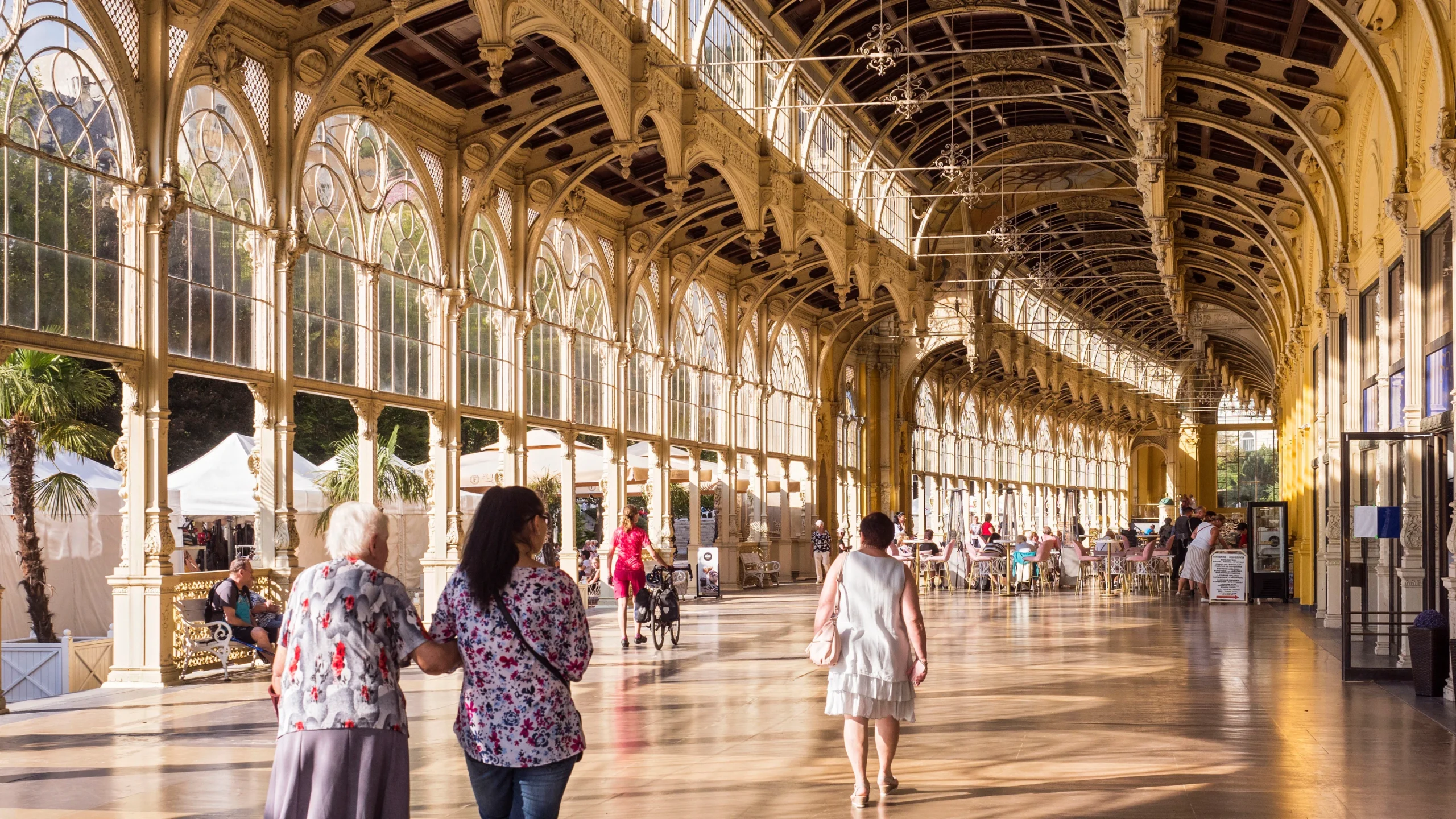
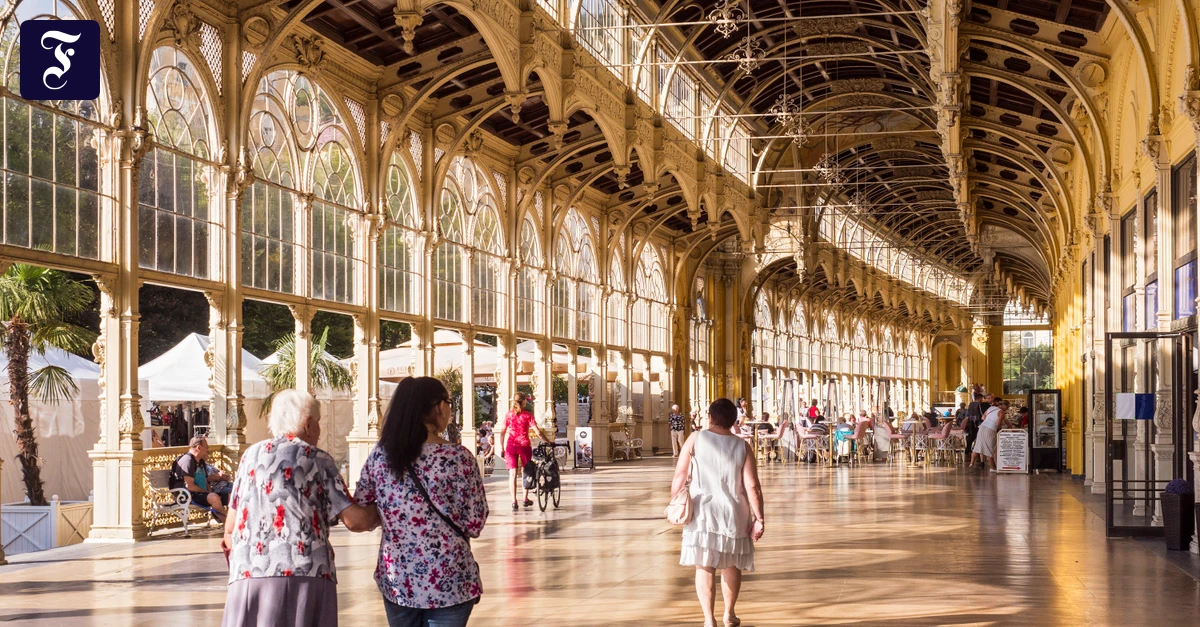
To walk through the streets of Marienbad is to step into a bygone century. The town’s aesthetic is anchored by the magnificent, neo-Baroque colonnade—a 120-meter-long structural masterpiece of cast iron, painted in the iconic "Habsburg yellow." Designed to allow the aristocracy of the early 20th century to promenade in any weather, the structure features intricate ceiling frescoes and wall murals that have stood the test of time.
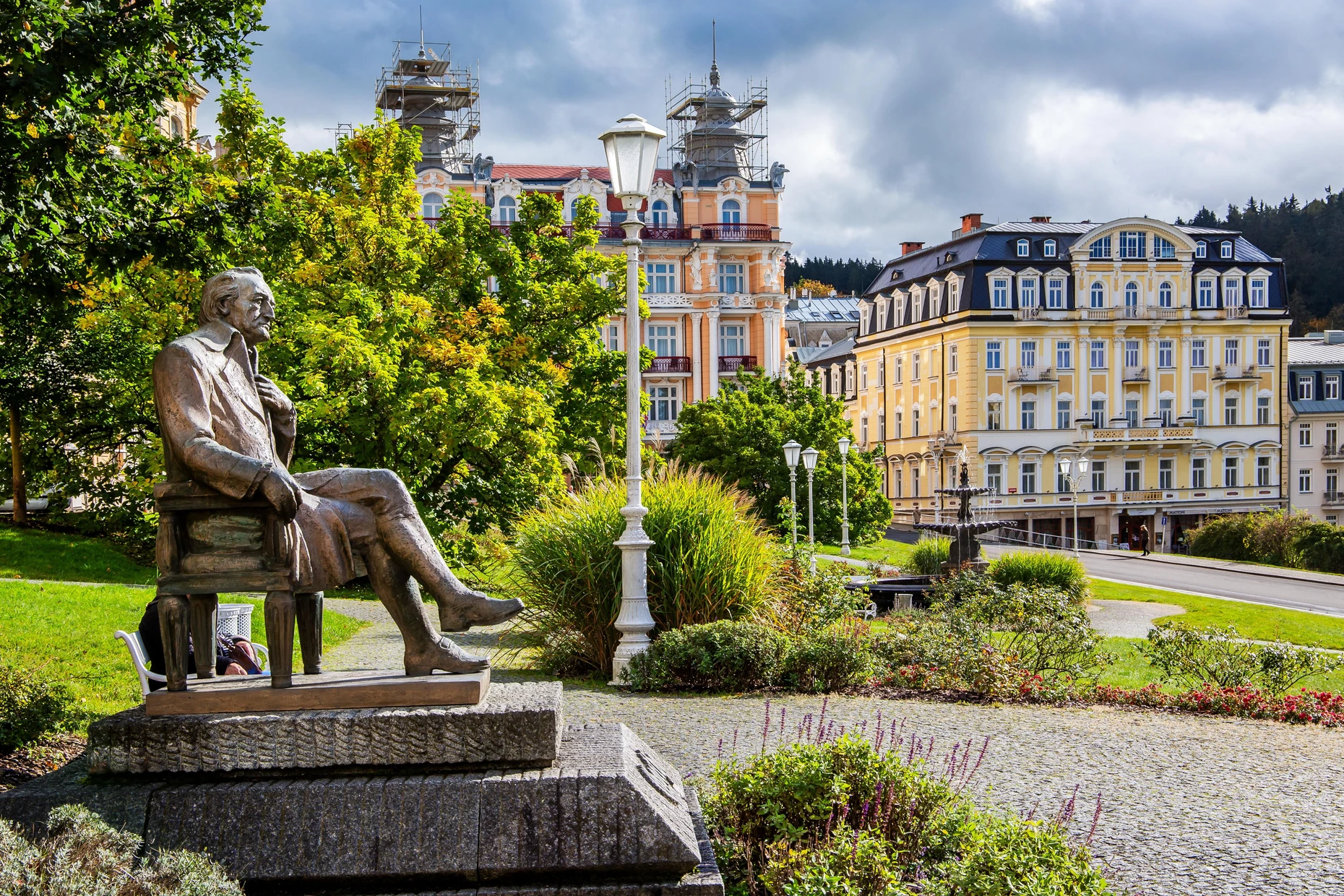
Surrounding this architectural gem are hotels and villas adorned with towers, gables, and elaborate statuary. Unlike many European cities that sacrificed their heritage to the modernization of the post-war era, Marienbad survived the turbulence of the 20th century almost entirely intact. Today, the town serves as a proud member of the UNESCO World Heritage "Great Spa Towns of Europe," a designation it shares with its Bohemian neighbors, Karlovy Vary (Carlsbad) and Františkovy Lázně (Franzensbad).
A Chronology of Cures and Crowns
The history of Marienbad is inextricably linked to the elite of European society. Its reputation as a premier destination for regeneration was solidified in the late 19th and early 20th centuries, when it became a focal point for the continent’s movers and shakers.
- 1904: The peak of the town’s golden era, marked by a historic meeting between King Edward VII of Great Britain and the Austrian Emperor Franz Joseph I. King Edward was so enamored with the town that he famously declared, "I have traveled all over India, Ceylon, and every spa in Europe, but nowhere has the poetry of the beautiful nature touched my heart like here in Marienbad."
- The Intellectual Pilgrimage: Long before the kings arrived, the town served as a magnet for the greatest minds of the age. Luminaries such as Frédéric Chopin, Gustav Mahler, Leo Tolstoy, Friedrich Nietzsche, and Mark Twain all walked the paths of Marienbad.
- The Goethe Connection: Perhaps no figure is more linked to the town’s romantic mystique than Johann Wolfgang von Goethe. It was here that the 72-year-old poet sought his final, unrequited love in the 17-year-old Ulrike von Levetzow. The rejection he suffered inspired the Marienbad Elegy, one of his most poignant literary works.
Supporting Data: The Science of the Springs
Marienbad’s longevity as a medical destination is grounded in geology. It is the only spa town in Europe to boast four distinct types of natural healing springs, with approximately 40 mineral sources within the town limits and over 100 in the immediate vicinity.
According to Dr. Markéta Hovorková, a chief physician at the local spa, the healing properties are diverse and targeted. "The springs are cold, acidic, and rich in iron, carbon dioxide, and Glauber’s salt," she explains. Because the mineral concentration is so high, patients are cautioned to drink from specialized porcelain "beak cups." The design of these vessels is not merely decorative; the narrow spout ensures that the water—which can be abrasive—does not come into contact with the teeth, preventing mineral staining.
Furthermore, the town utilizes volcanic gases and therapeutic mud for medical applications, shifting its focus in the modern era toward preventative wellness rather than strictly curative medicine.
Official Perspectives and the Evolution of Tourism
The geopolitical landscape of European tourism has shifted, and Marienbad has adapted with agility. Kurdirektor Karel Kalivoda notes that while the town historically relied on a significant contingent of Russian visitors, the current sanctions and travel restrictions have prompted a successful pivot.
"We have seen a significant increase in domestic Czech visitors and German guests, which has more than compensated for the loss of the Russian market," says Kalivoda. This transition is reflective of a broader strategy to reposition Marienbad as a modern wellness destination that appeals to a younger, more health-conscious demographic.
The arrival of the Swissôtel brand marks a milestone in this transition. By opening their first pure wellness hotel in the city—a complex that integrates five historical townhouses under a single, modern glass roof—the brand is setting a new standard. "We are bridging the gap between historical architecture and the precision of modern Swiss wellness," says General Manager Jean Wendling. The property offers a minimalist SPA landscape, including hammams, tepidariums, and in-room fitness technology, signaling a departure from the traditional, treatment-heavy "kur" model toward a more flexible, leisure-oriented experience.
Implications: The Future of the "Spa"
As Marienbad moves forward, it faces the challenge of balancing its role as a living museum with the demands of 21st-century travelers. The "Singing Fountain"—a centerpiece of the town that performs to a mix of classical compositions and popular culture hits—is a perfect metaphor for this duality. While some might view the fountain’s eclectic playlist (ranging from Mozart to Celine Dion) as "eighties-style" kitsch, it is precisely this charm that attracts thousands of visitors nightly.
The town’s enduring appeal lies in its commitment to the "flaneur" lifestyle. The act of walking, sipping mineral water, and indulging in the local Oblaten (thin, sugar-dusted wafer biscuits) is a ritual that transcends generations.
Key Takeaways for the Future:
- Sustainable Preservation: The UNESCO designation ensures that the physical beauty of the town will remain protected, preventing the kind of unchecked urban development that has diluted the character of other historic sites.
- Wellness Diversification: By moving toward preventative health and luxury wellness, Marienbad is successfully attracting a demographic that values longevity and self-care.
- Market Resilience: The town has proven that it can weather geopolitical storms by diversifying its guest base, proving that the universal desire for healing and relaxation is stronger than political friction.
Ultimately, Marienbad remains a sanctuary. Whether one visits to bathe in the copper tub once used by King Edward VII—where the carbonated water creates a sensation of bathing in champagne—or simply to enjoy the cool, forest-scented air of the Bohemian woods, the town offers a rare commodity: a pause button in a fast-paced world. While it may not have delivered the "love" that Goethe and Chopin desperately sought, it continues to deliver something perhaps more enduring: the feeling of being perfectly, peacefully at rest.