Berlin, Germany – The German political scene is currently a maelstrom of internal dissent, inter-party friction, and high-stakes policy debates, reflecting a period of profound uncertainty and shifting alliances. From a defiant CDU lawmaker in Saxony-Anhalt challenging his party’s stance against the far-right AfD, to the intricate and contentious negotiations for Berlin’s next government, and a slew of federal policy disputes, the nation’s political actors are grappling with a complex array of challenges. This dynamic environment is further complicated by debates on pension reform, environmental taxes, and the future of housing, all set against a backdrop of public scrutiny and economic pressures.
Main Facts
The core of Germany’s current political unrest can be summarized across several key fronts:
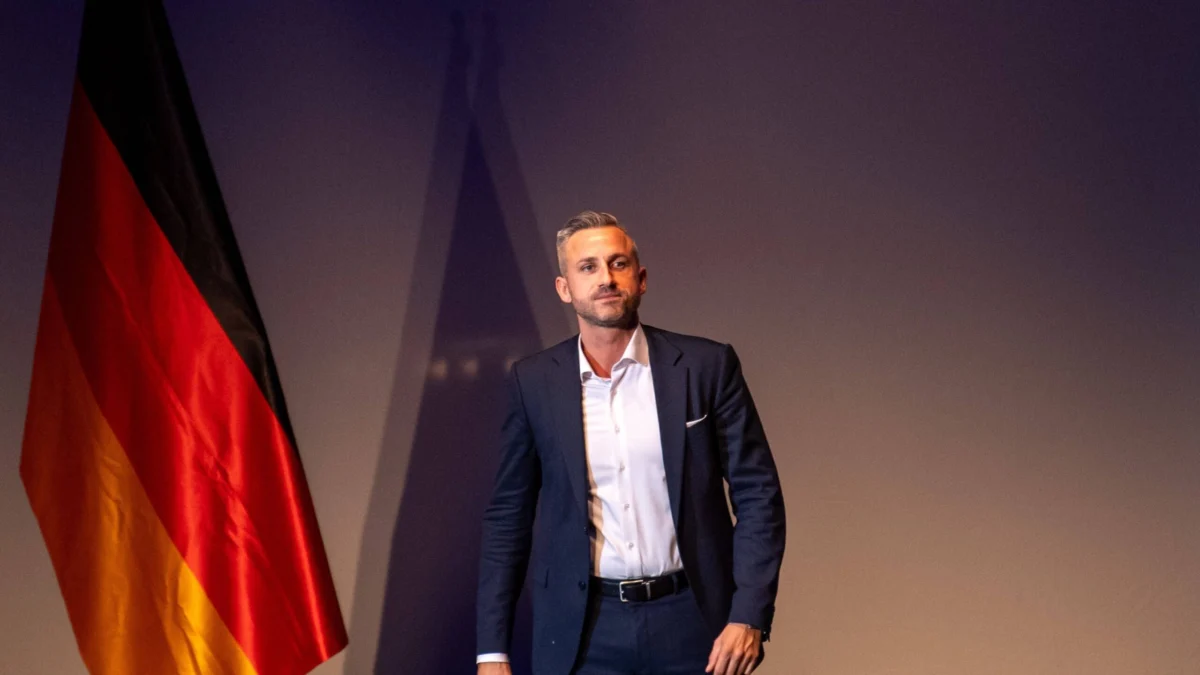
- CDU Defiance in Saxony-Anhalt: Guido Heuer, a CDU state parliamentarian in Saxony-Anhalt, has publicly stated his intention to remain in the plenary hall during the upcoming election of AfD politician Ulrich Siegmund as Minister-President, directly contravening his party’s expected collective walkout. This move highlights internal fissures within the CDU regarding its approach to the increasingly influential far-right.
- Berlin Coalition Saga: The capital city is mired in protracted coalition negotiations following recent elections. While the SPD has formally decided to enter talks with the Left Party (Die Linke) and the Greens, these discussions are fraught with controversy. A key flashpoint is the Left Party’s Vanessa Emde, whose Israel-critical positions have sparked widespread condemnation and internal party strife, leading to a stalled resolution within her own faction. Furthermore, the proposed socialization of 160,000 apartments, a key demand of the Left, is drawing sharp criticism for its potential economic repercussions.
- Federal Policy Gridlock: The federal "grand coalition" of CDU/CSU and SPD is experiencing significant strain over several critical policy areas. Disagreements on the timeline and specifics of pension reform, particularly the contentious "Rente mit 63" (retirement at 63), persist. A proposed plastic tax is facing resistance from the CSU, while the resignation of former Labor Minister Bärbel Bas has ignited accusations of "inhumane" and "indecent" attacks from the Union. Economic concerns are also mounting, with the Federal Court of Auditors reportedly criticizing the government’s debt policy.
These developments underscore a period of intense political maneuvering and ideological clashes, signaling potential shifts in governance and a heightened sense of national debate on fundamental policy directions.

Chronology of Key Developments
The past few days and weeks have seen a rapid succession of events and pronouncements that illuminate the current political climate:
The Berlin Coalition Conundrum:
- Recently: The Berlin SPD announced its decision to officially commence coalition negotiations with Die Linke and the Greens. This move, following extensive exploratory talks, paves the way for a potential red-green-red government in the capital. The Greens are expected to make their own decision on entering formal talks in the coming days.
- Ongoing Controversy (Emde): The Linke faction in the Berlin House of Representatives is struggling to find a resolution regarding its controversial member, Vanessa Emde. Emde, who entered the parliament on September 20th, has repeatedly sparked debate with her Israel-critical positions, including the assertion that "states have no right to exist, only people." A recent digital board meeting, intended to address the issue, saw Emde call in sick, pushing further deliberations to the following Tuesday.
- Economic Warnings: DIW (German Institute for Economic Research) chief Marcel Fratzscher urged an end to "panic-mongering" surrounding the potential Berlin coalition, specifically criticizing statements from CDU politician Katherina Reiche, who warned of a "danger to the economic location" extending beyond Berlin. Fratzscher deemed such broad judgments problematic and damaging.
- Internal SPD Dissent: Reports surfaced that 20 SPD Bundestag members issued a joint statement opposing a Berlin coalition with the Left Party. Their concerns centered on "recurring conflicts regarding antisemitism" within the Berlin Left, as well as alleged "contacts with criminal clans" and "extremist milieus," questioning the political reliability of the state party. SPD faction leader Matthias Miersch confirmed these critical voices.
- Cultural Criticism and Calls for "Ostracization": Culture Minister Wolfram Weimer (non-party) vehemently warned against a red-green-red government in Berlin, arguing it would "betray the consensus on remembrance policy" by allegedly opening "doors to antisemitism" and undermining the processing of SED injustice. In a more extreme stance, Nathanael Liminski, NRW Minister for European and Federal Affairs, called for "political purges" within the Berlin Left, provocatively suggesting that "Jew-haters and clan-friends" should be expelled, drawing a controversial parallel to the party’s Stalinist origins.
- Green Party Reservations: Minister-President Cem Özdemir (Greens) also voiced strong reservations about his party cooperating with the Left in Berlin. However, he cautioned against equating the Left with the AfD, arguing that such a comparison "trivializes the dangers of right-wing extremism."
- Housing Nationalization Debate: Berlin’s incumbent Economy Senator, Franziska Giffey (SPD), strongly rejected the coalition’s proposed plan to socialize 160,000 apartments from large housing corporations. She argued the proposed 16 billion euro compensation (100,000 euros per apartment) was unrealistic, predicting lengthy legal battles and a halt to new construction, thereby exacerbating the housing shortage.
- Junge Union’s Demands: The Junge Union (JU), the youth organization of the CDU/CSU, went further, demanding that a potential red-green-red Berlin government be excluded from intelligence information from the Federal Office for the Protection of the Constitution and the Federal Criminal Police Office. They also called for a federal law to immediately prevent such nationalizations, branding the coalition a "cultural breach" deserving of "societal ostracization."
Federal Policy and Inter-Party Tensions:

- Pension Reform Disagreements: The faction leaders of the CDU/CSU, Thorsten Frei, and the SPD, Matthias Miersch, affirmed their commitment to pension reform but revealed significant differences regarding implementation timelines and specific details. Frei pressed for a swift legislative draft from the new Labor Minister to discuss details like the controversial "Rente mit 63" (early retirement after 45 contribution years), while Miersch emphasized the need for the new minister to have sufficient time.
- Bas Resignation Fallout: Thorsten Frei (CDU) criticized the SPD’s "immoderate" and "untruthful" language following the resignation of former Labor Minister Bärbel Bas. Bas stepped down after the death of her stepdaughter, citing personal attacks from coalition partners. SPD leaders, including Manuela Schwesig and Lars Klingbeil, had accused the Union of "inhumane" and "indecent" behavior. Miersch countered, highlighting "constant attacks" from the CDU/CSU.
- New Labor Minister’s Stance: The newly sworn-in Federal Labor Minister, Alexander Schweitzer (SPD), stated his goal is to find a "good compromise" on the contentious "Rente mit 63." He emphasized the coalition agreement’s commitment to maintaining early retirement after 45 contribution years, even as a commission proposed deviations.
- Plastic Tax and Fiscal Policy: CSU leader Markus Söder vehemently rejected the planned plastic tax by the SPD-led Federal Environment Ministry, calling it "exaggerated nonsense" and demanding compensation for "cold progression" (tax bracket creep). The SPD parliamentary group, through its deputy leader Wiebke Esdar, retorted that the Union "cannot always make new expensive demands and at the same time dismiss agreed revenues like the plastic tax."
- Healthcare and Labor Law: Thorsten Frei (CDU) advocated for equal access to specialist appointments for all insured individuals, promising proposals from Health Minister Carsten Linnemann. He also reiterated the coalition’s agreement to shift from a daily to a weekly maximum working time, aligning with EU directives and promoting work-life balance, despite union warnings about the end of the eight-hour day.
- Regional Transport Funding: State transport ministers, led by Bavaria’s Christian Bernreiter (CSU), are demanding increased federal funding for regional rail transport, citing projected 8% cost increases for the coming year and potential service reductions.
- Combustion Engine & Biofuels: Following a German-French agreement to soften the EU’s planned 2035 ban on new combustion engines, Federal Transport Minister Bilger (CDU) announced efforts to promote E20 gasoline (20% bioethanol content) to reduce oil import dependence and support the German auto industry in export markets.
- Federal Debt Criticism: The Federal Court of Auditors reportedly criticized Finance Minister Lars Klingbeil’s (SPD) fiscal policies, accusing the government of negligent debt management and warning of a widening gap between revenues and expenditures.
- Strategic Oil Reserves: The Bundesrat approved an ordinance allowing Germany to release further strategic oil reserves, temporarily reducing the mandatory reserve period from 90 to 82 days to stabilize energy markets.
- Internal SPD Leadership: SPD Vice-Chairman Alexander Schweitzer expressed support for Lars Klingbeil’s potential re-election as party leader, advocating for a focus on the party’s direction rather than personnel changes during a challenging period of low poll numbers.
- Politicians in Pension Scheme: CSU state group leader Alexander Hoffmann opposed the recommendation to include politicians in the statutory pension insurance, arguing it would not solve systemic problems and would create complex parallel systems.
- Sugar Tax Adjustments: Thorsten Frei (CDU) called for "improvements" to the planned sugar tax, suggesting transition periods for beverage manufacturers and opposing the creation of additional administrative positions. He defended the tax’s public health goals but also tempered expectations for a rapid reduction in electricity tax for consumers, linking it to future budget flexibility.
- Call for Coalition Unity: NRW Minister-President Hendrik Wüst (CDU) publicly urged the federal coalition to cease public disputes, stressing the importance of resolving disagreements behind closed doors and focusing on implementing agreed policies to foster cooperation.
- Migration as EU Problem: Federal Chancellor Friedrich Merz (CDU) reiterated his view that irregular migration is "one of the biggest problems" facing the European Union, a sentiment he claims is increasingly shared by other EU leaders.
Supporting Data and Context
The numerous debates and conflicts outlined above are not isolated incidents but rather symptoms of deeper structural and ideological tensions within German politics.
The AfD and CDU’s Internal Struggle: Guido Heuer’s decision to remain in the Saxony-Anhalt plenary hall during an AfD candidate’s election is highly symbolic. Historically, mainstream parties, including the CDU, have maintained a "firewall" (Brandmauer) against the AfD, often demonstrating non-participation in votes or walking out to signal their rejection of the far-right. Heuer’s defiance, though framed as an individual decision not to comment on a secret ballot, sends a signal of eroding solidarity with this anti-AfD strategy, particularly in eastern German states where the AfD enjoys stronger support. This could encourage further individual breaks from party lines and complicate the CDU’s efforts to present a united front. The image showing a demonstration against an AfD gathering, while generic, serves as a backdrop to the public sentiment and protest that often accompanies AfD activities, which Heuer’s action might be seen as undermining.
Berlin’s Left-Wing Coalition and its Ramifications: The potential red-green-red coalition in Berlin is particularly scrutinized due to the Left Party’s historical baggage and controversial contemporary stances. The party, a successor to the East German SED, has long faced accusations of downplaying SED injustices. Vanessa Emde’s Israel-critical positions are not merely abstract; they touch on sensitive historical and moral responsibilities in Germany, especially in Berlin, the former capital of Nazi Germany. Her statement denying the "right to exist for states" is particularly provocative in this context. The internal SPD dissent and the strong condemnation from figures like Wolfram Weimer and Nathanael Liminski underscore the deep discomfort within mainstream politics regarding the Left’s ideological integrity and its perceived tolerance of problematic elements.
The proposed housing socialization in Berlin is another major point of contention. The idea, stemming from a successful referendum, aims to address Berlin’s acute housing crisis. However, Franziska Giffey’s warning about the proposed 16 billion euro compensation being "unrealistic" is backed by economic arguments. Experts often point out that market-value compensation would be significantly higher, potentially bankrupting the city or leading to endless lawsuits. Furthermore, the threat of halted construction by housing companies is a real concern, as investor confidence could plummet, exacerbating the very housing shortage the measure aims to solve. The "80,000 new apartments in five years" cited by Giffey highlights the current strategy of working with developers, which a socialization policy could disrupt.
Federal Coalition Friction: The ongoing debates within the federal coalition – on pensions, taxes, and labor law – illustrate the inherent difficulties of governing across ideological divides. The "Rente mit 63" allows long-term contributors to retire early without deductions, a policy popular with the SPD but economically burdensome. The pension commission’s recommendations likely aimed for greater sustainability, setting up a conflict with the coalition agreement. Similarly, the plastic tax, while environmentally motivated, faces economic arguments about competitiveness and administrative burden, as highlighted by Söder’s concerns about 800 additional administrative positions and unfairness to German businesses compared to international competitors. The "cold progression" argument, where inflation pushes taxpayers into higher brackets without real income increase, is a classic conservative demand for tax relief. The dispute over Bärbel Bas’s resignation points to a broader breakdown in political civility, where personal attacks intertwine with policy disagreements, further eroding trust between coalition partners. The reported criticism from the Federal Court of Auditors on the government’s debt policy adds another layer of pressure, indicating fiscal challenges that limit policy options.
Healthcare and Infrastructure: Frei’s call for equitable access to specialist appointments touches on a persistent challenge in Germany’s dual public-private healthcare system, where privately insured patients often experience shorter waiting times. The demand for more federal funding for regional rail transport reflects the continuous strain on public infrastructure and the ongoing tug-of-war between federal and state governments over financial responsibility, especially with rising operational costs.

Official Responses
- Guido Heuer (CDU, Saxony-Anhalt): "I myself have come to the decision that I will not leave the hall." He refused to comment on his voting behavior in the secret ballot for Ulrich Siegmund.
- Marcel Fratzscher (DIW Chief): "I don’t want to defend the individual positions of the Left here, but I consider this panic-mongering to be exaggerated… I think such language ultimately harms Germany. We need to be a bit more cautious in our approach, also in tone."
- Katherina Reiche (CDU, then Economy Minister): (Cited by Fratzscher) She saw a "clear danger for the economic location" of Berlin, extending "far beyond Berlin," with a red-green-red government.
- Franziska Giffey (SPD, Berlin Economy Senator): "I do not consider socialization to be the right way to move our city forward… This compensation below value will not go unchallenged. Lawsuits will follow that will drag on for years… No single new apartment will be created as a result."
- Thorsten Frei (CDU/CSU Faction Leader): On pension reform, he demanded a draft law to discuss specifics. On Bas’s resignation, he stated, "They certainly went too far, that is quite obvious. The choice of words was excessive and did not reflect the facts." On the sugar tax, he said, "We need transition periods for beverage manufacturers to change their recipes."
- Matthias Miersch (SPD Faction Leader): On pension reform, he emphasized the new Labor Minister needs time. On Bas’s resignation, he referred to "constant attacks" from the CDU/CSU and expressed "great distress" within his faction.
- Manuela Schwesig (SPD, Mecklenburg-Vorpommern Minister-President): Accused the Union of behaving "inhumanely" towards Bas.
- Lars Klingbeil (SPD Co-Chairman): Described the Union’s behavior towards Bas as "indecent."
- Wolfram Weimer (Culture Minister): "A government in the capital led by the direct successors of the SED would betray the consensus on remembrance policy in two respects… Especially in Berlin, where the Holocaust was once planned and executed, this attitude must not govern."
- Markus Söder (CSU Leader): On plastic tax, "You have to say no to such nonsense plans." On cold progression, "Cold progression is a duty [to compensate]… Without compensation, politics cannot seriously claim: ‘Performance must pay off in our country.’"
- Cem Özdemir (Greens, Minister-President): "The Greens cannot form a coalition and cooperate with someone like that [referring to the Berlin Left]… However, I want to state upfront: Anyone who equates the Left and the AfD in a blanket way trivializes the dangers of right-wing extremism."
- Nathanael Liminski (NRW Minister): "Jew-haters and clan-friends do not belong in self-help groups for therapy, but expelled from democratic parties… If there’s one thing this party, Die Linke, with its Stalinist origins, should be able to do, it’s political purges."
- Christian Bernreiter (CSU, Bavarian Transport Minister): "We now have to absorb eight percent increases for the coming year. That’s money no one has… After 2028, we in Bavaria will also face difficulties."
- Alexander Schweitzer (SPD, Federal Labor Minister): On "Rente mit 63," "I am confident that we will succeed in finding a good compromise." On Klingbeil’s leadership, "In such a situation, we should not discuss personnel, but wrestle over the course of this party."
- Alexander Hoffmann (CSU State Group Leader): "Including federal and state parliamentarians would not solve the problem of statutory pensions and would primarily mean the coexistence of several systems for decades."
- Hendrik Wüst (CDU, NRW Minister-President): "It would be much preferable to settle disputes behind closed doors and face-to-face… Everyone should pull themselves together now and work together on implementing what has already been agreed."
- Friedrich Merz (CDU, Federal Chancellor): "Irregular migration is one of the biggest problems we have in Europe."
Implications
The current political turbulence has significant implications for both national and regional governance in Germany.
Stability of the Federal Coalition: The ongoing public disagreements between the CDU/CSU and SPD, particularly on sensitive issues like pension reform, the plastic tax, and the handling of Bärbel Bas’s resignation, highlight the fragility of the grand coalition. While such tensions are not uncommon in multi-party governments, the sheer volume and intensity of these disputes suggest a coalition under considerable strain. This internal friction could impede legislative progress, particularly on complex reforms, and may lead to a perception of governmental paralysis or inefficiency. Hendrik Wüst’s public plea for unity underscores the concern that these open conflicts undermine public trust and the government’s ability to act decisively.
Future of Berlin’s Governance: The formation of a red-green-red government in Berlin, should it materialize, would mark a significant ideological shift for the capital. The deep-seated controversies surrounding the Left Party, particularly regarding antisemitism and its historical legacy, mean that such a coalition would likely face persistent opposition and heightened scrutiny from federal opposition parties and even within its own ranks. The demands from the Junge Union for the exclusion of such a government from intelligence information, though extreme, reflect a broader political strategy to delegitimize the Left Party as a governing force. Furthermore, the proposed housing socialization, if implemented, would set a precedent with far-reaching economic and legal consequences, potentially deterring investment and sparking prolonged legal battles, as warned by Franziska Giffey. The outcome in Berlin could serve as a litmus test for future left-leaning coalitions in other German states.

Policy Direction and Economic Impact: The various policy debates signal fundamental disagreements about Germany’s future trajectory. The push for pension reform highlights the demographic challenges facing the social security system, with differing views on how to balance financial sustainability with social justice. The contentious "Rente mit 63" is a prime example of a popular benefit that places a significant burden on the system.
The debates around environmental taxes like the plastic tax, while aimed at sustainability, reveal the tension between ecological goals and economic competitiveness. The criticism from Markus Söder underscores concerns that such measures could disproportionately burden German industry without global harmonization. Similarly, the call for compensation for "cold progression" reflects a broader debate about tax fairness and the burden on middle-income earners.
In the transport sector, the state ministers’ demands for more federal funding underscore the financial strain on public services and infrastructure, which are crucial for regional connectivity and the transition to more sustainable mobility. The softening of the combustion engine ban and the promotion of E20 gasoline reflect a pragmatic approach to energy transition, acknowledging economic realities and the current limitations of electric vehicle infrastructure, particularly in the broader European context.

Overall, Germany is navigating a complex period characterized by internal political fragmentation and significant policy challenges. The outcomes of these debates, both at the federal and state levels, will not only shape the country’s immediate future but also define the long-term direction of its political landscape and socio-economic policies. The intensity of these discussions reflects a vibrant, albeit often fractious, democracy grappling with profound questions about its identity, values, and economic future.