Berlin/Munich/Paris – Political landscapes in Germany and France are experiencing significant tremors today, with a fresh scandal engulfing a prominent German opposition leader, strategic maneuvering dominating a major party congress, and France grappling with a deadly shooting amidst preparations for widespread protests. The developments underscore a period of heightened tension and scrutiny across Europe, as leaders face renewed challenges to their credibility and governments confront deep-seated societal discontent.
I. Political Turmoil in Germany: Weidel’s Donation Scandal Resurfaces
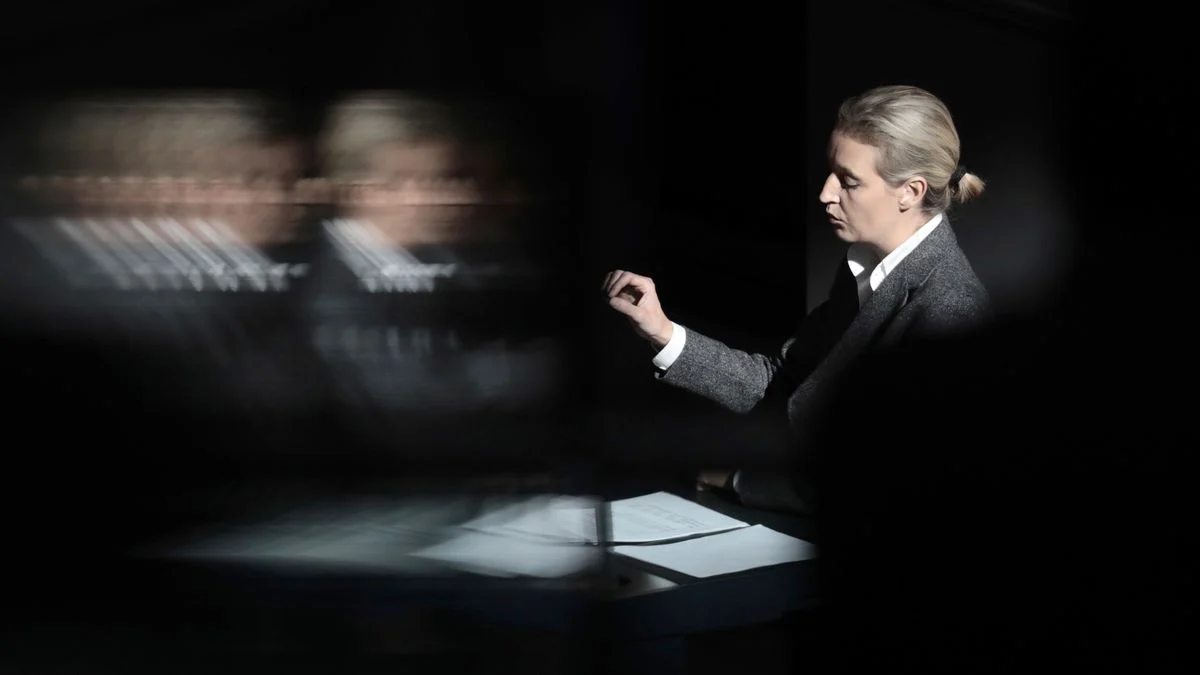
New revelations from a massive data leak are casting a shadow over Alice Weidel, co-leader of Germany’s far-right Alternative for Germany (AfD) party. The leaks suggest Weidel possessed earlier and more extensive knowledge regarding illicit campaign donations than she has previously admitted, potentially reigniting a scandal that once threatened her political career.
Main Facts: The Allegations Against Weidel
At the heart of the controversy is a substantial, illegal donation of €132,000 received by Weidel’s AfD district association in 2017. The funds, originating from Switzerland and cleverly structured into multiple tranches, were intended to finance her Bundestag election campaign as a lead candidate. German party finance law strictly prohibits donations from non-EU or non-EEA countries, and large sums must be reported immediately and transparently. The AfD was later fined a hefty €400,000 for these violations. Throughout the initial investigation and subsequent legal proceedings, Weidel steadfastly maintained her innocence, claiming no prior knowledge of the donations’ illegal nature or origin. She weathered the storm, ultimately ascending to the party’s co-leadership, a testament to her political resilience.
Chronology: A Scandal’s Timeline
The illegal donation saga began in 2017, ahead of the federal election, when the Swiss company "PWS Pharma Wholesale International AG" transferred €132,000 to the AfD’s Lake Constance district association, where Weidel was a leading figure. The money was split into 18 tranches, each below the €10,000 threshold that would trigger immediate disclosure requirements, a common tactic to circumvent transparency rules. These funds were explicitly earmarked for Weidel’s campaign.

For years, Weidel asserted that she only became aware of the problematic nature of the donations after they had been received and that her team acted swiftly to return them once their origin was questioned. This narrative allowed her to deflect criticism and portray herself as a victim of administrative oversight rather than an accomplice in illegal financing. The German Bundestag administration, however, ruled against the AfD, deeming the donations illegal and imposing the significant fine.
Supporting Data: The Digital Goldmine and German Party Finance Law
The current renewed scrutiny stems from an unprecedented data leak targeting the AfD. A collective of SPIEGEL journalists, in collaboration with ZDF and the Austrian newspaper "Der Standard," has been meticulously sifting through a staggering 284 gigabytes of data, comprising over 420,000 emails and more than 48,000 documents, stolen by hackers from AfD mailboxes and subsequently published online. This colossal digital trove offers an unparalleled glimpse into the internal workings, communications, and financial dealings of the party. The verification process for such a vast dataset is arduous, requiring careful authentication of each document and cross-referencing of information.
The initial findings from this joint investigation indicate that the public and even the AfD party itself may have been misled regarding Weidel’s involvement. The analyzed emails and documents reportedly suggest that Weidel was aware of the incoming payments much earlier than she previously claimed. Furthermore, it appears that the expectation of these donations was present within her inner circle, and the questionable origin of the money was known long before the official narrative suggested. This directly contradicts her long-standing assertion of ignorance and could significantly undermine her credibility. German party finance laws are designed to ensure transparency and prevent undue foreign influence on political processes. Violations, especially involving large sums and deliberate attempts to obscure origins, carry severe penalties, as demonstrated by the AfD’s prior fine.
Official Responses: Weidel’s Firm Denial
Confronted with these new findings derived from the data leak, Alice Weidel has, through her spokesperson, issued a firm denial. Her office declared that the AfD co-leader "revises none of her statements in the matter," indicating a steadfast refusal to alter her established defense. This unwavering stance suggests a strategy to dismiss the new evidence as unsubstantiated or misleading, or to argue that the leaks do not fundamentally change the legal interpretation of her actions. However, the comprehensive nature of the leaked data and the rigorous journalistic investigation behind it make such a dismissal increasingly challenging.

Implications: A Test for AfD’s Leadership
The resurfacing of the donation scandal poses a significant challenge for Alice Weidel and, by extension, for the AfD. As a party that often criticizes the transparency and integrity of the political establishment, these allegations strike at the core of their own claims of probity. If the new evidence holds up and demonstrates a deliberate deception on Weidel’s part, it could severely damage her standing, both within the party and among the wider electorate. For a party already under scrutiny for its controversial positions and increasingly under the watchful eye of domestic intelligence agencies, further questions about its financial conduct could exacerbate internal tensions and reinforce negative public perceptions. The ongoing analysis of the massive data leak promises to reveal more secrets, ensuring that the AfD remains a focal point of investigative journalism and political debate for the foreseeable future.
II. CSU Party Congress: Söder’s Strategic Maneuver and Aigner’s Rise
In Munich, the Christian Social Union (CSU) has commenced its party congress, bringing together over 1,000 delegates and guests for discussions that will shape the party’s direction and influence national politics. While CSU leader Markus Söder delivered the opening address, observers note that the true "star" of the event might be someone else entirely: Ilse Aigner, who Söder has strategically positioned for the Federal Presidency.
Main Facts: Söder’s Comeback and Aigner’s Candidacy
The CSU party congress, a pivotal event in Bavarian politics, began with the usual pomp and circumstance. Markus Söder, the Bavarian Minister-President and CSU chairman, addressed the assembly. Unlike last year, when his re-election as party leader was met with a comparatively modest 83% approval rating, Söder faces this congress in a more relaxed position, with no immediate elections for his leadership post on the agenda. His political fortunes have seen a notable turnaround in recent months. After a period that some pundits described as "Söder-Dämmerung" (Söder’s twilight), he has successfully rebranded himself. Eschewing past populist antics – famously stating "Döner was yesterday" in reference to his more casual public appearances – Söder now cultivates an image of a serious, stable leader, a potential anchor for the coalition, and even a quiet reserve candidate for the Chancellorship.
However, the spotlight, by Söder’s own design, has shifted to Ilse Aigner. Despite the official agenda not featuring a major address from her, the Bavarian State Parliament President has been publicly championed by Söder as the "ideal candidate" for the Federal Presidency. This endorsement is a calculated move with significant implications for both state and national politics.

Chronology: From Dämpfer to Stability Anchor
Markus Söder’s political journey has been marked by ambition and occasional setbacks. His 83% re-election result last year, while strong, was seen by some as a "dampener" compared to previous, more overwhelming mandates, signaling a degree of internal discontent. This period coincided with a perception of Söder as overly opportunistic and prone to grandstanding, particularly during the COVID-19 pandemic. However, a strategic recalibration has seen him adopt a more statesmanlike demeanor. His recent focus on stability, pragmatic policy, and a more reserved public persona has allowed him to regain ground and rebuild trust, both within his party and among the broader conservative electorate. This strategic shift has also paved the way for his endorsement of Aigner, a move that is deeply rooted in Bavarian political dynamics.
Supporting Data: The Federal Presidential Election Process
The German Federal President is elected by the Federal Convention (Bundesversammlung), a body composed of all members of the Bundestag and an equal number of delegates chosen by the state parliaments. This unique electoral college convenes every five years. The role of the Federal President is largely ceremonial, serving as a moral authority and representative figurehead, but the selection process is highly political. A candidate needs an absolute majority of votes to be elected.
Ilse Aigner’s qualifications are substantial. As the current President of the Bavarian State Parliament, she holds a high office and commands respect across party lines. Her political career has been diverse, including stints as a Federal Minister (of Food, Agriculture and Consumer Protection) and as a prominent figure in Bavarian state politics. Her measured approach and broad appeal make her a potentially unifying figure for the largely consensual office of Federal President.
Official Responses: Cross-Party Support and CDU Hesitation
Söder’s proclamation of Aigner as the ideal candidate has resonated beyond CSU circles. Support for her candidacy is reportedly growing across various political spectrums, indicating her ability to appeal to a broad range of voters and political actors. This cross-party appeal is crucial for the Federal Presidency, which ideally should be occupied by a figure who can unite the nation.

However, the senior sister party, the Christian Democratic Union (CDU), has shown hesitation. The CDU, led by Friedrich Merz, would naturally prefer to nominate a candidate from its own ranks for such a prestigious position. This internal desire creates a potential point of friction within the conservative alliance, especially as the current Federal President, Frank-Walter Steinmeier (SPD), approaches the end of his term. Merz is scheduled to speak at the CSU congress on Saturday, where he will inevitably face pressure to address the Aigner candidacy directly.
Implications: Bavarian Power Dynamics and National Ambitions
Söder’s championing of Ilse Aigner is widely interpreted as a shrewd political maneuver. By elevating Aigner to the national stage as a candidate for Federal President, Söder potentially removes a formidable rival from Bavarian state politics. Aigner is a highly popular and respected figure within the CSU, and her continued presence in Bavaria could, at times, overshadow Söder or represent an alternative power base. Should she succeed in becoming Federal President, it would open up new opportunities for Söder to consolidate his own power within Bavaria and further solidify his position as the undisputed leader of the CSU.
The situation highlights the complex interplay between state and national politics within the German federal system. Söder’s ambition extends beyond Bavaria, as evidenced by his repositioning as a potential Chancellor. The Aigner candidacy is a test of the CDU/CSU alliance’s ability to forge a common path on significant national appointments, even when internal party interests diverge. The coming months will reveal whether Söder’s strategic gambit pays off, both for Aigner and for his own national aspirations.
III. France on Edge: Shooting Near Paris Amidst Looming Protests
France is once again gripped by a profound sense of unease following a fatal shooting incident near Paris and the government’s declaration of an "alarm state" in anticipation of nationwide protests. The nation, still reeling from a recent wave of violent unrest, faces a precarious weekend as authorities prepare for a massive security operation.

Main Facts: A Deadly Attack and Heightened Alert
The country was plunged into shock today (Friday) after a gunman opened fire indiscriminately from a car in several locations near Paris, resulting in one fatality and multiple injuries. The suspect was apprehended by police, and investigative authorities are actively examining whether the attack was motivated by terrorism. This tragic event comes at an already tense juncture for France, exacerbating fears of further instability.
Chronology: A Weekend of Violence and Anticipated Unrest
The latest shooting incident occurs just days after widespread "violence excesses" engulfed numerous French cities last weekend. These disturbances, often characterized by riots, looting, and clashes with law enforcement, revealed deep-seated frustrations and a volatile social climate. Against this backdrop, France is bracing for another wave of nationwide protests scheduled for tomorrow (Saturday). Officially, these demonstrations are organized around a range of pressing socio-economic issues, including critical teacher shortages, the soaring cost of living, and stagnant wages. However, there is palpable concern among authorities and the public alike that these protests could once again devolve into widespread unrest, vandalism, and looting, mirroring the chaotic scenes of recent weeks and past "gilets jaunes" movements. The image of a Palestinian flag at a Paris protest (as noted in the original article’s image caption) subtly hints at the diverse and sometimes disparate grievances that can coalesce during periods of unrest, making the underlying causes complex and multi-faceted.
Supporting Data: Unprecedented Security Measures
In response to the escalating tensions and the anticipation of potential chaos, Interior Minister Laurent Nuñez today announced an unprecedented mobilization of security forces. A staggering 70,000 officers are being deployed across the country, a figure that underscores the gravity of the government’s concerns. This includes specialized units and elite forces, indicating a readiness to confront any severe disruptions. Furthermore, armored vehicles and water cannons have been placed on standby, signaling a robust and potentially forceful response to any acts of violence or destruction. To proactively manage the situation, authorities are also implementing specific preventative measures, such as curfews and bans on demonstrations in sensitive urban areas, particularly direct city centers, which have historically been flashpoints for unrest. These comprehensive measures reflect a determination to maintain public order and prevent a repeat of recent destructive episodes.
Official Responses: Interior Minister’s Stern Warning
Interior Minister Laurent Nuñez delivered a stern message to potential troublemakers, emphasizing that law enforcement would act decisively and with "a heavy hand" against any violence or illegal activity. His public statement serves as a clear warning that the state will not tolerate anarchy and is prepared to use all necessary means to protect citizens and property. This firm stance aims to deter those who might seek to exploit the protests for destructive purposes and to reassure a public increasingly weary of civil unrest. The government’s messaging is focused on restoring order and demonstrating its capacity to control the situation, even as it acknowledges the underlying grievances fueling the demonstrations.

Implications: Deep-Seated Social Cracks and Government Response
The confluence of a deadly shooting and the looming nationwide protests highlights the profound and multifaceted challenges facing France. The quick escalation of security measures underscores the fragility of social cohesion and the government’s deep concern about the potential for widespread civil disorder. The underlying issues driving the protests – economic hardship, educational deficits, and perceived social inequalities – are deeply entrenched and represent significant long-term challenges for President Emmanuel Macron’s administration. The government’s tough security response, while aimed at maintaining order, also risks further alienating segments of the population who feel their legitimate grievances are being met with force rather than dialogue. The coming weekend will be a critical test for French society and its government, with the hope that reason will prevail on all sides and that peaceful expression will not be overshadowed by violence.
IV. Beyond the Headlines: Other Notable Developments
While the political and social dynamics in Germany and France command significant attention, other noteworthy stories offer glimpses into community resilience, cultural crossovers, and personal transformations.
A Community’s Stand: Bielefeld Against the AfD
In a remarkable display of civic courage, Elisabeth Kutter, a pharmacist in Bielefeld, Germany, made headlines for her outspoken opposition to the AfD and her refusal to serve customers who openly sympathized with the party’s extremist views. Her stance, a defiant act against the normalization of far-right ideologies, quickly drew a torrent of abuse, including insults and even death threats. In a provocative response, the AfD established an information stand directly outside her pharmacy, attempting to intimidate her and rally their supporters. However, the community of Bielefeld rallied behind Kutter, demonstrating that her courage was not isolated. As the SPIEGEL+ article highlights, "Bielefeld and its wife against blue" (a reference to the AfD’s party color), the city largely made the "calculation without Bielefeld," showing that collective solidarity can effectively counter attempts at political intimidation and uphold democratic values.
From Pop Star to Silver Screen: Charli XCX Joins Scorsese
In a lighter turn of events, British pop sensation Charli XCX, 34, is set to make a cameo appearance in legendary director Martin Scorsese’s new film, "What Happens at Night." The industry service "Variety" reports that the acclaimed singer will have a brief, undisclosed role in the gothic psychodrama. The film boasts a stellar cast, with lead roles taken by Hollywood heavyweights Jennifer Lawrence, 36, and Leonardo DiCaprio, 51. This isn’t the first collaboration between Scorsese and Charli XCX; the Oscar-winning director previously appeared alongside fashion designer Marc Jacobs and musician John Cale on the cover of her album "Music, Fashion, Film," signaling a burgeoning connection between the pop star and the cinematic world.

A Lighter Note: The Mini-Hohlspiegel
In a Leipzig restaurant:
[Image of a sign with a humorous or ironic statement]
This brief, often satirical observation, offers a moment of levity amidst the day’s serious news, reflecting on the quirks of everyday life.
Evening Viewing: Sebastian Vettel’s Post-Racing Journey
For those seeking an insightful and inspiring watch this evening, the ARD media library offers the documentary "Being Sebastian Vettel," available since yesterday. This four-part series chronicles the life and career of Germany’s second-most successful Formula 1 driver, after Michael Schumacher. It traces his journey from his early days in karting, through his ascent to the pinnacle of motorsport, his four consecutive World Championship titles with Red Bull, and his eventual retirement from Aston Martin in 2022.
The documentary’s particular appeal, even for those not typically engrossed by motor racing, lies in its exploration of Vettel’s life post-Formula 1. At 39, the former racing champion has transformed into a passionate environmental activist. The series delves into the fascinating paradox of this transition: how does a life spent pushing the limits of speed and fossil fuels reconcile with a new mission to advocate for environmental sustainability and a mobility transition? The documentary features interviews with various figures, including Germany’s former Green Party Economy Minister, Robert Habeck, who provides commentary on Vettel’s remarkable evolution and his efforts to make the world "a little better."
Conclusion
From the renewed scrutiny of political leaders in Germany to the volatile social climate in France, the day’s events underscore the complex challenges facing Europe. While investigations into past wrongdoings continue to test political integrity, governments grapple with immediate threats to public order and deep-seated societal grievances. Amidst these weighty developments, stories of community resilience and unexpected career transformations offer a broader perspective on the human experience in a rapidly changing world. The coming days will undoubtedly bring further revelations and developments, keeping political observers and citizens alike on edge.