Jakarta, Indonesia – Gamelan, the traditional ensemble music of Indonesia, is far from a static relic of ancient folklore. A new generation of Indonesian composers and musicians is vibrantly redefining this centuries-old art form, integrating electronic sound elements and experimental approaches that challenge conventional perceptions and push the boundaries of its sonic possibilities. This dynamic evolution transforms Gamelan from a perceived museum piece into a living, breathing canvas for contemporary artistic expression, deeply rooted in tradition yet boldly embracing innovation.
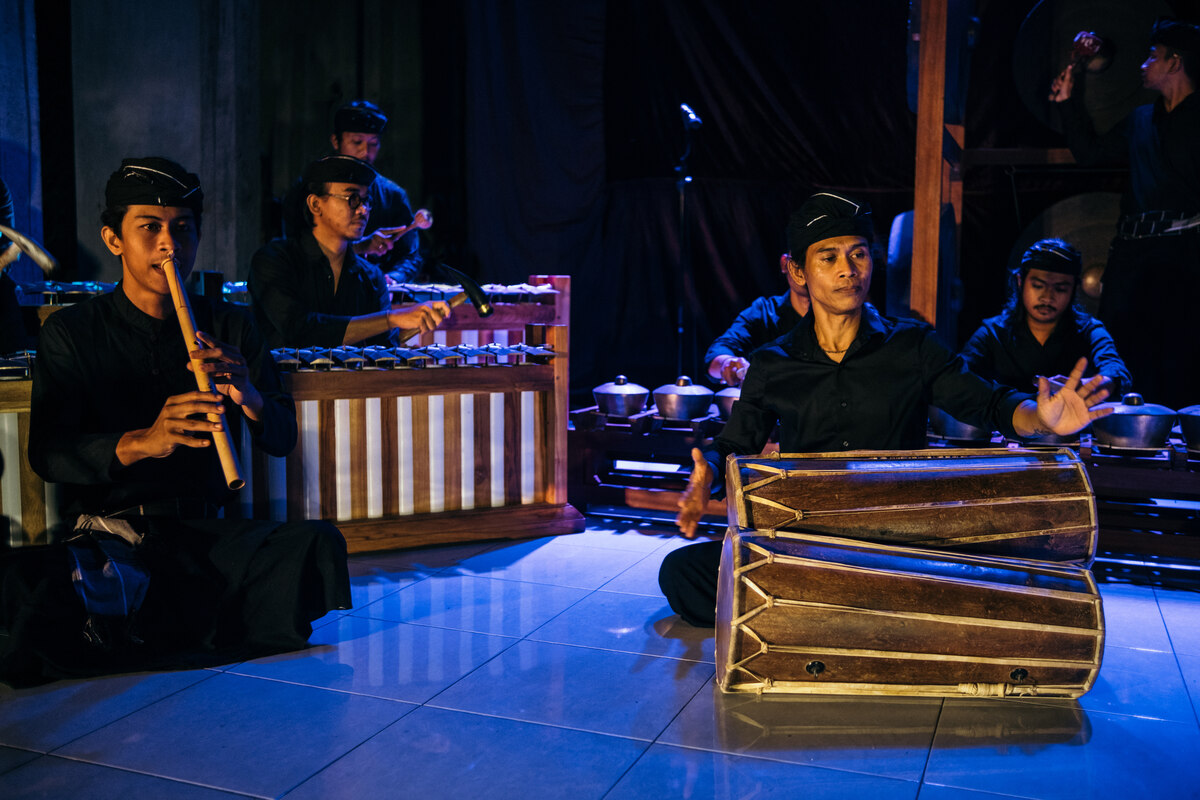
For many experiencing Gamelan for the first time, the initial encounter can be disorienting. There’s often no easily discernible melody or conventional beat to anchor the ear. Instead, a shimmering, iridescent soundscape emerges from an array of bronze instruments: resonant gongs, intricate metallophones, and small, bossed kettles interweave, while drums provide a subtle, yet crucial, rhythmic compass. Each percussive tone lingers, creating a rich, resonant tapestry as the next note is already being born, a continuous flow of sound that defies simplistic categorization.
The Resonating Heart of Indonesia: An Introduction to Gamelan
Gamelan is more than just music; it is the quintessential ensemble music of Indonesia, particularly flourishing on the islands of Java and Bali. Each Gamelan ensemble possesses its own unique character, built around bespoke sets of instruments, meticulously crafted and tuned to produce a distinct sonic signature. The sheer scale of these ensembles can vary dramatically, from intimate quartets to grand orchestras comprising up to 50 musicians, each contributing to a collective sound that is both intricate and powerful.
The instruments within a Gamelan ensemble are not merely tools; they are voices with specific, defined functions. The large gongs serve as the structural pillars of the composition, marking phrases and articulating the musical form. In front of them are the metallophones, played with curved hammers, which carry the melodic lines. At the forefront, the drums act as the acoustic conductor, guiding the tempo, dynamics, and overall flow of the music with subtle cues and rhythmic accents. Occasionally, string instruments or vocalists join the metallic chorus, adding layers of texture and emotion. Given that most instruments are traditionally placed low to the ground, musicians often perform seated, fostering a deep connection with their instruments and the collective energy of the ensemble.
Shattering Stereotypes: Gamelan Beyond Exoticism
In many Western contexts, Gamelan has historically been associated with temples, ancient rituals, and centuries-old traditions – often framed as an expression of a seemingly timeless, "exotic" culture. This perception, however, frequently falls into the trap of what the late US-Palestinian literary scholar Edward Said termed "Orientalism": a Western projection of idealized, often static, images onto non-Western cultures, devoid of their dynamic realities. Indonesia itself was a significant part of this colonial narrative, enduring nearly 350 years of Dutch colonial rule before achieving hard-won independence in 1949 after a bloody struggle. This colonial past and the subsequent Western gaze have long influenced how Gamelan is understood outside its homeland.
Yet, this image of Gamelan as a static cultural artifact is profoundly inaccurate. Far from being a museum exhibit, Gamelan is a vibrant, evolving art form. Particularly on the islands of Java and Bali, dynamic scenes of contemporary music have flourished, driven by innovative composers and performers. These artists are actively transforming instruments, experimenting with alternative tuning systems, and seamlessly integrating modern electronics to forge new musical languages. For them, Gamelan is not a fixed folkloric curiosity, but a rich, malleable material for cutting-edge contemporary art.
A Tapestry of Sound: Regional Diversity and Musical Complexity
Indonesia’s vast archipelago is home to an incredible diversity of musical practices, and Gamelan itself reflects this rich cultural mosaic. Java, as the political and economic heart of Indonesia and home to over half of its population, boasts distinct Gamelan traditions. Central Javanese Gamelan, for instance, is typically characterized by its calm, meditative quality, built around a shared core melody known as the Balungan. West Javanese Gamelan, by contrast, is often rhythmically more agile and deeply intertwined with dance traditions.
However, it is arguably on Bali, an island renowned internationally as a tourist destination – and famously branded as the "Island of Tradition" during the colonial era to create an antithesis to modernity – that the most virtuosic and intricate forms of Gamelan flourish. Despite its relatively small size (comparable to the German state of Saxony-Anhalt), Balinese Gamelan is celebrated for its high complexity, dramatic contrasts, and breathtaking speed. A hallmark of Balinese Gamelan is the Kotekan, an ingenious interlocking principle where two or more voices interweave to create a single, unified melodic line. No single voice plays the complete melody; rather, the combined interaction of individual parts forms the intricate musical structure, emphasizing the communal and collaborative essence of the performance.

Architects of the Future: Leading Voices in Contemporary Gamelan
The contemporary Gamelan movement is spearheaded by a cohort of visionary composers who respectfully engage with tradition while boldly pushing its boundaries. Their work exemplifies how Gamelan can be both deeply rooted in its heritage and open to radical transformation.
Dewa Alit: Forging New Paths on Bali
One of the most influential figures radically advancing this tradition is Dewa Alit. Born in Bali in 1973, Alit is widely regarded as a key figure in contemporary Gamelan. With his ensemble Gamelan Salukat, he not only develops entirely new instruments but also experiments with alternative tuning systems and composes works of astonishing rhythmic complexity.
Alit’s musical education began in childhood, a testament to the organic transmission of Gamelan knowledge. "My father taught me the metallophone. Later, I learned from my brother how to lead an orchestra," he recounts. This process of learning through observation, imitation, and communal playing remains central to Alit’s work. He emphasizes the profound dedication required: "One has to learn for at least eight years to truly understand Gamelan. We must listen to each other and communicate spontaneously." This direct, aural transmission stands in stark contrast to the score-centric approach often found in European classical music. While many contemporary Gamelan composers now use written notation, it often serves more as a guide than an absolute authority, with the actual learning and interpretation still heavily relying on listening and collaborative playing.
Iwan Gunawan: Bridging Worlds with Electronics
Another pivotal composer, the late Iwan Gunawan (born 1981), exemplified this blend of tradition and innovation. Gunawan, who tragically passed away at the age of 52 while rehearsing with the dance group Leine Roebana in Amsterdam, was considered one of Indonesia’s leading contemporary composers. His music seamlessly integrated traditional Gamelan sounds with sophisticated electronics and complex rhythmic structures.

Gunawan’s compositions frequently emerged from close collaborations with dancers, other ensembles, and electronic studios, imbuing his music with a strong process-oriented and collective spirit. A central tenet of his artistic vision was the expansion of the Gamelan sound itself: instruments were electronically manipulated, transposed, and fused live with the acoustic ensemble, creating rich, layered soundscapes that defied easy categorization.
Gunawan famously articulated his artistic philosophy, stating, "I make no distinction between ‘East’ and ‘West,’ nor between my Javanese roots and the Western roots of many of my artistic partners. I am more interested in the transcultural; music is simply music." This profound belief in the universal language of music guided his groundbreaking work. His untimely death is a significant blow to the contemporary music scene. German composer Dieter Mack, who collaborated with Gunawan for many years, lamented his passing as "a very bitter loss" because Gunawan had "decisively shaped the newer music in West Java."
Wayan Sudirana: Global Perspectives, Rooted in Ubud
The works of Dewa Alit and Iwan Gunawan underscore that tradition is not an immutable constant. Gamelan music is continually re-activated and reinterpreted through learning, collaborative playing, and experimentation. This sentiment is strongly echoed by the Balinese composer Wayan Sudirana. Born in 1980 in Ubud, Sudirana continues to live in his hometown, where he leads his own ensemble and teaches at the Arts Academy in Denpasar.
Sudirana’s artistic journey also reflects a global outlook. He has delved deeply into music traditions from Korea, India, and Ghana, and earned his doctorate in Canada. "Contemporary Gamelan is not simply a modernized version of traditional music," Sudirana explains. "It is a living and constantly evolving artistic language that creates space for experimentation, reflection, and intercultural dialogue." For Sudirana, Gamelan serves as a potent medium through which composers can respond to societal changes, technological advancements, and global interconnections.

Crucially, this contemporary evolution does not sever ties with the musical past. "Contemporary Gamelan is both rooted in tradition and open to transformations," Sudirana asserts. This inherent duality is precisely where the music’s extraordinary strength lies. It preserves its rich history not through stagnation, but through continuous adaptation and change.
Implications and the Enduring Legacy
The vibrant landscape of contemporary Gamelan music from Indonesia offers a profound counter-narrative to reductive, exoticizing perceptions. When one listens to these innovative compositions, one does not encounter an "exotic" sound world from a distant past. Instead, one hears the palpable present: composers actively navigating the intricate space between local tradition, global exchange, and artistic innovation to forge new forms of musical expression.
Redefining Cultural Heritage
The work of these contemporary Gamelan artists fundamentally redefines what constitutes "tradition." They demonstrate that cultural heritage is not a static set of rules to be preserved untouched, but a dynamic legacy that thrives through engagement, reinterpretation, and creative transformation. This approach ensures Gamelan remains relevant and resonant in an ever-changing world.
Global Resonance and Intercultural Dialogue
By embracing "transcultural" perspectives and incorporating diverse influences, contemporary Gamelan fosters a rich intercultural dialogue. It positions Gamelan not merely as an Indonesian curiosity, but as a vital contributor to the global contemporary music scene, capable of engaging with and influencing diverse musical traditions worldwide. Wayan Sudirana’s extensive studies in various world music traditions and Iwan Gunawan’s philosophy exemplify this outward-looking approach.

The Power of Process and Collective Creation
The emphasis on learning through observation, spontaneous communication, and interlocking parts (like Kotekan) highlights the deeply communal and process-oriented nature of Gamelan. This collaborative spirit, where the collective sound supersedes individual virtuosity, offers a powerful model for artistic creation that stands in contrast to more hierarchical Western classical traditions. It underscores that music is a shared experience, constantly being shaped and refined in real-time.
A Living Art Form for the 21st Century
Ultimately, contemporary Gamelan stands as a testament to the resilience and adaptability of traditional art forms. It is a powerful affirmation that cultural traditions can not only survive in the modern era but can flourish and evolve, offering unique perspectives on societal changes, technological progress, and the interconnectedness of global cultures. The tragic loss of Iwan Gunawan is a stark reminder of the individual genius that drives these movements, yet the ongoing work of artists like Dewa Alit and Wayan Sudirana ensures that Gamelan’s electric future continues to resonate, strong and clear, across the world.
Through the innovative work of these composers, Gamelan continues to captivate, challenge, and inspire, proving that the most profound traditions are those that dare to embrace change.