Washington D.C. – As the United States approaches a critical midterm election, a deeply unsettling issue has surged to the forefront of voter concerns: allegations of widespread political corruption and personal enrichment involving former President Donald Trump and his inner circle. What was once a simmering undercurrent of concern among ethics watchdogs has now become a defining narrative, shifting public sentiment and potentially influencing outcomes in key races across the nation.
While the intertwining of wealth and power has long been a feature of American politics, critics contend that the scale and brazenness of alleged financial maneuvering during Trump’s tenure have reached an unprecedented level. Public interest organizations and Democratic lawmakers are pointing to a dizzying array of financial transactions, from burgeoning cryptocurrency ventures to lucrative real estate deals in geopolitically sensitive regions, alongside controversial presidential pardons and shifts in environmental policy, all of which they argue served to line the pockets of the former president and his associates.
The White House, for its part, vehemently denies any wrongdoing, asserting that all actions taken by the President were in the best interest of the nation. However, these denials are increasingly falling on deaf ears among a significant portion of the electorate, who, according to recent polls, are prioritizing governmental ethics above even pressing economic issues like inflation and rising gas prices.
The Unprecedented Scale of Allegations
For veteran observers of political ethics, the current situation represents a concerning escalation. Lisa Gilbert, co-chair of the influential citizen advocacy group Public Citizen, a prominent voice in the fight against political corruption in the U.S., acknowledges that money has always played a significant role in American politics and that corruption is not a novel phenomenon. However, she emphatically states: "Under Trump, the problem has intensified; it has grown larger than anything previously experienced."
The accusations against Trump generally fall into two broad categories. First, he is alleged to have leveraged the presidency to accumulate substantial additional wealth for himself and his private enterprises. Second, he is accused of providing political favors or reciprocal actions to domestic and international benefactors in exchange for financial gains. These claims paint a picture of a presidency deeply intertwined with personal financial interests, raising fundamental questions about the integrity of the highest office.
A Web of Financial Dealings: Cryptocurrency and Global Real Estate
One of the most striking areas of alleged enrichment revolves around the burgeoning world of cryptocurrencies, an opaque and often unregulated financial landscape that has proven exceptionally lucrative for some.
The Cryptocurrency Conundrum
According to Lisa Gilbert, Trump has amassed an astounding $1.4 billion from cryptocurrency dealings since the beginning of his second term. This figure, if accurate, represents an extraordinary surge in wealth derived from a relatively new asset class, raising immediate questions about the nature and origins of such profits.
Mark Hays, a financial expert with the citizen advocacy organization Demand Progress, sheds light on how these gains allegedly materialize, citing a specific case: "One of the major deals was between the Trump-affiliated firm World Liberty Financial and the United Arab Emirates." Hays explains that the UAE reportedly invested a staggering $2 billion into a cryptocurrency launched by the Trump-linked company. The value of this cryptocurrency then experienced a sudden, dramatic spike overnight.
Crucially, Hays alleges that this investment was not a standalone transaction but part of a quid pro quo arrangement. In exchange for the UAE’s substantial investment, the Trump administration purportedly relaxed export and licensing regulations in favor of the Gulf nation. Such a direct linkage between a foreign investment in a presidential-affiliated company and a subsequent favorable policy shift would represent a severe breach of ethical standards, blurring the lines between national interest and personal financial gain.
Global Real Estate Footprint
Beyond the digital realm, Trump’s traditional business interests in real estate also reportedly flourished under his presidency, particularly in the strategically vital Gulf region. Corruption experts point to numerous property deals in several countries across the Gulf, involving firms directly associated with Trump himself, his son-in-law Jared Kushner, or his long-time confidant Steve Witkoff. These transactions raise concerns about potential conflicts of interest, as foreign entities might seek to curry favor with the U.S. administration by engaging in financially beneficial arrangements with the President’s family or business partners. The opaque nature of many of these international real estate ventures makes precise tracking and verification challenging, yet the pattern itself fuels public suspicion.
The Air Force One "Gift"
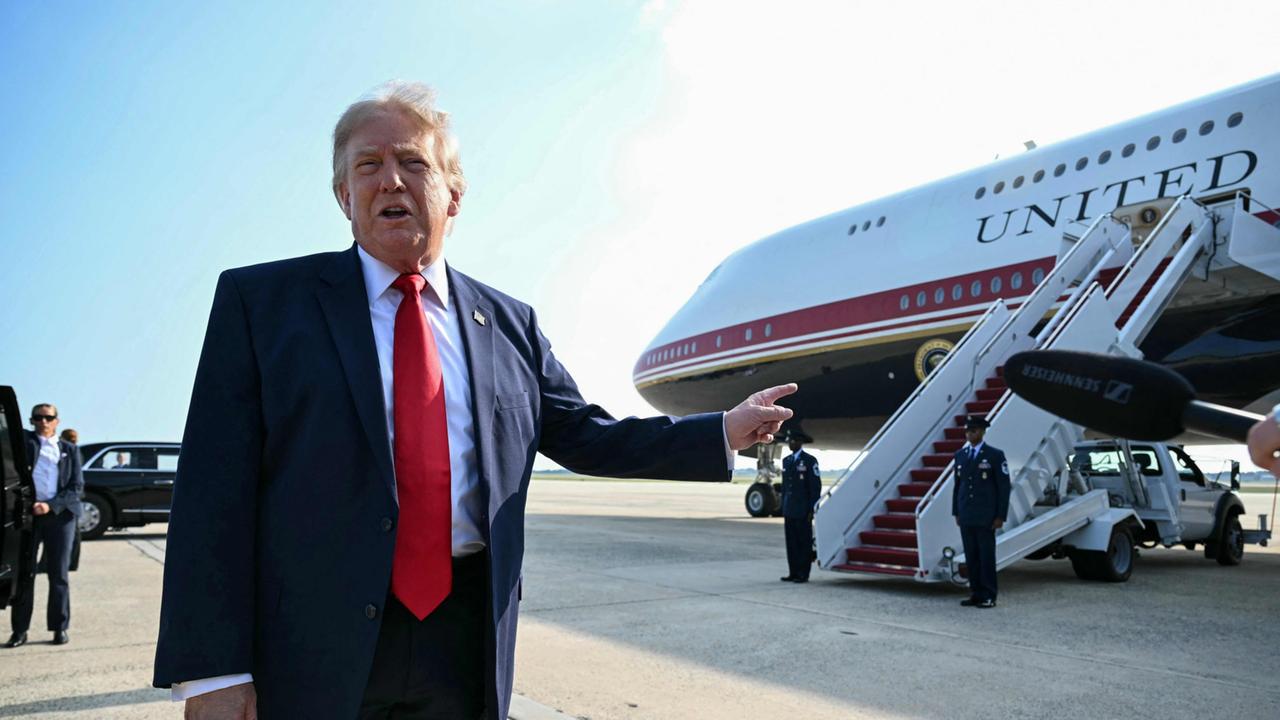
Another example frequently cited by critics is the acquisition of a jumbo jet from Qatar. This aircraft, originally a gift, was subsequently integrated into the presidential fleet and now serves as one of the Air Force One planes utilized by the President. While the specifics of this transaction and its exact valuation are complex, the optics of a foreign government providing a high-value asset that then directly benefits the U.S. presidency—and by extension, the President himself in terms of prestige and operational capacity—are highly scrutinized. Critics argue that such arrangements can be perceived as thinly veiled attempts at influence, undermining the impartiality of the presidency.
Congressional Scrutiny and Financial Estimates
The gravity of these allegations has not escaped the attention of the U.S. Congress. Democrats on the House Oversight Committee have conducted their own analyses, attempting to quantify the extent of the alleged enrichment. Their calculations, which aggregate Trump’s digital assets, real estate transactions, and other business dealings, suggest a colossal increase in the wealth of the President and his private circle, estimating a total sum of $9.7 billion since the commencement of his second term.
It is important to acknowledge that precisely substantiating such a figure to a definitive, legally verifiable standard remains challenging. The intricate web of private companies, trusts, and international transactions makes a full and transparent accounting difficult, even for congressional investigators. However, the sheer magnitude of the estimate, coupled with the detailed examples provided by ethics watchdogs, has created a compelling narrative that resonates with a public increasingly wary of political self-dealing.
Pardons, Policy, and Political Donations
The allegations extend beyond direct financial transactions to encompass the exercise of presidential power in ways that critics argue were influenced by financial contributions.
The Price of Clemency?
Lisa Gilbert of Public Citizen highlights another deeply troubling pattern: a series of presidential pardons and commutations granted to convicted felons after significant sums of money flowed into political action committees (PACs) closely aligned with Trump’s Republican Party. While the President possesses broad authority to grant clemency, the timing and beneficiaries of some of these actions have raised questions about whether they were influenced by financial inducements rather than merit or justice.
"We need a reform of pardon law," Gilbert asserts, underscoring the perceived vulnerability of the system to abuse. While proving a direct, legally actionable link between a donation and a pardon can be extraordinarily difficult, the appearance of such a connection erodes public trust in the judicial process and the integrity of presidential power.
Climate Policy: A Lucrative Denial?
Perhaps one of the most consequential areas where alleged corruption and financial influence intersect with policy is in the realm of climate change. Gilbert contends that money is the primary driver behind Trump’s consistent denial of the climate crisis. She points to the vast sums of money flowing from the oil and gas industry as campaign donations to Trump and his Republican allies.
"That’s behind all the bad decisions being made in the area of climate change," Gilbert states unequivocally. According to her, these financial incentives directly explain the Trump administration’s actions, such as rolling back stricter emissions standards for the auto industry and rescinding subsidies for wind power and other renewable energy sources. "As an oil company, you don’t like windmills. That’s unfortunately the direct connection," Gilbert explains, articulating a clear transactional relationship between industry donations and policy reversals that favor fossil fuel interests over environmental protection.
Official Denials and the Defense
In response to the barrage of accusations, the White House has consistently issued blanket denials. Official statements maintain that the President operates solely in the national interest and that any suggestion of personal financial gain influencing policy or presidential actions is unfounded.
Historically, Donald Trump has often defended his business dealings while in office by arguing that his vast wealth and experience as a successful businessman made him uniquely qualified to lead the country, not that they created conflicts of interest. He often framed his presidency as an extension of his business acumen, applying a "deal-making" approach to governance. However, this perspective often clashes with established norms of governmental ethics, which prioritize public service and impartiality over private financial gain. The inherent difficulty in legally proving "intent" or a direct quid pro quo in many corruption cases often allows such denials to stand, at least in a legal sense, even if public perception points elsewhere.
Shifting Public Sentiment: Midterm Implications
The growing public awareness and concern over these allegations are having a tangible impact on the political landscape, particularly as the midterm elections loom. A recent poll published by the Associated Press revealed that a striking 59 percent of Americans believe that Trump is more interested in personal profit than in the welfare of the citizenry.
Digging deeper into public perception, the poll indicated that 41 percent of respondents classify the President’s behavior as illegal, while an additional 18 percent deem it at least unethical. This means that a substantial majority (59%) view his conduct as ethically compromised, if not outright criminal.
Furthermore, a Fox News poll indicates a significant shift in voter priorities. Corruption has surged to the number one spot on the list of issues worrying voters, surpassing even previously dominant concerns such as inflation and rising gasoline prices. This elevation of governmental ethics to the top of the public agenda suggests a profound disillusionment and a demand for greater accountability from political leaders. For the Republican Party, this shift in voter sentiment presents a considerable challenge, potentially undermining their electoral prospects in key battleground states.
A Broader Systemic Issue
While the focus has largely been on former President Trump, some political figures acknowledge that the problem of money in politics extends beyond any single individual or party. Democratic Senator Sheldon Whitehouse of Rhode Island, a staunch advocate for campaign finance reform and climate action, describes the situation as a "climate denial fraud operation" running parallel to a "corruption machinery through party donations."
However, Whitehouse also candidly admits that his own party, the Democrats, has not done enough to combat personal enrichment and corruption. Speaking at a conference on anti-corruption in Washington, he lamented, "We have been so weak in addressing this issue that voters don’t know whether Democrats are even better than Republicans." This self-reflection underscores a broader systemic challenge within American politics, where the influence of money has become deeply entrenched, eroding public trust in democratic institutions as a whole.
The Path Forward: Legal and Ethical Challenges
The allegations surrounding Donald Trump’s financial dealings during his presidency will undoubtedly continue to fuel debate and potential legal scrutiny for years to come. The long-standing, and often ignored, Emoluments Clause of the U.S. Constitution, which prohibits federal officeholders from accepting gifts, payments, or titles from foreign governments without congressional consent, remains a crucial legal touchstone. While courts have largely avoided definitive rulings on its application to a sitting president’s business dealings, the public conversation continues to highlight its relevance.
Future investigations, potentially civil lawsuits, and the persistent efforts of watchdog organizations will continue to scrutinize these transactions. The challenge lies in navigating the complex legal landscape to definitively prove intent and direct causality, particularly when dealing with international financial flows and private business structures.
Ultimately, the enduring impact of these allegations transcends specific legal outcomes. They contribute to a pervasive sense of distrust in government, raising fundamental questions about the accountability of public officials and the integrity of the democratic process. As the nation grapples with these concerns, the call for comprehensive ethics reform, greater transparency in political finance, and a renewed commitment to public service over private gain grows ever louder, shaping not only the current election cycle but the very future of American governance.