By Florian Bayer
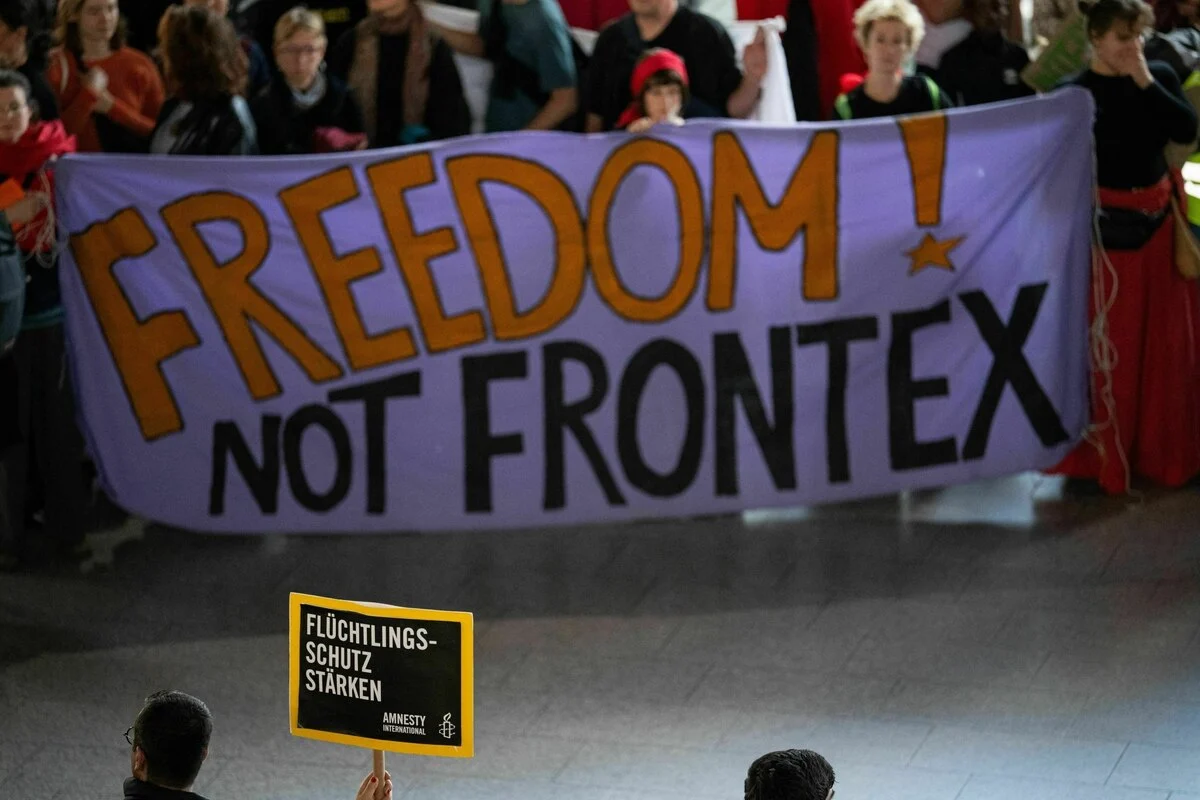
In a powerful display of collective dissent, approximately 50,000 students, researchers, and university staff took to the streets of Vienna this Thursday. Under the rallying cry "Alarmstufe Rot – Unis retten!" (Red Alert – Save the Universities!), the massive demonstration turned the city center into a stage for intellectual resistance. From the Technical University (TU) at Karlsplatz, the protesters marched through the heart of the capital, forcing the closure of the iconic Ringstraße, to culminate at the University of Vienna.
The demonstration was not merely a reaction to fiscal policy; it was an existential outcry against what many in the academic community view as the systematic erosion of Austria’s future. The spark for this widespread mobilization is the government’s proposed university budget for the period of 2028 to 2030, an agreement reached by the ruling coalition just last Saturday. As the dust settles on the streets, a deep chasm remains between the protesters’ demands for educational investment and the government’s insistence that the current funding model is a "success."

The Financial Chasm: Reality vs. Rhetoric
To understand the scale of the anger, one must look at the math behind the movement. The universities’ own calculations, verified by sector experts, indicate that a minimum of 18 billion euros is required over the three-year period to maintain the status quo of research and teaching. This figure is not an inflated wish list; it accounts for existing operational costs, the rising demand for higher education, and the necessity of keeping pace with international standards.
The government, however, has earmarked only 16 billion euros for the same timeframe. At first glance, this might appear to be a stable continuation of current funding levels. But the reality is far more precarious. This "nominal" 16 billion must now cover additional, previously unbudgeted obligations, such as the newly established Digital University in Linz (IT:U). Furthermore, the budget fails to account for the ongoing impact of inflation, which has significantly eroded the purchasing power of the universities’ existing resources. When adjusted for these factors, the budget represents a significant real-terms cut.
Chronology of a Mounting Conflict
The current standoff is the culmination of months of simmering tension within the Austrian academic landscape:

- Early 2024: Initial warnings from university rectors regarding the upcoming budget cycle for 2028–2030 signal a potential "Super-GAU" (a catastrophic scenario) for higher education.
- May 2024: A first major wave of protests erupts nationwide. In a symbolic act of mourning, demonstrators in front of the Federal Chancellery bury a mock coffin representing the death of independent research in Austria.
- October 2024 (Last Week): Student groups escalate their tactics, leading to the ongoing occupation of the auditorium at the Academy of Fine Arts in Vienna.
- Saturday, October 2024: The federal government announces its finalized budget plans, confirming the 16-billion-euro ceiling.
- Tuesday, October 2024: Immediate reactions follow as students protest directly in front of the University of Vienna.
- Thursday, October 2024: The "Alarmstufe Rot" protest brings 50,000 people to the streets of Vienna, marking the largest academic protest in years.
Symbolic Defiance: "Make Austria Dumb Again"
The imagery used by the demonstrators was as biting as it was creative. In the Resselpark before the Technical University, protesters blindfolded statues of historical figures, including Josef Ressel, the inventor of the ship’s propeller. The accompanying message was stark: "Those who cut funding for universities and research walk blindly into the future."
The signs carried by the protesters articulated the personal toll of these cuts. One poster bluntly asked, "Make Austria Dumb Again?" while another, attached to a baby carrier, read: "Would have loved to become a genius, but unfortunately out of budget." These slogans underscore the sentiment that the government’s fiscal conservatism is being bought at the price of the next generation’s intellectual potential. The warning that the University of Vienna, which has twice in a row secured a spot among the world’s top 100 universities, could soon plummet in international rankings was a recurring theme, highlighting the threat to Austria’s global academic standing.
The Government’s Stance: Defending the "Stable Level"
Faced with an EU deficit procedure and the pressure of fiscal consolidation, the Austrian government has attempted to frame the budget as a triumph of prudent management. Science Minister Eva-Maria Holzleitner (SPÖ) defended the deal in a recent ORF interview, maintaining that the 16 billion euros represent a "stable level" of funding.

The government’s argument rests on the claim that this sum is higher than what was initially discussed in earlier drafts. However, when pressed on the issue of purchasing power and inflation, Holzleitner conceded that the real-terms value is indeed a decrease. This admission has done little to appease the academic community, which points out that the current government program had explicitly promised to "safeguard the university budget"—a promise they feel has been fundamentally broken.
Voices from the Field: The Crisis of Trust
The disappointment felt by the academic leadership is palpable. Brigitte Hütter, President of the Universities Austria (uniko), has characterized the situation as a profound "loss of trust." According to Hütter, there was a tacit understanding that the government would provide an inflation adjustment to preserve the quality of education and research.
"Has the Science Minister not fought for us, or did she simply not prevail?" Hütter asked, reflecting the frustration of many university rectors. Sebastian Schütze, Rektor of the University of Vienna, issued a stern warning: "We are going to lose terrain internationally." His concerns are echoed by the Austrian Student Union (ÖH), which argues that the government’s prioritization of certain sectors over education is a fundamental miscalculation.

Viktoria Kudrna, a member of the ÖH leadership team, criticized the government’s double standards regarding EU fiscal rules. "It is baffling that there is always room for increased military spending within the EU fiscal framework, but never for education," she stated. "When classes are cancelled, staff positions are left vacant, and student support services deteriorate, it affects our future directly."
Economic and Strategic Implications
The implications of these budget cuts extend far beyond the campus walls. In an era where innovation, digital literacy, and high-level research are the primary drivers of economic stability, the decision to starve the university sector is being viewed by many economists as a long-term strategic blunder.
- Brain Drain: If Austria’s universities lose their international competitiveness, they risk becoming a transit point rather than a destination for top-tier academic talent.
- Quality of Instruction: Larger class sizes and fewer support staff lead to longer study durations and a decrease in the quality of the student experience, ultimately affecting the workforce readiness of graduates.
- Research Output: The erosion of research funding threatens Austria’s ability to participate in high-level European and international research consortia, which require a stable base of institutional funding.
The Road Ahead: A Standoff Without End?
As of now, the government has shown no sign of backtracking. The window for potential budget adjustments remains open until October 31, but the prevailing sentiment among activists and university officials is one of weary skepticism.

The occupation of the Academy of Fine Arts serves as a visible reminder that for the students, this is not just about numbers on a spreadsheet; it is a battle for the values of an open, educated society. The protesters are calling for alternative funding mechanisms, including the introduction of wealth and inheritance taxes and the systematic removal of climate-damaging subsidies, to bridge the financial gap.
As the sun sets on the protest-filled streets of Vienna, the question remains whether the government will acknowledge the "Alarmstufe Rot" or whether it will continue to prioritize rigid fiscal targets over the long-term health of the nation’s most vital intellectual engine. For the 50,000 who marched today, the message is clear: they refuse to let their future be "out of budget."