


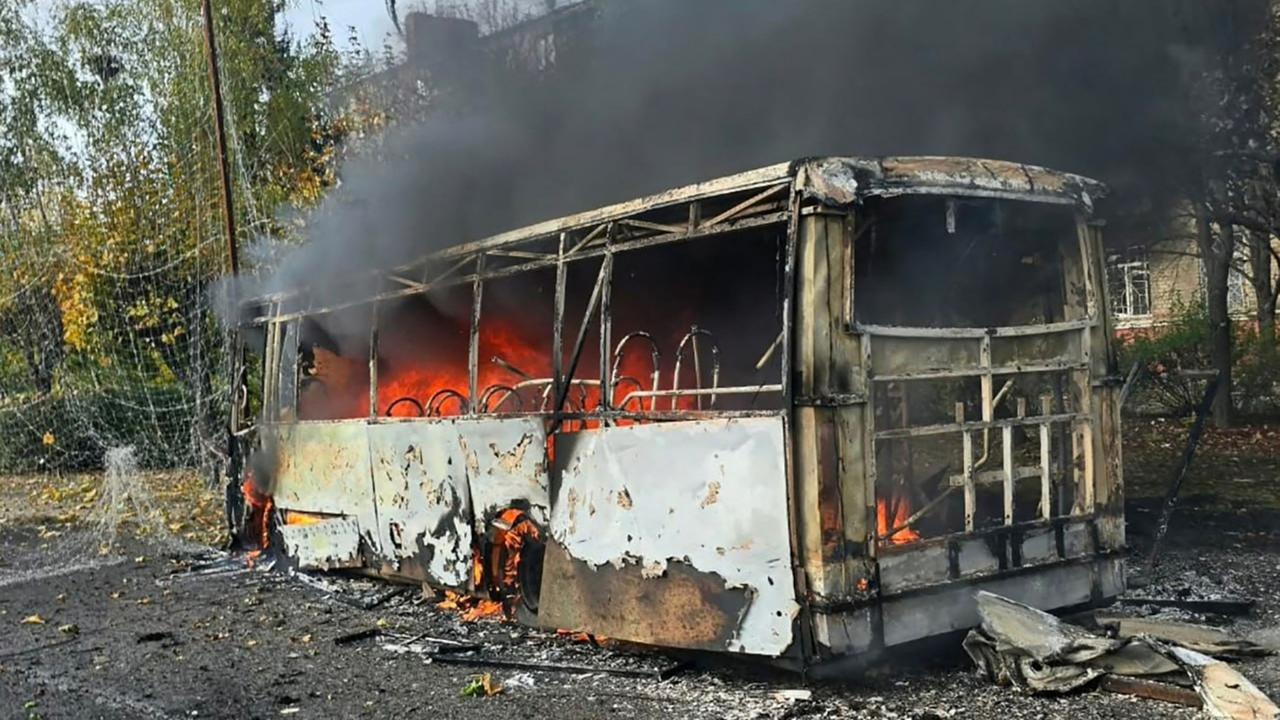
KRAMATORSK, UKRAINE – October 8, 2026 – A brutal wave of Russian assaults has plunged eastern Ukraine into renewed crisis, with at least 30 civilians killed and 18 wounded in a targeted strike on a bus in the city of Kramatorsk. The attack, which reduced the vehicle to a charred wreck, underscores the escalating humanitarian toll of the protracted conflict. Simultaneously, widespread power outages have been reported across the capital, Kyiv, and surrounding regions following coordinated strikes on critical energy infrastructure. These devastating attacks come amid a backdrop of heightened Russian offensive operations and mounting casualties on both sides.
The Immediate Catastrophe: A Bus Turned Inferno
The most immediate and horrific incident occurred in Kramatorsk, a strategically vital city in the Donetsk region. According to Ukrainian authorities, the bus, carrying civilians, was directly targeted by Russian forces. The state prosecutor’s office confirmed the grim toll of at least 30 fatalities and 18 injuries, emphasizing that the number of casualties could still rise as recovery efforts continue and the full extent of the devastation becomes clear.
Vadym Filashkin, the military governor of Donetsk, shared harrowing images on his Telegram channel depicting the charred remains of the bus, a stark testament to the ferocity of the attack. "These are people killed by the Russian army," Filashkin stated, his voice heavy with condemnation. "There is no justification for this, and there can be none." The governor issued an urgent plea for all remaining residents in the Donetsk region to evacuate to safer areas, acknowledging the persistent challenge of convincing many to leave their homes and livelihoods behind despite the escalating danger.
Escalating Tensions and Strategic Significance
The relentless nature of the attacks has forced a drastic reassessment of security measures in the region. Filashkin has ordered the immediate suspension of public transportation in Kramatorsk and the neighboring city of Sloviansk, both of which are among the last major Ukrainian-controlled cities in the eastern Donetsk Oblast. Before the full-scale Russian invasion, Kramatorsk was a vibrant city of 150,000 residents and plays a crucial role in the logistical support for Ukrainian armed forces operating on the front lines. The decision to halt public transport reflects the grave deterioration of the security situation and the heightened risk to civilian movement.
Widespread Power Outages Plunge Cities into Darkness
The impact of the Russian assaults extends beyond the immediate casualties. In Kyiv and several districts surrounding the capital, emergency power shutdowns have been implemented, plunging millions into darkness. Artem Nekrassow, the Deputy Minister of Energy, confirmed the emergency measures on Telegram, attributing the outages to damage inflicted on energy facilities by Russian shelling. The resulting voltage drops in the high-voltage grid have led to significant disruptions, including the failure of water supply pumps in several parts of the capital.
The power grid is also experiencing significant failures in front-line regions, including Sumy, Kharkiv, Donetsk, and Zaporizhzhia. Nekrassow stated that efforts are underway to restore power supply where the security situation permits, highlighting the ongoing challenges faced by energy workers amidst the active conflict.
A Grim Precedent: Previous Day’s Carnage
The attacks on October 8th follow a pattern of intensified Russian aggression that resulted in significant loss of life the previous day. On Wednesday, a missile strike on a building in Pryluky, a city in northern Ukraine, claimed the lives of 22 people, according to the Ukrainian State Emergency Service. Among the deceased were five children. The attack in the Chernihiv region also left 54 people injured, including seven children.
Furthermore, air raids on Kyiv on Wednesday evening resulted in two fatalities, as reported by the State Emergency Service. Reuters, citing Ukrainian figures, indicated that a total of 32 individuals were killed across Ukraine on Wednesday due to Russian attacks. These figures paint a grim picture of an intensified campaign of terror targeting civilian populations and infrastructure.
Official Responses and International Condemnation
Ukrainian officials have vehemently condemned the attacks, reiterating their accusations of war crimes against the Russian Federation. President Volodymyr Zelenskyy, in a televised address, vowed that Ukraine would not be intimidated and would continue to defend its sovereignty and its people. He urged international partners to accelerate the delivery of air defense systems and other crucial military aid to bolster Ukraine’s ability to repel such attacks.
International bodies and allied nations have issued strong statements of condemnation. The United Nations has expressed deep concern over the rising civilian casualties and the targeting of civilian infrastructure, calling for immediate de-escalation and adherence to international humanitarian law. Many Western governments have reiterated their unwavering support for Ukraine and have pledged to continue imposing sanctions on Russia. However, the effectiveness and speed of these responses remain a critical point of discussion as the conflict grinds on.
Implications for the Ongoing Conflict and Humanitarian Crisis
The recent escalation of Russian attacks carries significant implications for the ongoing conflict and the already dire humanitarian situation in Ukraine.
-
Deepening Humanitarian Crisis: The targeting of civilian areas, including public transportation and energy infrastructure, exacerbates the humanitarian crisis. Displaced populations face increasing hardship, and access to essential services like power and water becomes precarious, particularly in frontline regions. The psychological toll on civilians living under constant threat of bombardment is immeasurable.
-
Impact on Military Operations: While the primary targets appear to be civilian morale and infrastructure, these attacks can also indirectly impact military operations. The disruption of transportation networks and the diversion of resources to address humanitarian needs can strain Ukrainian capabilities. Conversely, the Ukrainian counteroffensive, which has seen incremental gains, will likely continue to face stiff resistance and increased pressure.
-
Energy Security Concerns: The repeated targeting of Ukraine’s energy infrastructure raises serious concerns about the country’s energy security, especially as the colder months approach. The damage inflicted on the power grid necessitates extensive repairs and could lead to prolonged disruptions, impacting both civilian life and industrial capacity.
-
The Role of International Aid: The attacks underscore the urgent need for continued and enhanced international support for Ukraine. The timely delivery of advanced air defense systems, robust humanitarian aid, and financial assistance are critical for Ukraine’s ability to withstand Russian aggression and protect its population. The effectiveness of international sanctions and diplomatic pressure on Russia remains a key factor in shaping the future trajectory of the conflict.
-
Information Warfare and Accountability: In parallel with the physical attacks, an intense information war continues. Ukraine has accused Russia of deliberately targeting civilians, while Russia has often claimed its targets are military in nature or has denied responsibility. The verification of claims and the pursuit of accountability for alleged war crimes remain crucial aspects of the international response.
Ukrainian Counter-Operations: Targeting Russian Infrastructure
In a separate development, Ukraine has reportedly conducted a counter-operation targeting the data center of Yandex, Russia’s largest internet company, in the Ryazan region. The attack reportedly caused a fire at the facility, disrupting some of its infrastructure. Yandex, which offers leading artificial intelligence models like YandexGPT, stated that core consumer services were not affected and that the situation was under control.
Additionally, in Salavat, Bashkortostan, fragments of drones reportedly caused a fire at an industrial site, though local authorities reported no injuries and that the company’s operations continued. These incidents highlight a growing trend of Ukrainian operations targeting Russian infrastructure, potentially aiming to disrupt logistical capabilities and sow economic disruption.
The ongoing conflict in Ukraine remains a complex and evolving tragedy, with the latest attacks serving as a stark reminder of the devastating human cost of this war. The international community faces the continuing challenge of finding effective solutions to de-escalate the violence, protect civilians, and hold perpetrators accountable.







