


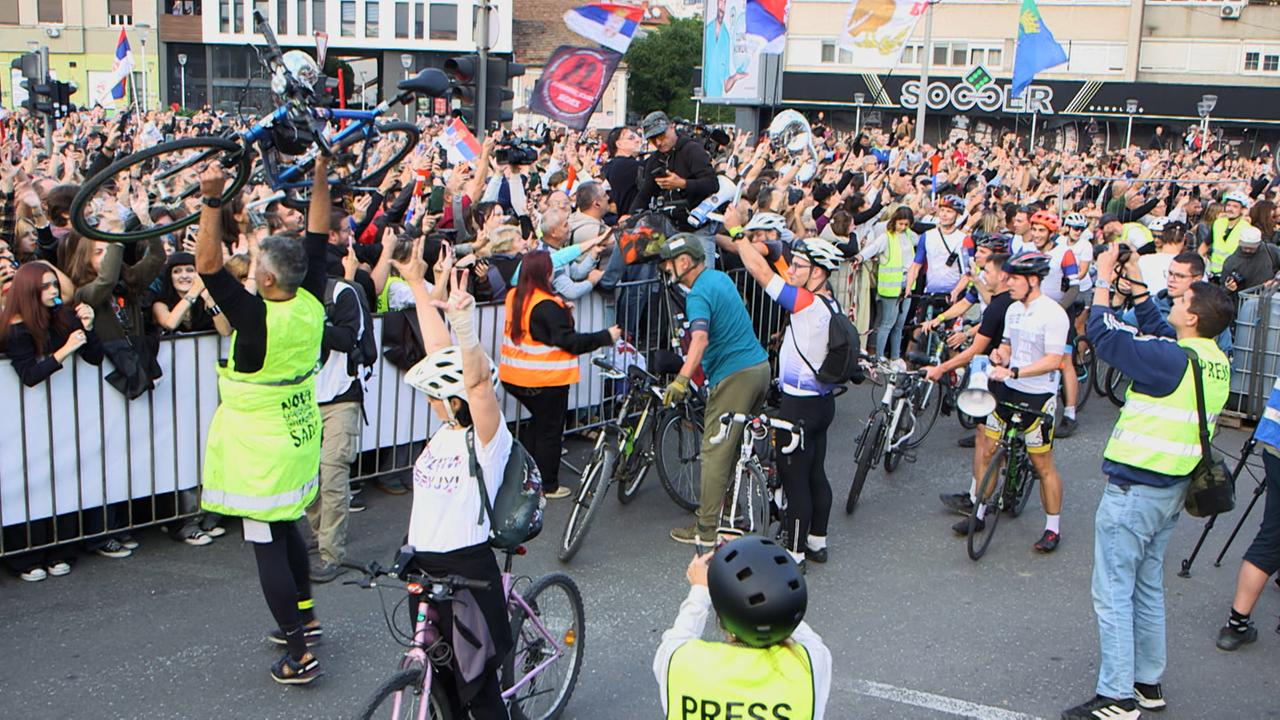
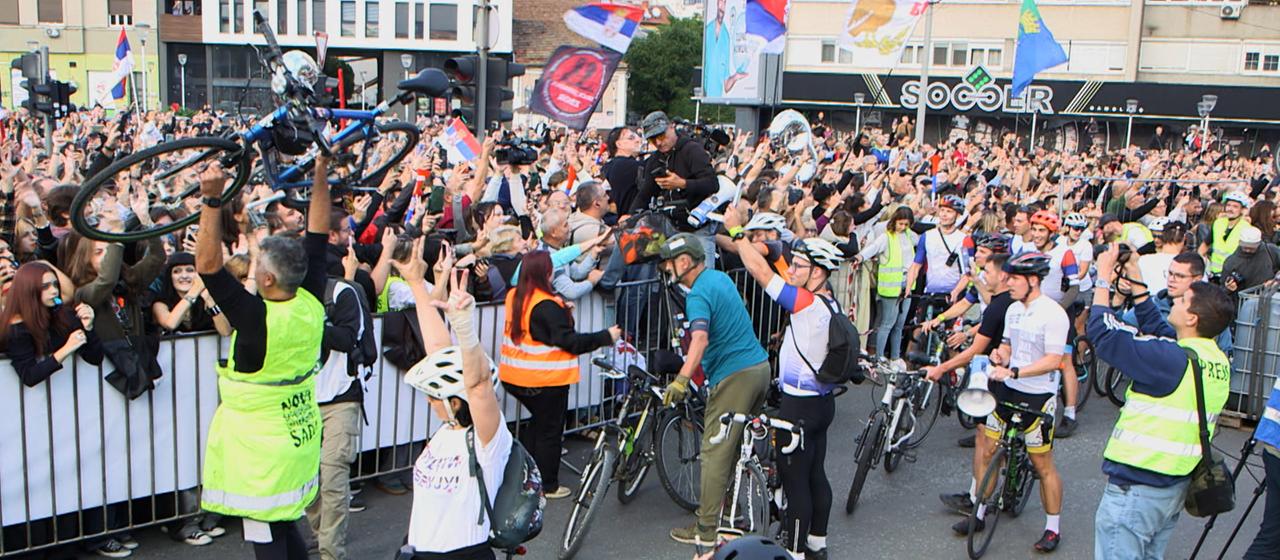
Belgrade, Serbia – October 10, 2026 – The air hangs heavy with the persistent drizzle, a fitting backdrop to the arduous journey undertaken by Marija, a 22-year-old medical student, and her cohort of over 120 fellow students. Their bicycles, laden with campaign materials and unwavering resolve, are their steeds in a unique electoral battle. For the past several days, they have been pedaling across Serbia, a grassroots campaign fueled by a potent mix of idealism and a deep-seated desire for change. Their target: the established political order, embodied by President Aleksandar Vučić, whose grip on power has defined Serbian politics for the better part of a decade.
This unconventional campaign, a far cry from the polished rallies and media blitzes of established parties, represents the culmination of a two-year student-led movement. Initially galvanized by a tragic accident, these young Serbians have transformed their collective grief and frustration into a formidable political force, now poised to challenge the status quo in the upcoming elections scheduled for the end of October.
The Spark: Tragedy and the Genesis of a Movement
The seeds of this student uprising were sown two years ago, in the aftermath of a devastating incident in Novi Sad. The collapse of a railway station canopy resulted in the tragic deaths of 16 people. This event, the students argue, was not an isolated accident but a stark manifestation of systemic corruption and governmental negligence that has plagued Serbia under Vučić’s leadership. The ensuing protests, initially a spontaneous outpouring of grief and anger, quickly evolved into a sustained movement demanding accountability and systemic reform.
The student movement, now running under the banner of a collective entity on electoral lists, has adopted a platform centered on a fundamental reset for Serbia. Their core demands include the restoration of the rule of law, a genuine commitment to European Union integration, and a drastic overhaul of the education system. They envision a future where meritocracy triumphs over cronyism and where Serbia reclaims its place as a stable and democratic nation on the European stage.
A Grassroots Campaign on Two Wheels: Cycling for Change
Marija, her face etched with the fatigue of the road but her eyes burning with determination, pulls on her rain jacket. Today’s leg of the campaign takes them through a predominantly rural region southwest of Belgrade, an area historically loyal to Vučić’s Serbian Progressive Party (SNS). Osecina is their first stop, a small town where they hope to connect with the local population and articulate their vision for a different Serbia.
"We hope to reach people here and explain what’s really happening in the country," Marija explains, her voice slightly strained but clear. The choice of a bicycle tour is not merely symbolic; it’s a practical and powerful statement. It underscores their commitment to a sustainable future, their connection to the everyday lives of ordinary Serbians, and their rejection of the ostentatious displays of wealth and power often associated with traditional political campaigns. It’s a way to literally and figuratively cover ground, engaging with communities directly, away from the controlled narratives of state-influenced media.
Navigating a Fractured Media Landscape
The students’ campaign faces an uphill battle against a media landscape heavily influenced by the ruling party. For many Serbians, state-controlled media outlets serve as their primary source of information, and these channels have been relentless in their efforts to discredit the student movement and its proponents.
A poignant example of this is the case of Professor Vladan Đokić. As the rector of the University of Belgrade, Đokić openly supported the student protests. Following a tragic incident at the university, police raided his office. In a moment that resonated deeply with many, Đokić delivered an impassioned speech from the university balcony, declaring, "They can take away computers and receivers, but they cannot take away the truth." For a brief period, he became a visible face of the opposition.
However, this newfound prominence came at a steep price. What Vučić’s opponents decry as a systematic smear campaign, orchestrated through media outlets loyal to the president, targeted Đokić relentlessly. His reputation was systematically dismantled, and he is no longer featured on the electoral lists, a stark illustration of the immense pressure faced by those who dare to challenge the established order.
Personal Attacks and the Erosion of Trust
The students and their allies are acutely aware that anyone who publicly opposes Vučić risks becoming a target of similar personal attacks and character assassinations. Jana Aćimović Planojević, a lawyer representing victims of a brutal police intervention in Valjevo, is another case in point. A year prior, demonstrators were severely beaten by police during protests. Aćimović Planojević, advocating for transparency and justice, found herself in the crosshairs. She was personally attacked on television, including by President Vučić himself.
"The worst were the stories they invented about my father," Aćimović Planojević recounts, her voice tinged with anger and pain. "They accused him, as a businessman, of burying ammonia and poisoning the entire town, leading to many cancer deaths." Despite such harrowing experiences, Aćimović Planojević continues to support the student movement, recognizing their unwavering commitment to the rule of law as a critical counterpoint to the prevailing political climate.
The Vučić Camp’s Counter-Narrative
As Marija and her fellow cyclists approach Osecina, they are met not only by potential supporters but also by local representatives of Vučić’s SNS party. From their perspective, Vučić has steered Serbia towards progress, particularly in infrastructure development. Svetozar Gacić, chairman of the local municipal council, proudly points to tangible improvements.
When questioned about the country’s EU accession prospects, the mayor accompanying Gacić appears hesitant. Gacić, however, steps in to affirm their unwavering support for President Vučić’s policies, emphasizing his commitment to European integration while simultaneously maintaining "good relations with our brotherly Russia." This stance highlights the complex geopolitical tightrope Serbia often walks, a narrative that the students seek to redefine with a clearer pro-European orientation.
Glimmers of Hope in the Countryside
Despite the political maneuvering and the challenges, the student cyclists find pockets of genuine support. In Osecina, a group of local residents greets them with enthusiastic applause, offering food and drink. "They have opened the doors and windows wide, allowing people to finally feel a breath of freedom," one man exclaims, his voice filled with emotion.
Another resident, tears welling in his eyes, adds, "We have respect for them. These are our children!" He expresses a collective desire for an end to the "madness" and places his hope in "God and this youth." Amidst this warmth, Marija, exhausted but visibly moved, shares, "We are doing this with all our hearts. And we are sharing our positive energy with everyone here."
A Race Against Time and Public Opinion
The journey is arduous. Marija, who has diabetes, frequently has to dismount, her strength tested by the inclines and the relentless rain. Yet, she is consistently supported by her fellow cyclists, who help push her forward. This mutual support is a microcosm of the solidarity that underpins their movement.
The significance of this electoral challenge cannot be overstated. Recent opinion polls suggest that the student list is now neck-and-neck with Vučić’s party. The upcoming election on October 25th, therefore, carries the potential to be a watershed moment not only for Serbia but for the entire Balkan region, marking a potential shift in political dynamics that have been in place for over a decade. The outcome will hinge on whether this burgeoning youth movement can translate its passion and courage into tangible electoral success, offering a compelling alternative to the entrenched power structures. The world watches to see if this bicycle brigade can indeed pedal Serbia towards a brighter, more democratic future.


