


Rome, Italy – October 8, 2026 – Italian Prime Minister Giorgia Meloni’s government is teetering on the brink as the Chamber of Deputies prepares for a pivotal final vote on a controversial new electoral law. Meloni has gambled heavily, tying the fate of the legislation to a confidence motion, a move that could either solidify her government’s power or trigger snap elections. While Meloni has secured preliminary victories in three confidence votes on specific aspects of the reform, the ultimate decision on the sweeping changes to Italy’s political system remains uncertain and fraught with potential upheaval.
The proposed electoral law, dubbed "Stabilicum" by the government – a term sarcastically described as pseudo-Latin by critics – aims to fundamentally alter how Italy elects its representatives and forms its governments. Meloni’s administration champions the reform as a necessary step towards greater political stability, aiming to curb the endemic governmental instability that has plagued Italy for decades and to empower voters by giving them a clearer mandate. However, opposition parties and some political analysts contend that the law is a thinly veiled attempt to entrench Meloni’s current center-right coalition in power, regardless of future electoral performance, and that it may even contravene Italy’s constitutional framework.
The Stakes: A System Undergoing Radical Transformation
At its core, the proposed electoral law seeks to achieve two primary objectives: to ensure that winning coalitions have a stable majority in parliament, thereby reducing the likelihood of government collapses, and to give voters a more direct say in choosing their leaders. Meloni has been vocal about her vision for a more decisive political landscape.
"We want whoever wins an election to have the foundation to govern for five years," Meloni declared during a rally in Bari in September. "So, no more surprising political about-faces, no more tactical backroom deals, as the Democratic Party would prefer, no more compromises at the expense of Italians. Citizens should elect the government that listens to them."
The proposed legislation introduces a system designed to create a strong parliamentary majority for the winning coalition. Specifically, it outlines a bonus system that would grant the coalition securing 42% of the vote in both chambers of parliament an additional 55% of the seats. This mechanism is intended to prevent the fragmented parliamentary arithmetic that has historically led to fragile coalitions and frequent government reshuffles.
Furthermore, the reform proposes a shift from voting for pre-determined party lists to allowing voters to directly choose specific candidates. This element aims to enhance the connection between elected officials and their constituents, giving voters more agency in shaping the composition of parliament. Crucially, the reform mandates that party blocs must coalesce around a single prime ministerial candidate during the electoral campaign. This provision would significantly diminish the role of the President of the Republic, who currently holds the constitutional power to assign government mandates, thereby centralizing power within the electoral process itself.
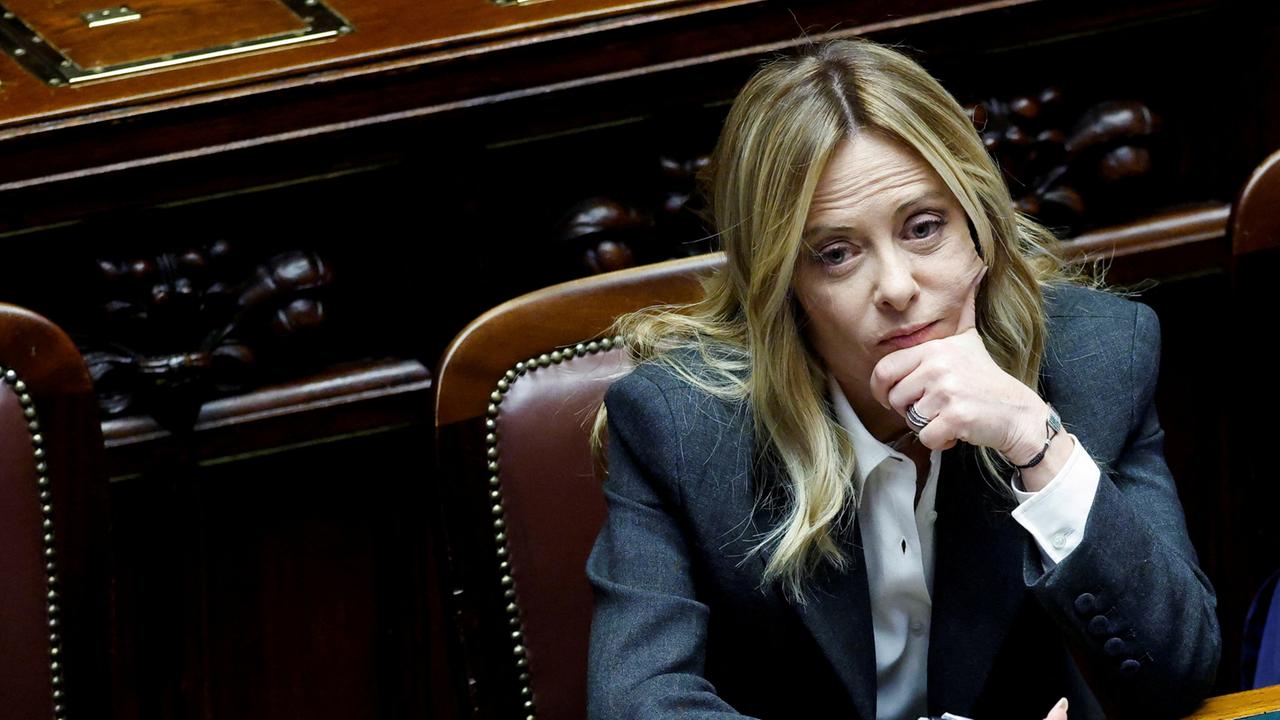
Meloni’s Drive for Reform: Beyond Electoral Mechanics
The push for this new electoral law is not solely about streamlining parliamentary procedures. It also represents a significant personal and political endeavor for Prime Minister Meloni, who has encountered setbacks in achieving some of her broader state-restructuring goals. Despite leading the longest-lasting government in post-war Italian history and earning a degree of respect from European partners, Meloni has not been able to fully realize her reformist agenda.
Her ambitious justice reform was rejected by voters in a referendum in the spring. The idea of directly electing the Prime Minister, a cornerstone of her reformist aspirations, has faced internal dissent and constitutional concerns. The initial attempt to overhaul the electoral law faltered in parliament, reportedly due to opposition from coalition partners who feared that the new rules would disproportionately benefit Meloni’s Brothers of Italy party at their expense.
The current strategy of tying the electoral reform to a confidence vote signifies Meloni’s determination to overcome these obstacles and secure a legislative victory that could reshape Italy’s political future. The preliminary success in three confidence votes on specific clauses indicates a degree of control over the legislative process, but the final, secret ballot in the Chamber of Deputies remains a critical juncture.
Opposition Voices: Concerns Over Democratic Integrity
The opposition has vehemently criticized the proposed electoral law, arguing that it is designed to manipulate the electoral rules to the sole advantage of the current center-right coalition. Critics contend that the reforms are not about genuine stability but about preserving power for a coalition that might otherwise lose public favor.
Senator Andrea Giorgis of the Democratic Party expressed strong reservations, stating, "The goal here is to disadvantage and punish the current opposition. This law is designed to put the opposition in difficulty." He views the reform as a partisan maneuver rather than a move towards a more functional democracy.
Former Prime Minister Matteo Renzi has been particularly vocal, accusing Meloni of deliberately distorting the rules to ensure her continued governance, even if her coalition performs poorly in the next election. "If you want to be honest, you have to admit that you are lying," Renzi asserted. "You are not doing this for stability. You are only doing it because you are convinced that otherwise you will lose next time, also because of your divisions." Renzi’s critique highlights the perception among opponents that the reform is driven by a fear of electoral defeat and a desire to pre-emptively secure a parliamentary advantage.
The Constitutional Tightrope: A Challenge to the Judiciary
A significant point of contention is the potential violation of Italy’s constitution. Opponents argue that the proposed "Stabilicum" law, with its bonus system and direct candidate selection, fundamentally alters the balance of power and democratic principles enshrined in the constitution. If Meloni’s reform is passed, opponents have vowed to challenge it before the Constitutional Court.
Constitutional law expert Michele Ainis, while explaining the technical aspects of the law, also acknowledged the linguistic peculiarity of the government’s chosen name for the legislation. "It’s one of our Italian quirks, to spoil the names of electoral laws with pseudo-Latin," Ainis commented. "Latin is suitable for making a word appear noble." This observation underscores the rhetorical strategies employed by the government to lend an air of gravitas and historical legitimacy to a reform that is highly contested.
The Shadow of the Far-Right: Unforeseen Challenges
Even if Meloni successfully navigates the legislative hurdles and secures the passage of her electoral law, her political calculus may still be complicated by emerging threats from within the right-wing spectrum. The rise of figures like former General Roberto Vannacci, who is reportedly gaining traction with radical and provocative anti-immigrant rhetoric, poses a challenge to Meloni’s leadership from the far-right.
Vannacci’s increasingly populist stance and inflammatory statements could erode support for Meloni’s more established conservative platform, potentially fracturing the very coalition the new electoral law is designed to strengthen. This dynamic could lead to a scenario where, despite the tailored electoral system, Meloni’s current alliance might struggle to secure a majority in future elections, thus undermining the intended purpose of the reform.
The coming hours and days will be critical for Giorgia Meloni and the future of Italian politics. The outcome of the vote on the new electoral law will not only determine the legislative landscape but also cast a long shadow over the stability and direction of Italy’s government in the years to come. The tightrope walk between achieving political stability and maintaining democratic principles remains precarious, with the potential for snap elections looming as a very real possibility should the reform falter.


