


Navanethem Pillay Awarded Nobel Peace Prize for Unwavering Fight for International Justice
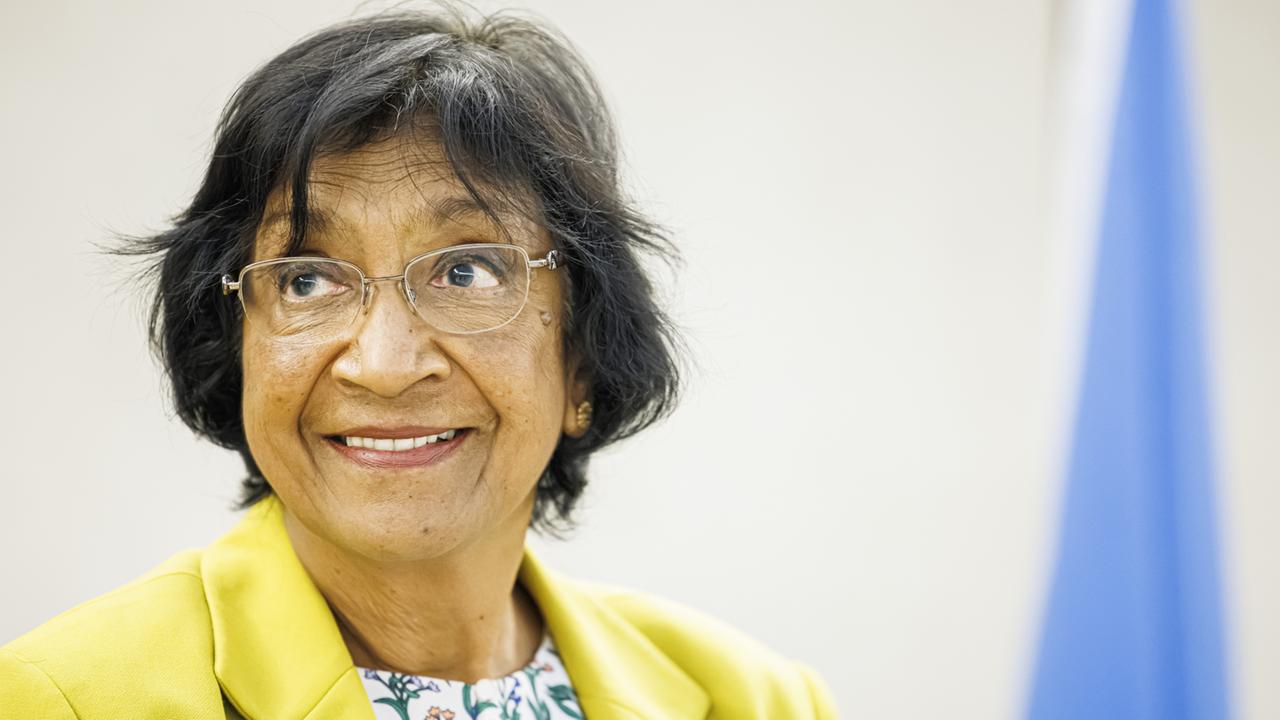
Oslo, Norway – October 9, 2026 – In a powerful affirmation of the enduring importance of international law and human rights, the Nobel Committee today announced that the 2026 Nobel Peace Prize has been awarded to Navanethem "Navi" Pillay, a distinguished South African jurist and human rights advocate. The 85-year-old trailblazer is recognized for her lifelong dedication to upholding international law, prosecuting war crimes, and championing justice for victims of mass atrocities.
The announcement, made by Jorgen Watne Frydnes, Chair of the Norwegian Nobel Committee, in Oslo, highlights Pillay’s profound impact on the global pursuit of accountability and her unwavering commitment to the principles of international justice, even in the face of immense political pressure.
"The Nobel Committee recognizes Navanethem Pillay for her tireless efforts to promote peace and international law," Frydnes stated. "The laureate has significantly contributed to ensuring that war crimes, crimes against humanity, and genocide are brought to justice. She stands as one of the foremost legal experts of our time, a beacon of courage and integrity in the complex and often fraught landscape of international justice."
A Lifetime Dedicated to Justice: Pillay’s Illustrious Career
Navanethem Pillay’s journey from the segregated townships of South Africa to the highest echelons of international law is a testament to her resilience and unwavering commitment to human dignity. Born in Durban, in the South African province of Natal, to a family of Indian Tamil descent, Pillay’s early life was shaped by the brutal realities of apartheid.
Her legal career began in the 1960s, where she bravely defended anti-apartheid activists, often at great personal risk. Her early work focused on challenging the injustices of the apartheid regime, advocating against torture, and fighting for the fundamental rights of those oppressed. This foundational experience instilled in her a deep understanding of the devastating consequences of systemic injustice and a profound empathy for victims.
A pivotal moment in her career came in 1995 when she was appointed as the first non-white woman to serve on the High Court of South Africa. This appointment marked a significant step forward in dismantling the legacy of racial discrimination within the South African judiciary. Following her tenure on the High Court, Pillay continued to extend her influence to the international stage.
Her expertise in international criminal law was further honed during her time at the International Criminal Tribunal for Rwanda (ICTR). There, she played a crucial role in prosecuting individuals responsible for the horrific genocide that engulfed the nation in 1994. Her work at the ICTR was instrumental in establishing precedents for holding perpetrators of mass atrocities accountable.
From 2003 to 2008, Pillay served as a judge at the International Criminal Court (ICC) in The Hague, a testament to her growing stature as a global authority on international justice. Her judicial acumen and unwavering commitment to the rule of law were further recognized when she was appointed as the United Nations High Commissioner for Human Rights from 2008 to 2014.
In this critical role, Pillay was a powerful voice for the voiceless, advocating for the rights of marginalized communities and speaking out against human rights violations across the globe. She led numerous UN investigations into serious human rights abuses, often venturing into conflict zones to document abuses and push for accountability.
One of her most notable post-High Commissioner roles involved leading a UN commission of inquiry into the situation in the Palestinian territories. In September 2025, this commission presented a report that made grave accusations, including alleging genocide in the Gaza Strip. This report, and Pillay’s leadership of the commission, underscored her continued willingness to tackle highly sensitive and contentious issues in the pursuit of justice.
International Law Under Strain: The Context for the Award
The Nobel Committee’s decision to honor Navanethem Pillay comes at a time of significant global turmoil, marked by a rising tide of armed conflicts and an alarming increase in political pressure on international legal institutions. In its justification, the committee explicitly referenced these challenges, emphasizing the precarious state of international law and the vital need for its robust defense.
"The world is witnessing an increasing number of wars and conflicts, and we see mounting political pressure on judges and institutions of international law," the committee stated. "The ability to resolve conflicts without violence hinges on a functioning international legal order. A system of international law where war criminals are held accountable and victims of abuse receive justice is a prerequisite for a peaceful world."
This sentiment resonates deeply with Pillay’s career. She has consistently argued that accountability for grave international crimes is not merely an act of retribution but a fundamental pillar for preventing future atrocities and fostering lasting peace. Her work has consistently demonstrated that a robust and impartial international legal framework is essential for maintaining global stability and ensuring that the principles of justice are upheld, regardless of political expediency.
The Nobel Peace Prize, established by the will of Alfred Nobel, is awarded to those who have made significant contributions to peace, international cooperation, or disarmament. This year, the committee faced the challenging task of selecting from a pool of 287 nominees, a figure that underscores the vast number of individuals and organizations working towards a more peaceful and just world. The nomination process allows for suggestions from various prominent figures, including government officials, university professors, heads of state, and previous laureates, highlighting the broad recognition of Pillay’s immense contributions.
The Award Ceremony and Global Recognition
The Nobel Prizes are traditionally presented on December 10th, the anniversary of Alfred Nobel’s death. The Peace Prize stands apart as it is awarded in Oslo, Norway, while the other Nobel Prizes are presented in Stockholm, Sweden. This year, the prize comes with a monetary award of twelve million Swedish kronor, equivalent to just over one million euros, recognizing the significant financial and personal investment required for such profound contributions.
The announcement of Pillay’s award has been met with widespread acclaim from international organizations and governments. The UN Human Rights Office issued a statement acknowledging Pillay’s decades of dedicated service, emphasizing that the award "underscores the necessity and value of human rights – today more than ever."
Amnesty International hailed the decision as the "right signal at the right time." Julia Duchrow, Secretary General of Amnesty International Germany, lauded Pillay for her courage in naming atrocities, irrespective of who committed them. "This very courage is lacking today in many governments that defend international law only when it suits them politically," Duchrow stated, highlighting a critical deficiency in contemporary international relations that Pillay’s work actively counters.
The German federal government also extended its congratulations, with a government spokesperson in Berlin acknowledging Pillay’s "great personal commitment and impressive persistence for human rights, justice, and the enforcement of international law over decades."
Looking Ahead: The Enduring Legacy of Navanethem Pillay
Navanethem Pillay’s Nobel Peace Prize is more than just a personal accolade; it is a powerful endorsement of the principles of international justice and accountability at a time when these very principles are under immense strain. Her career serves as a profound reminder that the pursuit of peace is inextricably linked to the pursuit of justice, and that the fight for human rights requires unwavering dedication, intellectual rigor, and an unyielding moral compass.
As the world grapples with escalating conflicts and the erosion of international norms, Pillay’s legacy offers a beacon of hope and a call to action. Her life’s work demonstrates that even in the darkest of times, the pursuit of justice is a vital and achievable endeavor, and that individuals, through their unwavering commitment, can indeed shape a more equitable and peaceful future for all. The awarding of the Nobel Peace Prize to Navanethem Pillay is a recognition of a lifetime spent fighting for a world where the rule of law prevails, and where every individual’s inherent dignity is protected and upheld.


