


Kyiv, Ukraine – October 9, 2026 – The ongoing conflict in Ukraine has reached a critical juncture, marked by a surge in devastating Russian assaults and a renewed, albeit fragile, attempt at diplomatic resolution. As Ukrainian forces grapple with intensified bombardment, international diplomats are convening for crucial talks aimed at charting a path toward de-escalation and long-term stability. The recent wave of attacks has underscored the brutal realities of the war, prompting stern rebukes from Western leaders and renewed calls for robust sanctions against Russia.
Summary of Key Developments
In the past 48 hours, Ukraine has endured a relentless barrage of Russian attacks, resulting in a significant loss of life and widespread destruction. Official figures from Kyiv report at least 78 fatalities and 215 injuries across the nation. President Volodymyr Zelenskyy has appealed for enhanced access to the Starlink satellite internet service, arguing it could prove instrumental in countering Russian ballistic missile launch sites.
Concurrently, a significant diplomatic effort is underway, with Ukrainian negotiators scheduled to meet with representatives of U.S. President Donald Trump in Washington D.C. on Friday and Saturday. A European delegation is also expected to participate. These high-stakes discussions are anticipated to address critical issues including security guarantees for Ukraine, a comprehensive post-war reconstruction plan, and other facets of the protracted conflict.
Meanwhile, Western condemnation of Russia’s actions has reached a new crescendo. German Foreign Minister Johann Wadephul has vehemently denounced President Putin’s "unimaginable brutality," stating that "Putin’s cruelty knows no bounds." This strong rhetoric follows unsuccessful meetings with his Russian counterpart, Sergey Lavrov, on the sidelines of the UN General Assembly in New York. The European Union is reportedly finalizing further sanctions designed to cripple Russia’s war economy and its enablers, signaling a united front against Moscow’s aggression.
A Chronology of Escalation and Diplomacy
The past week has been characterized by a stark dichotomy: escalating violence on the ground and a renewed push for dialogue at the diplomatic table.
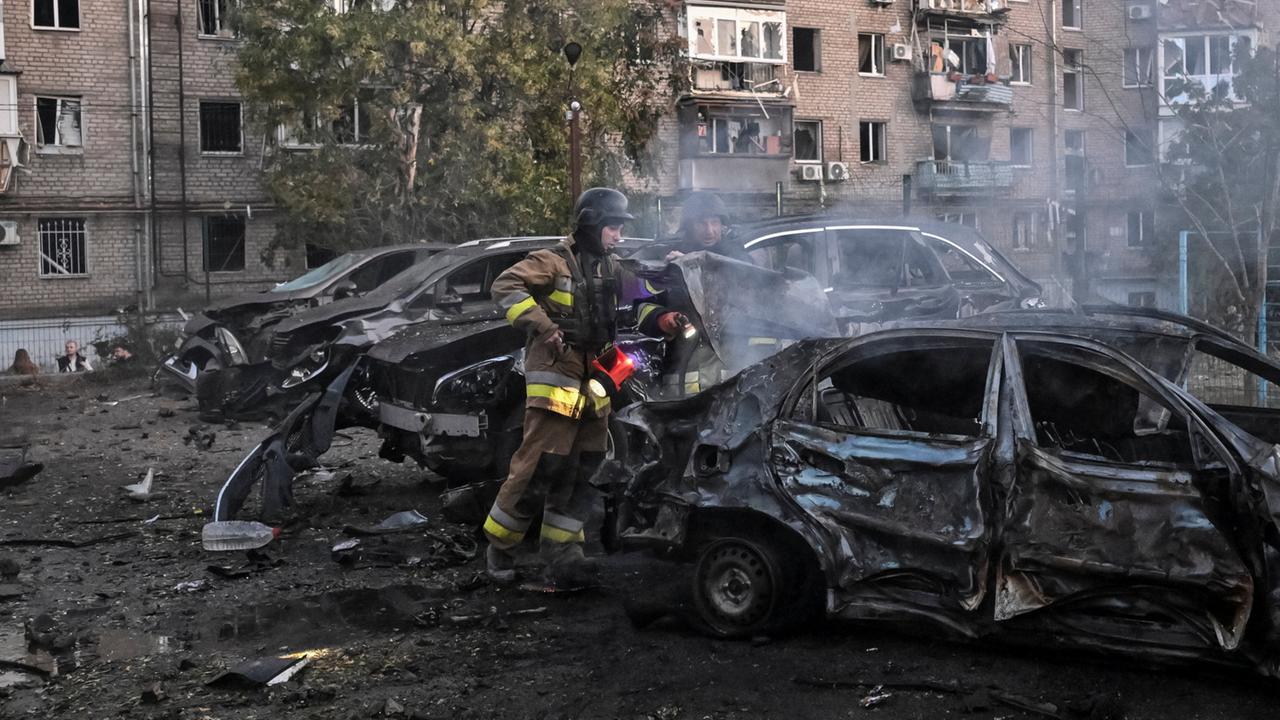
Early October 2026: Reports from various Ukrainian cities indicate a significant increase in the frequency and intensity of Russian aerial and missile attacks. Civilian infrastructure, including residential buildings, has been directly targeted, leading to a tragic rise in civilian casualties. The city of Pryluky, among others, has experienced nightly assaults, with reports of residential areas being deliberately destroyed while residents slept.
October 7-8, 2026: President Zelenskyy’s office confirms the ongoing intense attacks across the nation. The casualty figures of 78 dead and 215 injured are released, painting a grim picture of the human cost. The President’s urgent request for expanded Starlink access highlights the strategic importance of advanced communication and intelligence capabilities in the face of Russia’s advanced weaponry.
October 8, 2026: Russian news agency Tass reports on Ukrainian strikes in the Belgorod border region, citing local authorities who claim two fatalities and four injuries. Simultaneously, reports emerge of a drone attack in the Kaluga region, resulting in nine injuries. In the Tver region, a factory in Redkino reportedly caught fire following a Ukrainian drone strike, though the blaze was later extinguished. These incidents underscore the cross-border nature of the conflict and the reciprocal targeting of strategic locations.
October 9, 2026: The scheduled diplomatic meetings between Ukrainian and U.S. representatives are set to commence. The presence of a European delegation signifies a coordinated Western approach to resolving the conflict. The agenda, as outlined by U.S. officials, prioritizes Ukraine’s security and its future recovery.
October 9, 2026 (Current Report): This report details the latest developments, including the escalating attacks, casualty figures, diplomatic initiatives, and strong international reactions. The stark contrast between the battlefield realities and the diplomatic efforts sets the stage for a pivotal period in the Ukraine war.
Supporting Data and Observations
The human toll of the recent attacks is a stark indicator of the conflict’s severity. The reported figures of 78 dead and 215 injured in just two days underscore the indiscriminate nature of some of Russia’s offensive operations. The targeting of civilian areas, as described in Pryluky, raises grave concerns about potential war crimes.
President Zelenskyy’s appeal for Starlink highlights the evolving nature of modern warfare. The ability to disrupt or counter advanced missile systems is crucial, and access to satellite communication provides a vital edge in intelligence gathering and operational coordination. The request implies a perceived gap in Ukraine’s current capabilities to effectively neutralize these threats.
The reported Ukrainian strikes on Russian territory, while acknowledged by Russian state media, also indicate a broadening of the conflict’s reach. The attacks on Belgorod and Kaluga, and the factory fire in Tver, suggest Ukraine’s increasing capacity to project force beyond its borders, potentially as a retaliatory measure or a strategic disruption of Russian logistical capabilities.
It is crucial to note the disclaimer provided in the original article regarding the verification of casualty figures and operational details. In a conflict zone, information disseminated by the warring parties can be subject to propaganda and may not be immediately verifiable by independent sources. This underscores the importance of a critical approach to all reported data.
Official Responses and International Condemnation
The international response to the escalating violence has been swift and largely unified in its condemnation of Russia’s actions.
President Volodymyr Zelenskyy: Beyond his appeals for Starlink, President Zelenskyy has consistently highlighted the devastating impact of the war on his people. His speeches and public statements serve as a constant reminder of the human cost and the urgent need for international support.
German Foreign Minister Johann Wadephul: His strong denunciation of President Putin marks a significant hardening of rhetoric from a key European leader. Wadephul’s statement, "Putin’s cruelty knows no bounds," reflects a growing conviction that diplomatic channels have been exhausted and that a more forceful stance is required. He explicitly links the recent civilian casualties to Russia’s "attrition tactics," labeling them as "unimaginably brutal."
United States Officials: While specific statements from U.S. officials are not detailed in the provided text, their involvement in mediating the upcoming talks signifies a continued commitment to finding a diplomatic solution. The agenda outlined by U.S. personnel—security guarantees, reconstruction plans, and conflict resolution—demonstrates a forward-looking approach focused on Ukraine’s long-term security and stability.
European Union: The EU’s commitment to providing further financial aid for air defense systems, totaling 1.2 billion Euros, underscores its dedication to bolstering Ukraine’s defensive capabilities. The announcement of impending "comprehensively the most extensive" sanctions against individuals and entities supporting Russia’s war effort signals a significant escalation of economic pressure. The stated goal of these sanctions is to "severely affect Russia’s ability to attack Ukraine."
Implications and Future Outlook
The current confluence of intensified Russian aggression and renewed diplomatic engagement presents a complex and uncertain outlook for the Ukraine war.
Escalation of Hostilities: The recent attacks suggest Russia’s intent to maintain or even increase military pressure on Ukraine. The deliberate targeting of civilian areas, if proven, could lead to further international condemnation and potentially trigger more severe retaliatory measures from Ukraine and its allies.
The Role of Diplomacy: The upcoming talks in Washington represent a critical opportunity. The inclusion of U.S. and European negotiators indicates a desire for a coordinated international approach. The success of these discussions will hinge on Russia’s willingness to engage in good faith and on the ability of the parties to find common ground on core issues like security guarantees and territorial integrity. However, past rounds of negotiations have yielded no breakthroughs, and the current climate of intensified attacks may further complicate diplomatic efforts.
The Impact of Sanctions: The impending EU sanctions are designed to have a significant impact on Russia’s war-making capacity. The effectiveness of these measures will depend on their scope, enforcement, and the global economic landscape. Historically, sanctions have proven to be a potent tool, but their ability to compel a change in strategic behavior can be slow and variable.
The Need for Enhanced Air Defense: President Zelenskyy’s urgent request for Starlink and the EU’s financial commitment to air defense highlight a critical vulnerability for Ukraine. Russia’s continued reliance on aerial bombardment necessitates robust defensive capabilities to protect civilian populations and critical infrastructure. The expansion of Starlink access could also empower Ukraine to conduct more effective counter-offensives.
The Human Cost: Regardless of the diplomatic or military outcomes, the human cost of this war remains paramount. The ongoing loss of life and the displacement of millions are tragic consequences that will resonate for generations. The international community faces the dual challenge of de-escalating the conflict and addressing the immense humanitarian needs of the Ukrainian people.
The coming days and weeks will be crucial in determining the trajectory of the Ukraine war. The interplay between continued military pressure, diplomatic overtures, and international resolve will ultimately shape the future of Ukraine and the broader geopolitical landscape.


