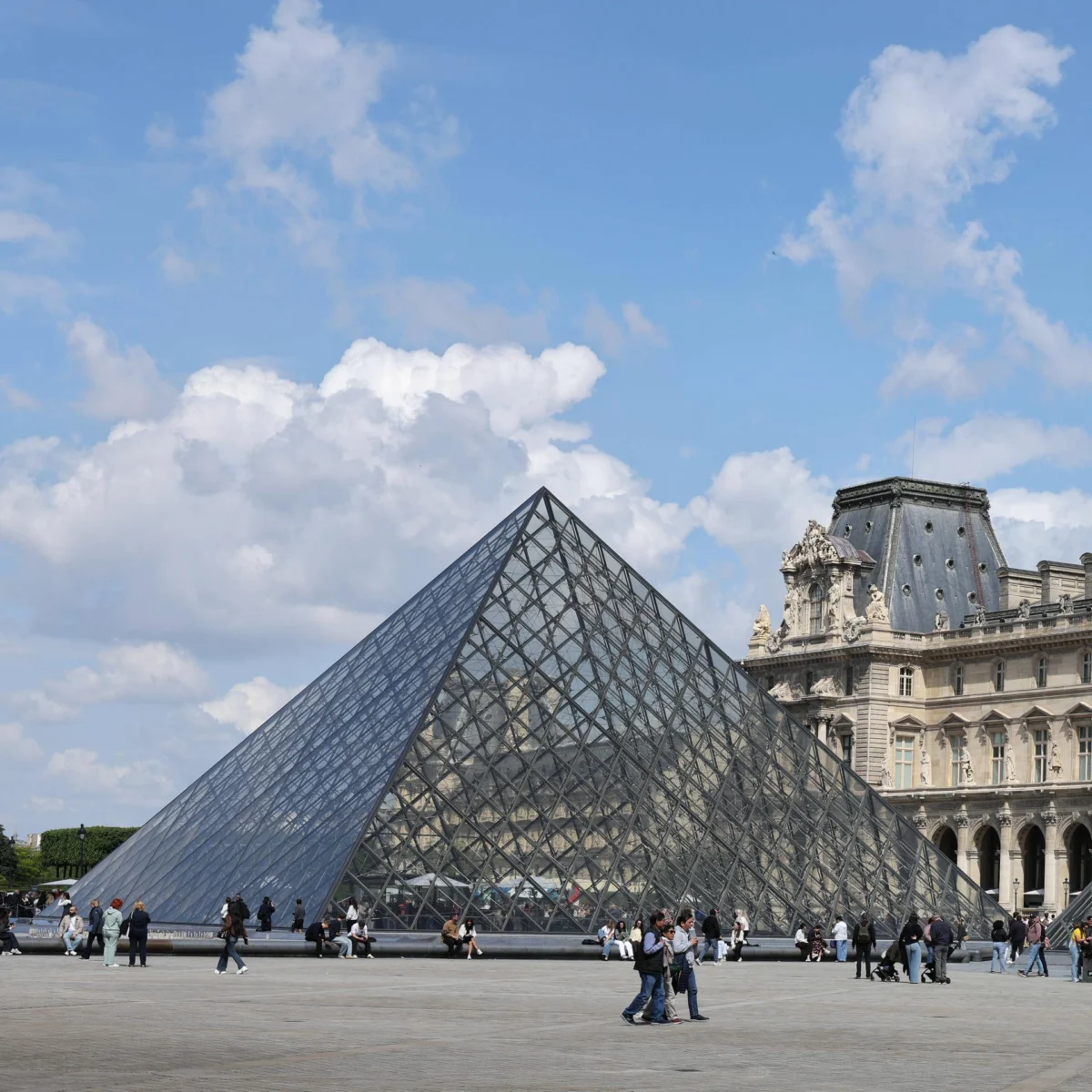
Paris, France – July 21, 2026 – Nine months after a meticulously planned and spectacular break-in that saw the theft of eight invaluable pieces of jewelry, the Louvre Museum in Paris has announced the reopening of its iconic Galerie d’Apollon. However, the grand hall, renowned for its opulence and historical significance, will welcome visitors not as a repository of priceless artifacts, but as a magnificent ceremonial space, entirely stripped of its former exhibits. This unprecedented decision marks a profound shift in how one of the world’s foremost cultural institutions balances public access with the paramount need for security in an increasingly vulnerable landscape.
The treasures previously displayed within the Galerie d’Apollon, estimated to be worth approximately 88 million Euros, will now be relocated to a high-security, windowless vault. This move, confirmed by Louvre Director Laurence Leribault to "Le Parisien," underscores the museum’s commitment to safeguarding its collections while acknowledging the inherent risks of public display for certain items. The director emphasized that rather than presenting visitors with a stark reminder of the loss through empty display cases, the space itself would be restored to its original splendor as a "Prunkgalerie" – an ornamental gallery, allowing its architectural and artistic grandeur to speak for itself.
Main Facts
The reopening of the Galerie d’Apollon on July 21, 2026, represents a bittersweet moment for the Louvre and the global art community. While the physical space, a testament to French artistry and royal patronage, once again becomes accessible, it does so under drastically altered circumstances.
- Reopening and Repurposing: The Galerie d’Apollon, a jewel within the Louvre, has reopened its doors nine months after a significant security breach. Crucially, it has been repurposed from an exhibition space into an ornamental, ceremonial hall, devoid of its former collection.
- Relocation of Treasures: All previously displayed collections and immensely valuable objects, including those that were not stolen but deemed at risk, have been moved to a new, state-of-the-art, windowless vault. This decision prioritizes the security of the remaining artifacts.
- Director’s Statement: Louvre Director Laurence Leribault articulated the rationale behind this radical change in an interview with "Le Parisien." He explained that the intention was to prevent the gallery from becoming a melancholic spectacle of empty vitrines, opting instead to highlight the inherent beauty and historical significance of the space itself.
- The October 2025 Heist: The catalyst for these changes was a audacious theft that occurred in mid-October 2025. Eight precious pieces of jewelry, with an estimated market value of 88 million Euros, were stolen from the gallery. To date, there has been no trace of the stolen items, and the perpetrators remain at large.
- Significance of the Galerie d’Apollon: The Galerie d’Apollon is not merely a room but a historical and artistic masterpiece in its own right. Its lavish decorations and intricate design are deeply intertwined with the history of French monarchy and art, making its transformation a significant event for the museum’s identity and visitor experience.
Chronology of Events
The events leading to this transformative decision for the Louvre unfold over a period marked by both celebration of art and profound security concerns.
- Historical Context (Pre-October 2025): For centuries, the Galerie d’Apollon stood as a beacon of French grandeur. Originally conceived by Louis XIV, its intricate designs by Charles Le Brun and later restoration by Eugène Delacroix made it one of the most magnificent rooms in Europe. It was famously a precursor to the Hall of Mirrors at Versailles. For decades, it housed a significant portion of the French Crown Jewels, or at least items of similar historical provenance and value, including diadems, necklaces, and other ornate pieces, making it a mandatory stop for any visitor interested in royal history and precious craftsmanship. Its displays were meticulously curated, drawing millions annually.
- Mid-October 2025: The Night of the Heist: The tranquility of the Louvre was shattered by a sophisticated and audacious theft. Details surrounding the break-in remain sparse, a testament to the ongoing investigation, but reports indicated a highly professional operation. Security systems were bypassed, and the thieves managed to extract eight distinct pieces of jewelry from the Galerie d’Apollon. The initial discovery, likely by morning staff, triggered an immediate lockdown of the museum and the activation of emergency protocols. Forensic teams, national police, and art crime investigators swarmed the site, beginning what would become a months-long, international hunt for the culprits and the priceless artifacts.
- October 2025 – December 2025: Immediate Aftermath and Investigation: Following the theft, the Galerie d’Apollon was immediately sealed off to the public. The Louvre launched an internal review of its security protocols, which had been considered among the most stringent globally. International police organizations, including Interpol, were alerted, and the stolen items were added to global art theft databases. The art world buzzed with speculation, grief, and condemnation. Public confidence in museum security was shaken, leading to calls for increased funding and technological upgrades across major institutions.
- January 2026 – June 2026: Deliberation and Strategic Planning: As the investigation continued with no immediate breakthroughs, the Louvre’s leadership, under Director Leribault, faced a critical dilemma. The Galerie d’Apollon, a symbol of national heritage, remained closed. Options ranged from simply reinforcing security and returning the exhibits, to more radical solutions. The idea of displaying empty vitrines was quickly dismissed as a morbid and disheartening prospect. Instead, discussions began on how to respect the space itself, re-evaluate display strategies for high-value items, and adapt to the new reality of heightened threats. This period saw extensive consultation with security experts, art historians, and conservationists, culminating in the decision to create a secure, windowless vault and reimagine the gallery.
- July 2026: Announcement and Reopening: The Louvre officially announced its plans for the Galerie d’Apollon, confirming the relocation of its most vulnerable treasures and the intention to reopen the space as an architectural and decorative masterpiece. The reopening on July 21, 2026, marks the physical manifestation of this strategic shift, presenting a grand hall that, while magnificent, now quietly underscores the vulnerability of cultural heritage in the modern era.
Supporting Data and Context
The decision to empty the Galerie d’Apollon and convert it into a purely ornamental space is not merely a reactive measure but reflects deeper challenges facing cultural institutions worldwide.
The Galerie d’Apollon: A Jewel in Itself
The Galerie d’Apollon’s significance extends far beyond the objects it once housed. Its very existence is a cornerstone of French artistic and monarchical history. Commissioned by King Louis XIV in the 17th century, it was designed by the architect Louis Le Vau and decorated by the painter Charles Le Brun, with sculptures by François Girardon. Its central theme, the triumph of Apollo (representing the Sun King, Louis XIV), is depicted in a breathtaking ceiling fresco. The gallery’s intricate stucco work, gilded motifs, and monumental paintings laid the stylistic groundwork for the famous Hall of Mirrors at the Palace of Versailles.
After a devastating fire in the 19th century, the gallery was meticulously restored by Félix Duban and completed by Eugène Delacroix, who painted the central panel, "Apollo Vanquishing the Serpent Python." This history imbues the space with an inherent artistic value that transcends any specific collection it might contain. It has long been a key site for the display of the French Crown Jewels, symbolizing continuity, power, and national identity. Its conversion now focuses the visitor’s gaze squarely on this architectural and decorative legacy, rather than the curated artifacts.
The Stolen Treasures: A Glimpse into the Loss
While the specific details of the eight stolen jewelry pieces remain confidential for investigative reasons, their estimated value of 88 million Euros speaks volumes about their historical, artistic, and material significance. Collections typically housed in such a prominent gallery would include items of immense provenance – perhaps pieces worn by French royalty, or gifts exchanged between empires, or masterworks of jewelry design from various epochs. These are not merely precious stones but intricate works of art, imbued with centuries of history, craftsmanship, and cultural memory.
The loss of eight such pieces represents an irreparable void in France’s national heritage. Each piece would have been unique, possibly featuring rare gemstones, complex settings, and intricate metalwork indicative of specific historical periods or renowned jewelers. Their disappearance means a chapter of art history is now literally missing, depriving future generations of direct engagement with these tangible links to the past. The 88 million Euro valuation, while staggering, likely only scratches the surface of their true, incalculable cultural worth.
The Louvre’s Security Challenge
The Louvre, a former royal palace spanning over 72,000 square meters and housing hundreds of thousands of artifacts, has always faced immense security challenges. Despite its reputation for cutting-edge surveillance, dedicated security personnel, and intricate alarm systems, it has not been immune to past incidents. The most famous, the 1911 theft of the Mona Lisa, highlighted vulnerabilities even in an earlier era. More recent, albeit less high-profile, incidents have underscored the persistent threat from organized crime and opportunistic individuals.
The "spectacular" nature of the October 2025 break-in suggests a level of sophistication that goes beyond typical smash-and-grab operations. It implies detailed reconnaissance, expert knowledge of the museum’s layout and security architecture, and potentially, an insider element or state-of-the-art technological capabilities employed by the perpetrators. This event places it in the company of other infamous, unsolved museum heists globally, such as the 1990 Isabella Stewart Gardner Museum theft in Boston or the 2017 Green Vault robbery in Dresden, both of which saw vast sums of art vanish without a trace. These incidents collectively force museums to continually re-evaluate the balance between accessibility, preservation, and defense against increasingly sophisticated threats.
The Black Market for Stolen Art
The black market for stolen art is a shadowy world, driven by illicit demand and often intertwined with other criminal enterprises. High-profile items like those stolen from the Louvre are notoriously difficult to sell openly. Their unique provenance makes them easily identifiable, rendering them "too hot" for legitimate collectors. Instead, they often end up in the hands of wealthy, unscrupulous private collectors who value them for their exclusivity, or are used as collateral in criminal dealings, or even held for ransom.
The lack of any trace of the stolen jewelry suggests either an extremely patient fence, a well-hidden private collection, or perhaps that the pieces have been dismantled to sell individual stones, though this would significantly diminish their historical value. The art crime world is a complex network, and the recovery of such items can often take decades, if they are ever recovered at all, highlighting the enduring nature of the loss.
Official Responses and Reactions
The aftermath of the theft and the subsequent decision to transform the Galerie d’Apollon have elicited a range of official responses and public reactions, reflecting the multifaceted impact of such an event on a national treasure.
Director Leribault’s Rationale
Laurence Leribault’s decision to empty the Galerie d’Apollon and move its valuable contents to a secure, windowless vault is a stark admission of the limits of conventional museum security for certain categories of objects. His statement to "Le Parisien" clearly articulated a philosophical shift: to prioritize the absolute safety of the remaining collection over its constant public display in a vulnerable setting. The choice to avoid "empty display cases" was pragmatic, aiming to prevent the gallery from becoming a mournful monument to loss. Instead, by emphasizing the intrinsic beauty of the space itself – its architecture, its historical frescoes, its decorative elements – the Louvre seeks to reframe the visitor experience. It transforms a site of material display into a celebration of artistry in its purest form, where the building itself becomes the primary exhibit. This move also implies a significant investment in cutting-edge vault technology, ensuring optimal environmental control and multi-layered security for the hidden treasures.
Police and Investigation Status
Nine months on, the official police investigation remains active, but publicly, there have been no significant breakthroughs. Authorities, including France’s specialized art crime unit (OCBC) and international partners like Interpol, are undoubtedly pursuing all leads, scrutinizing forensic evidence, and monitoring global art markets for any sign of the stolen jewelry. The silence from law enforcement typically indicates a complex case with few immediate clues, underscoring the professionalism of the perpetrators. Public appeals for information have been made, urging anyone with knowledge of the theft or the whereabouts of the items to come forward. The absence of recovery efforts further highlights the extreme difficulty in tracing such high-value, unique artifacts once they disappear into the criminal underworld.
Public and Expert Reactions
The public reaction to the Galerie d’Apollon’s reopening has been mixed. There is an undeniable sense of relief that a significant portion of the Louvre is once again accessible, and many appreciate the museum’s effort to repurpose the space gracefully. However, a profound sadness lingers over the loss of the stolen treasures and the necessity of hiding others. Art historians and cultural commentators have engaged in robust debates about the future of museum display. Some lament what they perceive as a victory for criminals, arguing that hiding art diminishes its public purpose. Others commend the Louvre’s pragmatic approach, suggesting that in an era of escalating threats, innovative security measures, even if they mean less public display for certain items, are essential for long-term preservation. Tourists, a significant component of the Louvre’s daily visitors, might initially experience disappointment at not seeing the anticipated glittering displays, but the sheer grandeur of the gallery itself is expected to captivate many.
Implications and Future Outlook
The Louvre’s decision for the Galerie d’Apollon is more than a response to a single crime; it signals a potential paradigm shift in how major cultural institutions approach security, display, and the very definition of public access to heritage.
Redefining Museum Display and Security
This incident could catalyze a broader re-evaluation of museum display strategies globally. Institutions might increasingly consider digital replicas, holographic projections, or virtual reality experiences to allow public interaction with extremely valuable or fragile objects, while the originals are kept in highly secure, restricted environments. The "windowless vault" concept pioneered here could become a standard for storing the most prized possessions. This shift would necessitate massive investments in advanced security technologies – including AI-powered surveillance, biometric access control, drone monitoring, and sophisticated anti-theft systems. The balance between allowing millions to witness history firsthand and protecting irreplaceable artifacts will become a central, evolving challenge, potentially leading to a tiered access system where some items are only seen by appointment or in highly controlled settings.
The Louvre’s Enduring Legacy
Despite the setback, the Louvre’s legacy as a preeminent cultural institution remains largely undimmed. Its vast collection, ranging from ancient civilizations to modern masterpieces, ensures its continued appeal. However, this event will undoubtedly become part of its storied history, a reminder of the fragility of even the most robust cultural strongholds. The museum’s ability to adapt and innovate, transforming a space of loss into a celebration of architectural heritage, demonstrates resilience. It forces a contemplation of what truly constitutes a museum’s value: the objects it contains, the stories it tells, or the very spaces it inhabits. The Louvre will continue to draw millions, but the Galerie d’Apollon will serve as a poignant reminder of the unseen treasures and the ever-present tension between preservation and public engagement.
The Search Continues
For the stolen jewelry, the search is likely to be a protracted and arduous one. History is replete with examples of art recovered decades after a theft, often through serendipitous discoveries or shifts in criminal allegiances. However, many masterpieces remain lost forever. The international art crime community will continue its relentless pursuit, hoping to one day bring these priceless pieces back to their rightful home. The Louvre, and indeed the world, will hold a collective breath, hoping for a miracle that restores the missing facets of its dazzling heritage, even as it innovates to protect what remains. The story of the Galerie d’Apollon, now a hall of splendor without its gems, will continue to evolve, a testament to both the enduring allure of art and the persistent threats it faces.